
Bay Area
Opinion – COVID-19 and the African American Community

The COVID-19 pandemic is hitting the African American community especially hard due to stark health disparities that were widespread well before this pandemic.
Our Black community here in Oakland and Alameda County is now, once again, particularly at-risk for a dangerous health problem. While Alameda County’s Latino and Pacific Islander communities are also experiencing disproportionately high rates of COVID-19, African Americans are dying at the highest rates. This is a very stressful and frightening reality.
Governments at all levels must stay focused on this disparity to avoid the worst outcomes of this epidemic and protect our community, especially our beloved seniors. The way that this virus appears to cause higher rates of fatalities among African Americans needs to be central to the way we tackle this problem.
During the last few months there have been unprecedented organizational challenges caused by COVID-19, including a nationwide shortage of tests; an uphill battle to acquire enough personal protection equipment (PPE) for health workers and the community; medical staffing shortages due to the scale of this pandemic and the urgency of getting care and housing to people who are homeless.
Throughout this turmoil we remain focused on the ways that the outbreak is hitting some communities so much harder. Why? Because while this disease does not discriminate, it does not erase racism against the African American community.

In response, the Alameda County Health Care Services Agency’s Public Health Department (ACPHD) is working to reduce disparities and promote health equity.
For the COVID-19 response, ACPHD is using a multi-pronged strategy: increasing access to testing, facilitating isolation and quarantine through health and social supports, providing community-specific health education, and improving the quality and integrity of race/ethnicity data.
We can and must mitigate the long-term health and socioeconomic impacts of this pandemic on communities of color.
Here are a few of the ways that our County has been responding to COVID-19:
• The County’s Office of Emergency Services (OES) is acting as a central hub for distribution of PPE, like masks and gowns, for local organizations. The OES purchases supplies and also receives PPE from state and federal sources, and directs it to the appropriate healthcare facilities and community organizations in the County. While PPE remains in tight supply nationwide, OES has fulfilled over 90% of the requests received.
• ACPHD has launched a testing team, focused on increasing access to COVID-19 testing through partnerships with cities, community clinics, and faith-based organizations. Any testing sites that come online in the county must comply with ACPHD guidelines, including access for low-income and homeless individuals as needed. I’m proud to say that Roots Community Clinic is leading the way with their walk-up test site in East Oakland, which serves all.
• Due to decades of discrimination, the Black community makes up a significantly disproportionate share of the county’s homeless population. We have quickly expanded the availability of shelter and testing by working with the state of California to acquire hotel space throughout the county for unsheltered individuals who are COVID-19 positive or at high risk for complications from the disease. The program continues to expand with more hotels currently being added throughout the county.
• Although the emerging data in Alameda County and California shows that the racial disparity is not as extreme here as it is in some cities, any disparity is unacceptable. To keep our communities informed of this issue, the county has been updating a COVID-19 data dashboard with information on the spread of the disease, including by zip code and racial group. View the dashboard at acphd.org/2019-ncov.
We have much more work to do. We need to continue to increase testing and expand contact tracing to help us identify new cases early and understand how the COVID-19 is spreading in our communities.
We need culturally competent teams to do this work. We need to overcome a history of discriminatory policies and outcomes that brought us here. We need to continue to support families, workers, small businesses and communities struggling with the economic consequences of this pandemic.
We cannot accept as fact that the Black community will get sick and die at inequitable rates. As we keep fighting COVID-19, we must do so in a manner that substantively addresses the historical racial health inequities of Alameda County.
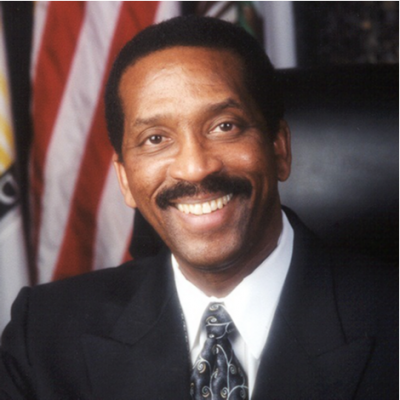
Supervisor Nate Miley represents Alameda County District 4, which includes Pleasanton, Oakland and Castro Valley.











Activism
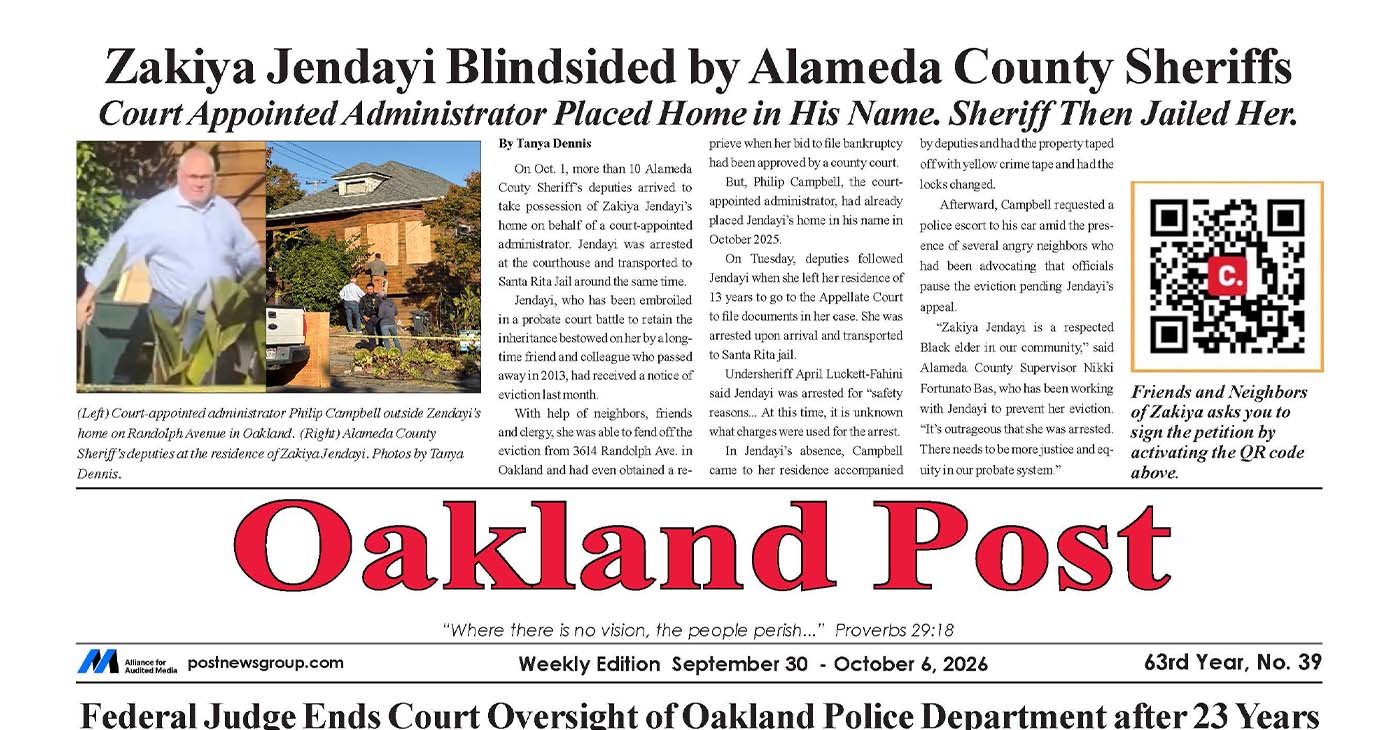
Oakland Post: Week of September 30 – October 6, 2026
The printed Weekly Edition of the Oakland Post: Week of September 30 – October 6, 2026

To enlarge your view of this issue, use the slider, magnifying glass icon or full page icon in the lower right corner of the browser window.


Activism
Oakland Post: Week of September 23 – 29, 2026
The printed Weekly Edition of the Oakland Post: Week of September 23 – 29, 2026
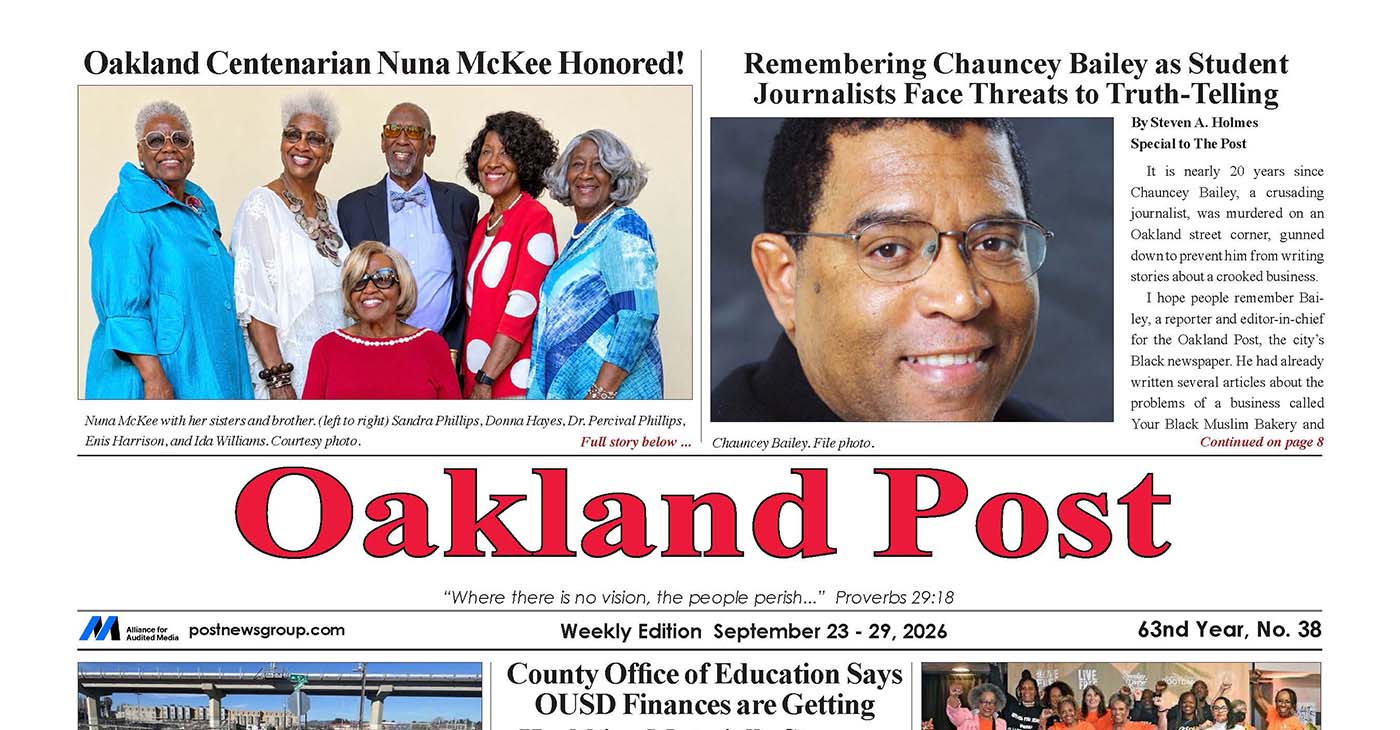
To enlarge your view of this issue, use the slider, magnifying glass icon or full page icon in the lower right corner of the browser window.
Activism
Oakland Post: Week of September 16 – 22, 2026
The printed Weekly Edition of the Oakland Post: Week of September 16 – 22, 2026
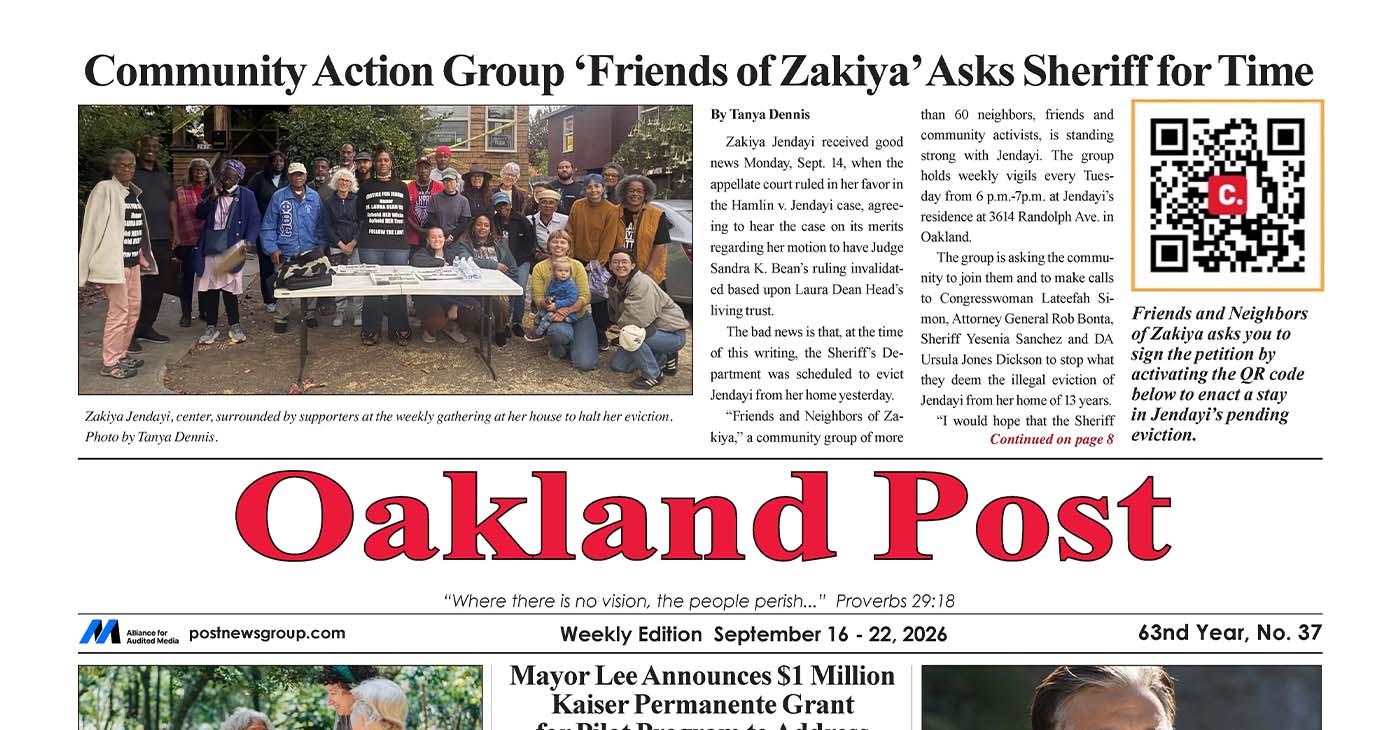
To enlarge your view of this issue, use the slider, magnifying glass icon or full page icon in the lower right corner of the browser window.


OP-ED: Proposition 44 Would Put a Price on Trust

OP-ED: Proposition 40: It’s Time to Play Chess, Not Checkers

Listening as a Lifeline: A Doula’s Witness to Black Maternal Health

New Protections for Ticket Buyers: Gov. Newsom Signs Assemblymember Isaac Bryan’s Bill

‘We Don’t Talk Trash — We Pick Up Trash!’

Zakiya Jendayi Arrested, Locked Out of Home by Sheriff’s Deputies

Oakland Post: Week of September 30 – October 6, 2026

Asm. Corey Jackson Announces Launch of 24-Hour Childcare in His District

IN MEMORIAM: The Rev. Leon “Sonny” Clark, Longtime Orange County Pastor and Community Leader, Dies at 72

Poll: Becerra Widens His Lead Over Hilton; Californians Split on Wealth Tax

From Historic Memories to New Possibilities: Oakland Celebrates Coliseum 60

County Office of Education Says OUSD Finances Are Getting Healthier, Materially Stronger

LIVE FREE Sunday Dinner Brings Faith, Fellowship and Civic Conversation to Oakland

Remembering Chauncey Bailey as Student Journalists Face Threats to Truth-Telling

BLACspace Cooperative Invites Bay Area to Experience Oakland’s Black Cultural Ecosystem Through a BLAC Map Tour + Party

Standoff for Justice: Our Homes Are Worth Fighting For

Oakland Post: Week of August 26 – September 1, 2026

Frontier Airlines’ Return to Oakland Airport Brings Flights, Jobs and Opportunity

Gubernatorial Candidate Steve Hilton Blasts California New Tire Rules; Newsom Hits Back

Chef Sharon Lee Blends Culinary Excellence, Education and Empowerment

Jackie Wright Champions Bay Area Stories, Filmmakers and Cultural Institutions

Misnamed ‘Parent’ PAC Seeks to Influence Oakland School Board Elections

Oakland Coliseum Project Opens Door for Small Businesses to Build Bigger

Big City Mayors Ask for “Yes” Vote on Housing Bond Measure; Conservatives Say “No”

Gov. Newsom’s Latest Appointees Include Sacramento Advocate for Formerly Incarcerated Students; State’s New Tech Chief

Longtime BWOPA Member Brendalyn Goodall Appointed to California Workforce Development Board

Gov. Newsom Signs Law Shielding Immigration Aid Workers From Doxing Threats

Oakland Post: Week of September 2 – 8, 2026

Secretary of State Shirley N. Weber Urges Californians to Vote Early as Voter ID Battle Intensifies

IN MEMORIAM: Dolly Parton Dead at 80 — How She Built a Legacy of Love and Earned Her Place in Black Culture

The Conversation With Al McFarlane 6/23/26

Media Monday 6/22/26

LIVE! ASK ALMA! — TUES. 6.23.26 7PM EST

Car Buying Secrets: 4 Hidden Checks Before You Sign!

Is This 550 HP Charger Worth YOUR Money? AutoNetwork Review

Celebrating Juneteenth – Frederick Douglass on education and resistance

LIVE! — ASK ALMA! — TUES. 6.19.26 7PM EST

Hyundai Ioniq 5 Parking, Safety, and 360 View #shorts

2025 Ioniq 5 New Wiper & Powerful Performance! #shorts

Electric SUV Range: Is 259 Miles Enough? #shorts

EV Charging: How Fast Can You Charge an Electric Vehicle? #shorts

Biometric Cooling… Messaging Seats…Come on! 2025 Infiniti QX80 Autograph 4WD

Charged Up: Witness the Magic of a Fully Electric Car! #shorts

Range Rover Sport PHEV Included…: See What’s Inside This Luxury SUV! #shorts

Invisible Hood View: Perfect Parking with X-Ray Vision! #shorts
-
 Community3 weeks ago
Misnamed ‘Parent’ PAC Seeks to Influence Oakland School Board Elections
-

 Activism3 weeks ago
Oakland Post: Week of September 9 – 15, 2026
-

 Community3 weeks ago
Richmond Tiny House Village Farm & Garden Set to Open Gates on Sept. 26
-

 Black History3 weeks ago
Latest Massacre in Haiti Reveals Cruelty U.S. Deportations
-

 Black History3 weeks ago
OPINION: Nolan Wells’ Death One of Several Signifying Racial Terror Lives on in U.S. South
-

 Business2 weeks ago
Mayor Lee Announces $1 Million Kaiser Permanente Grant for Pilot Program to Address Homelessness, Clean Up Public Spaces throughout Oakland
-

 Community3 weeks ago
Democratic Clubs Interview Candidates for Oakland School Board
-

 Uncategorized3 weeks ago
NBA All-Star Damian Lillard Returns Home for 15th Annual Backpack Giveaway
