
Activism
OP-ED: Supervisors Must Implement Civilian Oversight of Sheriff’s Dept. Over Santa Rita Jail Death
Norma Nelson, a lifetime Black Women Organized for Political Action member (Sacramento Chapter) and founding member of the California League of Women Voters Criminal Justice Committee Interest Group, joined the circle of families whose tragic experiences highlight the need for transparency and accountability in Alameda County law enforcement.

By Katie Dixon
Moina Shaiq
Rev. Derron Jenkins
Norma Nelson, a lifetime Black Women Organized for Political Action member (Sacramento Chapter) and founding member of the California League of Women Voters Criminal Justice Committee Interest Group, joined the circle of families whose tragic experiences highlight the need for transparency and accountability in Alameda County law enforcement.
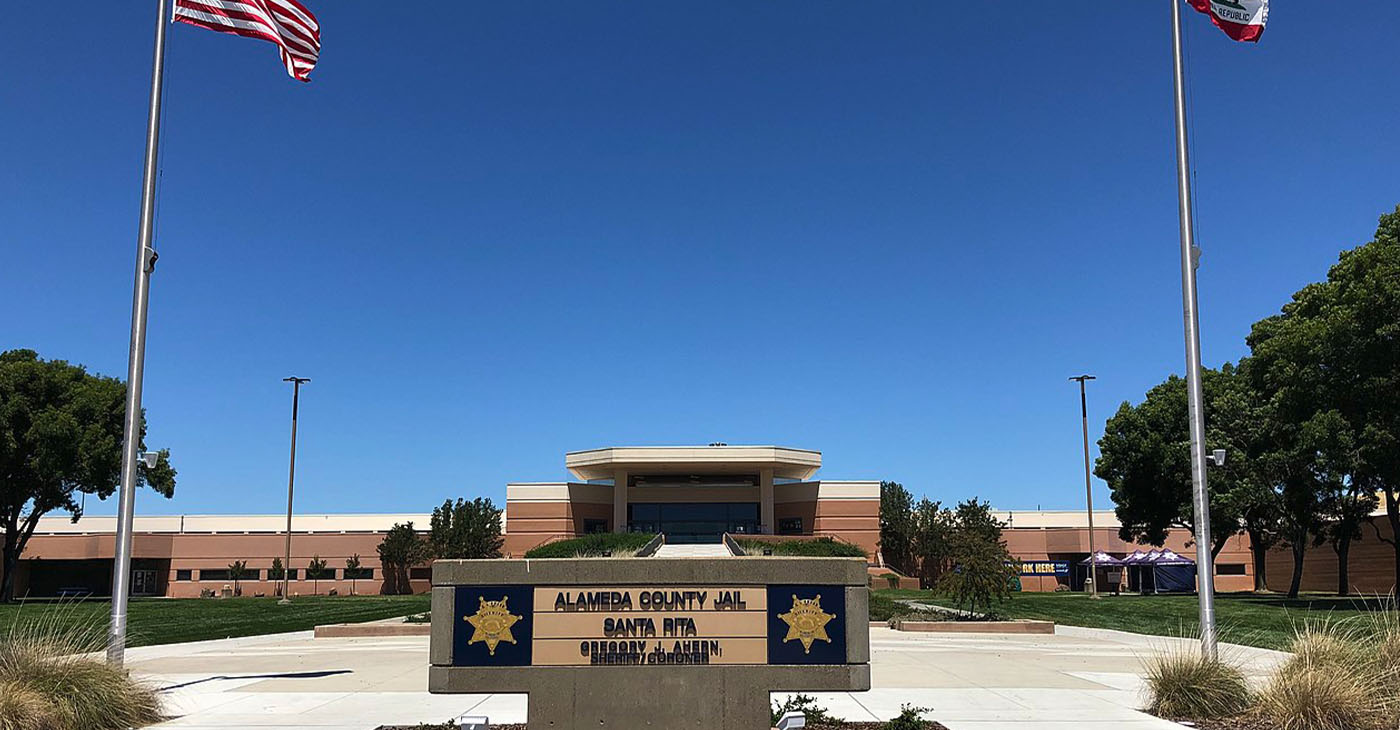
On May 2, 2020, her brother, Donald Nelson, a Black man, had his medical request and needs ignored by staff at Santa Rita jail, the family asserts.
Instead, according to the family, Donald Nelson was placed in a holding cell with an alleged white supremacist (based upon social media posts) only to be fatally assaulted within two hours of being in custody.
Though they reached out to jail staff, the family was not notified for nearly a week as he lay dying alone in a hospital bed.
At the Alameda County Board of Supervisors’ Public Protection Committee meeting last month, Norma Nelson joined Angelina Reyes, president of the Alameda County Council of League of Women Voters, in urging “implementation of a strong, independent civilian oversight of the Sheriff with subpoena power so that violence in the jail and deaths like my brother’s can be fully investigated.”
Alameda County voters want oversight of law enforcement. They voted twice by over 80% for police oversight in Oakland and elected a new reform-minded sheriff who campaigned supporting oversight of her own office. Community engagement by the sheriff’s office itself has shown the highest priority – 80% – is for oversight and transparency.

The Board of Supervisors organized a year-long process and heard the same message overwhelmingly from their constituents. Yet now Supervisors say they are unclear if voters want effective oversight of law enforcement. Meaningful, effective, independent oversight of the Sheriff’s Department must include:
- Independent legal counsel for the Oversight Board separate from County Counsel which represents the interests of the county in lawsuits that may be at odds with oversight.
- An Oversight Board of diverse backgrounds and knowledge, not representing law enforcement or county officials. Candidates for the Oversight Board should be recruited by a selected panel of county residents for appointment by the Board of Supervisors
- An Inspector General with subpoena power with authority to provide professional, full-time assistance
- Adequate resources, including investigators and policy analysts
Before voting on oversight, we call on each Supervisor to commit to refusing campaign contributions from law enforcement unions so the public can trust their decisions are not influenced by the police unions’ deep pockets.
If Supervisors don’t trust what they learned from their own constituent outreach, they should place an initiative for strong, independent sheriff oversight on the 2024 ballot.
Current county oversight proposals are less effective and will perpetuate a culture that drastically needs to change. It is critical that the Supervisors create oversight that includes the demonstrated desire of county residents for real accountability and reform, not window dressing.
We join county residents who are hopeful about newly elected Sheriff Yesenia Sanchez. But oversight isn’t about who is sheriff – it’s good government that can build trust with the community and save taxpayer money by strengthening effective law enforcement and addressing the issues that have led to numerous expensive lawsuits against the county.
Effective civilian oversight will assist the Board and sheriff in determining and making the reforms that the Alameda County’s Sheriff’s Department and jail need.
Oversight gives residents a voice to raise issues of concern and ensure a dedicated staff and Board to research and investigate policies and situations to bring recommendations to the Supervisors.
The Board of Supervisors discusses Sheriff Oversight at the Public Protection meeting on Thursday, June 22 at 10 a.m. The public can participate at 1221 Oak St, Oakland or on zoom (email sheriffoversight@gmail.com for link).
Katie Dixon, of All of Us or None; Moina Shaiq, of Interfaith Coalition for Justice in Our Jails and Rev. Derron Jenkins, Coalition for Police Accountability are the authors of this Op-Ed.








Activism
Oakland Post: Week of March 18 – 24, 2026
The printed Weekly Edition of the Oakland Post: Week of March 18 – 24, 2026

To enlarge your view of this issue, use the slider, magnifying glass icon or full page icon in the lower right corner of the browser window.
Activism
Oakland Post: Week of March 11 -17, 2026
The printed Weekly Edition of the Oakland Post: Week of March 11 – 17, 2026

To enlarge your view of this issue, use the slider, magnifying glass icon or full page icon in the lower right corner of the browser window.
Activism
Oakland Post: Week of March 4 – 10, 2026
The printed Weekly Edition of the Oakland Post: Week of March 4 – 10, 2026

To enlarge your view of this issue, use the slider, magnifying glass icon or full page icon in the lower right corner of the browser window.

WORK FROM HOME
Home-based business with potential monthly income of $10K+ per month. A proven training system and website provided to maximize business effectiveness. Perfect job to earn side and primary income. Contact Lynne for more details: Lynne4npusa@gmail.com 800-334-0540


Black Artists in America, Installation Three Wraps at the Dixon Gallery and Gardens

Grief, Advocacy, and Education: A Counselor Reflects on Black Maternal Health

Future of Florida’s Black History Museum in Limbo

New Research Shows the Many Benefits of Early Learning

South Hampton K-8 Students Among Top 10 Finalists for Samsung’s ‘Solve for Tomorrow’ Competition

Cuba: No Negotiation with US on the President or Political System

Brooklyn Academy of Music Names Jamaican-Born Tamara McCaw as President

Trinidad & Tobego – U.S. Launches WhatsApp Channel for American Citizens in the Country

Oakland Post: Week of March 18 – 24, 2026

AI Innovation vs. Ethics and Environmental Impact

AI, Web3, and Digital Reparations

What If You Owned Your AI Agent?

Season 7, Episode 3 – January Reporter’s Roundtable 📱

Season 7, Episode 3 – January Reporter’s Roundtable

AI, Media, and Power | Part 2, Real-World Impacts and Tradeoffs

Discrimination in City Contracts

Oakland Post: Week of February 11 – 17, 2026

Reflecting on Black History Milestones in Birmingham AL

Rising Optimism Among Small And Middle Market Business Leaders Suggests Growth for California

CITY OF SAN LEANDRO STATE OF CALIFORNIA PUBLIC WORKS DEPARTMENT ENGINEERING DIVISION NOTICE TO BIDDERS FOR ANNUAL STREET OVERLAY/REHABILITATION 2019-21 – PHASE III

Oakland Post: Week of February 18 – 24, 2026

PRESS ROOM: NBA Hall of Fame Nominee Terry Cummings Joins 100 Black Men of DeKalb County to Launch Victory & Values Initiative

Oakland Post: Week of February 25 – March 3, 2026

Trump’s MAGA Allies are Creating Executive Order Plan to Steal the 2026 Midterms

U.S. manufacturing rebounds – how foundry services are adapting to rising demand

OP-ED: One Hundred Years of Black Workers Telling the Truth

Advancements in solar technology that are changing the way we power the world

Chase Oakland Community Center Hosts Alley-Oop Accelerator Building Community and Opportunity for Bay Area Entrepreneurs

Poll Shows Support for Policies That Help Families Afford Child Care

PRESS ROOM: Civil Rights TV Launches in Selma as the World’s First 24/7 Civil Rights Television Network

Hyundai Ioniq 5 Parking, Safety, and 360 View #shorts

2025 Ioniq 5 New Wiper & Powerful Performance! #shorts

Electric SUV Range: Is 259 Miles Enough? #shorts

EV Charging: How Fast Can You Charge an Electric Vehicle? #shorts

Biometric Cooling… Messaging Seats…Come on! 2025 Infiniti QX80 Autograph 4WD

Charged Up: Witness the Magic of a Fully Electric Car! #shorts

Range Rover Sport PHEV Included…: See What’s Inside This Luxury SUV! #shorts

Invisible Hood View: Perfect Parking with X-Ray Vision! #shorts

AI Is Reshaping Black Healthcare: Promise, Peril, and the Push for Improved Results in California

ESSAY: Technology and Medicine, a Primary Care Point of View

Sanctuary Cities

The RESISTANCE – FREEDOM NOW

STATE OF THE PEOPLE: Freddie

ECONOMIC BOYCOTT DAY!!!!!

I told You So
-
 Activism4 weeks ago
Oakland Post: Week of February 25 – March 3, 2026
-
 #NNPA BlackPress4 weeks ago
Poll Shows Support for Policies That Help Families Afford Child Care
-

 Activism3 weeks ago
Oakland Post: Week of March 4 – 10, 2026
-

 #NNPA BlackPress3 weeks ago
Woman’s Search for Family’s Roots Leads to Ancestor John T. Ward – A Successful Entrepreneur and Conductor on the Underground Railroad
-

 #NNPA BlackPress3 weeks ago
OP-ED: NNPA Launches 2026 “Leadership Matters” Video Series
-

 #NNPA BlackPress3 weeks ago
Advocates Raise Alarm Over ICE Operation, MOU and Detention Risks in Baltimore County
-

 #NNPA BlackPress3 weeks ago
COMMENTARY: Women of Color Shape Our Past and Future
-

 #NNPA BlackPress3 weeks ago
Pete Buttigieg to Join Mayor Randall Woodfin for Community Town Hall in Birmingham
