
Education
OP-ED: New “Common Core” Test Flunks 70 Percent of Students

By Kitty Kelly Epstein
The Common Core, like many U.S. education reforms, sounded good when it was first discussed. It was explained that children across the country would have a more or less common set of critical thinking lessons to learn.
However, the reality is turning out to be negative.
The tests are profits driven and promote racial disparities: The biggest problem is that the Common Core is linked to a whole new set of standardized tests that Pearson, a $9 billion for-profit company is being paid to create.
An even bigger worry about the tests is the fact that every standardized test ever developed in the U.S. has resulted in a disproportionately negative impact on Latinos and African-Americans. Standardized tests enhance, rather than reduce, both the racial wealth gap and the education gap.
Seventy percent of New York students were considered “Not Proficient” on pilot Common Core tests: Most states have said they will use the Common Core. New York got a head start. The State of New York reports the following on the pilot tests it administered in 2013: 70 percent of all students did not meet what is considered “proficiency,” and 84 percent of African-American students did not meet what is considered “proficiency”
This is an example from the New York Common Core standard for third graders:
“ Use tiling to show in a concrete case that the area of a rectangle with whole number side lengths a and b+c is the sum of a*c and b*c. Use area models to represent the distributive property in mathematical reasoning. (NYS Common Core 3 MD 7.C)
“Recognize area as additive. Find areas of rectilinear figures by decomposing them into non-overlapping rectangles and adding the areas of the non-overlapping parts, applying this technique to solve real world problems. ((NYS Common Core 3MD 7. D).”
The combination of reading, computation, vocabulary, manipulation, and reasoning skills required to solve such problems could be a good long-term goal for elementary students, but requiring all students to be able to answer standardized test questions based on this standard at the age of eight with little preparation represents the sort of “gotcha” mentality that has characterized education policy-making in the U.S. for several decades.
The rollout of the test has sparked strong opposition in New York: The 60,000 member New York State teachers union has withdrawn support for the Common Core as it is currently being implemented.
State Senator George Latimer of the New York called for a delay in the rollout of Common Core, likening the current process to “steaming across the Atlantic when there are icebergs in the water.”
Says Latimer, in a Jan. 8 news column, “ I believe that the outcry against specific aspects of the Common Core — the lack of preparation, privacy of student data, and over-reliance on testing — is an opportunity for us to respond to consumer feedback and adjust to the market.”
Humans do not learn from constant failure. We learn from nurturing, support, encouragement, opportunities for joyful learning, loving critique, and ultimate success.
The high U.S. dropout rate is indicative of the fact that millions of young people will take themselves away from discouraging environments as soon as they are able.
Andin case you think the whole world has gone crazy, the U.S. is the only country in the world that tests students every year or pays such a huge portion of its education budget to for-profit testing firms.
Kitty Kelly Epstein, PhD is the author of “A Different View of Urban Schools: Civil Rights, Critical Race Theory,” and “Unexplored Realities” (2012) and is host of “Education Today,” a radio show on KPFA – FM 94.1.












Business
Don’t Let scammers Crash Your School Year
OAKLAND POST — Buy from official and trusted retailers whenever possible, double check website URLs for misspellings or other red flags, and make sure the site uses https://. Be wary of deals that seem too good to be true as well. Avoid clicking links in unsolicited emails or text messages, including fake “missed delivery” notifications that often lead to fraudulent websites or malware.


Today’s students and young adults are true digital natives, having grown up online, learning to navigate digital spaces as a normal part of daily life. As they transition to college, they turn to digital platforms and social media for everything from apartment hunting and job searches to shopping, banking and talking with friends.
That familiarity, however, can create a false sense of security, making younger adults just as much of a target for fraud and scams as older individuals. According to the FBI’s Internet Crime Report, Americans ages 20–29 reported more than $500 million to internet-crime losses in 2025.
As scammers become more sophisticated, including using AI, students need to be more vigilant than ever about fraud and scams. Understanding the most common ones can help you avoid becoming a victim.
Common Scams Targeting Students
Online shopping and marketplace scams
Whether you’re furnishing a dorm, moving into an apartment or buying textbooks, online deals and secondhand marketplaces can help you save money while also creating more opportunities for scammers.
Buy from official and trusted retailers whenever possible, double check website URLs for misspellings or other red flags, and make sure the site uses https://. Be wary of deals that seem too good to be true as well. Avoid clicking links in unsolicited emails or text messages, including fake “missed delivery” notifications that often lead to fraudulent websites or malware.
Before making a purchase, read seller reviews and ratings. If you’re buying locally, meet in a safe public place and inspect the item before paying.
Job scams
As students return to school this fall, some may be looking for part-time jobs or internships. Scammers target students with fake jobs offering high salaries, flexible schedules or jobs you can do from your residence hall, apartment or home.
If you receive a job offer by text, email, or direct message – be cautious, especially if you never applied to work at that company. Always use well-known job boards and then apply directly through the company’s official website.
Also, if an employer asks you to pay upfront for training, equipment, background checks or application fees, it may be a sign of a scam. Legitimate companies will never charge you to get a job. They also won’t send you money and then ask you to return a portion of it.
Rental and housing scams
Scammers know student housing is in high demand. They’ll often post fake apartment listings or copy legitimate ones to trick potential renters into sending money for a deposit.
Rental prices that seem unusually low should raise a red flag. Use a reverse image search to see if photos of the property appear on a different website or in a different location. Research unfamiliar property managers or housing websites before sending money, and avoid paying deposits through wire transfers, gift cards or peer-to-peer payment apps.
Double check the address, read online reviews of the property management company and schedule a tour of the house or apartment before signing a lease or sending a deposit. That way, you’ll know the listing and location is real.
The influence of AI
Thanks to artificial intelligence, scammers can now create cloned voices and deepfake videos, along with fraudulent emails, text messages and even websites and apps that look real. These AI tools let scammers impersonate family members, employers, banks, law enforcement, delivery companies and trusted brands to get you to send money or share personal information.
How to protect yourself
No matter what type of scam you encounter, a few simple habits can go a long way toward reducing your risk:
- Limit the personal information you share online and make social media profiles private whenever possible. This can help reduce the information scammers can use to target you, guess your security questions or attempt to access your financial accounts.
- When you’re making a payment, use more protected methods, such as credit and debit cards, which generally offer stronger consumer protections than wire transfers, gift cards or peer-to-peer payment apps. Treat peer-to-peer payments, such as Zelle, like cash — once the money is sent, it’s often difficult to recover.
- Scammers can spoof phone numbers to make calls look like they’re coming from your bank, law enforcement or another trusted organization. Don’t automatically trust your caller ID – if you get a call demanding immediate action or claiming there’s a problem with your account, hang up and call back directly using a verified phone number. Banks will never call and ask you for account information, tell you to transfer money to ‘protect’ it or pressure you to act immediately.
- Don’t click links or download attachments from unexpected emails or text messages and avoid accessing your financial accounts or making online purchases on public Wi-Fi, where savvy cybercriminals can gain access to your login credentials.
- Perhaps most importantly, slow down. Back-to-school season brings a flurry of financial decisions and scammers know students are looking for deals. They often create a false sense of urgency to try to pressure people into making quick decisions. Taking a few extra minutes to verify information can make the difference.
The bottom line
Whether you’re shopping for school supplies, searching for a job or signing your first lease if you’re entering college, your status as a student can make you a prime target for scammers.
Stay skeptical of unsolicited offers, verify before you pay or share personal information, and slow down when something feels rushed. Those simple habits can help protect your money, your identity and your peace of mind throughout the school year from scams and fraud.
For more financial health tips, visit chase.com/scamproof.
For informational/educational purposes only: Views and strategies described in this article or provided via links may not be appropriate for everyone and are not intended as specific advice/recommendation for any business. Information has been obtained from sources believed to be reliable, but JPMorgan Chase & Co. or its affiliates and/or subsidiaries do not warrant its completeness or accuracy. The material is not intended to provide legal, tax, or financial advice or to indicate the availability or suitability of any JPMorgan Chase Bank, N.A. product or service. You should carefully consider your needs and objectives before making any decisions and consult the appropriate professional(s). Outlooks and past performance are not guarantees of future results. JPMorgan Chase & Co. and its affiliates are not responsible for, and do not provide or endorse third party products, services, or other content.
Deposit products provided by JPMorgan Chase Bank, N.A. Member FDIC. Equal Opportunity Lender.
© 2026 JPMorgan Chase & Co.

Books
Tarsha Jordan’s Bonita the Bumble Bee Brings STEAM Learning to Life
OAKLAND POST — In “Bonita The Bumble Bee and the Quarantine,” Jordan helped young readers process the uncertainty and isolation surrounding the COVID-19 pandemic. In a later book about returning to school, Bonita guided children through changing routines, expectations and emotions. Designed to promote social-emotional development and mental health awareness, the book was made available in English, Spanish, and Mandarin.

For educator, childcare provider and children’s author Tarsha Jordan, Bonita the Bumble Bee is much more than a colorful storybook character. The cheerful bee has become a teaching tool, a comforting friend and a creative way for children to explore their emotions, navigate life changes and discover the world around them.
Jordan’s inspiration for Bonita grew from her lifelong commitment to children and education. With more than 30 years of experience as an educator and administrator, she operates Kindergarten Readiness Academy, a licensed family childcare program in Oakland’s Longfellow neighborhood. The academy prepares young children socially, emotionally and academically for school.
Her firsthand experience has given Jordan a deep understanding of how children communicate, what captures their attention, and how stories can open conversations young readers may not otherwise know how to begin.
Jordan describes her mission as developing lifelong learners who love reading while introducing children to relatable characters. Bonita fulfills that mission by addressing real-life experiences in language children can understand.
In “Bonita The Bumble Bee and the Quarantine,” Jordan helped young readers process the uncertainty and isolation surrounding the COVID-19 pandemic. In a later book about returning to school, Bonita guided children through changing routines, expectations and emotions. Designed to promote social-emotional development and mental health awareness, editions were made available in English, Spanish and Mandarin.
Bonita’s impact becomes even more immediate when children meet the character in person. Jordan recently hosted a Mommy and Me children’s tea party at Bay Street Emeryville, where Bonita buzzed around the event, greeted young guests and brought the literary character to life.
“The children can interact with the character, experience the excitement of seeing a familiar literary friend come to life and develop an even stronger connection with reading,” Jordan said.
For children of color, that connection carries another important dimension: representation. Children benefit from seeing themselves reflected in books, educational environments, imaginative characters and the people creating those stories.
Jordan also believes Bonita expands children’s imaginations and encourages them to envision new possibilities.
“When children of color see authors that look like them creating books, building educational programs and bringing original characters into their communities, they are exposed to the possibilities beyond the story itself,” Jordan said. “They can begin to imagine themselves as writers, educators, entrepreneurs, artists and creators.”
Founded to introduce STEAM, (science, technology, engineering, the arts and mathematics) to children in transitional kindergarten through third grade, Bonita The Bumble Bee also addresses neurodivergent behaviors.
Known to young learners as “Teacher Tarsha,” Jordan combines Bonita’s whimsical personality with hands-on experiments and activities for children ages 3 to 8. The experiences promote early literacy, strengthen problem-solving skills and give children tools for managing their emotional health.
Jordan holds master’s degrees in education and public administration and is pursuing a doctorate in education. Her academic preparation and extensive classroom experience help her create programs that are both engaging and developmentally meaningful.
“We’re hoping to take Bonita to the next level and welcome new partnerships,” Jordan said.
Visit BonitaTheBumbleBee.com
Community
Misnamed ‘Parent’ PAC Seeks to Influence Oakland School Board Elections
OAKLAND POST — The majority of this ‘parent’ PAC money came from two sources: a San Francisco billionaire named Michelle Boyers and the “Champions for Quality Education,” a PAC run by two long-time charter industry advocates in Oakland, Kimi Kean and Hae-Sin Thomas.

Earlier this year, two Oakland parents formed a new Political Action Committee (PAC), which they describe as an “Oakland parent-led effort working towards better public schools” focused on electing new leaders in Oakland Unified School District (OUSD) Districts 2 and 6, opposing progressive incumbents.
So far, the Parent PAC has donated to Arielle Fleisher in District 2 and Alexandra Williams in District 6.
According to the latest filing with the City of Oakland, the PAC raised a total of $45,540 but received just 12 individual contributions from Oaklanders who appear to be OUSD parents, totaling $2,100, less than 5% of the total.
Most of this ‘parent’ PAC money came from two sources: San Francisco billionaire Michelle Boyers and the “Champions for Quality Education,” a PAC run by two long-time charter industry advocates in Oakland, Kimi Kean and Hae-Sin Thomas.
Besides charter advocates, the Champions PAC was funded by real estate developers and crypto executives and was active in the 2024 District 3 election. These two contributions totaled $37,120 and, together with a $5,000 contribution from former Oakland Mayor Libby Schaaf’s failed state treasurer campaign, make up 92% of the total contributions received by this PAC.
Candidates running against the incumbents and supported by the Champions PAC favor closing more schools in Oakland, claiming in public meetings that this is the only way to balance the budget permanently. However, they have provided no evidence that school closings over the past 20 years have strengthened OUSD’s financial position or improved educational and budget conditions in other districts that have gone that route.
The current school board majority, including the incumbents in District 2, Jennifer Brouhard, and District 6, Valarie Bachelor, strongly oppose school closings.
Importantly, while many advocates of reducing the number of schools maintain that closing more schools is the road to fiscal health, almost as an article of faith, they do not examine nor even mention the consequences that follow as a result of the many schools that OUSD has already closed over the years.
To name only a few, Oakland has lost Roots International Academy, an East Oakland middle school that was closed over broad community opposition in 2019; Lakeview Elementary School near Lake Merritt, which, despite protests, was closed in 2012; and Santa Fe Elementary in West Oakland, also closed in 2012.
Several Oakland parents have expressed concerns over the new Champions PAC and the misleading name it gave itself.
“It’s pretty disheartening to see a PAC branding itself as ‘parent-led’ when over 95% of its funding came from wealthy non-parent donors and charter-aligned PACs — before most Oakland parents even had a chance to weigh in,” said Journey Meadows.
“Our schools deserve advocates who reflect our community and truly care about our children, not a well-funded campaign to reshape the board from the outside,” she said.
Stefanie Parrott also had harsh words for PACs that push to close schools.
“It is upsetting and insulting when a parent group lobbies for the closure of someone else’s schools, especially without ever engaging actual families of the schools they want to close and without a true understanding of, or with a cruel indifference to, the devastation school closures have on poor Black and Brown communities,” she said.
“This is especially true when the parent group is funded by outside interests like charter industry leaders and out-of-town billionaires,” she continued.
“Instead of dismissing the impacted students and families, they might actually talk to us in West and East Oakland before their ‘advocacy’ harms our communities. I am an OUSD parent, and they don’t speak for me,” Parrott said.



REPORT: Community Level Policy Is Impacting Homelessness and Drug Abuse in California
OPINION: AI Needs to Know Who Is the Boss
Goldi-Locs and Two (or Three) Bears in the Forest in California Hills

Election Watch 2026: 85% of Eligible Voters in California Are Registered

Don’t Let scammers Crash Your School Year

BOOK REVIEW — Curved Air: A Biography of Sickle Cell Anemia and the Quest to Cure the First Molecular Disease

California’s Legal Cannabis Market Hits $8 Billion as State Touts Progress on Fighting Drugs, Crime

Blacks and Latinos Clash Over LA’s Barrio Run; Mayor Karen Bass Calls for Dialogue Across Racial, Neighborhood Lines

Asm. Smallwood-Cuevas’s Bill Repealing ‘Racist’ CalWORKs ‘Man-in-the-House’ Rule Clears Legislature

Asm. Smallwood-Cuevas’s Bill Repealing ‘Racist’ CalWORKs ‘Man-in-the-House’ Rule Clears Legislature

‘Ready to See These Bills Become Law’: Sen. Weber’s Package of 15 Bills Advance to Gov. Newsom’s Desk

‘Ready to See These Bills Become Law’: Sen. Weber’s Package of 15 Bills Advance to Gov. Newsom’s Desk

Tarsha Jordan’s Bonita the Bumble Bee Brings STEAM Learning to Life

On Your November Ballot: Prop 45 Would Speed Up Environmental and Public Project Reviews

Henry O. Flipper: A Trailblazer at West Point and Beyond

Department of Homeland Security Demands California Secretary of State Shirley N. Weber Scrub Voter Rolls

New Judge Could Decide if Karmelo Anthony Gets a New Trial

“The Power to See Threats Sooner”: Gov. Newsom, Safety Officials Showcase California’s Investments in Hi-Tech Wildfire Prevention

Alpha Kappa Alpha Sorority, Inc. Celebrates New North Atlantic Regional Director

California Sen. Padilla Joins Colleagues to Introduce Bill Imposing Term Limits on Supreme Court Justices

Less Affluent School Districts, Including Sacramento City, Face Threat of State Takeover

Car Wash Workers Cope with Lingering Impacts of ICE Raids

Oakland Post: Week of July 29 – August 4, 2026

How Oakland’s Courtsmith is Scaling its Business and Local Impact

ESSAY: California Can Close Its Colorectal Cancer Gap

Oakland Post: Week of August 5 – 11, 2026

As Part of Your Back-to- School Checklist, Vaccinate

Oakland ‘Port Serves as a Powerful Engine for Good Jobs and Economic Development

Gov. Newsom Signs New Affordable Housing Legislation

Gov. Newsom Announces $109.6 Million in Funding for 278 Supportive Homes in Bakersfield, Contra Costa, Sacramento and Fresno

The Conversation With Al McFarlane 6/23/26

Media Monday 6/22/26

LIVE! ASK ALMA! — TUES. 6.23.26 7PM EST

Car Buying Secrets: 4 Hidden Checks Before You Sign!

Is This 550 HP Charger Worth YOUR Money? AutoNetwork Review

Celebrating Juneteenth – Frederick Douglass on education and resistance

LIVE! — ASK ALMA! — TUES. 6.19.26 7PM EST

Hyundai Ioniq 5 Parking, Safety, and 360 View #shorts

2025 Ioniq 5 New Wiper & Powerful Performance! #shorts

Electric SUV Range: Is 259 Miles Enough? #shorts

EV Charging: How Fast Can You Charge an Electric Vehicle? #shorts

Biometric Cooling… Messaging Seats…Come on! 2025 Infiniti QX80 Autograph 4WD

Charged Up: Witness the Magic of a Fully Electric Car! #shorts

Range Rover Sport PHEV Included…: See What’s Inside This Luxury SUV! #shorts

Invisible Hood View: Perfect Parking with X-Ray Vision! #shorts
-
 Community4 weeks ago
Less Affluent School Districts, Including Sacramento City, Face Threat of State Takeover
-
 Commentary4 weeks ago
ESSAY: California Can Close Its Colorectal Cancer Gap
-
 Business4 weeks ago
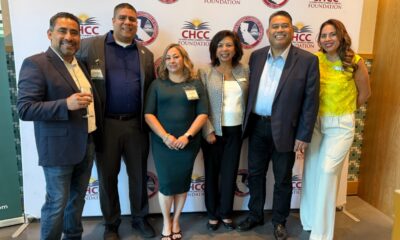
California Hispanic Chambers of Commerce Unveils: ‘Powering the Future’ Theme for 47th Annual Statewide Convention
-

 Community4 weeks ago
Four Candidates, Including Incumbent Barbara Lee, Qualify for Oakland Mayor’s Race
-

 Activism4 weeks ago
Oakland Post: Week of August 12 – 18, 2026
-

 Business4 weeks ago
From Blueprint to Breakthrough: Tackling Affordable Housing in Oakland
-

 Black History4 weeks ago
Oakland Observes Black August with Block Parties, Film Showings, Workshops
-

 Commentary4 weeks ago
COMMENTARY: Why Local School Tax Measure G1 Will Not Be on the November Ballot
