
Opinion
Op-Ed: GOP Stopped Being ‘Party of Lincoln’ Long Before Trump

Last week, House Speaker Paul Ryan denounced Donald Trump for playing footsie with David Duke and the Ku Klux Klan, saying Republicans are “the party of Lincoln.”
The speaker is to be applauded for denouncing Trump’s dog whistle racial politics, but he’s got his history wrong. Today’s Republican Party is a far remove from the party of Abraham Lincoln.
Lincoln fought to save the Union, and after the Confederate surrender he moved to reconcile warring states in order “to build a more perfect Union.”
Lincoln’s party introduced and ratified the 13th Amendment, legally ending slavery. Today, 20 percent of Republicans who voted for Donald Trump in South Carolina disapprove of Lincoln’s executive order freeing the slaves, according to a YouGov poll, and 70 percent want the Confederate flag to fly over the State House.
The Republican Party in Lincoln’s day introduced and ratified the 14th Amendment, guaranteeing equal protection under the law. Today’s Republican Party — the party that Trump, Ted Cruz and Marco Rubio are fighting so hard to lead — opposes any steps that actually promote equal protection or fairness.
They oppose affirmative action, economic set-asides and special consideration for programs for the needy. They oppose equal pay for women. They oppose equal rights for the LGBT community.
The Republican Party in Lincoln’s day introduced and ratified the 15th Amendment outlawing discrimination in voting on the basis of race, color or previous condition of servitude. Today’s Republican Party introduced literally hundreds of legislative bills in 49 states after 2011 to enforce new voting restrictions that would disproportionately impact minorities, women, workers, young people, seniors and the disabled.
Today’s Republican Party praises the conservatives on the Supreme Court who gutted the Voting Rights Act in Shelby County v. Holder, and won’t hold hearings or allow a vote on legislation to fix the damage done.
The Republican Party in Lincoln’s day built the national railroads, even as the Civil War raged. It created the land grant colleges, helping to open access to millions to higher education. Lincoln constantly called for “internal improvements” and championed the rights of free labor, as opposed to slave labor.
Today’s Republican Party has systematically favored tax cuts for the rich while slashing investments in areas vital to our future from infrastructure to education.
In Lincoln’s day, Democrats were the party of the South, the party of Jefferson Davis, leader of the Confederate revolt. Democrats were slaveholders. Democrats flocked to the Confederacy and opposed the Reconstruction after the Civil War.
Democrats became the party of segregation, opposing the civil rights movements. Orville Faubus, Lester Maddox, George Wallace and Bull Connor were all Democrats.
But after national leaders of the Democratic Party began to support civil rights for African-Americans, blacks began to switch parties.
When Lyndon Johnson worked with Dr. King and others to pass the Civil Rights Act, the Voting Rights Act and the war on poverty, blacks flooded the Democratic Party. And in 1964, Republicans nominated Barry Goldwater, who opposed the Civil Rights Act.
Strom Thurmond led Dixiecrats out of the Democratic Party. Richard Nixon’s Southern strategy sought to consolidate Republican gains in the South. Ronald Reagan opened his campaign in Philadelphia, Miss., infamous for the murders of civil rights workers Schwerner, Goodman and Chaney, talking about states’ rights. The heirs of Jefferson Davis joined the Republican Party en masse. And Democrats became the party of diversity, the heirs to Abraham Lincoln.
Trump’s dog whistle racial signaling is not new to today’s Republican Party. This is that party that fostered the nonsense about Barack Obama’s birth certificate.
It is the party that waged a campaign of relentless obstruction to everything Obama proposed as president. Trump shocks Republicans because he is cruder than most but also because he’s revealed their dodge.
Republicans have used racial signaling to get those whose jobs are being shipped abroad to embrace the party run by those who are shipping them abroad. It brings together the workers who are being shafted with the billionaires who are getting the gold.
Trump has used the same dog whistle racial signaling, but he has also challenged the lousy trade deals and the big money special interest politics. That has made him a hero to many angry blue-collar Republican voters but anathema to the Republican country club set.
But the reality is inescapable. Today’s Republican Party is no longer the party of Lincoln. It is the party of Jefferson Davis, the Southern-based, increasingly white party of states’ rights and racial division.


Activism
Oakland Post: Week of September 9 – 15, 2026
The printed Weekly Edition of the Oakland Post: Week of September 9 – 15, 2026

To enlarge your view of this issue, use the slider, magnifying glass icon or full page icon in the lower right corner of the browser window.
Activism
Oakland Post: Week of September 2 – 8, 2026
The printed Weekly Edition of the Oakland Post: Week of September 2 – 8, 2026
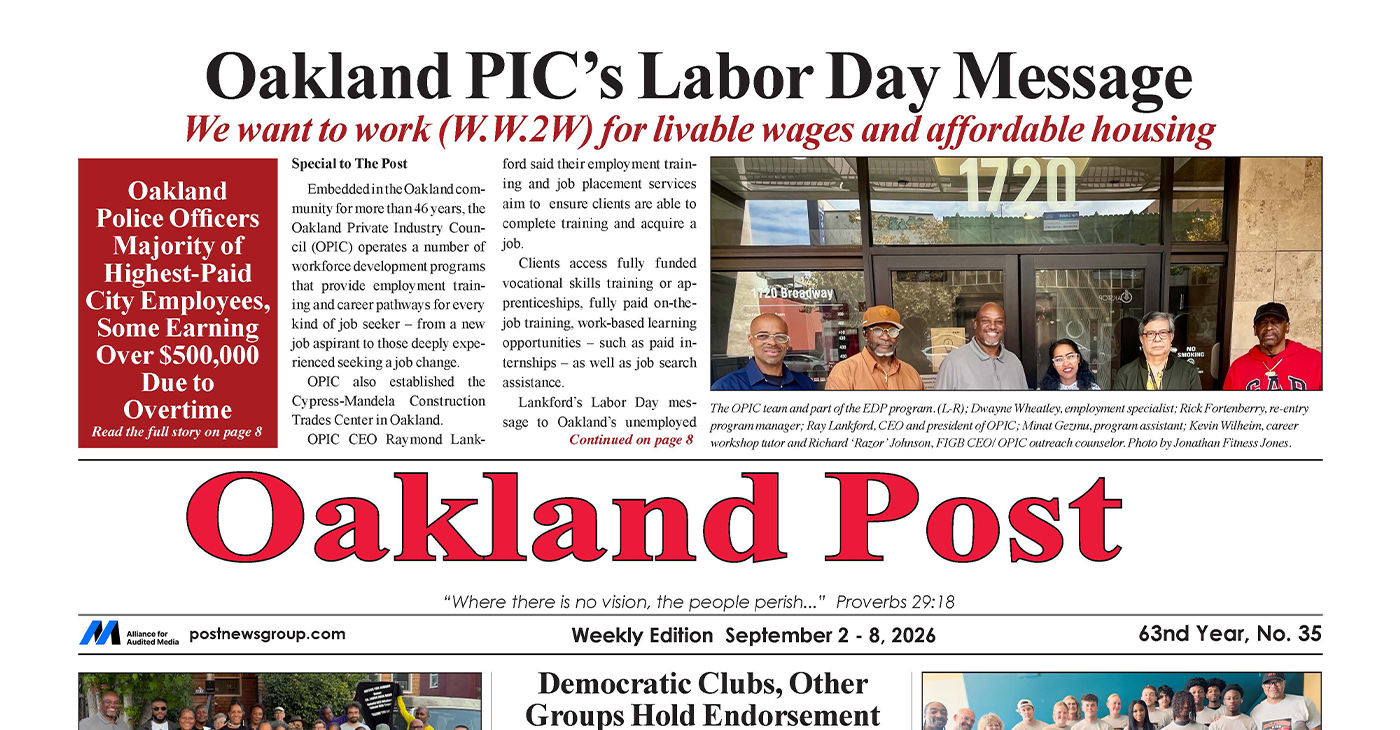
To enlarge your view of this issue, use the slider, magnifying glass icon or full page icon in the lower right corner of the browser window.
Activism
Oakland Post: Week of August 26 – September 1, 2026
The printed Weekly Edition of the Oakland Post: Week of August 26 – September 1, 2026
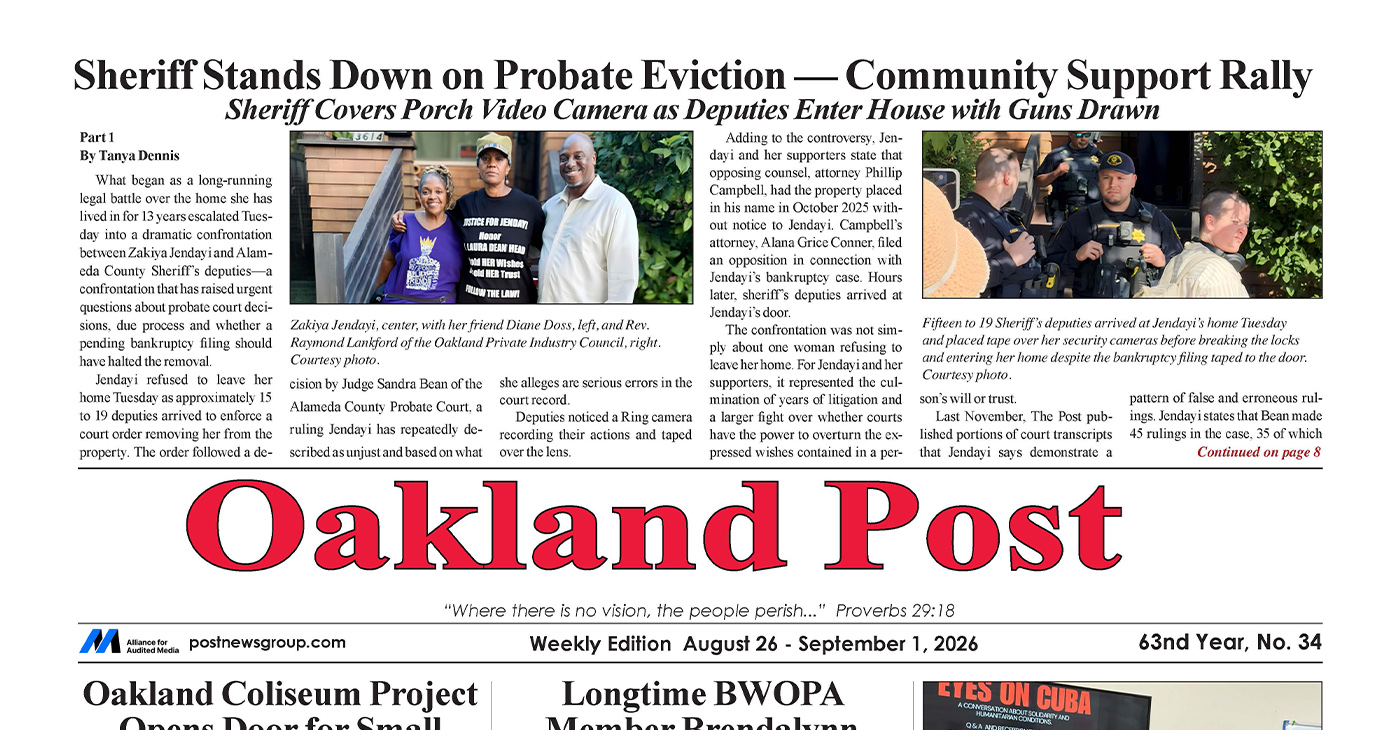
To enlarge your view of this issue, use the slider, magnifying glass icon or full page icon in the lower right corner of the browser window.


Port of Oakland, Army Corps Sign Historic Harbor Design Agreement

Democratic Clubs Interview Candidates for Oakland School Board

Nuna Phillips-McKee Celebrates 100 Years: ‘A Century of Faith, Family and God’s Amazing Grace!’

D.A. Ursula Jones Dickson: Terminix to Pay $3.15 Million Over Illegal Disposal of Pesticides, Customer Records

REPORT: Community Level Policy Is Impacting Homelessness and Drug Abuse in California
OPINION: AI Needs to Know Who Is the Boss
Goldi-Locs and Two (or Three) Bears in the Forest in California Hills

Election Watch 2026: 85% of Eligible Voters in California Are Registered

Don’t Let scammers Crash Your School Year

BOOK REVIEW — Curved Air: A Biography of Sickle Cell Anemia and the Quest to Cure the First Molecular Disease

California’s Legal Cannabis Market Hits $8 Billion as State Touts Progress on Fighting Drugs, Crime

Blacks and Latinos Clash Over LA’s Barrio Run; Mayor Karen Bass Calls for Dialogue Across Racial, Neighborhood Lines

Asm. Smallwood-Cuevas’s Bill Repealing ‘Racist’ CalWORKs ‘Man-in-the-House’ Rule Clears Legislature

Asm. Smallwood-Cuevas’s Bill Repealing ‘Racist’ CalWORKs ‘Man-in-the-House’ Rule Clears Legislature

‘Ready to See These Bills Become Law’: Sen. Weber’s Package of 15 Bills Advance to Gov. Newsom’s Desk

Department of Homeland Security Demands California Secretary of State Shirley N. Weber Scrub Voter Rolls

New Judge Could Decide if Karmelo Anthony Gets a New Trial

“The Power to See Threats Sooner”: Gov. Newsom, Safety Officials Showcase California’s Investments in Hi-Tech Wildfire Prevention

Alpha Kappa Alpha Sorority, Inc. Celebrates New North Atlantic Regional Director

California Sen. Padilla Joins Colleagues to Introduce Bill Imposing Term Limits on Supreme Court Justices

Less Affluent School Districts, Including Sacramento City, Face Threat of State Takeover

Car Wash Workers Cope with Lingering Impacts of ICE Raids

Oakland Post: Week of July 29 – August 4, 2026

How Oakland’s Courtsmith is Scaling its Business and Local Impact

ESSAY: California Can Close Its Colorectal Cancer Gap

Oakland Post: Week of August 5 – 11, 2026

As Part of Your Back-to- School Checklist, Vaccinate

Oakland ‘Port Serves as a Powerful Engine for Good Jobs and Economic Development

Gov. Newsom Signs New Affordable Housing Legislation

Gov. Newsom Announces $109.6 Million in Funding for 278 Supportive Homes in Bakersfield, Contra Costa, Sacramento and Fresno

The Conversation With Al McFarlane 6/23/26

Media Monday 6/22/26

LIVE! ASK ALMA! — TUES. 6.23.26 7PM EST

Car Buying Secrets: 4 Hidden Checks Before You Sign!

Is This 550 HP Charger Worth YOUR Money? AutoNetwork Review

Celebrating Juneteenth – Frederick Douglass on education and resistance

LIVE! — ASK ALMA! — TUES. 6.19.26 7PM EST

Hyundai Ioniq 5 Parking, Safety, and 360 View #shorts

2025 Ioniq 5 New Wiper & Powerful Performance! #shorts

Electric SUV Range: Is 259 Miles Enough? #shorts

EV Charging: How Fast Can You Charge an Electric Vehicle? #shorts

Biometric Cooling… Messaging Seats…Come on! 2025 Infiniti QX80 Autograph 4WD

Charged Up: Witness the Magic of a Fully Electric Car! #shorts

Range Rover Sport PHEV Included…: See What’s Inside This Luxury SUV! #shorts

Invisible Hood View: Perfect Parking with X-Ray Vision! #shorts
-
 Business4 weeks ago
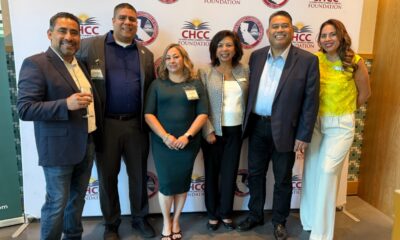
California Hispanic Chambers of Commerce Unveils: ‘Powering the Future’ Theme for 47th Annual Statewide Convention
-
 Community4 weeks ago
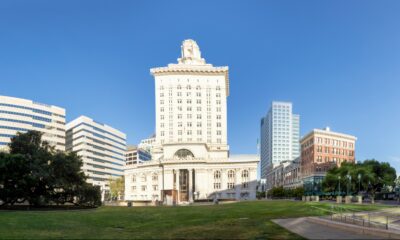
Four Candidates, Including Incumbent Barbara Lee, Qualify for Oakland Mayor’s Race
-
 Activism4 weeks ago
Oakland Post: Week of August 12 – 18, 2026
-
 Black History4 weeks ago
Oakland Observes Black August with Block Parties, Film Showings, Workshops
-

 Commentary4 weeks ago
COMMENTARY: Why Local School Tax Measure G1 Will Not Be on the November Ballot
-

 Commentary2 weeks ago
Standoff for Justice: Our Homes Are Worth Fighting For
-

 Business2 weeks ago
Gubernatorial Candidate Steve Hilton Blasts California New Tire Rules; Newsom Hits Back
-

 Activism2 weeks ago
Oakland Post: Week of August 26 – September 1, 2026
