
Economy
ON THE MONEY: Baby boomers have different desires in housing
WAVE NEWSPAPERS — Unlike just 15 years ago, many baby boomers are discovering that the large, high-end homes with their high-maintenance costs no longer fit their needs as they grow older. And younger people aren’t buying big houses, either.

By John L. Grace
Unlike just 15 years ago, many baby boomers are discovering that the large, high-end homes with their high-maintenance costs no longer fit their needs as they grow older.
And younger people aren’t buying big houses, either. It wasn’t that long ago when boomer retirees were rushing to buy or build elaborate, five or six-bedroom houses in warm climates, fueled in part by the easy credit of the real estate boom.
Many baby boomers poured millions into these spacious homes, planning to live out their golden years in houses with all the bells and whistles.
“Tastes — and access to credit — have shifted dramatically since the early 2000s. These days, buyers of all ages eschew the large, ornate houses built in those years in favor of smaller, more-modern looking alternatives, and prefer walkable areas to living miles from retail,” according to the Wall Street Journal, March 21.

The Journal opined that the problem is expected to worsen in the 2020s, as more baby boomers across the country advance into their 70s and 80s, the age group where people typically exit homeownership due to poor health or death. Boomers currently own 32 million homes and account for two out of five or 40% of the homeowners in the country.
Buyers have been led down the path of focusing on location, interest rates and inventory. The most important factor to take into consideration, however, is buying behavior based on age.
Thanks to the U.S. Census Bureau and Dent Research we can see that Americans tend to buy their first house at 31, their largest around 41 and sell those same homes at 79.
Born between 1946 and 1964, baby boomers turn anywhere from 55 to 73 this year. From 1980 to 2000 40% of all homes purchased in the U.S. were on lot sizes of a half acre to 10 acres, according to Dent Research. That is a 20-year period, where individual thinking boomers who were doing the same thing at the same time of the age group couldn’t live without their magnificent McMansions.
It stands to reason for this observer that current prices are a direct result of 76 million Americans coming into the equation. It didn’t matter whether the population was legal or illegal, legitimate or illegitimate.
With all of that demand for housing coming out of the woodwork, home prices must go up. On the other side of the equation, it becomes reasonable that when boomers who constitute 24% of the U.S. population go to heaven the supply and demand principles come back into play.
When 130 years of residential real estate remains on this earth after 76 million people go to heaven without those McMansions, you tell me where you think prices are headed.
From 1929-32 New York real estate declined 69%, wrote Zubin Jelveh in The New Republic in September 2009. That’s the same time that the stock market was off 89%, according to Yahoo Finance.
Jelveh went on to say, “A home owner who would have invested in a house on the eve of the Great Depression would not have recovered the full value of their investment until four decades later.”
If you were an adult in the early 1900s the average age of death was mid-50s, according to the U.S. Census Bureau. So you died with great regret long before prices fully recovered.
Neither of those events could ever happen again, right? Investors understand buy low, sell high. The same stock logic applies to all highly appreciated assets.
Savvy investors don’t let emotion dictate their behavior. Or you can be in the middle the pack or at the back of a herd of cows, where the view and the smell never changes.
John L. Grace is president of Investor’s Advantage Corp, a Los Angeles-area financial planning firm that has been helping investors manage wealth and prepare for a more prosperous future since 1979. His On the Money column runs monthly in The Wave.
This article originally appeared in the Wave Newspapers.













Business
OP-ED: Proposition 44 Would Put a Price on Trust
The danger in Proposition 44 is not only its 90 percent figure. It is that the meaning of “qualifying” spending will be worked out later. A clinic preparing a budget today may not know whether a navigator, health educator, transportation program, outreach worker, technology upgrade, or other patient-support service will be counted the way it expects. Yet the financial consequence of getting it wrong could be immediate.


Business
OP-ED: Proposition 40: It’s Time to Play Chess, Not Checkers
Proposition 40 would impose a one-time 5 percent tax on the wealth of Californians with more than $1 billion in assets. Most of that money would go toward health care, with the remainder supporting food assistance and education-related programs.


Economy
Poll: Becerra Widens His Lead Over Hilton; Californians Split on Wealth Tax
A new Public Policy Institute of California poll shows Democrat Xavier Becerra leads Republican Steve Hilton by 22 points in California’s governor’s race, with 60% of likely voters supporting Becerra compared to 38% for Hilton. The September survey also reveals Californians are closely divided on a proposed one-time tax on billionaires, with 52% of likely voters in favor of Proposition 40. Affordability issues are a major factor for voters. Read more to learn about the poll’s additional findings on voter sentiment.
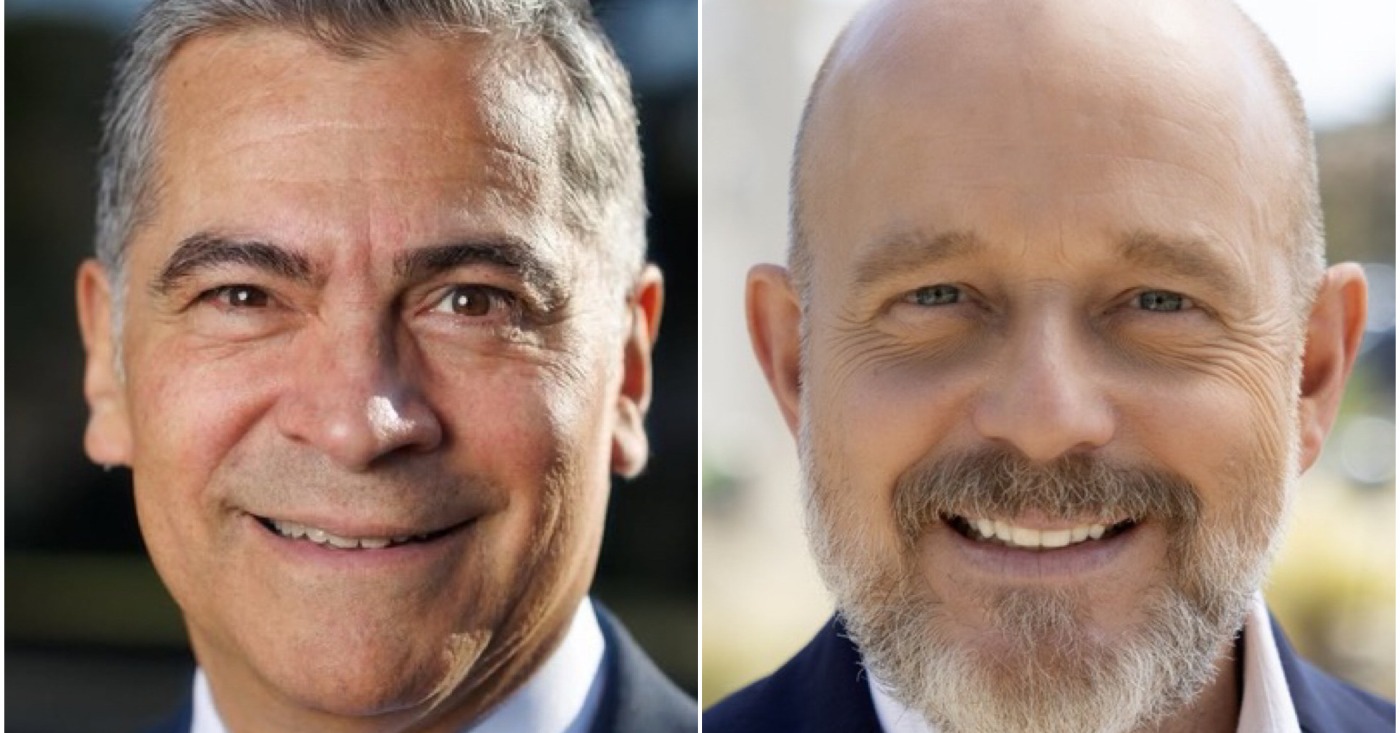
Democrat Xavier Becerra holds a 22-point lead over Republican Steve Hilton in California’s governor’s race, while voters remain closely divided over a proposed one-time tax on billionaires, according to a new Public Policy Institute of California poll.
The September PPIC survey found that 60% of likely voters support Becerra, compared with 38% for Hilton. His lead is actually narrower than it was in July, when he led Hilton 61% to 36%.
Becerra leads among independent voters, with 57% supporting him compared with 38% for Hilton. Party loyalty remains strong, with 93% of Democratic likely voters backing Becerra and 92% of Republicans supporting Hilton.
Hilton leads in the Central Valley, where 52% of likely voters support him compared with 46% for Becerra.
Affordability remains a major factor: 65% of likely voters say candidates’ plans to address cost-of-living issues are “very important” to their vote.
“Affordability continues to be top of mind for Californians when considering their choice for governor,” said Mark Baldassare, PPIC Statewide Survey director and Miller Chair in Public Policy.

The poll also found a narrow split over Proposition 40, a proposed one-time tax of up to 5% on taxpayers with assets exceeding $1 billion. Fifty-two percent of likely voters said they would vote yes, while 46% said they would vote no.
Support for the wealth tax varies sharply by party. Seventy-two percent of Democrats favor Proposition 40, compared with 46% of independents and 21% of Republicans.
Two competing measures also drew majority support. Fifty-one percent back Proposition 41, while 54% support Proposition 42, both of which could affect the wealth-tax proposal.
The findings come as Californians express broader frustration with the state’s political direction. Seventy-one percent of likely voters expect bad economic times in California over the next year.
“Californians are clearly grumpy and aren’t enamored with any particular political party or movement,” Baldassare said.
The survey interviewed 1,745 California adults, including 1,103 likely voters, from Sept. 4-10. The margin of error for likely voters is plus or minus 3.8 percentage points.




Oakland Post: Week of October 7 – 13, 2026

OP-ED: Proposition 44 Would Put a Price on Trust

OP-ED: Proposition 40: It’s Time to Play Chess, Not Checkers

Listening as a Lifeline: A Doula’s Witness to Black Maternal Health

New Protections for Ticket Buyers: Gov. Newsom Signs Assemblymember Isaac Bryan’s Bill

‘We Don’t Talk Trash — We Pick Up Trash!’

Zakiya Jendayi Arrested, Locked Out of Home by Sheriff’s Deputies

Oakland Post: Week of September 30 – October 6, 2026

Asm. Corey Jackson Announces Launch of 24-Hour Childcare in His District

IN MEMORIAM: The Rev. Leon “Sonny” Clark, Longtime Orange County Pastor and Community Leader, Dies at 72

Poll: Becerra Widens His Lead Over Hilton; Californians Split on Wealth Tax

From Historic Memories to New Possibilities: Oakland Celebrates Coliseum 60

County Office of Education Says OUSD Finances Are Getting Healthier, Materially Stronger

LIVE FREE Sunday Dinner Brings Faith, Fellowship and Civic Conversation to Oakland

Remembering Chauncey Bailey as Student Journalists Face Threats to Truth-Telling

Standoff for Justice: Our Homes Are Worth Fighting For

Oakland Post: Week of August 26 – September 1, 2026

Frontier Airlines’ Return to Oakland Airport Brings Flights, Jobs and Opportunity

Jackie Wright Champions Bay Area Stories, Filmmakers and Cultural Institutions

Gubernatorial Candidate Steve Hilton Blasts California New Tire Rules; Newsom Hits Back

Chef Sharon Lee Blends Culinary Excellence, Education and Empowerment

Misnamed ‘Parent’ PAC Seeks to Influence Oakland School Board Elections

Oakland Coliseum Project Opens Door for Small Businesses to Build Bigger

Big City Mayors Ask for “Yes” Vote on Housing Bond Measure; Conservatives Say “No”

Gov. Newsom’s Latest Appointees Include Sacramento Advocate for Formerly Incarcerated Students; State’s New Tech Chief

Oakland Post: Week of September 2 – 8, 2026

Longtime BWOPA Member Brendalyn Goodall Appointed to California Workforce Development Board

Gov. Newsom Signs Law Shielding Immigration Aid Workers From Doxing Threats

Secretary of State Shirley N. Weber Urges Californians to Vote Early as Voter ID Battle Intensifies

Oakland Post: Week of September 9 – 15, 2026

The Conversation With Al McFarlane 6/23/26

Media Monday 6/22/26

LIVE! ASK ALMA! — TUES. 6.23.26 7PM EST

Car Buying Secrets: 4 Hidden Checks Before You Sign!

Is This 550 HP Charger Worth YOUR Money? AutoNetwork Review

Celebrating Juneteenth – Frederick Douglass on education and resistance

LIVE! — ASK ALMA! — TUES. 6.19.26 7PM EST

Hyundai Ioniq 5 Parking, Safety, and 360 View #shorts

2025 Ioniq 5 New Wiper & Powerful Performance! #shorts

Electric SUV Range: Is 259 Miles Enough? #shorts

EV Charging: How Fast Can You Charge an Electric Vehicle? #shorts

Biometric Cooling… Messaging Seats…Come on! 2025 Infiniti QX80 Autograph 4WD

Charged Up: Witness the Magic of a Fully Electric Car! #shorts

Range Rover Sport PHEV Included…: See What’s Inside This Luxury SUV! #shorts

Invisible Hood View: Perfect Parking with X-Ray Vision! #shorts
-
 Community4 weeks ago
Misnamed ‘Parent’ PAC Seeks to Influence Oakland School Board Elections
-
 Activism4 weeks ago
Oakland Post: Week of September 9 – 15, 2026
-

 Community4 weeks ago
Richmond Tiny House Village Farm & Garden Set to Open Gates on Sept. 26
-

 Black History4 weeks ago
Latest Massacre in Haiti Reveals Cruelty U.S. Deportations
-

 Black History4 weeks ago
OPINION: Nolan Wells’ Death One of Several Signifying Racial Terror Lives on in U.S. South
-

 Business3 weeks ago
Mayor Lee Announces $1 Million Kaiser Permanente Grant for Pilot Program to Address Homelessness, Clean Up Public Spaces throughout Oakland
-
 Economy2 weeks ago
Poll: Becerra Widens His Lead Over Hilton; Californians Split on Wealth Tax
-
 Business2 weeks ago
County Office of Education Says OUSD Finances Are Getting Healthier, Materially Stronger
