Connect with us

Politics

Ohio House OKs Bill Banning Abortions After 1st Heartbeat

Published

on

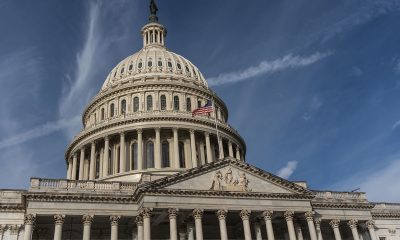
Ohio State Rep. Christina Hagan (Courtesy of HaganForOhio.com)

Ohio State Rep. Christina Hagan (Courtesy of HaganForOhio.com)

JULIE CARR SMYTH, AP Statehouse Correspondent

COLUMBUS, Ohio (AP) — A bill that would ban most abortions after the first detectable fetal heartbeat again cleared the state House on Wednesday following a startlingly emotional floor debate in which a veteran female lawmaker revealed she’d been raped and had an abortion and a male legislator shed tears as he recounted praying his stillborn child would take a breath.

Advocates now have the rest of the two-year session to lobby the bill’s opponents in the Senate.

The Republican-controlled House approved the bill 55-40 in its third vote on it in as many sessions. The legislation met its demise in the Senate two sessions ago and last session made it as far as the House floor and was voted down.

Proponents on Wednesday defended the bill as life-protecting, while opponents called it unconstitutional and heavy-handed.

Sponsoring Rep. Christina Hagan, a Uniontown Republican, set the tone for the debate by revealing in her opening remarks that her heartbeat had stopped repeatedly while she was being delivered and her mother might have given up hope but didn’t.

“This bill is very much about loving women and loving children and providing that expansion of rights to the unborn,” she said.

Rep. Stephanie Howse, a Cleveland Democrat, also had to compose herself while speaking as she urged colleagues to “love thy neighbor,” including women she said make decisions to have abortions “in love.”

For Rep. Teresa Fedor, a Toledo Democrat, the debate was progressing with one important voice missing: that of the rape victim.

Fedor, a champion of legislation against human trafficking, jotted down words such as “judge,” ”God!” ”shame” and “political ambition” from Wednesday’s debate and, when enough of them filled her paper, stood to speak.

“I heard all these stories that just fit your scenario, and I respect that, but you don’t respect my reason — my rape, my abortion,” she said. “And I guarantee you there are other women who should stand up with me and be courageous enough to speak that voice.”

She called the bill “fundamentally inhuman.”

After the vote, Fedor told several reporters she was “very young” when she was raped and had told “probably two people.”

“I’m in this political arena, you know, and you have to make a decision: How far are you willing to go to really represent?” she said. “And then, with something like this (bill), it just was time.”

The Associated Press generally doesn’t identify people who say they’re victims of sexual assaults unless they come forward publicly, as Fedor has done.

Several major anti-abortion groups, including Ohio Right to Life, have failed to support passage of the heartbeat bill, fearing it would prompt a losing challenge to the U.S. Supreme Court’s Roe v. Wade decision that would serve only to expand abortion rights.

Senate President Keith Faber, a Celina Republican, said he shared those concerns but intends to review the latest version of the bill and hold hearings.

“I’m still waiting for that legal scholar to come forward and say, ‘The heartbeat bill is constitutional,'” he said.

___

Associated Press reporter Ann Sanner contributed to this report.

Copyright 2015 The Associated Press. All rights reserved. This material may not be published, broadcast, rewritten or redistributed.

Activism

2025 in Review: Seven Questions for Assemblymember Lori Wilson — Advocate for Equity, the Environment, and More

Her rise has also included several historic firsts: she is the only Black woman ever appointed to lead the influential Assembly Transportation Committee, and the first freshman legislator elected Chair of the California Legislative Black Caucus. She has also been a vocal advocate for vulnerable communities, becoming the first California legislator to publicly discuss being the parent of a transgender child — an act of visibility that has helped advanced representation at a time when political tensions related to social issues and culture have intensified. 

Published

on

Assemblymember Lori D. Wilson (D-Suisun City). File photo.

By Edward Henderson, California Black Media 

Assemblymember Lori D. Wilson (D-Suisun City) joined the California Legislature in 2022 after making history as Solano County’s first Black female mayor, bringing with her a track record of fiscal discipline, community investment, and inclusive leadership.

She represents the state’s 11th Assembly District, which spans Solano County and portions of Contra Costa and Sacramento Counties.

Her rise has also included several historic firsts: she is the only Black woman ever appointed to lead the influential Assembly Transportation Committee, and the first freshman legislator elected Chair of the California Legislative Black Caucus. She has also been a vocal advocate for vulnerable communities, becoming the first California legislator to publicly discuss being the parent of a transgender child — an act of visibility that has helped advanced representation at a time when political tensions related to social issues and culture have intensified.

California Black Media spoke with Wilson about her successes and disappointments this year and her outlook for 2026.

What stands out as your most important achievement this year?

Getting SB 237 passed in the Assembly. I had the opportunity to co-lead a diverse workgroup of colleagues, spanning a wide range of ideological perspectives on environmental issues.

How did your leadership contribute to improving the lives of Black Californians this year?

The Black Caucus concentrated on the Road to Repair package and prioritized passing a crucial bill that remained incomplete during my time as chair, which establishes a process for identifying descendants of enslaved people for benefit eligibility.

What frustrated you the most this year?

The lack of progress made on getting Prop 4 funds allocated to socially disadvantaged farmers. This delay has real consequences. These farmers have been waiting for essential support that was promised. Watching the process stall, despite the clear need and clear intent of the voters, has been deeply frustrating and reinforces how much work remains to make our systems more responsive and equitable.

What inspired you the most this year?

The resilience of Californians persists despite the unprecedented attacks from the federal government. Watching people stay engaged, hopeful, and determined reminded me why this work matters and why we must continue to protect the rights of every community in our state.

What is one lesson you learned this year that will inform your decision-making next year?

As a legislator, I have the authority to demand answers to my questions — and accept nothing less. That clarity has strengthened my approach to oversight and accountability.

In one word, what is the biggest challenge Black Californians are facing currently?

Affordability and access to quality educational opportunities.

What is the goal you want to achieve most in 2026?

Advance my legislative agenda despite a complex budget environment. The needs across our communities are real, and even in a tight fiscal year, I’m committed to moving forward policies that strengthen safety, expand opportunity, and improve quality of life for the people I represent.

Continue Reading

Activism

2025 in Review: Seven Questions for Assemblymember Tina McKinnor, Champion of Reparations, Housing and Workers’ Rights

In 2025, McKinnor pushed forward legislation on renters’ protections, re-entry programs, reparations legislation, and efforts to support Inglewood Unified School District. She spoke with California Black Media about the past year and her work. Here are her responses.

Published

on

Assemblymember Tina McKinnor (D-Inglewood). File photo.

By Joe W. Bowers Jr., California Black Media 

Assemblymember Tina McKinnor (D-Inglewood) represents

California’s 61st Assembly District.

As a member of the California Legislative Black Caucus (CLBC),

McKinnor was elected in 2022. She chairs the Los Angeles County Legislative Delegation and leads the Assembly Public Employment and Retirement Committee. McKinnor also served as a civic engagement director, managed political campaigns, and worked as chief of staff for former Assemblymembers Steven Bradford and Autumn Burke.

In 2025, McKinnor pushed forward legislation on renters’ protections, re-entry programs, reparations legislation, and efforts to support Inglewood Unified School District. She spoke with California Black Media about the past year and her work. Here are her responses.

Looking back on 2025, what do you see as your biggest win?

Assembly Bill (AB) 628. If rent is $3,000, people should at least have a stove and a refrigerator. It’s ridiculous that people were renting without basic appliances.

I’m also proud that I was able to secure $8.4 million in the state budget for people coming home from incarceration. That includes the Homecoming Project, the menopause program for incarcerated women, and the Justice Leaders Program.

How did your leadership help make life better for Black Californians this year?

After the Eaton Fire, I pushed to get the same kind of support for affected areas that wealthier regions get after disasters.

I also did a lot of work building political power— establishing the Black Legacy PAC and California for All of Us PAC so we could support Black candidates and educate voters. We also called voters to make sure they understood Prop 50.

People need to understand this: there are only 12 Black legislators in the Capitol. Folks act like we can just walk in and pass reparations, but that’s not how it works.

What frustrated you most this year?

The governor did not have the political will to sign these bills: AB 57 and AB 62. They both passed overwhelmingly in the Assembly and the Senate. We did the work. The only person who didn’t have the political will to sign them was the governor.

The public needs to ask the governor why he didn’t sign the bills. We can’t keep letting people off the hook. He has to answer.

I also introduced AB 51 — the bill to eliminate interest payments on Inglewood Unified School District’s long-standing state loan — held in the Appropriations Committee. That was frustrating,

What inspired you most in 2025?

The civil rights trip to Alabama was life changing. We visited the Legacy Museum and the National Memorial for Peace and Justice. We took members of the Black, Latino, Jewish, and API caucuses with us. It changed all of us.

People aren’t always against us — they just don’t know our history.

What’s one lesson from 2025 that will shape how you approach decisions next year?

The legislative trip to Norway taught me that collaboration matters. Government, labor, and industry sit down together there. They don’t make villains. Everybody doesn’t get everything they want, but they solve problems.

What’s the biggest challenge facing Black Californians in one word?

Inequity. It shows up in housing, wealth, stress – all these things.

What’s the number one goal you want to accomplish in 2026?

Bringing back AB 57 and AB 62, and securing money for the Inglewood Unified loan interest forgiveness.

Continue Reading

Activism

2025 in Review: Seven Questions for Sen. Laura Richardson, Who Made Legislative History This Year

Before elected office, she served as a legislative staffer at the local, state, and federal levels and built a strong academic foundation, earning a political science degree from UCLA and an MBA from USC.

Published

on

Sen. Laura Richardson (D-San Pedro). File photo.

By Edward Henderson, California Black Media 

Elected in November 2024 to represent California’s 35th Senate District, Sen. Laura Richardson (D-San Pedro) brings decades of experience to her role.

Before elected office, she served as a legislative staffer at the local, state, and federal levels and built a strong academic foundation, earning a political science degree from UCLA and an MBA from USC.

Richardson says she remains deeply committed to empowering residents, strengthening neighborhoods, and supporting the local economy.

For example, SB 748, a bill she authored that Gov. Newsom signed into law this year, allows cities to use existing homelessness funds to clear unsafe RV encampments, and another measure aimed at expanding provider access for Medi-Cal patients.

California Black Media (CBM) spoke with Richardson about her successes and disappointments over the past year and her plans for 2026.

What stands out as your most important achievement this year?

Being number one in getting the most bills signed by a freshman senator. Our team and staff were able to effectively move legislation through committees in both the Senate and Assembly and gain the governor’s support.

How did your leadership contribute to improving the lives of Black Californians?

Securing overall agency support from the governor to begin the work of understanding and documenting descendants of slavery. The discussion around “40 acres and a mule” will be ongoing for many years, but moving forward with creating an agency—although not fully funded—was significant. They were baby steps, but they were steps.

What frustrated you the most this year?

The administration. Even though federal and state roles differ, California has its own values and priorities. When the federal government makes cuts that impact Californians, the state legislature feels the need to backfill to protect people. It was challenging and frustrating.

What inspired you the most this year?

SB 237, which I was a joint principal author on, inspired me. It dealt with fuel stability. Two refineries closed, and several others are barely hanging on. Even as we work toward zero emissions, we still need a certain amount of fuel. SB 237 opened up some of the fuel potential in Kern County, and there’s a pipeline from Kern County down to my district.

What is one lesson you learned this year that will inform your decision-making next year?

Engage the governor’s staff earlier. I’m going to push to involve the governor’s legislative staff sooner.

In one word, what is the biggest challenge Black Californians are facing right now?

Affordability. No matter how much you make, everything is more expensive—gas, groceries, insurance, mortgages. Costs keep rising while salaries don’t.

What is the goal you want to achieve most in 2026?

Creating a process for dealing with abandoned cemeteries.

The last piece—not specific to this year but building toward the future—is figuring out how people and businesses in the district and in California can participate in major events like the Olympics, FIFA, and the Super Bowl, all of which are taking place here.

Continue Reading

Subscribe to receive news and updates from the Oakland Post

* indicates required

CHECK OUT THE LATEST ISSUE OF THE OAKLAND POST

ADVERTISEMENT

WORK FROM HOME

Home-based business with potential monthly income of $10K+ per month. A proven training system and website provided to maximize business effectiveness. Perfect job to earn side and primary income. Contact Lynne for more details: Lynne4npusa@gmail.com 800-334-0540

Facebook

Trending

Politics

Ohio House OKs Bill Banning Abortions After 1st Heartbeat

Published

on

Ohio State Rep. Christina Hagan (Courtesy of HaganForOhio.com)

Ohio State Rep. Christina Hagan (Courtesy of HaganForOhio.com)

JULIE CARR SMYTH, AP Statehouse Correspondent

COLUMBUS, Ohio (AP) — A bill that would ban most abortions after the first detectable fetal heartbeat again cleared the state House on Wednesday following a startlingly emotional floor debate in which a veteran female lawmaker revealed she’d been raped and had an abortion and a male legislator shed tears as he recounted praying his stillborn child would take a breath.

Advocates now have the rest of the two-year session to lobby the bill’s opponents in the Senate.

The Republican-controlled House approved the bill 55-40 in its third vote on it in as many sessions. The legislation met its demise in the Senate two sessions ago and last session made it as far as the House floor and was voted down.

Proponents on Wednesday defended the bill as life-protecting, while opponents called it unconstitutional and heavy-handed.

Sponsoring Rep. Christina Hagan, a Uniontown Republican, set the tone for the debate by revealing in her opening remarks that her heartbeat had stopped repeatedly while she was being delivered and her mother might have given up hope but didn’t.

“This bill is very much about loving women and loving children and providing that expansion of rights to the unborn,” she said.

Rep. Stephanie Howse, a Cleveland Democrat, also had to compose herself while speaking as she urged colleagues to “love thy neighbor,” including women she said make decisions to have abortions “in love.”

For Rep. Teresa Fedor, a Toledo Democrat, the debate was progressing with one important voice missing: that of the rape victim.

Fedor, a champion of legislation against human trafficking, jotted down words such as “judge,” ”God!” ”shame” and “political ambition” from Wednesday’s debate and, when enough of them filled her paper, stood to speak.

“I heard all these stories that just fit your scenario, and I respect that, but you don’t respect my reason — my rape, my abortion,” she said. “And I guarantee you there are other women who should stand up with me and be courageous enough to speak that voice.”

She called the bill “fundamentally inhuman.”

After the vote, Fedor told several reporters she was “very young” when she was raped and had told “probably two people.”

“I’m in this political arena, you know, and you have to make a decision: How far are you willing to go to really represent?” she said. “And then, with something like this (bill), it just was time.”

The Associated Press generally doesn’t identify people who say they’re victims of sexual assaults unless they come forward publicly, as Fedor has done.

Several major anti-abortion groups, including Ohio Right to Life, have failed to support passage of the heartbeat bill, fearing it would prompt a losing challenge to the U.S. Supreme Court’s Roe v. Wade decision that would serve only to expand abortion rights.

Senate President Keith Faber, a Celina Republican, said he shared those concerns but intends to review the latest version of the bill and hold hearings.

“I’m still waiting for that legal scholar to come forward and say, ‘The heartbeat bill is constitutional,'” he said.

___

Associated Press reporter Ann Sanner contributed to this report.

Copyright 2015 The Associated Press. All rights reserved. This material may not be published, broadcast, rewritten or redistributed.

Activism

2025 in Review: Seven Questions for Assemblymember Lori Wilson — Advocate for Equity, the Environment, and More

Her rise has also included several historic firsts: she is the only Black woman ever appointed to lead the influential Assembly Transportation Committee, and the first freshman legislator elected Chair of the California Legislative Black Caucus. She has also been a vocal advocate for vulnerable communities, becoming the first California legislator to publicly discuss being the parent of a transgender child — an act of visibility that has helped advanced representation at a time when political tensions related to social issues and culture have intensified. 

Published

on

Assemblymember Lori D. Wilson (D-Suisun City). File photo.

By Edward Henderson, California Black Media 

Assemblymember Lori D. Wilson (D-Suisun City) joined the California Legislature in 2022 after making history as Solano County’s first Black female mayor, bringing with her a track record of fiscal discipline, community investment, and inclusive leadership.

She represents the state’s 11th Assembly District, which spans Solano County and portions of Contra Costa and Sacramento Counties.

Her rise has also included several historic firsts: she is the only Black woman ever appointed to lead the influential Assembly Transportation Committee, and the first freshman legislator elected Chair of the California Legislative Black Caucus. She has also been a vocal advocate for vulnerable communities, becoming the first California legislator to publicly discuss being the parent of a transgender child — an act of visibility that has helped advanced representation at a time when political tensions related to social issues and culture have intensified.

California Black Media spoke with Wilson about her successes and disappointments this year and her outlook for 2026.

What stands out as your most important achievement this year?

Getting SB 237 passed in the Assembly. I had the opportunity to co-lead a diverse workgroup of colleagues, spanning a wide range of ideological perspectives on environmental issues.

How did your leadership contribute to improving the lives of Black Californians this year?

The Black Caucus concentrated on the Road to Repair package and prioritized passing a crucial bill that remained incomplete during my time as chair, which establishes a process for identifying descendants of enslaved people for benefit eligibility.

What frustrated you the most this year?

The lack of progress made on getting Prop 4 funds allocated to socially disadvantaged farmers. This delay has real consequences. These farmers have been waiting for essential support that was promised. Watching the process stall, despite the clear need and clear intent of the voters, has been deeply frustrating and reinforces how much work remains to make our systems more responsive and equitable.

What inspired you the most this year?

The resilience of Californians persists despite the unprecedented attacks from the federal government. Watching people stay engaged, hopeful, and determined reminded me why this work matters and why we must continue to protect the rights of every community in our state.

What is one lesson you learned this year that will inform your decision-making next year?

As a legislator, I have the authority to demand answers to my questions — and accept nothing less. That clarity has strengthened my approach to oversight and accountability.

In one word, what is the biggest challenge Black Californians are facing currently?

Affordability and access to quality educational opportunities.

What is the goal you want to achieve most in 2026?

Advance my legislative agenda despite a complex budget environment. The needs across our communities are real, and even in a tight fiscal year, I’m committed to moving forward policies that strengthen safety, expand opportunity, and improve quality of life for the people I represent.

Continue Reading

Activism

2025 in Review: Seven Questions for Assemblymember Tina McKinnor, Champion of Reparations, Housing and Workers’ Rights

In 2025, McKinnor pushed forward legislation on renters’ protections, re-entry programs, reparations legislation, and efforts to support Inglewood Unified School District. She spoke with California Black Media about the past year and her work. Here are her responses.

Published

on

Assemblymember Tina McKinnor (D-Inglewood). File photo.

By Joe W. Bowers Jr., California Black Media 

Assemblymember Tina McKinnor (D-Inglewood) represents

California’s 61st Assembly District.

As a member of the California Legislative Black Caucus (CLBC),

McKinnor was elected in 2022. She chairs the Los Angeles County Legislative Delegation and leads the Assembly Public Employment and Retirement Committee. McKinnor also served as a civic engagement director, managed political campaigns, and worked as chief of staff for former Assemblymembers Steven Bradford and Autumn Burke.

In 2025, McKinnor pushed forward legislation on renters’ protections, re-entry programs, reparations legislation, and efforts to support Inglewood Unified School District. She spoke with California Black Media about the past year and her work. Here are her responses.

Looking back on 2025, what do you see as your biggest win?

Assembly Bill (AB) 628. If rent is $3,000, people should at least have a stove and a refrigerator. It’s ridiculous that people were renting without basic appliances.

I’m also proud that I was able to secure $8.4 million in the state budget for people coming home from incarceration. That includes the Homecoming Project, the menopause program for incarcerated women, and the Justice Leaders Program.

How did your leadership help make life better for Black Californians this year?

After the Eaton Fire, I pushed to get the same kind of support for affected areas that wealthier regions get after disasters.

I also did a lot of work building political power— establishing the Black Legacy PAC and California for All of Us PAC so we could support Black candidates and educate voters. We also called voters to make sure they understood Prop 50.

People need to understand this: there are only 12 Black legislators in the Capitol. Folks act like we can just walk in and pass reparations, but that’s not how it works.

What frustrated you most this year?

The governor did not have the political will to sign these bills: AB 57 and AB 62. They both passed overwhelmingly in the Assembly and the Senate. We did the work. The only person who didn’t have the political will to sign them was the governor.

The public needs to ask the governor why he didn’t sign the bills. We can’t keep letting people off the hook. He has to answer.

I also introduced AB 51 — the bill to eliminate interest payments on Inglewood Unified School District’s long-standing state loan — held in the Appropriations Committee. That was frustrating,

What inspired you most in 2025?

The civil rights trip to Alabama was life changing. We visited the Legacy Museum and the National Memorial for Peace and Justice. We took members of the Black, Latino, Jewish, and API caucuses with us. It changed all of us.

People aren’t always against us — they just don’t know our history.

What’s one lesson from 2025 that will shape how you approach decisions next year?

The legislative trip to Norway taught me that collaboration matters. Government, labor, and industry sit down together there. They don’t make villains. Everybody doesn’t get everything they want, but they solve problems.

What’s the biggest challenge facing Black Californians in one word?

Inequity. It shows up in housing, wealth, stress – all these things.

What’s the number one goal you want to accomplish in 2026?

Bringing back AB 57 and AB 62, and securing money for the Inglewood Unified loan interest forgiveness.

Continue Reading

Activism

2025 in Review: Seven Questions for Sen. Laura Richardson, Who Made Legislative History This Year

Before elected office, she served as a legislative staffer at the local, state, and federal levels and built a strong academic foundation, earning a political science degree from UCLA and an MBA from USC.

Published

on

Sen. Laura Richardson (D-San Pedro). File photo.

By Edward Henderson, California Black Media 

Elected in November 2024 to represent California’s 35th Senate District, Sen. Laura Richardson (D-San Pedro) brings decades of experience to her role.

Before elected office, she served as a legislative staffer at the local, state, and federal levels and built a strong academic foundation, earning a political science degree from UCLA and an MBA from USC.

Richardson says she remains deeply committed to empowering residents, strengthening neighborhoods, and supporting the local economy.

For example, SB 748, a bill she authored that Gov. Newsom signed into law this year, allows cities to use existing homelessness funds to clear unsafe RV encampments, and another measure aimed at expanding provider access for Medi-Cal patients.

California Black Media (CBM) spoke with Richardson about her successes and disappointments over the past year and her plans for 2026.

What stands out as your most important achievement this year?

Being number one in getting the most bills signed by a freshman senator. Our team and staff were able to effectively move legislation through committees in both the Senate and Assembly and gain the governor’s support.

How did your leadership contribute to improving the lives of Black Californians?

Securing overall agency support from the governor to begin the work of understanding and documenting descendants of slavery. The discussion around “40 acres and a mule” will be ongoing for many years, but moving forward with creating an agency—although not fully funded—was significant. They were baby steps, but they were steps.

What frustrated you the most this year?

The administration. Even though federal and state roles differ, California has its own values and priorities. When the federal government makes cuts that impact Californians, the state legislature feels the need to backfill to protect people. It was challenging and frustrating.

What inspired you the most this year?

SB 237, which I was a joint principal author on, inspired me. It dealt with fuel stability. Two refineries closed, and several others are barely hanging on. Even as we work toward zero emissions, we still need a certain amount of fuel. SB 237 opened up some of the fuel potential in Kern County, and there’s a pipeline from Kern County down to my district.

What is one lesson you learned this year that will inform your decision-making next year?

Engage the governor’s staff earlier. I’m going to push to involve the governor’s legislative staff sooner.

In one word, what is the biggest challenge Black Californians are facing right now?

Affordability. No matter how much you make, everything is more expensive—gas, groceries, insurance, mortgages. Costs keep rising while salaries don’t.

What is the goal you want to achieve most in 2026?

Creating a process for dealing with abandoned cemeteries.

The last piece—not specific to this year but building toward the future—is figuring out how people and businesses in the district and in California can participate in major events like the Olympics, FIFA, and the Super Bowl, all of which are taking place here.

Continue Reading

Trending

Copyright ©2021 Post News Group, Inc. All Rights Reserved.