
Housing
Oakland’s Rent Adjustment Program Hosts Hearing for Tenants of Uptown Apartments


The City’s Housing and Community Development Department’s Rent Adjustment Program recently sent out a notice of a hearing for tenants at Uptown Apartments, commonly known as Forest City, located in downtown Oakland at 600-601-500 William St., Tuesday, Aug. 28, 10 a.m., at 250 Frank Ogawa Plaza, Suite #5313 in Oakland.
The hearing, “Uptown Housing Workforce, LLC v. Tenants,” will deal with the landlord’s request that the apartments be declared exempt from the city’s rent law and eviction protections, although significant city funding was used to build the project, according to tenant activist James Vann.
A least one tenant has reported to the Post that her rent has been raised four times in the past year.
The Uptown Apartments complex, owned by Forest City, was a key part of former Mayor Jerry Brown’s plan to bring wealthier residents to Oakland. The Uptown development includes 665 apartments in a four-city-block site built in partnership with the city.
Recently, Forest City, an Ohio-based real estate investment firm, sold Uptown and the rest of its assets nationwide to Brookfield Asset Management for $11.4 billion including debt.
Brookfield, based in Toronto, is global alternative asset manager with about $285 billion of assets under management, focusing on real estate, renewable power, infrastructure and private equity.











Business
Gov. Gavin Newsom Signs Law Streamlining Affordable Housing Rules
The legislation builds on the governor’s efforts that have reversed decades of inaction on housing and homelessness — creating more homes and the largest reduction in unsheltered homelessness in more than 15 years.

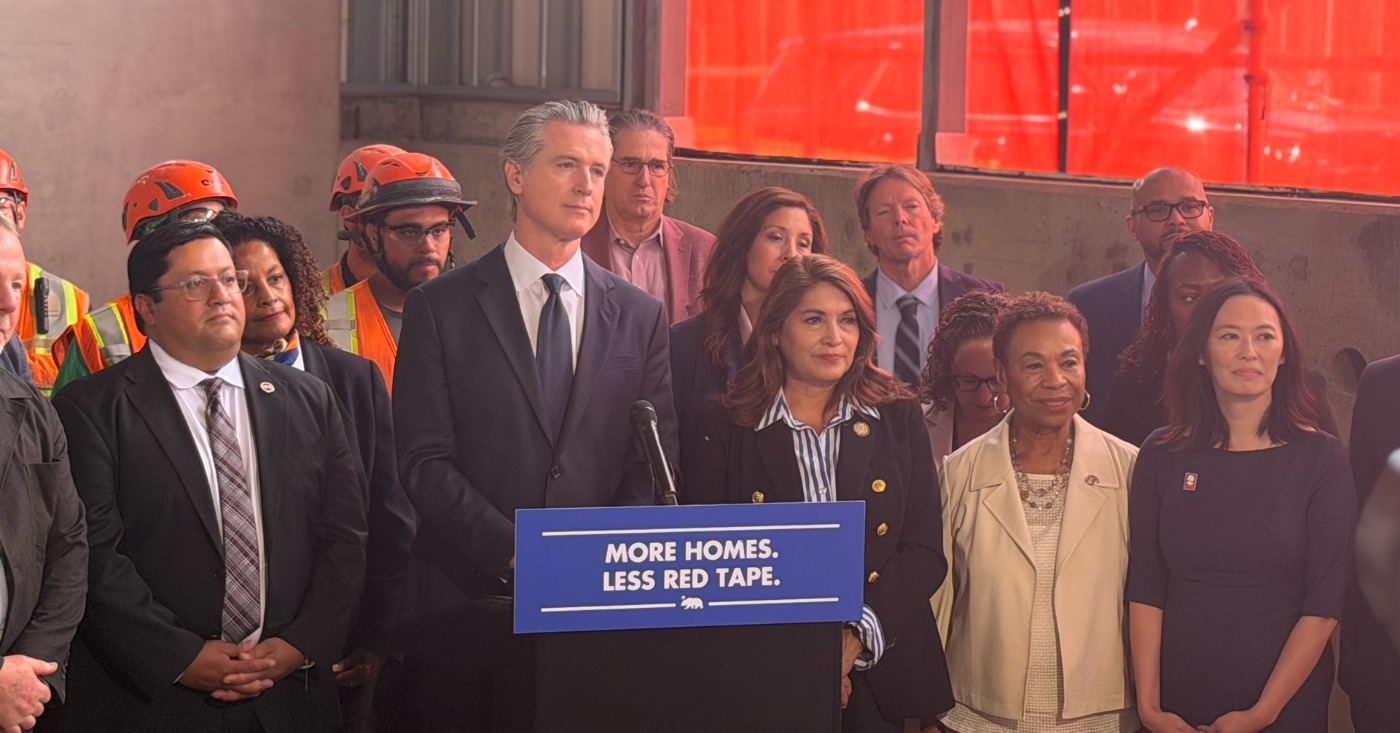
In Oakland on July 13, Gov. Newsom signed AB 179 — the state’s new housing budget trailer bill that cuts red tape, modernizes how California finances affordable housing, and lowers the cost of building a unit by up to $70,000.
The legislation builds on the governor’s efforts that have reversed decades of inaction on housing and homelessness — creating more homes and the largest reduction in unsheltered homelessness in more than 15 years.
Oakland is the first pro-housing city in the Bay Area, and it’s not slowing down. Oakland is cutting through bureaucracy, unlocking new financing, and clearing the path for more affordable homes to get built faster.
Special thanks to East Bay Asian Local Development Corporation (EBADC), State Assemblymember Sharon Quirk Silva, and California Housing and Community Development Director Gustavo Velasquez.

Business
The Part of Buying a Home That No Real Estate Show Ever Prepares You For
BLACKPRESSUSA NEWSWIRE — Uncover the hidden aspects of buying a home that are left out on TV. Equip yourself with the right tools to tackle real estate challenges today!

Buying a home involves far more than house tours and getting the keys, with hidden costs, emotional decisions, inspections, and unforeseen challenges shaping the journey behind the scenes.
You’ve saved up the money and are ready to join the homeowner’s club. Maybe you’ve spent hours watching YouTube videos, scrolling through listings, and following every real estate show that promises to reveal the secrets of buying the perfect home.
You feel prepared. You’ve seen the dramatic negotiations, the beautiful renovations, and the happy moments when buyers finally get the keys.
Except that the home-buying process might show up with its own script.
How Much Financial Preparation Happens Before House Hunting Begins?
Most real estate shows begin with the exciting part: touring homes, comparing features, and imagining life in a new space. What they often skip is the financial groundwork that happens long before buyers schedule their first showing.
Saving for a down payment is only one part of the process.
You also need to consider closing costs, inspection fees, moving expenses, property taxes, insurance, and the ongoing costs that come with maintaining a home. There is also the question of how much house you can comfortably afford, not just how much a lender is willing to approve.
Painting the full financial picture before starting the search can prevent the excitement of buying a home from turning into unexpected pressure later.
How Emotional Can the Search for the Right Home Become?
Finding a home isn’t just about square footage, location, or price. The search becomes tied to hopes about the future, from creating a place to raise a family to finally having a space that feels truly yours.
That emotional connection can make the process exciting, but it can also be stressful. A rejected offer, a home that sells before you can act, or a property that looks different in person than it did online can be disappointing after weeks of searching.
Taking a step back can help you make decisions based on more than the excitement of finding a place you love.
When Inspections Reveal What a Beautiful Home Can Hide
A home can look perfect during a showing. Fresh paint, modern finishes, and a well-kept yard can create an impressive first impression, but they don’t usually reveal what is happening behind the walls or underneath the surface.
An inspection is where the hidden details start coming into focus. You may discover issues such as:
- Foundation problems that could affect the home’s long-term stability
- Plumbing concerns that may lead to leaks or water damage
- Electrical issues that require repairs or upgrades
- Roofing problems that may create future maintenance costs
- Signs of moisture, mold, or damage that may not appear during a quick walkthrough
Some discoveries may be minor fixes, while others can affect negotiations or even change whether moving forward is the right decision.
Can Closing Costs Add Up Beyond the Price of Buying a Home?
The price of a home is the number everyone talks about, but you already know it isn’t the only expense buyers need to prepare for. By the time a property reaches the closing stage, several additional costs can affect the final amount needed to complete the purchase.
These expenses can include:
- Loan fees
- Appraisal costs
- Title services
- Morgage insurance
- Taxes
- Other charges tied to transferring ownership
Even buyers who carefully planned their budget can be surprised by how quickly these smaller expenses add up.
In addition, financial surprises aren’t the only things that can complicate the final steps of buying a home. Paperwork issues, financing changes, or unresolved details can also affect the timeline, which is why understanding what causes a delayed closing in real estate deals can help you prepare for unexpected setbacks.
Personalizing a New Home Becomes an Ongoing Project
You’ve finally got the keys to your new home and can’t wait to sit on the couch, relax, and enjoy the moment you’ve been working toward. This is where the TV shows end, with the happy homeowners walking through the door and celebrating the start of a new chapter.
The reality? The spending isn’t done yet.
Furniture, décor, repairs, and small upgrades often become part of the next phase after moving in. Some projects are planned before entering the home, while others only become obvious after spending time in the space and discovering what works and what doesn’t.
Those changes don’t need to happen all at once. The small improvements made over time are often what transform a house from a property into a place that reflects the people who live there.
FAQ
How Long Does the Home Buying Process Usually Take?
The timeline can vary depending on the market, financing, inspections, and other factors involved in the transaction. Some purchases move quickly, while others take longer because of unexpected issues that need to be resolved.
Why Does Location Matter So Much When Buying a Home?
A home’s location affects more than the view outside the window. Factors such as commute times, nearby amenities, future development, and neighborhood changes can all influence the experience of living there.
Is a Bigger Home Always a Better Investment?
Not necessarily. A larger property may offer more space, but it can also come with higher maintenance costs, taxes, and upkeep responsibilities. The best choice depends on whether the home fits the buyer’s lifestyle and financial goals.
What Happens After You Move Into Your New Home?
The first months of homeownership often involve adjusting to new responsibilities, learning the property’s needs, and making gradual improvements. The process of turning a house into a comfortable home continues well beyond moving day.
The Real Home Buying Journey Goes Beyond the Big Reveal
Buying a home comes with exciting moments, but the journey involves much more than picking a favorite property and getting the keys. Financial planning, unexpected challenges, and the small decisions along the way all shape the experience. The parts that rarely make it onto real estate shows are often the ones that prepare buyers the most.
Keep tabs on our website for more homeowner stories, lifestyle insights, and news from around the country.
Black History
COMMENTARY: Property Is Power! Why the Dream Booker T. Washington Preached in 1905 Still Matters Today
MICHIGAN CHRONICLE — Booker T. Washington’s philosophy on Black economic progress, articulated over a century ago, remains relevant today. He argued that true freedom for Black Americans, then only 40 years removed from emancipation, depended on economic ownership, not just political rights.
The national conversation about Black economic progress has long been defined by access. We measure advancement through educational attainment, professional achievement, political representation, and civic participation, and rightly so. Each represents a victory over barriers that once seemed permanent. Yet beneath those visible markers of progress lies a quieter question, one that has shaped the American economy since its founding. Who owns the assets that appreciate while everyone else is working? More than a century ago, Booker T. Washington believed he knew the answer; his insight was not merely about economics; it was about power, it was about permanence. And it remains strikingly relevant in an era when conversations about racial equity often emphasize representation while giving far less attention to ownership.
In 1905, America was only forty years removed from emancipation, but freedom remained profoundly incomplete for millions of Black Americans across the South; voting rights were being systematically stripped away. Jim Crow laws had become entrenched; lynching was used to terrorize Black communities, and economic opportunity was intentionally constrained through law, custom, and violence. Against that backdrop, Booker T. Washington traveled the country delivering a message that many found controversial not because he rejected political rights, but because he argued that political freedom, standing alone, could not secure lasting independence. Economic ownership, he believed, was the indispensable foundation upon which genuine freedom would rest.

George Washington’s philosophy is often misunderstood as accommodation or political retreat. It was neither. It was an argument about sequence. “It is at the bottom of life we must begin, and not at the top,” he told audiences, insisting that no people could sustain political influence without first establishing an economic foundation. He worried that Black Americans, understandably eager to secure civil and political rights after centuries of oppression, might overlook the enduring power of ownership. In one of his most remarkable observations, he lamented that “… a seat in Congress or the State Legislature was more sought than real estate or industrial skill.” More than 120 years later, that sentence still carries unusual force. America continues to debate representation with great intensity yet often pays comparatively little attention to the question Washington believed would ultimately determine whether that representation translated into lasting prosperity.
Washington was not dismissing politics; he understood the importance of the ballot box as well as anyone of his era. His point was subtler: political influence without an economic foundation is inherently fragile; laws can change, administrations come and go, courts reverse precedent, majorities shift. But families who own productive assets possess something that is less vulnerable to the changing winds of politics; they possess leverage.
By 1903, speaking before the Brooklyn Institute in New York, Washington expanded this argument even further. Reflecting on the American founding, he observed that one of the nation’s defining aspirations had been to secure “the most complete guarantee of the safety of life and property.” The pairing of those words was deliberate to Washington; liberty and property were inseparable. A society that protected freedom while leaving large segments of its population without meaningful opportunities to own productive assets had fulfilled only part of its democratic promise.
That observation speaks directly to the present moment.
Today’s conversations about racial inequality often focus on disparities in income, educational attainment or employment. Those discussions are essential, but they sometimes obscure a more fundamental distinction: the difference between earning and owning. Income provides stability and ownership creates permanence. Wages finance today’s expenses but appreciating assets finance tomorrow’s opportunities. The American economy has always rewarded ownership more generously than labor because assets compound while wages are spent. That is why the story of wealth in America is, at its core, a story about property.
Washington understood this intuitively long before economists could measure it. Throughout his speeches across Alabama, Georgia, Mississippi, Virginia, Tennessee, the Carolinas and major Northern cities including New York, Boston, Philadelphia and Chicago, he returned repeatedly to the same themes. He urged Black families to purchase homes rather than remain lifelong tenants. He encouraged Black farmers to own the land they cultivated rather than simply work it; he promoted saving capital, mastering trade, building businesses, and establishing institutions rooted in ownership rather than dependence. No race, he argued, could achieve lasting independence while remaining economically dependent on others.
To Washington, land was never simply acreage it represented security, leverage, education, citizenship and inheritance. A farm was not valuable merely because it produced crops. It could finance a child’s future, provide collateral for investment, create stability during economic hardships and become an asset passed from one generation to the next. Likewise, a home represented far more than shelter. It symbolized permanence, civic participation and confidence in the future of a community.
Modern research has largely confirmed what Washington understood through observation: for most American families, homeownership remains the single largest source of household wealth. Equity accumulated over decades finances higher education, entrepreneurship, retirement, and intergenerational transfers of wealth. Property becomes capital, and capital creates choices that wages alone rarely can.
This reality carries particular significance for Black America because the wealth gap has always been, in important respects, an ownership gap. The Black middle class has never been more educated or professionally accomplished than it is today. Black Americans lead major corporations, serve in Congress and on federal courts, teach at leading universities and build successful businesses across nearly every sector of the economy. These achievements deserve recognition; they represent extraordinary progress, yet the racial wealth gap remains considerably wider than the income gap, a reminder that educational success and professional advancement, while essential, do not automatically produce wealth.
The explanation is neither mysterious nor accidental: wealth accumulates primarily through appreciating assets. Families who own homes, businesses, commercial real estate, and investment portfolios generally experience compounding gains across generations. Families excluded from those opportunities often begin each generation from a similar starting point, regardless of improvements in income. Ownership changes the trajectory because ownership allows time to work on behalf of the owner.
This is why the next chapter of Black economic progress should not abandon the pursuit of equal opportunity but rather expand it. Access remains indispensable; strong schools, fair lending, civil rights protections, political participation, and equal treatment under the law remain foundational commitments of a democratic society, but access alone has never guaranteed wealth ownership has.
Perhaps that is Booker T. Washington’s most enduring lesson. He challenged a generation emerging from slavery to think beyond immediate survival and toward permanent economic citizenship. More than a century later, the challenge is different, but the principle remains remarkably similar. The question is no longer whether Black Americans can enter institutions that once excluded them. It is whether they are building ownership within the economy.
That is the philosophy behind Property is Power! It is not merely a slogan about real estate. It is a broader argument about how durable wealth is created, preserved and transferred. It recognizes that governments change, policies evolve and markets fluctuate, but families who own appreciating assets possess something that extends beyond a single election cycle or economic moment. They possess leverage, stability and the ability to transfer opportunities to the next generation.
Booker T. Washington understood that freedom without ownership remained incomplete more than a century later; his observation still challenges us. If the twentieth century expanded access, perhaps the defining work of the twenty-first century is to expand ownership. History suggests that while access may open the door, ownership builds the house and gives future generations the keys.
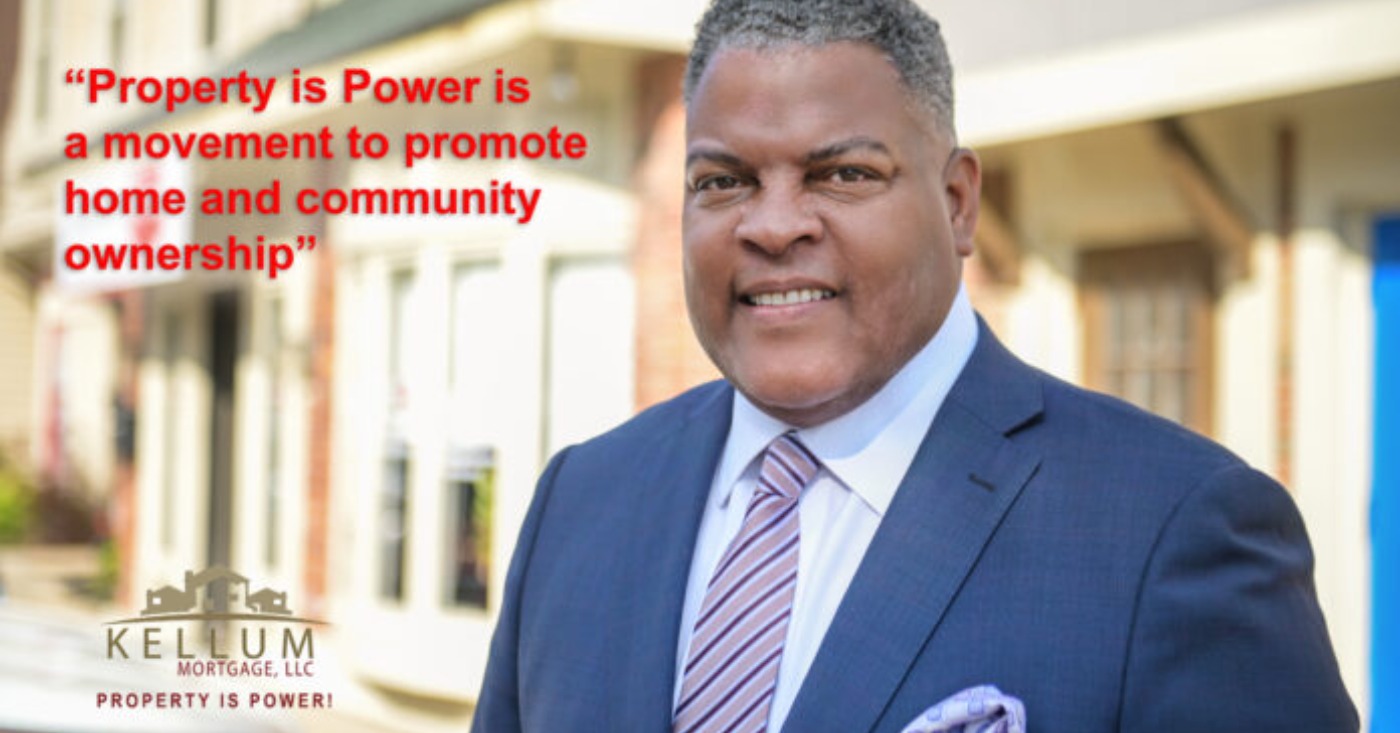
Property is Power! is a movement to promote home and community ownership. Studies indicate homeownership leads to higher graduation rates, family wealth, and community involvement.
Based on reporting by Michigan Chronicle.

WORK FROM HOME
Home-based business with potential monthly income of $10K+ per month. A proven training system and website provided to maximize business effectiveness. Perfect job to earn side and primary income. Contact Lynne for more details: Lynne4npusa@gmail.com 800-334-0540


Oakland Post: Week of July 22 – 28, 2026

Fed Court to Decide Landmark First Amendment Case

Jordan Walker Leads Call for More Black Youth in Baseball

How Black WNBA Players Became Collateral Damage in the Caitlin Clark Culture War

NAACP Announces $20m Voter Registration Drive at National Convention in Chicago

Starting This Summer, California Car Buyers Can Get an Instant $3500 Off the Cost of Electric Vehicles

Surveillance Pricing Fight: State Senate Debates Bill Banning Retailers from Using AI to Set Prices Based on a Buyer’s Profile

Oakland Children’s Hospital Workers and Patients Rally for Pediatric Medical Care

Opinion: When Politicians Start Sanitizing One Chapter of History, They’re Coming After The Whole Book

Beyond Politics: California Legislators Across Party Lines Celebrate Lori Wilson at 50

NPRC to Meet with California Attorney General’s Office on to Urge Guardianship Reform

Mount Zion MBC, Church of Jesus Christ of Latter-day Saints Partner to Bring 29,000 Meals to Alameda County

Councilmember Houston Helps Deter Trend to Award Contracts to Suburban Companies

Rep. Garamendi, House Democrats Demand Trump Administration Abandon Illegal Plans to Dismantle Civil Rights, Special Ed Offices

Council Gives Approval for $125 Million Oakland Coliseum Sale to AASEG
Oakland Children’s Hospital Workers and Patients Rally for Pediatric Medical Care
Mount Zion MBC, Church of Jesus Christ of Latter-day Saints Partner to Bring 29,000 Meals to Alameda County
Surveillance Pricing Fight: State Senate Debates Bill Banning Retailers from Using AI to Set Prices Based on a Buyer’s Profile

Gov. Gavin Newsom Signs Law Streamlining Affordable Housing Rules

Saving Black Mothers Starts Outside the Hospital

IN MEMORIAM: Oakland Dance Legend Reginald Ray-Savage, 67

Oakland Celebrates $125 Million Coliseum Sale
Starting This Summer, California Car Buyers Can Get an Instant $3500 Off the Cost of Electric Vehicles

NPRC Heads to Washington to Elevate Adult Guardianship Reform at National Whistleblower Summit


Agricultural Engineer Effie Gant Plans Bay Area Farmers Market Initiative

The Part of Buying a Home That No Real Estate Show Ever Prepares You For

Oakland Post: Week of June 17 – 23, 2026

Oakland Post: Week of July 1 – 7, 2026

NCBW-OBAC Champions Black Women Entrepreneurs at Business en Blaque Expo

The Conversation With Al McFarlane 6/23/26

Media Monday 6/22/26

LIVE! ASK ALMA! — TUES. 6.23.26 7PM EST

Car Buying Secrets: 4 Hidden Checks Before You Sign!

Is This 550 HP Charger Worth YOUR Money? AutoNetwork Review

Celebrating Juneteenth – Frederick Douglass on education and resistance

LIVE! — ASK ALMA! — TUES. 6.19.26 7PM EST

Hyundai Ioniq 5 Parking, Safety, and 360 View #shorts

2025 Ioniq 5 New Wiper & Powerful Performance! #shorts

Electric SUV Range: Is 259 Miles Enough? #shorts

EV Charging: How Fast Can You Charge an Electric Vehicle? #shorts

Biometric Cooling… Messaging Seats…Come on! 2025 Infiniti QX80 Autograph 4WD

Charged Up: Witness the Magic of a Fully Electric Car! #shorts

Range Rover Sport PHEV Included…: See What’s Inside This Luxury SUV! #shorts

Invisible Hood View: Perfect Parking with X-Ray Vision! #shorts
-
 Business2 days ago
Oakland Children’s Hospital Workers and Patients Rally for Pediatric Medical Care
-
 Business2 days ago
Mount Zion MBC, Church of Jesus Christ of Latter-day Saints Partner to Bring 29,000 Meals to Alameda County
-
 Business2 days ago
Surveillance Pricing Fight: State Senate Debates Bill Banning Retailers from Using AI to Set Prices Based on a Buyer’s Profile
-
 Business4 days ago
Gov. Gavin Newsom Signs Law Streamlining Affordable Housing Rules
-
 Black History6 days ago
Saving Black Mothers Starts Outside the Hospital
-
 Black History1 week ago
Oakland Celebrates $125 Million Coliseum Sale
-
 Business2 days ago
Starting This Summer, California Car Buyers Can Get an Instant $3500 Off the Cost of Electric Vehicles
-
 Community1 week ago
NPRC Heads to Washington to Elevate Adult Guardianship Reform at National Whistleblower Summit
