
Bay Area
Oakland Students Learn to Foster Solidarity Through Multiracial Leadership Organization
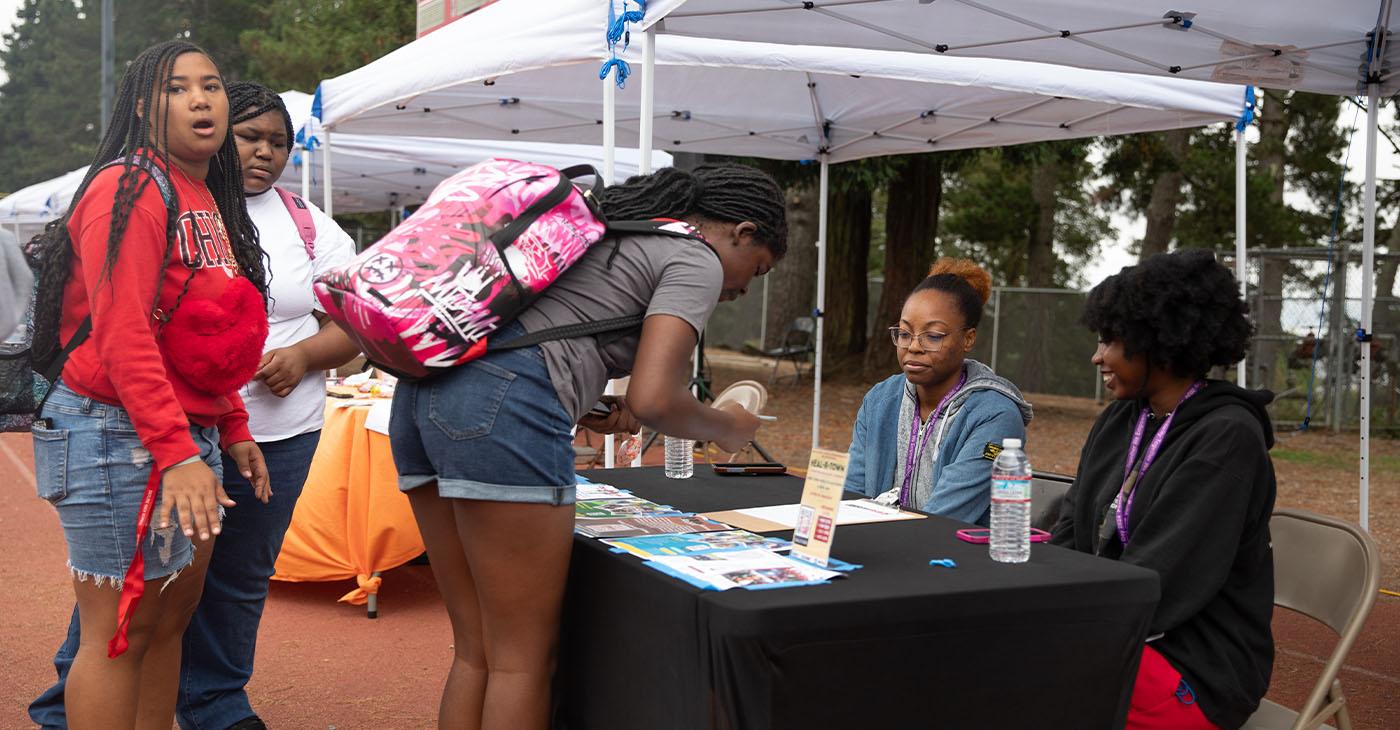
For over 25 years, an Oakland leadership organization has worked to foster multiracial relationships amongst students, where historically, there has been division. Youth Together was created by Raquel Jimenez, a Latino history teacher at Castlemont High School, who noticed tension between Black and Latino students. Through a coalition of other Oakland-based organizations, Youth Together was established to provide resources to students and give them skills to build community with other racial groups.

By Magaly Muñoz
For over 25 years, an Oakland leadership organization has worked to foster multiracial relationships amongst students, where historically, there has been division.
Youth Together was created by Raquel Jimenez, a Latino history teacher at Castlemont High School, who noticed tension between Black and Latino students. Through a coalition of other Oakland-based organizations, Youth Together was established to provide resources to students and give them skills to build community with other racial groups.
Student members of Youth Together told the Post that the reason they joined the organization was to build skills around social justice and connect with people they otherwise wouldn’t have met.
One student, Oli, said the group helped her to grow confidence in speaking with new people and to learn more about the history of racial issues in Oakland, which she wishes teachers did more of to include in their curriculum.
Lena, another student who attends Skyline High School with Oli, said the groups at school are typically divided by race because “students fall into stereotypes”. She explained that kids would put her in a “stereotypical Asian” persona but once they got to know her, they started treating her differently.
Berlin, a student Youth Together member, shared that he transferred to three different schools because of racial tensions with other students. He said other groups attempted to start problems with him because he didn’t come from the same background as them.
Lena said people would be more open to being friends with other races if they were taught about them more frequently in school.
“It’s really important to understand different ethnicities and their backgrounds and struggles that they’ve went through,” Lena said.
Asian, Latino and Black students make up the biggest racial groups in Oakland Unified School District. Latino students in particular make up over half of the student population with almost 24,000 kids in the 2022-23 school year.
The Youth Together students shared that over the years more white students have started attending their schools and the diversity is no longer what it used to be. They also said the teachers do not reflect the student body diversity.
Oli said although there are student fights at Skyline, she doesn’t feel that they are racially motivated. But she claims that most of the racial tensions actually come from teachers who express negative rhetoric to students during their lessons, especially in history classes.
Through these conversations about race and social justice, the students are better prepared to speak to their peers at an annual event called Unity Day.
Unity Day was hosted at Skyline and Oakland High School at the very beginning of the school year. Kids participated in activities and group discussions about diversity and the ongoing disparities in their education.
The Youth Together team said they looked forward to having these talks with students and to connecting them with others.
Lead organizer Seanna said she wants Unity Day to bring folks together and undo the years of division that Oakland schools have experienced. Her two high school aged brothers, who are also members of Youth Together, have told her that tensions run higher now than they did when she was in high school several years ago.
Seanna wants the cycle of tension and detachment among different racial groups to end, both in school and in the city. She said people felt more united and like a community when she was growing up, but that doesn’t feel like the case anymore.
If Unity Day is what the school and larger community need in order to get along, she hopes the idea continues and expands until things start to come together again.
“It just takes one person to want to keep fighting, to inspire other people to keep fighting, and that’s the domino effect I would love to see. Maybe that change that we all crave for will come,” Seanna said.












Activism
Oakland Post: Week of September 23 – 29, 2026
The printed Weekly Edition of the Oakland Post: Week of September 23 – 29, 2026

To enlarge your view of this issue, use the slider, magnifying glass icon or full page icon in the lower right corner of the browser window.
Activism
Oakland Post: Week of September 16 – 22, 2026
The printed Weekly Edition of the Oakland Post: Week of September 16 – 22, 2026

To enlarge your view of this issue, use the slider, magnifying glass icon or full page icon in the lower right corner of the browser window.
Activism
Oakland Post: Week of September 9 – 15, 2026
The printed Weekly Edition of the Oakland Post: Week of September 9 – 15, 2026

To enlarge your view of this issue, use the slider, magnifying glass icon or full page icon in the lower right corner of the browser window.


Asm. Corey Jackson Announces Launch of 24-Hour Childcare in His District

IN MEMORIAM: The Rev. Leon “Sonny” Clark, Longtime Orange County Pastor and Community Leader, Dies at 72

Poll: Becerra Widens His Lead Over Hilton; Californians Split on Wealth Tax

From Historic Memories to New Possibilities: Oakland Celebrates Coliseum 60

County Office of Education Says OUSD Finances Are Getting Healthier, Materially Stronger

LIVE FREE Sunday Dinner Brings Faith, Fellowship and Civic Conversation to Oakland

Remembering Chauncey Bailey as Student Journalists Face Threats to Truth-Telling

BLACspace Cooperative Invites Bay Area to Experience Oakland’s Black Cultural Ecosystem Through a BLAC Map Tour + Party

In Wake of Death on Doorstep, Williams Chapel Baptist Church Calls for Better Care, Funding for Unhoused

Oakland Centenarian Nuna McKee Honored!

Caribbean Nations Produce Action Plan Calling for UK Reparations Over Slavery

Oakland Post: Week of September 23 – 29, 2026

Doulas Are Helping Black California Moms Navigate Pregnancy–Even as High Mortality Rates Persist

Newsom Signs Addictive Social Media Law to Protect Kids

On Your November Ballot: Prop 38 Would Allocate $8.4 Billion to Immunology and Immunotherapy Funding

Standoff for Justice: Our Homes Are Worth Fighting For

Oakland Post: Week of August 26 – September 1, 2026

Frontier Airlines’ Return to Oakland Airport Brings Flights, Jobs and Opportunity

Gubernatorial Candidate Steve Hilton Blasts California New Tire Rules; Newsom Hits Back

Chef Sharon Lee Blends Culinary Excellence, Education and Empowerment

Jackie Wright Champions Bay Area Stories, Filmmakers and Cultural Institutions

Big City Mayors Ask for “Yes” Vote on Housing Bond Measure; Conservatives Say “No”

Oakland Coliseum Project Opens Door for Small Businesses to Build Bigger

Gov. Newsom’s Latest Appointees Include Sacramento Advocate for Formerly Incarcerated Students; State’s New Tech Chief

Misnamed ‘Parent’ PAC Seeks to Influence Oakland School Board Elections

Longtime BWOPA Member Brendalyn Goodall Appointed to California Workforce Development Board

Gov. Newsom Signs Law Shielding Immigration Aid Workers From Doxing Threats

Secretary of State Shirley N. Weber Urges Californians to Vote Early as Voter ID Battle Intensifies

From Palestine to Oakland: Seeds for Liberation Examines Shared Struggles for Freedom

IN MEMORIAM: Dolly Parton Dead at 80 — How She Built a Legacy of Love and Earned Her Place in Black Culture

The Conversation With Al McFarlane 6/23/26

Media Monday 6/22/26

LIVE! ASK ALMA! — TUES. 6.23.26 7PM EST

Car Buying Secrets: 4 Hidden Checks Before You Sign!

Is This 550 HP Charger Worth YOUR Money? AutoNetwork Review

Celebrating Juneteenth – Frederick Douglass on education and resistance

LIVE! — ASK ALMA! — TUES. 6.19.26 7PM EST

Hyundai Ioniq 5 Parking, Safety, and 360 View #shorts

2025 Ioniq 5 New Wiper & Powerful Performance! #shorts

Electric SUV Range: Is 259 Miles Enough? #shorts

EV Charging: How Fast Can You Charge an Electric Vehicle? #shorts

Biometric Cooling… Messaging Seats…Come on! 2025 Infiniti QX80 Autograph 4WD

Charged Up: Witness the Magic of a Fully Electric Car! #shorts

Range Rover Sport PHEV Included…: See What’s Inside This Luxury SUV! #shorts

Invisible Hood View: Perfect Parking with X-Ray Vision! #shorts
-
 Community2 weeks ago
Misnamed ‘Parent’ PAC Seeks to Influence Oakland School Board Elections
-

 Activism3 weeks ago
Oakland Post: Week of September 2 – 8, 2026
-

 Community2 weeks ago
Richmond Tiny House Village Farm & Garden Set to Open Gates on Sept. 26
-

 Black History2 weeks ago
Latest Massacre in Haiti Reveals Cruelty U.S. Deportations
-

 Black History2 weeks ago
OPINION: Nolan Wells’ Death One of Several Signifying Racial Terror Lives on in U.S. South
-

 Activism2 weeks ago
Oakland Post: Week of September 9 – 15, 2026
-

 Community2 weeks ago
Democratic Clubs Interview Candidates for Oakland School Board
-
 Featured2 weeks ago
‘Ready to See These Bills Become Law’: Sen. Weber’s Package of 15 Bills Advance to Gov. Newsom’s Desk
