
Commentary
Newly Elected Democratic County Judges Introduce Major New Bail Reform Changes
NNPA NEWSWIRE — “…backlash resulted in Harris County voters showing up to the polls and sending those judges packing, allowing a new crop of Democratic judges to take up the issue of bail reform in a swift and more progressive manner after being sworn in on January 1.”

By Jeffrey L. Boney, NNPA Newswire Political Analyst
There is an old saying that “elections have consequences” and in Harris County, Texas, that saying has new meaning.
This past November, Democrats swept every single race in Harris County during the midterm elections, turning the county completely blue. Prior to the midterm elections, one of the most controversial and highly charged issues at the county level involved bail reform.
There was heavy pushback against bail reform in Harris County, mostly from the Republican judges who had served on the bench for years, which caused backlash amongst many activists and community leaders. That backlash resulted in Harris County voters showing up to the polls and sending those judges packing, allowing a new crop of Democratic judges to take up the issue of bail reform in a swift and more progressive manner after being sworn in on January 1.
This new slate of 15 Democratic county judges recently held a major press conference at the Barbara Jordan-Mickey Leland School of Public Affairs building located at Texas Southern University, along with Harris County Criminal Court at Law Judge Darrell Jordan, who has been on the bench since 2017 and who was the first judge to implement bail reform locally, and many other key county elected officials such as new County Judge Lina Hidalgo, and other activists and community leaders, to unveil significant revisions to Harris County’s current bail system.

Jordan announced the passage of Local Rule 9.1, which is a new bail rule that was drafted by the judges, with significant input from Harris County Sheriff Ed Gonzalez, Harris County District Attorney Kim Ogg, as well as from the lawyers who represent the indigent defendants that have been impacted by Harris County’s unconstitutional bail system.
The county contingent believes this change will finally bring effective bail reform to Harris County, and they plan to present this adopted new bail reform change to a federal judge to request it be implemented immediately in order to settle the civil rights lawsuit that has been filed against Harris County. According to county officials, Harris County has spent roughly $9 million in public funds on three outside private law firms to defend itself against the 2016 lawsuit that brought by two civil rights groups and a local law firm on behalf of indigent defendants who could not pay the necessary money to be released from jail.
“We want to settle this within the first 30 days of the new judges taking office,” said Jordan. “I am pleased that we were able to collaborate to ensure we came up with a rule that was in line with national best practices and something feasible for all parties to carry out. Due to the pending lawsuit we have to request to operate under our new rule. This will be a joint motion from the plaintiffs, DA, Sheriff, and the judges. It is our plan to have this up in running in the next 35 days.”
Under the new bail reform changes, 85 percent of individuals who are arrested on misdemeanor offenses will automatically qualify for release on no-cash bonds, according to county officials.
There are some offenses, for which there are absolutely no exceptions. Those who are not eligible to benefit from the new bail reform rules changes include individuals who have violated bond conditions in an open case, have been charged with domestic violence, have violated a protective order and are facing repeated drunk driving offenses.
Under the proposed new changes, defendants will appear before a magistrate or judge within 48 hours, at which time they may also qualify for a personal recognizance bond.
“This is a history making moment for civil rights not only in Harris County but for the U.S., because as the third-largest county in America, which is larger than 26 states, what we do here will be watched by all and can be emulated or replicated by all,” Jordan continued. “This is significant because what this also means is that no one will be in jail because they cannot afford to get out.”
Back in 2017, Chief U.S. District Judge Lee H. Rosenthal of the U.S. District Court for the Southern District of Texas handed down a historic 193-page decision, finding that the Harris County money bail system was unconstitutional and ordered Harris County to stop keeping people who had been arrested on misdemeanor charges in jail because they could not pay bail.
In her ruling, Judge Rosenthal highlighted statistics that revealed that 40 percent of the people who had been arrested on misdemeanor charges in Harris County had been arrested and jailed until their cases were resolved, and wrote in her ruling: “Harris County’s policy is to detain indigent misdemeanor defendants before trial, violating equal protection rights against wealth-based discrimination and violating due process protections against pretrial detention.”
She also directly cited an amicus brief in her ruling that was filed by the NAACP Legal Defense Fund (LDF) and Harris County Precinct One Commissioner Rodney Ellis, stating: “An amicus filing by Harris County Commissioner Rodney Ellis and the NAACP Legal Defense and Educational Fund notes that African Americans make up 18 percent of Harris County’s adult population but 48 percent of the Harris County Jail’s adult population. A 2011 study found that in Harris County, 70 percent of White misdemeanor defendants obtain early pretrial release from detention, but only 52 percent of Latino misdemeanor defendants and 45 percent of African American misdemeanor defendants do so. The defendants did not dispute this data.”
This is huge news for many Black, Latino, poor and disadvantaged Harris County residents, who have fallen victim to this law.
Commissioner Ellis believes the new rule changes enacted by the newly elected Harris County Criminal Court judges, who have only been in office for less than a month, demonstrates a clear commitment to upholding the Constitution and finally settling the bail lawsuit in Harris County.
“For too long in Harris County, money has determined whether a person languishes behind bars, separated from their family and denied due process because they cannot afford bail for nonviolent misdemeanors, while others — even those charged with violent crimes — are able to walk free if they can put up the cash,” said Commissioner Ellis. “This is an overdue first step toward leveling a two-tiered justice system, where access to justice, liberty and due process has been based on how much money a person has in their pocket instead of their guaranteed constitutional rights. Harris County will no longer be the largest county in the nation to violate the Constitution with its misdemeanor bail procedures. Instead, Harris County now has an opportunity to take the lead in implementing a holistic pretrial system for misdemeanor cases that upholds the Constitution, safeguards due process and protects our communities.”
Tarsha Jackson, who serves as the director of the Texas Organizing Project’s Right2Justice campaign, released a statement on the bail reform plan unveiled by Harris County, saying:
“Elections have consequences, and this is why TOP devoted so many resources to elections to build the progressive infrastructure that made this bail plan possible. When we launched TOP’s Right2Justice campaign in 2015 after Sandra Bland died in a jail cell in Waller County, one of our priorities was to end the money bail system that kept Ms. Bland behind bars simply because she couldn’t afford the $5,000 bond. The plan offered this week is a monumental start, but there’s still work to be done. We look forward on continuing to work with our elected officials and the community to take on bail reform for felony charges. Money should never be the deciding factor whether a person is released from jail or stays locked up.”
Judge Rosenthal’s ruling served as a severe blow to Harris County, and the results of the midterm elections seemingly delivered the knockout punch needed to reform the bail system, which is a major part of the overall criminal justice system, in Harris County.
As a result of these new proposed bail reform changes, it appears that other Texas counties that have bail systems that mirror that of Harris County’s unconstitutional bail system could finally see changes coming their way real soon as well. Time will tell.
In the meantime, the National Newspaper Publishers Association will continue to monitor the issue as it unfolds, particularly during the current Texas Legislative Session, where state legislators could effectively pass comprehensive bail reform legislation that would legally force the rest of the state of Texas to transform their current bail systems to do what is right and fair for all Texas residents. The results in Texas could bode well for other states across the country.
Jeffrey Boney is a political analyst for the NNPA Newswire and BlackPressUSA.com and the associate editor for the Houston Forward Times newspaper. Jeffrey is an award-winning journalist, dynamic, international speaker, experienced entrepreneur, business development strategist and founder and CEO of the Texas Business Alliance Follow Jeffrey on Twitter @realtalkjunkies.









Commentary
OPINION: The Philippines Isn’t Foreign When Your Family Still Lives There
Americans complain about inflation. Filipinos complain about surviving. That’s not a knock on America. It’s a reminder that for millions of Filipino Americans, the Philippines isn’t some faraway place we visit on vacation. It’s where our parents were born. Where our cousins still


Americans complain about inflation.
Filipinos complain about surviving.
That’s not a knock on America. It’s a reminder that for millions of Filipino Americans, the Philippines isn’t some faraway place we visit on vacation. It’s where our parents were born. Where our cousins still live. Where grandparents are buried. Where every phone call home can begin with, “We’re okay,” or, just as easily, “We need help.”
The Bay Area is home to one of the nation’s largest Filipino communities. California alone has nearly two million Filipinos—roughly half of all Filipino Americans in the United States.
Every year, Filipino Americans send an estimated $17 billion from the United States to the Philippines. Those remittances account for roughly a tenth of the Philippine economy. One wire transfer may keep children in school, put food on the table, pay hospital bills, or help elderly parents make it another month.
That’s why Filipino Americans were paying attention to President Ferdinand Marcos Jr.’s State of the Nation Address this week.
They were listening for justice.
They were listening for Lyle Prijoles.
Prijoles, a 40-year-old Filipino American from Hayward, was killed on April 19 during a Philippine military operation in Negros Occidental. Also killed was Kai Sorem, a 26-year-old activist from Seattle.
The Armed Forces of the Philippines say those killed were connected to the Communist Party’s New People’s Army.
Their families say otherwise.
Human-rights advocates describe Prijoles and Sorem as labor organizers and peaceful activists working alongside sugar workers struggling under crushing poverty. Prijoles had traveled repeatedly to the Philippines since 2006, documenting conditions in Negros and advocating for farm workers whose lives rarely improve no matter who occupies the presidential palace in Manila.
Those conflicting stories are exactly why members of Congress, led by Rep. Pramila Jayapal (D-WA-7), have called for an independent investigation.
After all, two American citizens are dead.
If an ally’s military kills Americans under disputed circumstances, shouldn’t we want to know exactly what happened?
Yet the story barely made news in the United States.
Perhaps because it’s inconvenient.
It’s inconvenient for Manila – and Washington.
Strategic allies aren’t supposed to kill American citizens.
The Philippines isn’t just another country.
It’s family.
President Marcos had bigger issues on his mind this week.
China’s growing aggression in the West Philippine Sea dominated much of the speech. Marcos rightly rejected racist insults aimed at Filipinos and insisted his country would not surrender its sovereignty.
“We are not racists. We are not liars,” Marcos declared. “We are respectful, and we are dignified. We are Filipinos, and we do not yield.”
Strong words.
But patriotism isn’t measured only by how forcefully a government stands up to China.
It’s also measured by how a government treats its own people.
The Philippines inherited many of America’s democratic institutions. Even the “State of the Nation Address” echoes our “State of the Union.” Congress. Elections. Constitutional government. We exported the architecture of democracy.
What we couldn’t export was accountability.
That’s why activists like Lyle Prijoles believed ordinary workers deserved better.
And that’s why his death matters.
About the Author
Emil Guillermo is an award-winning journalist, political analyst and comic monologist. See him on his microtalk show on YouTube at @emilamok1.

Commentary
Asm. McKinnor’s Bill Banning Drones Above Outdoor Entertainment Events Awaits Senate Decision
POST NEWS GROUP —
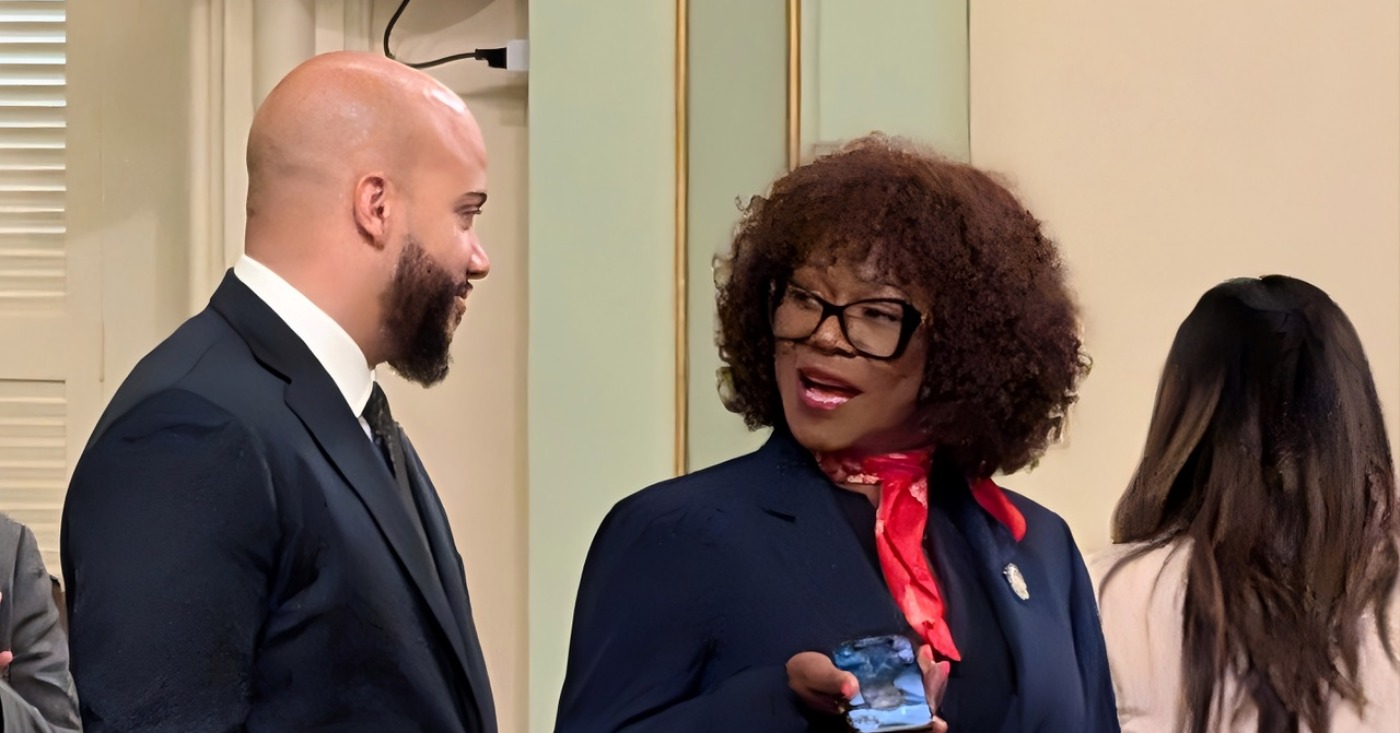
Photo Caption:
Assemblymember Tina McKinnor (D-Inglewood) is advancing legislation that would prohibit unauthorized drones from operating within 400 feet of large outdoor ticketed entertainment events.
Assembly Bill 2113, titled “Aviation: Unmanned Aircraft Systems: Ticketed Entertainment Events,” passed the Senate Public Safety Committee on June 30 by a 6-0 vote and was referred to the Senate Appropriations Committee.
The Assembly approved the bill May 18 on a bipartisan 72-0 vote, with support from 54 Democrats and 18 Republicans. AB 2113 must clear the Senate Appropriations Committee before the Legislature’s Aug. 31 deadline to remain active.
“Large, ticketed entertainment events such as concerts, festivals, and sporting events bring thousands of people into dense confined spaces, including many venues in my (California State Assembly District 61),” McKinnor said. “Unauthorized drones and activities in these settings pose a real risk to public safety and can interfere with event operations and emergency response.”
McKinnor said the legislation would establish a state-level restriction that local authorities could enforce while preserving the federal government’s authority over U.S. airspace.
McKinnor also said, “While the Federal Government regulates airspace, local law enforcement is responsible for protecting public safety on the ground, yet current law does not provide a clear state-level prohibition addressing this issue.
Under the bill, the restriction would apply to outdoor professional music, sporting, or performing arts events held at venues with a capacity of at least 1,000 people.
Each violation would be an infraction punishable by a $500 fine.
McKinnor, who chairs the Assembly Select Committee on the 2028 Olympic and Paralympic Games and the Los Angeles County Legislative Delegation, said the restrictions are particularly important as California prepares to host major international gatherings, including the 2028 Olympic and Paralympic Games.
“AB 2113 protects the intellectual property rights of artists and addresses a growing public safety gap at public events due to the growing use of drones across California,” said McKinnor, a member of the California Legislative Black Caucus (CLBC).
The Association for Uncrewed Vehicle Systems International (AUVSI) has raised concerns about the bill’s potential effects on legitimate commercial drone operations.
Mason Sisk, the group’s director of government affairs, said AB 2113 would address the “disruptive use of drones,” including operations that infringe on artists’ intellectual property. However, the trade association has asked McKinnor’s office to add an exemption for commercial flights providing services such as cargo transportation and infrastructure inspections.
“Our issue with the bill really has to do with the distinction between the ‘loitering and hovering’ and the disruptive use of drones. So, I would ask that the committee not support the bill until we have language figured out,” Sisk told the Senate Committee on Public Safety.
To address concerns raised during the legislative process, McKinnor accepted amendments that narrowed the bill’s scope and exempted certain authorized operations. The prohibition would not apply to venue-approved flights, venue employees conducting official business, regulated utility employees performing official duties, or emergency personnel responding to an incident.
“My office and the sponsor have been engaging with stakeholders throughout this process, and I want to thank everyone for their patience and collaboration,” McKinnor said. “We remain committed to working in good faith as the bill moves forward to address concerns of stakeholders.”
Black History
George Cook: The Inventor Who Made Fishing Smarter
George Cook was a Black American inventor from Louisville, Kentucky. He was born in 1863, during a time when Black Americans faced unfair laws, limited opportunities, and many barriers to education, jobs, and recognition. Even with these challenges, he became known for his intell
George Cook was a Black American inventor from Louisville, Kentucky. He was born in 1863, during a time when Black Americans faced unfair laws, limited opportunities, and many barriers to education, jobs, and recognition. Even with these challenges, he became known for his intelligence, honesty, and ability to think in practical ways. Some records say he worked as a cook for Buffalo Bill Cody and later as a chef on a private dining car for the Louisville and Nashville Railroad. He was even known by the nickname “Honest Mister Cook.”
As with many Black American inventors and scientists of that era, there is little biographical information about Mr. Cook.
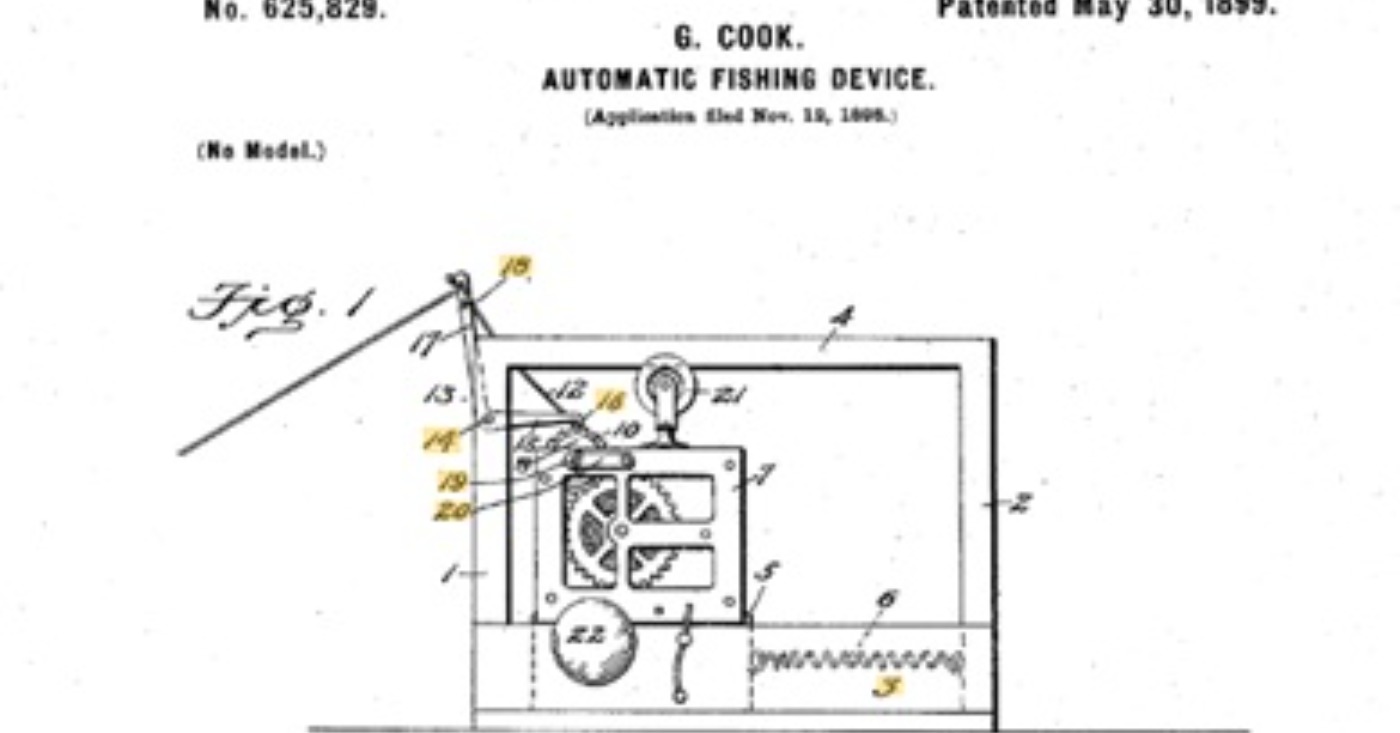
Cook’s most famous invention was the Automatic Fishing Device. He received U.S. Patent No. 625,829 for it on May 30, 1899. His patent shows that he was not just someone with an idea, but someone who made it happen.
So, what did the Automatic Fishing Device do? Imagine fishing with a line in the water. Usually, you have to watch carefully and pull the line at just the right moment when a fish bites. Cook wanted to make that process easier. His device was designed to react when a fish pulled on the line. The tension from the fish would trigger a lever. That lever would release a spring-loaded part of the device, causing it to move quickly and help pull in the line. The device also had an alarm gong that would ring to let the fisher know something was happening.
This invention was important because it used simple mechanical ideas in a clever way. Springs, levers, rails, and alarms were not new by themselves, but Cook combined them to solve a real problem. His device showed how inventors often take familiar parts and arrange them in a new way to make life easier.
Cook looked at fishing and asked, “How can this be improved?” Then, he created a device that could respond automatically when a fish tugged on the line. His invention let fishermen relax instead of watching the line for hours, trusting the alarm to alert them.
Cook may not be as famous as some inventors, but his Automatic Fishing Device shows that creativity and innovation can be applied anywhere. His legacy lives on as part of the larger story of Black innovation in America.

WORK FROM HOME
Home-based business with potential monthly income of $10K+ per month. A proven training system and website provided to maximize business effectiveness. Perfect job to earn side and primary income. Contact Lynne for more details: Lynne4npusa@gmail.com 800-334-0540


Car Wash Workers Cope with Lingering Impacts of ICE Raids

Misty Copeland Shapes Ballet’s Tomorrow

As Part of Your Back-to- School Checklist, Vaccinate

As Part of Your Back-to- School Checklist, Vaccinate

Congresswoman Simon Demands Investigation into Trump’s Abuse of Emergency Powers for Coal Export Terminal in West Oakland

OPINION: The Philippines Isn’t Foreign When Your Family Still Lives There

Asm. McKinnor’s Bill Banning Drones Above Outdoor Entertainment Events Awaits Senate Decision

California Sen. Padilla Joins Colleagues to Introduce Bill Imposing Term Limits on Supreme Court Justices

Department of Homeland Security Demands California Secretary of State Shirley N. Weber Scrub Voter Rolls

George Cook: The Inventor Who Made Fishing Smarter

Gov. Newsom Announces $109.6 Million in Funding for 278 Supportive Homes in Bakersfield, Contra Costa, Sacramento and Fresno

Rep. Kamlager Dove Demands Care, Justice for Man Shot by ICE

“The Power to See Threats Sooner”: Gov. Newsom, Safety Officials Showcase California’s Investments in Hi-Tech Wildfire Prevention

100 Black Wings’ Team Oakland Youth Athletes Heading to Taiwan for 2026 International Children’s Games

Oakland ‘Port Serves as a Powerful Engine for Good Jobs and Economic Development
Department of Homeland Security Demands California Secretary of State Shirley N. Weber Scrub Voter Rolls

Oakland Children’s Hospital Workers and Patients Rally for Pediatric Medical Care

New Judge Could Decide if Karmelo Anthony Gets a New Trial
“The Power to See Threats Sooner”: Gov. Newsom, Safety Officials Showcase California’s Investments in Hi-Tech Wildfire Prevention

Alpha Kappa Alpha Sorority, Inc. Celebrates New North Atlantic Regional Director

Surveillance Pricing Fight: State Senate Debates Bill Banning Retailers from Using AI to Set Prices Based on a Buyer’s Profile

Mount Zion MBC, Church of Jesus Christ of Latter-day Saints Partner to Bring 29,000 Meals to Alameda County
California Sen. Padilla Joins Colleagues to Introduce Bill Imposing Term Limits on Supreme Court Justices

Starting This Summer, California Car Buyers Can Get an Instant $3500 Off the Cost of Electric Vehicles

COMMENTARY: You Are Already Paying for the AI Boom

California Bill Would Let Abuse Victims Use Trauma as Legal Defense for Violent Crime

Fed Court to Decide Landmark First Amendment Case

Gov. Gavin Newsom Signs Law Streamlining Affordable Housing Rules

Oakland Celebrates $125 Million Coliseum Sale
Car Wash Workers Cope with Lingering Impacts of ICE Raids

The Conversation With Al McFarlane 6/23/26

Media Monday 6/22/26

LIVE! ASK ALMA! — TUES. 6.23.26 7PM EST

Car Buying Secrets: 4 Hidden Checks Before You Sign!

Is This 550 HP Charger Worth YOUR Money? AutoNetwork Review

Celebrating Juneteenth – Frederick Douglass on education and resistance

LIVE! — ASK ALMA! — TUES. 6.19.26 7PM EST

Hyundai Ioniq 5 Parking, Safety, and 360 View #shorts

2025 Ioniq 5 New Wiper & Powerful Performance! #shorts

Electric SUV Range: Is 259 Miles Enough? #shorts

EV Charging: How Fast Can You Charge an Electric Vehicle? #shorts

Biometric Cooling… Messaging Seats…Come on! 2025 Infiniti QX80 Autograph 4WD

Charged Up: Witness the Magic of a Fully Electric Car! #shorts

Range Rover Sport PHEV Included…: See What’s Inside This Luxury SUV! #shorts

Invisible Hood View: Perfect Parking with X-Ray Vision! #shorts
-
 Featured5 days ago
Department of Homeland Security Demands California Secretary of State Shirley N. Weber Scrub Voter Rolls
-
 Business3 weeks ago
Oakland Children’s Hospital Workers and Patients Rally for Pediatric Medical Care
-
 #NNPA BlackPress2 weeks ago
New Judge Could Decide if Karmelo Anthony Gets a New Trial
-
 Environment5 days ago
“The Power to See Threats Sooner”: Gov. Newsom, Safety Officials Showcase California’s Investments in Hi-Tech Wildfire Prevention
-
 Black History2 weeks ago
Alpha Kappa Alpha Sorority, Inc. Celebrates New North Atlantic Regional Director
-
 Business3 weeks ago
Surveillance Pricing Fight: State Senate Debates Bill Banning Retailers from Using AI to Set Prices Based on a Buyer’s Profile
-
 Business3 weeks ago
Mount Zion MBC, Church of Jesus Christ of Latter-day Saints Partner to Bring 29,000 Meals to Alameda County
-
 Featured5 days ago
California Sen. Padilla Joins Colleagues to Introduce Bill Imposing Term Limits on Supreme Court Justices
