
Commentary
Newly Elected Democratic County Judges Introduce Major New Bail Reform Changes
NNPA NEWSWIRE — “…backlash resulted in Harris County voters showing up to the polls and sending those judges packing, allowing a new crop of Democratic judges to take up the issue of bail reform in a swift and more progressive manner after being sworn in on January 1.”

By Jeffrey L. Boney, NNPA Newswire Political Analyst
There is an old saying that “elections have consequences” and in Harris County, Texas, that saying has new meaning.
This past November, Democrats swept every single race in Harris County during the midterm elections, turning the county completely blue. Prior to the midterm elections, one of the most controversial and highly charged issues at the county level involved bail reform.
There was heavy pushback against bail reform in Harris County, mostly from the Republican judges who had served on the bench for years, which caused backlash amongst many activists and community leaders. That backlash resulted in Harris County voters showing up to the polls and sending those judges packing, allowing a new crop of Democratic judges to take up the issue of bail reform in a swift and more progressive manner after being sworn in on January 1.
This new slate of 15 Democratic county judges recently held a major press conference at the Barbara Jordan-Mickey Leland School of Public Affairs building located at Texas Southern University, along with Harris County Criminal Court at Law Judge Darrell Jordan, who has been on the bench since 2017 and who was the first judge to implement bail reform locally, and many other key county elected officials such as new County Judge Lina Hidalgo, and other activists and community leaders, to unveil significant revisions to Harris County’s current bail system.
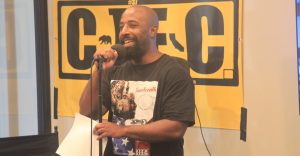
Jordan announced the passage of Local Rule 9.1, which is a new bail rule that was drafted by the judges, with significant input from Harris County Sheriff Ed Gonzalez, Harris County District Attorney Kim Ogg, as well as from the lawyers who represent the indigent defendants that have been impacted by Harris County’s unconstitutional bail system.
The county contingent believes this change will finally bring effective bail reform to Harris County, and they plan to present this adopted new bail reform change to a federal judge to request it be implemented immediately in order to settle the civil rights lawsuit that has been filed against Harris County. According to county officials, Harris County has spent roughly $9 million in public funds on three outside private law firms to defend itself against the 2016 lawsuit that brought by two civil rights groups and a local law firm on behalf of indigent defendants who could not pay the necessary money to be released from jail.
“We want to settle this within the first 30 days of the new judges taking office,” said Jordan. “I am pleased that we were able to collaborate to ensure we came up with a rule that was in line with national best practices and something feasible for all parties to carry out. Due to the pending lawsuit we have to request to operate under our new rule. This will be a joint motion from the plaintiffs, DA, Sheriff, and the judges. It is our plan to have this up in running in the next 35 days.”
Under the new bail reform changes, 85 percent of individuals who are arrested on misdemeanor offenses will automatically qualify for release on no-cash bonds, according to county officials.
There are some offenses, for which there are absolutely no exceptions. Those who are not eligible to benefit from the new bail reform rules changes include individuals who have violated bond conditions in an open case, have been charged with domestic violence, have violated a protective order and are facing repeated drunk driving offenses.
Under the proposed new changes, defendants will appear before a magistrate or judge within 48 hours, at which time they may also qualify for a personal recognizance bond.
“This is a history making moment for civil rights not only in Harris County but for the U.S., because as the third-largest county in America, which is larger than 26 states, what we do here will be watched by all and can be emulated or replicated by all,” Jordan continued. “This is significant because what this also means is that no one will be in jail because they cannot afford to get out.”
Back in 2017, Chief U.S. District Judge Lee H. Rosenthal of the U.S. District Court for the Southern District of Texas handed down a historic 193-page decision, finding that the Harris County money bail system was unconstitutional and ordered Harris County to stop keeping people who had been arrested on misdemeanor charges in jail because they could not pay bail.
In her ruling, Judge Rosenthal highlighted statistics that revealed that 40 percent of the people who had been arrested on misdemeanor charges in Harris County had been arrested and jailed until their cases were resolved, and wrote in her ruling: “Harris County’s policy is to detain indigent misdemeanor defendants before trial, violating equal protection rights against wealth-based discrimination and violating due process protections against pretrial detention.”
She also directly cited an amicus brief in her ruling that was filed by the NAACP Legal Defense Fund (LDF) and Harris County Precinct One Commissioner Rodney Ellis, stating: “An amicus filing by Harris County Commissioner Rodney Ellis and the NAACP Legal Defense and Educational Fund notes that African Americans make up 18 percent of Harris County’s adult population but 48 percent of the Harris County Jail’s adult population. A 2011 study found that in Harris County, 70 percent of White misdemeanor defendants obtain early pretrial release from detention, but only 52 percent of Latino misdemeanor defendants and 45 percent of African American misdemeanor defendants do so. The defendants did not dispute this data.”
This is huge news for many Black, Latino, poor and disadvantaged Harris County residents, who have fallen victim to this law.
Commissioner Ellis believes the new rule changes enacted by the newly elected Harris County Criminal Court judges, who have only been in office for less than a month, demonstrates a clear commitment to upholding the Constitution and finally settling the bail lawsuit in Harris County.
“For too long in Harris County, money has determined whether a person languishes behind bars, separated from their family and denied due process because they cannot afford bail for nonviolent misdemeanors, while others — even those charged with violent crimes — are able to walk free if they can put up the cash,” said Commissioner Ellis. “This is an overdue first step toward leveling a two-tiered justice system, where access to justice, liberty and due process has been based on how much money a person has in their pocket instead of their guaranteed constitutional rights. Harris County will no longer be the largest county in the nation to violate the Constitution with its misdemeanor bail procedures. Instead, Harris County now has an opportunity to take the lead in implementing a holistic pretrial system for misdemeanor cases that upholds the Constitution, safeguards due process and protects our communities.”
Tarsha Jackson, who serves as the director of the Texas Organizing Project’s Right2Justice campaign, released a statement on the bail reform plan unveiled by Harris County, saying:
“Elections have consequences, and this is why TOP devoted so many resources to elections to build the progressive infrastructure that made this bail plan possible. When we launched TOP’s Right2Justice campaign in 2015 after Sandra Bland died in a jail cell in Waller County, one of our priorities was to end the money bail system that kept Ms. Bland behind bars simply because she couldn’t afford the $5,000 bond. The plan offered this week is a monumental start, but there’s still work to be done. We look forward on continuing to work with our elected officials and the community to take on bail reform for felony charges. Money should never be the deciding factor whether a person is released from jail or stays locked up.”
Judge Rosenthal’s ruling served as a severe blow to Harris County, and the results of the midterm elections seemingly delivered the knockout punch needed to reform the bail system, which is a major part of the overall criminal justice system, in Harris County.
As a result of these new proposed bail reform changes, it appears that other Texas counties that have bail systems that mirror that of Harris County’s unconstitutional bail system could finally see changes coming their way real soon as well. Time will tell.
In the meantime, the National Newspaper Publishers Association will continue to monitor the issue as it unfolds, particularly during the current Texas Legislative Session, where state legislators could effectively pass comprehensive bail reform legislation that would legally force the rest of the state of Texas to transform their current bail systems to do what is right and fair for all Texas residents. The results in Texas could bode well for other states across the country.
Jeffrey Boney is a political analyst for the NNPA Newswire and BlackPressUSA.com and the associate editor for the Houston Forward Times newspaper. Jeffrey is an award-winning journalist, dynamic, international speaker, experienced entrepreneur, business development strategist and founder and CEO of the Texas Business Alliance Follow Jeffrey on Twitter @realtalkjunkies.









Black History
Remembering Chauncey Bailey as Student Journalists Face Threats to Truth-Telling
Nearly two decades ago, Oakland Post reporter and editor-in-chief Chauncey Bailey was tragically murdered for investigating a crooked business. His assassination shocked the journalism world and is remembered as student journalists today face increasing threats and censorship. A former classmate of Bailey and chair of the Student Press Law Center notes a significant rise in calls from students seeking legal advice amid a hostile environment. This situation highlights the importance of protecting young journalists and their pursuit of truth. Read more to learn about Bailey’s legacy and current challenges facing student press.

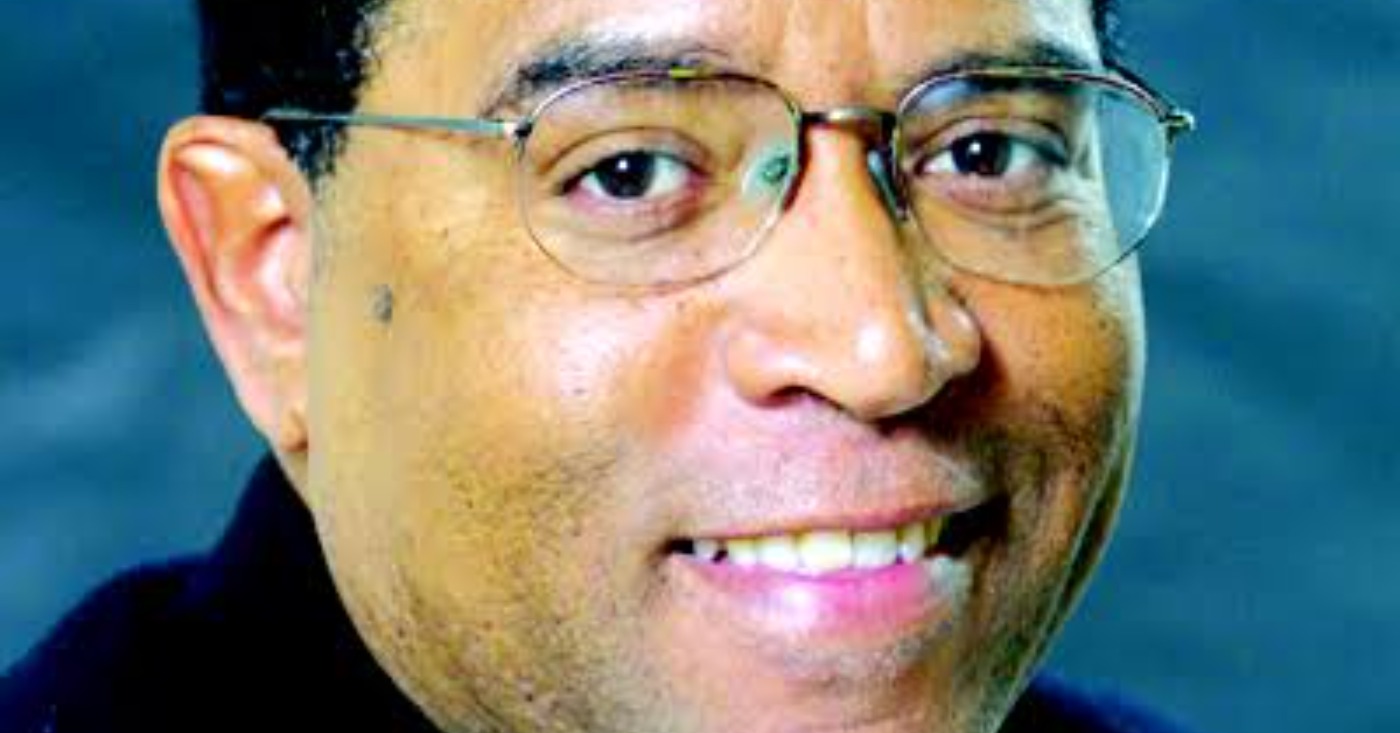
It is nearly 20 years since Chauncey Bailey, a crusading journalist, was murdered
on an Oakland street corner, gunned down to prevent him from writing stories about a
crooked business.
I hope people remember Bailey, a reporter and editor-in-chief for the
Oakland Post, the city’s Black newspaper. He had already written several articles about
the problems of a business called Your Muslim Bakery and was working on another
when the bakery’s owner ordered an employee to kill Bailey.
His murder shocked the journalism world that found the idea of an American
reporter killed for doing his job unfathomable. For me, the shock and sadness were also
personal.
I knew Bailey. In the mid-1970s we were classmates in the Michelle Clark Memorial
Foundation program, the precursor to the Institute for Journalism Education Summer
Program. A program, backed by the Ford Foundation, that provided intensive training

for fledgling minority journalism students and then placed them in jobs at newspapers
and television stations.
I’m reminded of Bailey and that program when I visit the East Bay at the end of
September to discuss the future of student journalism. To me, the visit will not only
evoke memories of Bailey. It will also be an opportunity to hone strategies to protect and
support student journalists who are under attack today, maybe not in the way that took away Chauncey Bailey, but an attack, nonetheless.
Spurred by the hostility toward the free press emanating out of Washington, high
school and college journalists are facing a barrage of censorship and harassment from
school administrators and local officials.
The 24-hour hotline staffed by the Student Press Law Center (SPLC), the non-profit I chair, has seen a 35% increase in calls from student journalists seeking legal advice on censorship, libel and copyright issues during the past two years, as well as a tripling in the number of complaints of harassment, including threats of firing, of faculty advisors.
I am not suggesting today’s national climate is as dangerous as the murderous
intentions of Yusef Bey IV, the man who ordered Bailey’s assassination. But the
harassment of student journalists does kill something else. It can destroy the desire of
student journalists to continue their growth to become professional news gatherers and
producers – something the country will always need.
It is that professional maturation that I’m reminded of when I think back on Chauncey
Bailey.
Truth be told, when we were classmates back in 1974 Bailey was the class clown,
known more for his sardonic wit than his writing or reporting talent. I have vivid
memories of Bailey sitting at his desk in the back of the room regaling us with sarcastic
comments. Sure, he was funny.
And he didn’t exhibit the level of reporting skills of our other classmates such as Milton Coleman who went on to be the Deputy Managing Editor of the Washington Post or Alexis Scott who for years has run the Atlanta Daily World.
After a series of reporting jobs in Hartford, Connecticut, Detroit, Michigan, and Oakland, Bailey had risen in talent and skill to helm this very newspaper. A tip from a source led Bailey to look into the possibility that Bey was running Your Muslim Bakery into bankruptcy. Word that Bailey was working on that story filtered back to Bey who ordered the journalist killed.
On August 2, 2007, Bailey was shot three times at point-blank range as he walked to work.
So, when I think of my trip to the East Bay my thoughts go to journalism’s past
represented by Chauncey Bailey’s sacrifice and what the staff and the board of SPLC
can do to secure the current and future work of student journalists.
Steven A. Holmes is a former Pulitzer Prize-winning journalist. His novel “Black Messiahs” was published in May this year.

Activism
Oakland Post: Week of September 23 – 29, 2026
The printed Weekly Edition of the Oakland Post: Week of September 23 – 29, 2026

To enlarge your view of this issue, use the slider, magnifying glass icon or full page icon in the lower right corner of the browser window.
Books
BOOK REVIEW: ‘Laws of Solomon’ Reveals Tender Heart of Former Child Soldier
The monsters that came to him early in his sleep were the easy ones. It was the later demons that stole Solomon Nangobi’s sleep, the spirits of all the people he killed when he was a child soldier in Uganda, and when he was a fixer in New York as an adult. Their ghosts called to him with urgent voices, though he left that life behind long ago.

Author: Eriq La Salle, Copyright: c.2026, Publisher: Poisoned Pen Press, SRP: $18.99, Page Count: 304 pages
Finally, after so much work, you’ve left your past behind.
That’s what you tell yourself: what’s done is done and you can’t undo history. It’s over. You try not to think about last month, last year, a decade back because what does it matter? As in the new novel, “Laws of Solomon” by Eriq La Salle, remembering is too full of pain.
The monsters that came to him early in his sleep were the easy ones. It was the later demons that stole Solomon Nangobi’s sleep, the spirits of all the people he killed when he was a child soldier in Uganda, and when he was a fixer in New York as an adult. Their ghosts called to him with urgent voices, though he left that life behind long ago.
Now, his days were filled working the soil in gardens near Malibu, and he loved the quiet life.
Still, he kept his guns.
And he was glad: when Solomon recognized two Zeta gunmen stalking a well-dressed man, woman, and child through the gardens, he couldn’t walk away. He stopped the gangsters with bullets, but not before the adults and their bodyguards were dead. The child, an 8-year-old boy named Gaby, was safe, but Gaby couldn’t tell Solomon what was going on.
What became quickly certain, however, was that Solomon was now Gaby’s guardian, and the Zeta crime boss wanted them dead, too.
When he was the same age as Gaby, Solomon saw unspeakable things, the murder of his parents, the destruction of his homeland, and the atrocities that Uganda dictator Idi Amin’s soldiers committed. He learned to kill, he observed, and he was hardened, understanding as a small boy that revenge was often necessary and needed, and that blood would shed at those times.
But Gaby was pure, an innocent, a child.
Solomon reached out to his contacts to try to get the boy to safety, but being a contact of a marked man was likewise a dangerous thing: the monsters outside were worse than the ones inside him.
Two words for you: ‘Whoo weee.’ That’s what you’re going to say when you close the back cover of “Laws of Solomon,” knowing that you’ve just been taken on a wild up-and-down, around-and-round ride.
La Salle makes it impossible not to like Solomon, an African man who has, over time, lost nearly everything dear to him and who has no faith in much of anything. Readers get that part of the story eventually, and there’s historical authenticity in some of it, but we never really get to know Solomon, which makes the book feel dark and dangerous. Along the way, we meet and get to know his helpers, which buoys Solomon’s chase to find safety for the boy, and your heart won’t stop pounding.
Keep in mind that this is a thriller partially set in 1970s Uganda, so expect lots of violence but don’t expect a lot of people to live. If you’re up for that, find “Laws of Solomon.” You won’t be able to leave it behind.



From Historic Memories to New Possibilities: Oakland Celebrates Coliseum 60

County Office of Education Says OUSD Finances Are Getting Healthier, Materially Stronger

LIVE FREE Sunday Dinner Brings Faith, Fellowship and Civic Conversation to Oakland

Remembering Chauncey Bailey as Student Journalists Face Threats to Truth-Telling

BLACspace Cooperative Invites Bay Area to Experience Oakland’s Black Cultural Ecosystem Through a BLAC Map Tour + Party

In Wake of Death on Doorstep, Williams Chapel Baptist Church Calls for Better Care, Funding for Unhoused

Oakland Centenarian Nuna McKee Honored!

Caribbean Nations Produce Action Plan Calling for UK Reparations Over Slavery

Oakland Post: Week of September 23 – 29, 2026

Doulas Are Helping Black California Moms Navigate Pregnancy–Even as High Mortality Rates Persist

Newsom Signs Addictive Social Media Law to Protect Kids

On Your November Ballot: Prop 38 Would Allocate $8.4 Billion to Immunology and Immunotherapy Funding

Ask California: Golden State Releases New AI Chatbot

Asm. Isaac Bryan’s Bill Banning California Police From ICE Side Jobs Reaches Newsom’s Desk

Assemblymember LaShae Sharp-Collins’s Bill Would Pause Law Enforcement’s Use of Shock Gloves Pending Study

Less Affluent School Districts, Including Sacramento City, Face Threat of State Takeover

ESSAY: California Can Close Its Colorectal Cancer Gap

California Hispanic Chambers of Commerce Unveils: ‘Powering the Future’ Theme for 47th Annual Statewide Convention

Four Candidates, Including Incumbent Barbara Lee, Qualify for Oakland Mayor’s Race

Oakland Post: Week of August 12 – 18, 2026

From Blueprint to Breakthrough: Tackling Affordable Housing in Oakland

Oakland Observes Black August with Block Parties, Film Showings, Workshops

COMMENTARY: Why Local School Tax Measure G1 Will Not Be on the November Ballot

Standoff for Justice: Our Homes Are Worth Fighting For

Returning to Its Roots, the Oakland Black-Eyed Pea Festival Partners with the Freedom Farmers Market Sept. 12

Oakland Post: Week of August 26 – September 1, 2026

NPRC Scores First Advocacy Victory: David Shaw Finally Gets His Wish to ‘Go Home’

Frontier Airlines’ Return to Oakland Airport Brings Flights, Jobs and Opportunity

Gubernatorial Candidate Steve Hilton Blasts California New Tire Rules; Newsom Hits Back

Chef Sharon Lee Blends Culinary Excellence, Education and Empowerment

The Conversation With Al McFarlane 6/23/26

Media Monday 6/22/26

LIVE! ASK ALMA! — TUES. 6.23.26 7PM EST

Car Buying Secrets: 4 Hidden Checks Before You Sign!

Is This 550 HP Charger Worth YOUR Money? AutoNetwork Review

Celebrating Juneteenth – Frederick Douglass on education and resistance

LIVE! — ASK ALMA! — TUES. 6.19.26 7PM EST

Hyundai Ioniq 5 Parking, Safety, and 360 View #shorts

2025 Ioniq 5 New Wiper & Powerful Performance! #shorts

Electric SUV Range: Is 259 Miles Enough? #shorts

EV Charging: How Fast Can You Charge an Electric Vehicle? #shorts

Biometric Cooling… Messaging Seats…Come on! 2025 Infiniti QX80 Autograph 4WD

Charged Up: Witness the Magic of a Fully Electric Car! #shorts

Range Rover Sport PHEV Included…: See What’s Inside This Luxury SUV! #shorts

Invisible Hood View: Perfect Parking with X-Ray Vision! #shorts
-
 Commentary4 weeks ago
Standoff for Justice: Our Homes Are Worth Fighting For
-
 Activism4 weeks ago
Oakland Post: Week of August 26 – September 1, 2026
-
 Business4 weeks ago
Frontier Airlines’ Return to Oakland Airport Brings Flights, Jobs and Opportunity
-
 Business4 weeks ago
Gubernatorial Candidate Steve Hilton Blasts California New Tire Rules; Newsom Hits Back
-
 Business4 weeks ago
Chef Sharon Lee Blends Culinary Excellence, Education and Empowerment
-

 Community4 weeks ago
Big City Mayors Ask for “Yes” Vote on Housing Bond Measure; Conservatives Say “No”
-

 Black History4 weeks ago
Jackie Wright Champions Bay Area Stories, Filmmakers and Cultural Institutions
-

 Education4 weeks ago
Gov. Newsom’s Latest Appointees Include Sacramento Advocate for Formerly Incarcerated Students; State’s New Tech Chief
