
#NNPA BlackPress
Mayor Sheng Thao Speaks on Public Safety, Oakland-Vietnam Trade Opportunities
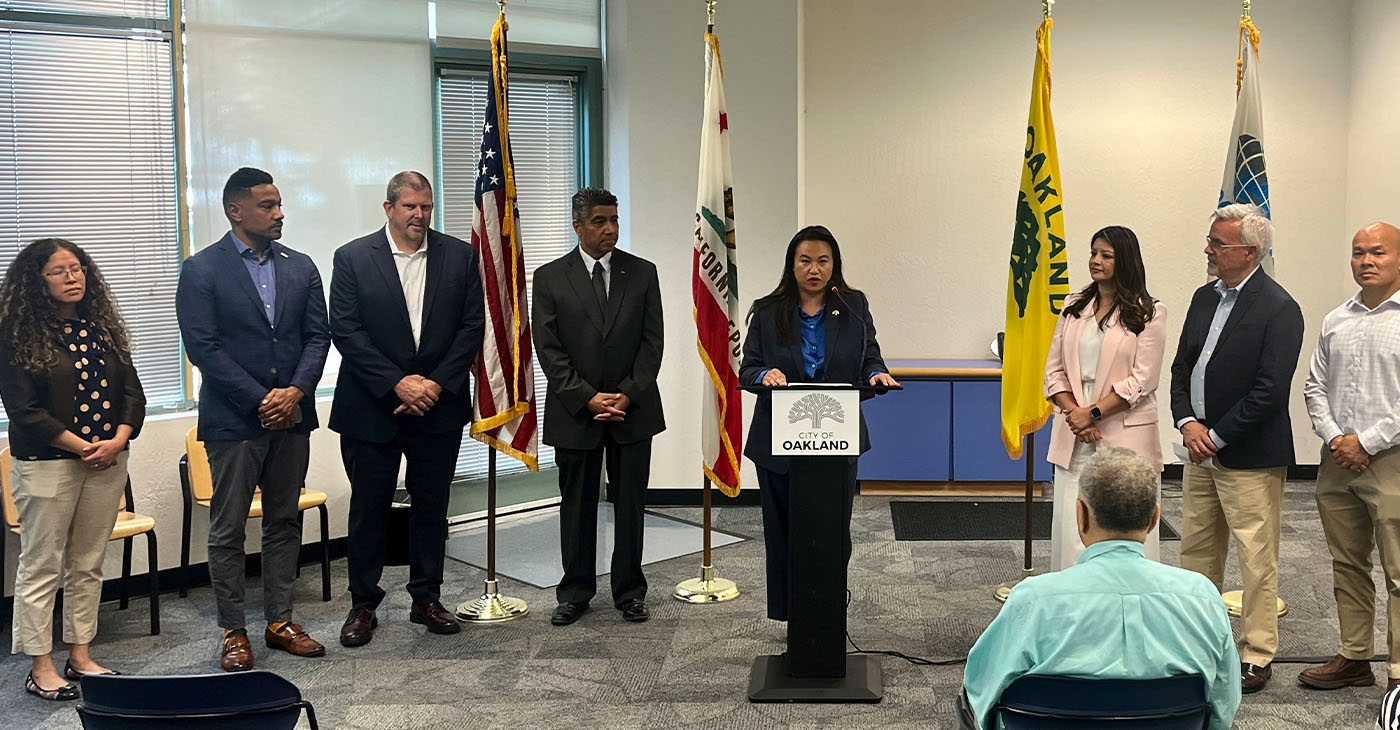
By Ken Epstein Oakland Mayor Sheng Thao, just back from a Vietnam trade mission, spoke at a press conference this week to discuss the results of her international meetings and also to address community concerns about crime in the city. She said she is “working day and night” to increase public safety: investing in violence […]
The post Mayor Sheng Thao Speaks on Public Safety, Oakland-Vietnam Trade Opportunities first appeared on BlackPressUSA.

By Ken Epstein
Oakland Mayor Sheng Thao, just back from a Vietnam trade mission, spoke at a press conference this week to discuss the results of her international meetings and also to address community concerns about crime in the city.
She said she is “working day and night” to increase public safety: investing in violence prevention programs, seeking more funding to expand public safety resources, and collaborating with the governor to bring in the California Highway Patrol and Alameda County Sheriff’s Office.
As the mayor of Oakland, she said, “I was able to call the governor directly, and this is now why we have the resources of CHP here in the City of Oakland.
Pointing out that the city now has the highest number of officers in uniform in the past three years, she said there is still work to be done to put the officers where they are needed most.
Thao also discussed the recent successful trade delegation to Vietnam, which ended Aug. 8 and included the mayor, Alameda County officials and Port of Oakland board members, and was designed to promote Oakland as a trading partner with Vietnam.

“This trip was an investment in Oakland’s future, by cultivating critical relationships that will grow our city’s economy” Thao said in a statement.
The Oakland delegation met with representatives from private industry, Long An International Port, the mayors of Hanoi, Ho Chi Minh City and Da Nang, and Prime Minister Pham Minh Chinh.
In-depth discussions with Pham focused on climate change issues, including establishing “green corridors” for all Vietnam ports and the Port of Oakland.
Other productive meetings were held with several companies, including electric vehicle manufacturer, VinFast, where discussions focused on importing their vehicles through the Port of Oakland; and airline, VietJet, which launched discussions on a possible new international route to Oakland Airport. An MOU was signed with THACO Industries, a leading manufacturer in mechanical products and technology.
Elaborating on the city’s commitment to reduce crime and make Oakland residents safer, Mayor Thao said,
“To actually catch the perpetrators, that means we have to have the manpower for that. We are talking about how we free up our officers, whether it’s ‘civilianizing’ some positions, so we can get more officers doing investigative work.”
Despite inheriting a major deficit from the previous administration, the mayor said the city’s new budget did not cut funds for violence prevention and received $1.2 million from the state to fund technology upgrades.
Specifically, she said the city is expanding Ceasefire, the Oakland Police Department’s anti-violence program, installing more license plate readers throughout the city, and working with the sheriff’s office to set up check points for intoxicated drivers.
She added, “Arguably, I would say that crimes would be even higher than it is today if I were to have cut in my budget the programs for our after-school programming, for summer programming.”
Thao emphasized that the changes will not occur overnight, but the public can expect to see progress.
“Although this is a hard moment in time – this, too, shall pass,” she said. “Because we are now in the phase of implementing. But I promise you, you will start seeing some of those results moving forward, towards next year.”
Property crime in Oakland has increased 28%, according to an ABC7 report in July. Homicides, so far, in 2023 are down 13% compared to 2022, while burglaries are up 41%. Vehicle thefts have increased 50%.
While rising crime is an issue that is frequently connected to “law and order” partisan political campaigns and is often viewed as an intensely local concern, the data points to more complex national reasons and solutions, spurred by the pandemic and other intersecting crises.
According to a report from the Brooking Institution in April, “Cities and towns of all sizes saw their murder rates increase … rising over 35% in cities with populations over 250,000; 40% percent in cities with populations of 100,000 to 250,000; and around 25% in cities with populations under 25,000.
In an article about “recent trends in violent crime,” from the Brennan Center for Justice, which opposes mass incarceration, the dramatic growth in crime across the country started during the pandemic.
“Despite politicized claims that this rise was the result of criminal justice reform in liberal-leaning jurisdictions, murders rose roughly equally in cities run by Republicans and cities run by Democrats. So-called red states actually saw some of the highest murder rates of all.
“This data makes it difficult to pin recent trends on local policy shifts and reveals the central flaw in arguments that seek to politicize a problem as complex as crime. Instead, the evidence points to broad national causes driving rising crime.”
This news story included reporting from KGO7, SF Chronicle, KRON4 and the Oakland Post.
The post Mayor Sheng Thao Speaks on Public Safety, Oakland-Vietnam Trade Opportunities first appeared on Post News Group. This article originally appeared in Post News Group.
The post Mayor Sheng Thao Speaks on Public Safety, Oakland-Vietnam Trade Opportunities first appeared on BlackPressUSA.








#NNPA BlackPress
COMMENTARY: The National Protest Must Be Accompanied with Our Votes
Just as Trump is gathering election data like having the FBI take all the election data in Georgia from the 2020 election, so must we organize in preparation for the coming primary season to have the right people on ballots in each Republican district, so that we can regain control of the House of Representatives and by doing so, restore the separation of powers and balance that our democracy is being deprived of.

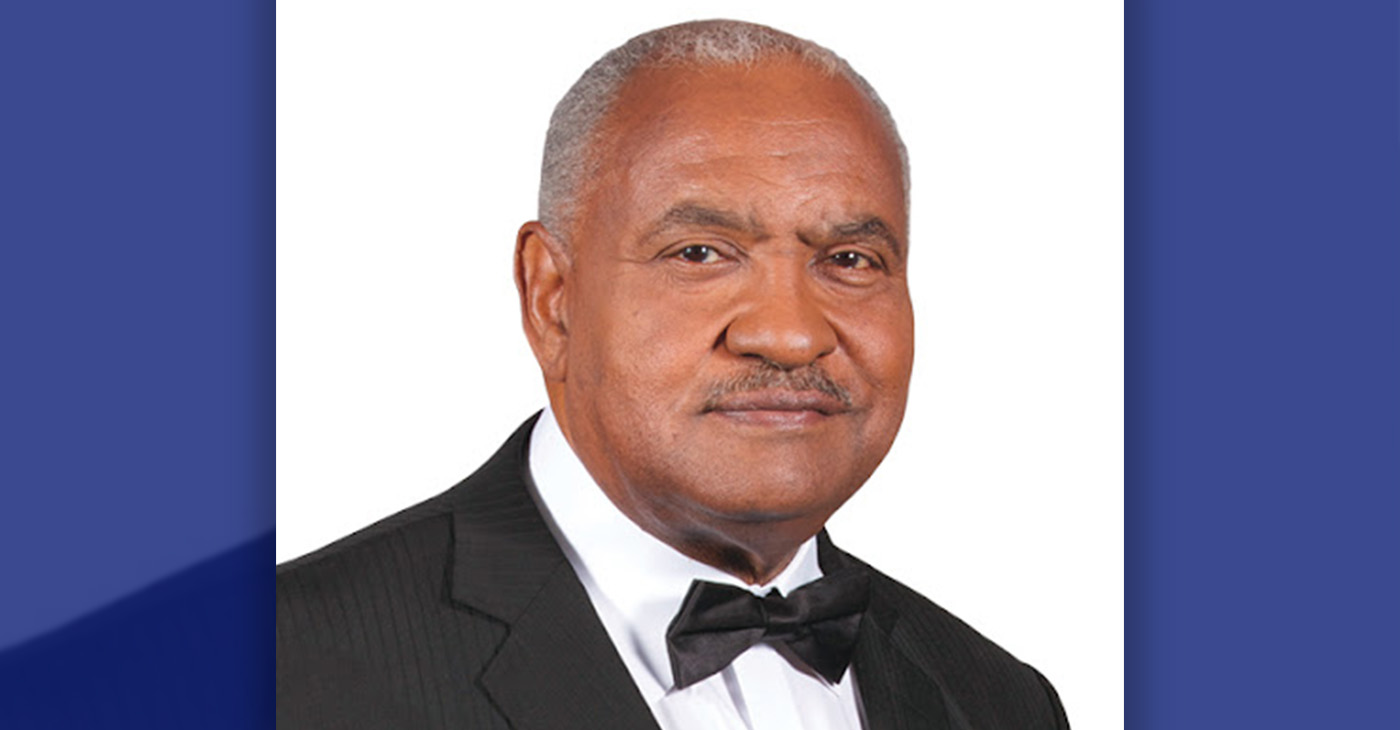
By Dr. John E. Warren, Publisher San Diego Voice & Viewpoint Newspaper
As thousands of Americans march every week in cities across this great nation, it must be remembered that the protest without the vote is of no concern to Donald Trump and his administration.
In every city, there is a personal connection to the U.S. Congress. In too many cases, the member of Congress representing the people of that city and the congressional district in which it sits, is a Republican. It is the Republicans who are giving silent support to the destructive actions of those persons like the U.S. Attorney General, the Director of Homeland Security, and the National Intelligence Director, who are carrying out the revenge campaign of the President rather than upholding the oath of office each of them took “to Defend The Constitution of the United States.”
Just as Trump is gathering election data like having the FBI take all the election data in Georgia from the 2020 election, so must we organize in preparation for the coming primary season to have the right people on ballots in each Republican district, so that we can regain control of the House of Representatives and by doing so, restore the separation of powers and balance that our democracy is being deprived of.

In California, the primary comes in June 2026. The congressional races must be a priority just as much as the local election of people has been so important in keeping ICE from acquiring facilities to build more prisons around the country.
“We the People” are winning this battle, even though it might not look like it. Each of us must get involved now, right where we are.
In this Black History month, it is important to remember that all we have accomplished in this nation has been “in spite of” and not “because of.” Frederick Douglas said, “Power concedes nothing without a struggle.”
Today, the struggle is to maintain our very institutions and history. Our strength in this struggle rests in our “collectiveness.” Our newspapers and journalists are at the greatest risk. We must not personally add to the attack by ignoring those who have been our very foundation, our Black press.
Are you spending your dollars this Black History Month with those who salute and honor contributions by supporting those who tell our stories? Remember that silence is the same as consent and support for the opposition. Where do you stand and where will your dollars go?

#NNPA BlackPress
Why Black Parents Should Consider Montessori
BLACKPRESSUSA NEWSWIRE — I have found that there are some educational approaches that consistently provide a safer, more enriching, and more affirmative environment for Black children. The Montessori method, developed by Italian physician Maria Montessori and introduced to the U.S. in the early 20th century, is one such approach.

As a mother of four children, I’ve done A LOT of school shopping. I don’t mean the autumn ritual of purchasing school supplies. I mean shopping for schools – pouring over promotional materials, combing through websites, asking friends and community members for referrals to their favorite schools, attending open houses and orientations, comparing curriculums and educational philosophies, meeting teachers and principals, and students who all claim that their school is the best.
But keep in mind – I’m not just a mom of four children. I’m a mom of four Black children, and I’m also a psychologist who is very interested in protecting my little ones from the traumatic experience that school can too often become.
For Black children in the United States, school can sometimes feel more like a prison than an educational institution. Research shows that Black students experience school as more hostile and demoralizing than other students do, that they are disciplined more frequently and more harshly for typical childhood offenses (such as running in the halls or chewing gum in class), that they are often labeled as deviant or viewed as deficient more quickly than other children, that teachers have lower academic expectations of Black students (which, in turn, lowers those students’ expectations of themselves), and that Black parents feel less respected and less engaged by their children’s teachers and school administrators. Perhaps these are some of the underlying reasons that Black students tend to underperform in most schools across the country.
The truth is that schools are more than academic institutions. They are places where children go to gain a sense of who they are, how they relate to others, and where they fit into the world. The best schools are places that answer these questions positively – ‘you are a valuable human being, you are a person who will grow up to contribute great things to your community, and you belong here, with us, exploring the world and learning how to use your gifts.’ Unfortunately, Black children looking for answers to these universal questions of childhood will often hit a brick wall once they walk into the classroom. If the curriculum does not reflect their cultural experiences, the teachers don’t appear to value them, and they spend most of their time being shamed into compliance rather than guided towards their highest potential, well…what can we really expect? How are they supposed to master basic academic skills if their spirits have been crushed?
Here’s the good news. In my years of school shopping, and in the research of Black education specialists such as Jawanza Kunjufu and Amos Wilson, I have found that there are some educational approaches that consistently provide a safer, more enriching, and more affirmative environment for Black children. The Montessori method, developed by Italian physician Maria Montessori and introduced to the U.S. in the early 20th century, is one such approach.
The key feature of Montessori schooling is that children decide (for the most part) what they want to do each day. Led by their own interests and skill levels, children in a Montessori classroom move around freely and work independently or with others on tasks of their own
choosing. The classroom is intentionally stocked with materials tailored to the developmental needs of children, including the need to learn through different senses (sight, touch/texture, movement, etc.). The teacher in a Montessori classroom is less like a boss and more like a caring guide who works with each child individually, demonstrating various activities and then giving them space to try it on their own. The idea is that over time, students learn to master even the toughest tasks and concepts, and they feel an intense sense of pride and accomplishment because they did it by themselves, without pressure or pushing.
I think that this aspect of the Montessori method is good for all kids. Do you remember the feeling of having your creativity or motivation crushed by being told exactly what to do, when to do it, how to do it, and why? The truth is that when presented with a new challenge and then given space, children actually accomplish a lot! They are born with a natural desire to learn. It is that spirit of curiosity, sense of wonder, and excitement to explore that Montessori helps to keep alive in a child. But that’s not the only reason that I think Black parents need to consider Montessori.
Fostering a love of learning is great. But more importantly, I think that Montessori students excel at learning to love. It begins with Montessori’s acknowledgement that all children are precious because childhood is a precious time. In many school systems, Black children are treated like miniature adults (at best) or miniature criminals (at worst), and are subjected to stressful situations that no kids are equipped to handle – expectations to be still and silent for long periods, competitive and high-stakes testing, and punitive classroom discipline. It’s easy to get the sense that rather than being prepared for college or careers, our children are being prepared to fail. Couple this with the aforementioned bias against Black children that seems to run rampant within the U.S. school system, and you end up with children who feel burned out and bitter about school by the time they hit 3rd grade.
In my experience, Montessori does a better job of protecting the space that is childhood – and all the joy of discovery and learning that should come along with that. Without the requirement that students “sit down and shut up,” behavioral issues in Montessori classrooms tend to be non-existent (or at least, the Montessori method doesn’t harp on them; children are gently redirected rather than shamed in front of the class). Montessori students don’t learn for the sake of tests; they demonstrate what they’ve learned by sharing with their teacher or classmates how they solve real-world problems using the skills they’ve gained through reading, math, or science activities. And by allowing children a choice of what to focus on throughout the day, Montessori teachers demonstrate that they honor and trust children’s natural intelligence. The individualized, careful attention they provide indicates to children that they are each seen, heard, and valued for who they are, and who they might become. Now that’s love (and good education).
As a parent, I’ve come to realize that many schools offer high-quality academics. Montessori is no different. Students in Montessori schools gain exposure to advanced concepts and the materials to work with these concepts hands-on. Across the nation, Montessori schools emphasize early literacy development, an especially important indicator of life success for young Black boys and men. Montessori students are provided with the opportunity to be
successful every day, and the chance to develop a sense of competence and self-worth based on completing tasks at their own pace.
But I have also learned that the important questions to ask when school shopping are often not about academics at all. I now ask, ‘Will my children be treated kindly? Will they be listened to? Protected from bias and bullying? Will they feel safe? Will this precious time in their lives be honored as a space for growth, development, awe, and excitement? Will they get to see people like them included in the curriculum? Will they be seen as valuable even if they don’t always ‘measure up’ to other kids on a task? Will they get extra support if they need it? Will the school include me in major decisions? Will the school leaders help to make sure that my children reach their fullest potential? Will the teacher care about my children almost as much as I do?’
Consistently, it’s been the Montessori schools that have answered with a loud, resounding ‘Yes!’ That is why my children ended up in Montessori schools, and I couldn’t be happier with that decision. If you’re a parent like me, shopping for schools with the same questions in mind, I’d urge you to consider Montessori education as a viable option for your precious little ones. Today more than ever, getting it right for our children is priceless.
#NNPA BlackPress
LIVE from the NMA Convention Raheem DeVaughn Says The Time Is Now: Let’s End HIV in Our Communities #2
Set against the backdrop of the NMA conference, Executive Officers from the National Medical Association, Grammy Award Winning Artist and Advocate Raheem DeVaughn, and Gilead Sciences experts, are holding today an important conversation on HIV prevention and health equity. Black women continue to be disproportionately impacted by HIV despite advances in prevention options. Today’s event […]

Set against the backdrop of the NMA conference, Executive Officers from the National Medical Association, Grammy Award Winning Artist and Advocate Raheem DeVaughn, and Gilead Sciences experts, are holding today an important conversation on HIV prevention and health equity.
Black women continue to be disproportionately impacted by HIV despite advances in prevention options. Today’s event is designed to uplift voices, explore barriers to access, and increase awareness and key updates about PrEP, a proven prevention method that remains underutilized among Black women. This timely gathering will feature voices from across health, media, and advocacy as we break stigma and center equity in HIV prevention.
Additional stats and information to know:
● Black women continue to be disproportionately affected by HIV, with Black women representing more than 50% of new HIV diagnoses among women in the U.S. in 2022, despite comprising just 13% of women in the U.S.
● Women made up only 8% of PrEP users despite representing 19% of all new HIV diagnoses in 2022.
● Gilead Sciences is increasing awareness and addressing stigma by encouraging regular HIV testing and having judgment-free conversations with your healthcare provider about prevention options, including oral PrEP and long-acting injectable PrEP options.
● PrEP is an HIV prevention medication that has been available since 2012.
● Only 1 in 3 people in the U.S. who could benefit from PrEP were prescribed a form of PrEP in 2022.

WORK FROM HOME
Home-based business with potential monthly income of $10K+ per month. A proven training system and website provided to maximize business effectiveness. Perfect job to earn side and primary income. Contact Lynne for more details: Lynne4npusa@gmail.com 800-334-0540


CITY OF SAN LEANDRO STATE OF CALIFORNIA PUBLIC WORKS DEPARTMENT ENGINEERING DIVISION NOTICE TO BIDDERS FOR ANNUAL STREET OVERLAY/REHABILITATION 2019-21 – PHASE III

Oakland Post: Week of February 11 = 17, 2026

Rising Optimism Among Small And Middle Market Business Leaders Suggests Growth for California

Discrimination in City Contracts

COMMENTARY: The National Protest Must Be Accompanied with Our Votes

Congresswoman Simon Votes Against Department of Homeland Security, ICE Funding

Post Newspaper Invites NNPA to Join Nationwide Probate Reform Initiative

Community Celebrates Turner Group Construction Company as Collins Drive Becomes Turner Group Drive

New Bill, the RIDER Safety Act, Would Support Transit Ambassadors and Safety on Public Transit

Trump’s White House Pushes to Control California Wildfire Recovery

Gov. Newsom, AG Bonta to Local Law Enforcement: You Have Authority to Investigate Federal Agents

Dorothy Lee Bolden: Uniting Domestic Workers

Cracking Down on Human Trafficking, California DOJ Announces 120 Arrests

COMMENTARY: The Biases We Don’t See — Preventing AI-Driven Inequality in Health Care

California Launches Study on Mileage Tax to Potentially Replace Gas Tax as Republicans Push Back

Life Expectancy in Marin City, a Black Community, Is 15-17 Years Less than the Rest of Marin County

Jefferson County (AL) Democrats Open Qualifying for 2026 Primary Elections

Oakland Post: Week of January 28, 2025 – February 3, 2026

Skater Emmanuel Savary Sharpens Routines for the 2026 U.S. Championships

COMMENTARY: With Gratitude and Praise for 2026
Community Celebrates Turner Group Construction Company as Collins Drive Becomes Turner Group Drive
California Launches Study on Mileage Tax to Potentially Replace Gas Tax as Republicans Push Back

OP-ED: The Dream Cannot be Realized Without Financial Freedom

From Civil Rights to ICE Raids, Trump’s Unchecked Power Puts Every Community at Risk
From Civil Rights to ICE Raids, Trump’s Unchecked Power Puts Every Community at Risk

Travis Scott Teaches Us How to Give Forward

Oakland Post: Week of January 21 – 27, 2026

Four Stolen Futures: Will H-E-B Do The Right Thing?

After Don Lemon’s Arrest, Black Officials Raise Concerns About Independent Black Media

Newsom’s Finance Director Joe Stephenshaw Opens 2026-27 Budget Debate with Cautious Plan

Hyundai Ioniq 5 Parking, Safety, and 360 View #shorts

2025 Ioniq 5 New Wiper & Powerful Performance! #shorts

Electric SUV Range: Is 259 Miles Enough? #shorts

EV Charging: How Fast Can You Charge an Electric Vehicle? #shorts

Biometric Cooling… Messaging Seats…Come on! 2025 Infiniti QX80 Autograph 4WD

Charged Up: Witness the Magic of a Fully Electric Car! #shorts

Range Rover Sport PHEV Included…: See What’s Inside This Luxury SUV! #shorts

Invisible Hood View: Perfect Parking with X-Ray Vision! #shorts

AI Is Reshaping Black Healthcare: Promise, Peril, and the Push for Improved Results in California

ESSAY: Technology and Medicine, a Primary Care Point of View

Sanctuary Cities

The RESISTANCE – FREEDOM NOW

STATE OF THE PEOPLE: Freddie

ECONOMIC BOYCOTT DAY!!!!!

I told You So
-
 Activism3 weeks ago
Life Expectancy in Marin City, a Black Community, Is 15-17 Years Less than the Rest of Marin County
-
 Activism3 weeks ago
Oakland Post: Week of January 28, 2025 – February 3, 2026
-
 Activism2 weeks ago
Community Celebrates Turner Group Construction Company as Collins Drive Becomes Turner Group Drive
-
 Business2 weeks ago
California Launches Study on Mileage Tax to Potentially Replace Gas Tax as Republicans Push Back
-
 Activism4 weeks ago
Oakland Post: Week of January 21 – 27, 2026
-
 Activism2 weeks ago
After Don Lemon’s Arrest, Black Officials Raise Concerns About Independent Black Media
-

 Activism3 weeks ago
Medi-Cal Cares for You and Your Baby Every Step of the Way
-
 Activism2 weeks ago
Discrimination in City Contracts
