
Energy
LEWIS/MOORE: Solar, Powered by the People
WASHINGTON INFORMER — Solar power is abundant, affordable, and accessible in the District of Columbia

By Kimberly Lewis and Michelle Moore
Solar power is abundant, affordable, and accessible in the District of Columbia. Every single solar panel that is installed with the projected $300 million that will go to build solar projects in our nation’s capital over the next five years will cut utility bills, create jobs, and build wealth – but for whom? There are only three certified minority and woman-owned solar businesses operating in D.C. The problem with our new green economy is that it’s propagating the same old inequities instead of reflecting the beautiful diversity of the places we live. That’s why we’re celebrating Black History Month by calling for a new chapter in the story of the solar industry in America, starting right here in Washington, D.C.
We see the disparities first hand as part of the leadership team of Groundswell, a D.C.-based nonprofit that builds community power. When we issued our first RFP for a community solar project, there were few to no minority or woman-owned solar businesses and hardly any woman or people of color on the leadership teams of the companies that responded. We wanted to know why and what we could do about it, so we reached out to NYMBUS Holdings, a local minority-owned research firm, for answers. Their new report is a wake-up call that includes immediate and measurable steps we can take together to close the gap and make sure that solar is delivering on the promise of being power to, for, and by the people.
It’s the right thing to do. The District of Columbia is a richly diverse community that is blessed with some of the most progressive solar energy policies in the country. Not only is our city committed to using 100% clean energy, we have the nation’s biggest solar incentives and a Solar for All program that delivers free solar power to our low-income neighbors who are struggling to pay utility bills. The policies that make D.C. a great place for solar are enabled by the people of Washington, D.C. Our thriving local solar industry should look like Washington, D.C., too.
We’re not alone. These same inequities are tragically common themes at every level within the green movement. A new report about diversity in the environmental field by Green 2.0 shows that it is still predominantly male and increasingly white. The solar sector is no exception. Nationally, fewer than 30% of the people working in the solar industry are female. But when you look at who pays the most for energy, more than half of families paying disproportionately high electricity bills across the United States are African American. It’s not fair.
We’ve got to do better. The growth of the solar industry generates more than clean power – it creates jobs and builds wealth. It holds the promise of lifting more lives beyond financial stability towards greater ease. If more solar power just makes the same people richer, we’ve failed.
We can’t wait. We’ve got to get serious, set goals, and keep score. As the NYMBUS report highlights, while all the data sources tell the same story about the sad state of solar industry when it comes to diversity, there are no comprehensive, consistently measured and validated annual reports. Equitable economic participation belongs right next to 100% renewable energy on Washington, D.C.’s clean energy scorecard. To win, we’ve got to recognize that the technical, regulatory, and financial complexity of the solar industry presents significant barriers to new people and businesses entering the field. Taking a page from the tech industry’s playbook, launching a clean energy incubator could support local entrepreneurs with the knowledge and networks they need to succeed.
That’s just the beginning of what turning Washington, D.C.’s solar leadership into equitable economic empowerment could mean. The opportunity is now, and Washington’s got what it takes. Let’s put the people in solar power and make it Made in D.C.
Kimberly Lewis is a senior vice president of community advancement at the U.S. Green Building Council and Michelle Moore is CEO of community solar nonprofit Groundswell.
This article originally appeared in the Washington Informer.











Business
Starting This Summer, California Car Buyers Can Get an Instant $3500 Off the Cost of Electric Vehicles
OAKLAND POST — Beginning later this summer, eligible Californians can receive a $3,500 rebate on new zero-emission vehicles with a manufacturer’s suggested retail price of up to $50,000. Buyers purchasing qualifying used electric vehicles priced at up to $25,000 can receive a $1,750 rebate. The rebate will be applied directly at participating dealerships, allowing buyers to receive the discount immediately instead of waiting for reimbursement.


California residents purchasing their first zero-emission vehicle will soon be eligible for an instant rebate of up to $3,500 under a new state program aimed at making electric vehicles more affordable.
Gov. Gavin Newsom signed Senate Bill (SB) 168 on July 16, creating the MyFirstEV program as part of California’s 2026-27 state budget. The initiative dedicates $135.5 million in state funding for point-of-sale rebates, which participating automakers will match dollar for dollar. State officials said the combined investment will provide $270 million in savings for first-time electric vehicle buyers.
Beginning later this summer, eligible Californians can receive a $3,500 rebate on new zero-emission vehicles with a manufacturer’s suggested retail price of up to $50,000. Buyers purchasing qualifying used electric vehicles priced at up to $25,000 can receive a $1,750 rebate. The rebate will be applied directly at participating dealerships, allowing buyers to receive the discount immediately instead of waiting for reimbursement.
“With our new instant rebate program for electric vehicles, we’re making it easier for families to drive clean, breathe clean, and keep more money in their pockets,” Newsom said in a statement.
The MyFirstEV program is part of a broader $600 million investment in California’s clean transportation economy included in the state budget. The funding package also provides $150 million for the Community Air Protection Program, $19.8 million for the Clean Cars 4 All program for lower-income residents, $35 million for clean off-road equipment through the Air Quality Improvement Program, $135.5 million for the Clean Truck and Bus Voucher Incentive Project, and $130 million for the Carl Moyer Program to replace older heavy-duty engines with cleaner alternatives.
According to the governor’s office, the transportation investments are funded through Cap-and-Invest revenue and smog-abatement fees while maintaining a balanced state budget.
California continues to expand its zero-emission transportation network. The state surpassed 2.5 million cumulative zero-emission vehicle sales earlier this year, exceeding its original goal of 1.5 million sales by 2025. Officials also reported that California has more than 200,000 public and shared electric vehicle charging plugs statewide, in addition to an estimated 800,000 home charging stations.

Activism
More and More, Black Californians Are Worried About Rising Costs of Housing, Energy, Food and Gas
According to an April 2024 report by the Greenlining Institute, low-income Black Californians are struggling with affordability due to a combination of historical systemic barriers and modern economic pressures. The Greenlining Institute is a California-based policy, research, and advocacy nonprofit founded in 1993 to fight systemic racism and economic injustice.


By Antonio Ray Harvey, California Black Media
Housing, energy, food and gas are four essential household expenses, and their rising costs are forcing residents—especially lower-income households—to make difficult trade-offs, Assemblymember Rhodesia Ransom (D-Stockton) said at a conference on affordability last week in Sacramento.
Ransom, a member of the California Legislative Black Caucus (CLBC), noted a shift in consumer behavior, stating, “Before people used to choose between things that they wanted and things that they needed.”
“Now, what we’re hearing from constituents is they are prioritizing their needs differently,” she said. “Because of the affordability crisis, it’s no longer about choosing between other needs. Our constituents are now saying ‘what needs to be prioritized?’ Gas and food are at the top of the list.”
Ransom made the comments about affordability at Capitol Weekly’s informational conference titled “Affordability: The Cost of Living in California,” which was held on April 30 at the University of California’s Student and Policy Center.
Co-hosted with the University of California Student and Policy Center, the political conversations focused on identifying policy solutions to the state’s extremely high prices for energy, food, and essentials.
The keynote speakers at the conference were former Assemblymember Lorena Gonzalez, president of the California Federation of Labor Unions, and Mike Madrid, a political strategist, author, and senior fellow at UC Irvine.
Conversations about affordability are taking on greater urgency as the election season kicks in, speakers said.
According to an April 2024 report by the Greenlining Institute, low-income Black Californians are struggling with affordability due to a combination of historical systemic barriers and modern economic pressures. The Greenlining Institute is a California-based policy, research, and advocacy nonprofit founded in 1993 to fight systemic racism and economic injustice.
Black households in California experience the highest levels of rent burden; approximately 65% of Black renters, according to the Greenlining report. Historical “redlining” and ongoing discrimination have restricted homeownership. Black families also pay 43% more for energy than White households, partly because they are more likely to live in older, less energy-efficient rentals.
In addition, roughly 1 in 3 Black adults (36.5%) reported household food insecurity in late 2025, more than double the rate for White adults. This is often exacerbated by “food deserts” in predominantly Black neighborhoods.
In March, Assembly Minority Leader Heath Flora (R-Ripon) expressed concerns about affordability in California, describing it as a crisis where families are being “pushed to the edge.”
“Californians should not have to choose between putting food on the table or filling up their car,” Flora stated. “We need to cut costs now. Not tomorrow, not next week, not next month. Now.”
Cuts to the federal Supplemental Nutrition Assistance Program (SNAP) funding are being driven by the Trump Administration’s One Big Beautiful Bill Act (H.R. 1), which is reducing federal spending by approximately $187 billion through 2034.
Those reductions are putting more pressure on the state to help, Ransom said. According to the AAA Gas Prices website, as of May 8, California’s gasoline prices averaged over $6 per gallon in some areas, with various locations experiencing spikes of $7 to $8 per gallon. In California, fuel prices are driven by refinery maintenance and market volatility, while high food prices are linked to rising transportation costs, experts say.

Arts and Culture
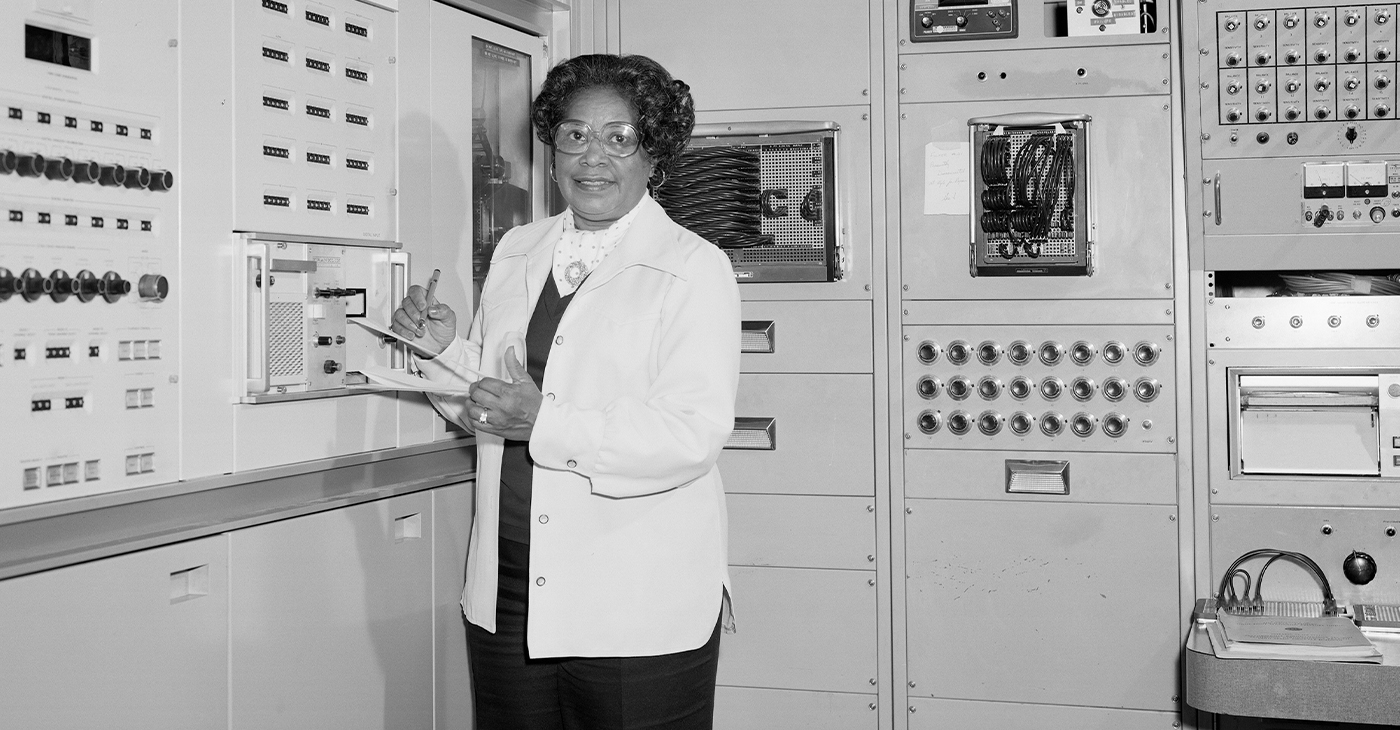
Against All Odds: Mary Jackson’s Journey to NASA Engineer
Jackson’s life took a significant turn when she was offered the opportunity to work in a wind tunnel, a facility used to test the effects of air moving over aircraft structures. It was here that her passion for engineering truly took flight. However, there was a challenge: to become an engineer, she needed to take advanced courses that were only offered at a segregated high school.
By Tamara Shiloh
When we talk about breaking barriers in science, technology, engineering, and mathematics, the name Mary Jackson deserves a place at the top of the list.
Jackson was born in 1921 in Hampton, Virginia, a place that would later become central to her groundbreaking work. From an early age, she showed a strong aptitude for math and science—subjects that, at the time, were not widely encouraged for African American women. But Jackson was not one to be limited by expectations. She earned degrees in mathematics and physical science from Hampton Institute (now Hampton University), setting the foundation for a career that would change history.
Before joining NASA, Jackson worked as a teacher and later as a research mathematician at the National Advisory Committee for Aeronautics (NACA), the agency that eventually became NASA. Like many African American women of her time, she began her career as a “human computer,” performing complex calculations by hand. It was in this environment that she worked alongside brilliant minds like Katherine Johnson, forming part of a powerful group of African American women whose calculations helped launch America into space.
Jackson’s life took a significant turn when she was offered the opportunity to work in a wind tunnel, a facility used to test the effects of air moving over aircraft structures. It was here that her passion for engineering truly took flight. However, there was a challenge: to become an engineer, she needed to take advanced courses that were only offered at a segregated high school.

Jackson did something truly remarkable. She petitioned the city of Hampton for permission to attend those classes. She didn’t accept “no” as an answer. And she won.
In 1958, Jackson became NASA’s first African American female engineer.
But Jackson’s impact didn’t stop there.
Later in her career, she chose to step away from her engineering position—not because she couldn’t continue, but because she wanted to make a difference. She moved into roles focused on equal opportunity, working to ensure that women and minorities had access to the same opportunities she fought so hard to get.
Jackson’s story gained wider recognition through the book and film Hidden Figures, which highlighted the contributions of African American women at NASA. But long before the spotlight found her, Jackson was doing the work—quietly, persistently, and brilliantly.
Jackson retired from Langley in 1985. Among her many honors were an Apollo Group Achievement Award and being named Langley’s Volunteer of the Year in 1976. She served as the chair of one of the center’s annual United Way campaigns and a member of the National Technical Association (the oldest African American technical organization in the United States).
She and her husband Levi had an open-door policy for young Langley recruits trying to gain their footing in a new town and a new career. A 1976 Langley Researcher profile might have done the best job capturing Mary’s spirit and character, calling her a “gentlelady, wife and mother, humanitarian and scientist.”
For Jackson, science and service went hand in hand.
She died on Feb. 11, 2005, at age 83, at a convalescent home in Hampton, Virginia.
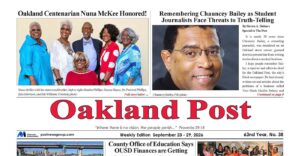


Asm. Corey Jackson Announces Launch of 24-Hour Childcare in His District

IN MEMORIAM: The Rev. Leon “Sonny” Clark, Longtime Orange County Pastor and Community Leader, Dies at 72

Poll: Becerra Widens His Lead Over Hilton; Californians Split on Wealth Tax

From Historic Memories to New Possibilities: Oakland Celebrates Coliseum 60

County Office of Education Says OUSD Finances Are Getting Healthier, Materially Stronger

LIVE FREE Sunday Dinner Brings Faith, Fellowship and Civic Conversation to Oakland

Remembering Chauncey Bailey as Student Journalists Face Threats to Truth-Telling

BLACspace Cooperative Invites Bay Area to Experience Oakland’s Black Cultural Ecosystem Through a BLAC Map Tour + Party

In Wake of Death on Doorstep, Williams Chapel Baptist Church Calls for Better Care, Funding for Unhoused

Oakland Centenarian Nuna McKee Honored!

Caribbean Nations Produce Action Plan Calling for UK Reparations Over Slavery

Oakland Post: Week of September 23 – 29, 2026

Doulas Are Helping Black California Moms Navigate Pregnancy–Even as High Mortality Rates Persist

Newsom Signs Addictive Social Media Law to Protect Kids

On Your November Ballot: Prop 38 Would Allocate $8.4 Billion to Immunology and Immunotherapy Funding

Standoff for Justice: Our Homes Are Worth Fighting For

Oakland Post: Week of August 26 – September 1, 2026

Frontier Airlines’ Return to Oakland Airport Brings Flights, Jobs and Opportunity

Gubernatorial Candidate Steve Hilton Blasts California New Tire Rules; Newsom Hits Back

Chef Sharon Lee Blends Culinary Excellence, Education and Empowerment

Jackie Wright Champions Bay Area Stories, Filmmakers and Cultural Institutions

Big City Mayors Ask for “Yes” Vote on Housing Bond Measure; Conservatives Say “No”

Oakland Coliseum Project Opens Door for Small Businesses to Build Bigger

Gov. Newsom’s Latest Appointees Include Sacramento Advocate for Formerly Incarcerated Students; State’s New Tech Chief

Misnamed ‘Parent’ PAC Seeks to Influence Oakland School Board Elections

Longtime BWOPA Member Brendalyn Goodall Appointed to California Workforce Development Board

Gov. Newsom Signs Law Shielding Immigration Aid Workers From Doxing Threats

Secretary of State Shirley N. Weber Urges Californians to Vote Early as Voter ID Battle Intensifies

From Palestine to Oakland: Seeds for Liberation Examines Shared Struggles for Freedom

IN MEMORIAM: Dolly Parton Dead at 80 — How She Built a Legacy of Love and Earned Her Place in Black Culture

The Conversation With Al McFarlane 6/23/26

Media Monday 6/22/26

LIVE! ASK ALMA! — TUES. 6.23.26 7PM EST

Car Buying Secrets: 4 Hidden Checks Before You Sign!

Is This 550 HP Charger Worth YOUR Money? AutoNetwork Review

Celebrating Juneteenth – Frederick Douglass on education and resistance

LIVE! — ASK ALMA! — TUES. 6.19.26 7PM EST

Hyundai Ioniq 5 Parking, Safety, and 360 View #shorts

2025 Ioniq 5 New Wiper & Powerful Performance! #shorts

Electric SUV Range: Is 259 Miles Enough? #shorts

EV Charging: How Fast Can You Charge an Electric Vehicle? #shorts

Biometric Cooling… Messaging Seats…Come on! 2025 Infiniti QX80 Autograph 4WD

Charged Up: Witness the Magic of a Fully Electric Car! #shorts

Range Rover Sport PHEV Included…: See What’s Inside This Luxury SUV! #shorts

Invisible Hood View: Perfect Parking with X-Ray Vision! #shorts
-
 Community2 weeks ago
Misnamed ‘Parent’ PAC Seeks to Influence Oakland School Board Elections
-

 Activism3 weeks ago
Oakland Post: Week of September 2 – 8, 2026
-

 Community2 weeks ago
Richmond Tiny House Village Farm & Garden Set to Open Gates on Sept. 26
-

 Black History2 weeks ago
Latest Massacre in Haiti Reveals Cruelty U.S. Deportations
-

 Black History2 weeks ago
OPINION: Nolan Wells’ Death One of Several Signifying Racial Terror Lives on in U.S. South
-

 Activism2 weeks ago
Oakland Post: Week of September 9 – 15, 2026
-

 Community2 weeks ago
Democratic Clubs Interview Candidates for Oakland School Board
-
 Featured2 weeks ago
‘Ready to See These Bills Become Law’: Sen. Weber’s Package of 15 Bills Advance to Gov. Newsom’s Desk
