Connect with us

Activism

Let’s Talk Health: Empowering Our Community with Health Literacy

At Covered California, we recognize that understanding health insurance is more than just choosing a plan –it’s about having the knowledge to make informed decisions that lead to healthier lives. That’s why this year’s open enrollment campaign, “Let’s Talk Health,” focuses on breaking down barriers and simplifying the complex language of health care.

Published

on

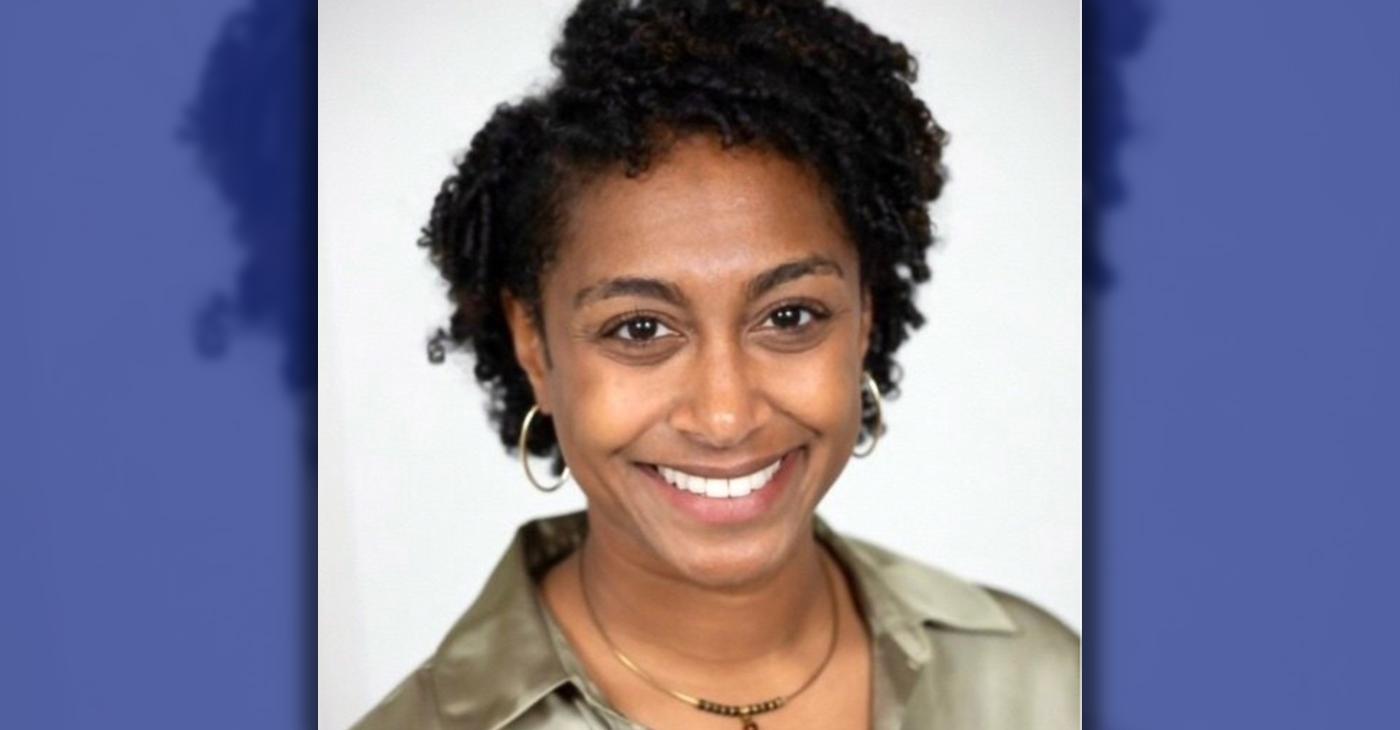
Dr. Monica Soni. Courtesy of Covered California
Dr. Monica Soni. Courtesy of Covered California.

By Dr. Monica Soni

Navigating health insurance can often feel overwhelming, especially for individuals and families who are new to the system or unsure about their options.

At Covered California, we recognize that understanding health insurance is more than just choosing a plan –it’s about having the knowledge to make informed decisions that lead to healthier lives. That’s why this year’s open enrollment campaign, “Let’s Talk Health,” focuses on breaking down barriers and simplifying the complex language of health care.

Health literacy is critical for achieving better outcomes, reducing disparities, and ensuring every African American and Black Californian — regardless of their income, ethnicity, or background — has access to quality care. By making health insurance simpler to understand, we empower individuals to access preventive services, manage chronic conditions, and avoid costly medical bills.

Breaking Barriers in African American and Black Communities
This year, “Let’s Talk Health” places a special focus on supporting African American and Black communities, where systemic inequities in health outcomes persist. These communities often face higher rates of chronic conditions and challenges in navigating the health care system. To address these disparities, Covered California partnered with trusted organizations to provide information, tips and resources.

In San Francisco, Andre Atkins, Director of Programs at Rafiki Coalition, led a dialogue with Dr. Kim Rhoads, Community Engagement Director at UCSF Helen Diller Family Comprehensive Cancer Center; Destiny Williams, Health and Wellness Program Manager at Rafiki Coalition; and myself.

These conversations play a vital role in the pursuit of health equity by sharing power and creating spaces where our community can learn, share experiences, ask questions and connect with advocates who work daily to understand their unique needs. Through these efforts, we reaffirm our dedication to fostering equity and inclusion in health care, ensuring that every voice is heard and supported.

Why Health Literacy Matters
Health literacy goes beyond understanding health care terms. It’s about empowerment. It equips individuals to make informed decisions, from choosing the right health plan to finding a provider to deliver preventive care and seeking mental health services. At Covered California, we provide tools and resources, such as side-by-side plan comparisons and financial assistance details, to ensure everyone can navigate their options confidently and access the care they need.

Taking the First Step
Whether you’re a student, part-time worker, family of four, open enrollment is your opportunity to prioritize your health and your future. This year’s open enrollment period runs from Nov. 1, 2024, to Jan. 31, 2025, and we’re here to assist you every step of the way.

Consumers must select a health plan by the Dec. 31 to receive coverage for the entire year, starting Jan. 1, 2025.

To find the plan that’s right for you, and take the first step toward a healthier tomorrow, visit CoveredCA.com and fill out the application yourself or put in your ZIP code and connect with a certified agent in your neighborhood who can guide you through your options. Together, we can break down barriers and ensure that all Californians have the tools to thrive.

Dr. Monica Soni, MD, is the Chief Medical Officer for Covered California, where she leads efforts in health equity, quality transformation, and clinical innovation. As a practicing board-certified internal medicine physician and health care leader with over a decade of experience, Dr. Soni is committed to improving affordability, access, and outcomes for all Californians.

Continue Reading
Click to comment

Leave a Reply

Your email address will not be published. Required fields are marked *

Activism

California Launches Free Diaper Program for Newborns Statewide

The initiative, called Golden State Start, will provide 400 free diapers to every newborn delivered at participating California hospitals beginning this summer. The state is partnering with Baby2Baby, a California-based nonprofit that distributes essential items to children in need nationwide.

Published

on

iStock
iStock.

By Bo Tefu, California Black Media

Gov. Gavin Newsom announced Friday that California will launch a first-in-the-nation program providing free diapers to families with newborns, part of a broader effort to lower costs for parents and improve infant health outcomes.

The initiative, called Golden State Start, will provide 400 free diapers to every newborn delivered at participating California hospitals beginning this summer. The state is partnering with Baby2Baby, a California-based nonprofit that distributes essential items to children in need nationwide.

State officials said hospitals participating in the program will give families the diapers when they are discharged after birth, helping parents leave with an immediate supply of newborn essentials.

“Every baby born in California deserves a healthy start in life,” Newsom said in a statement. He said the program is part of California’s broader affordability efforts, which also include free school meals, universal preschool for four-year-olds and expanded after-school programs.

The announcement comes ahead of Mother’s Day and is tied to the administration’s broader CalRx initiative, which aims to reduce costs for essential products and medications. State officials said California is also exploring ways to lower diaper prices by challenging high costs from major brands.

The first year of the program will prioritize hospitals serving large numbers of Medi-Cal patients, with plans to expand to additional hospitals and birthing centers over time. Officials said the effort is intended to reduce financial pressure on low-income families and improve infant and maternal health by ensuring parents have access to clean diapers.

“California families deserve to feel supported during one of life’s more exciting, yet vulnerable transitions,” First Partner Jennifer Siebel Newsom said in a statement. She said the program would allow parents to focus on caring for their newborns instead of worrying about basic supplies.

According to Baby2Baby, one in two families in the United States struggles to afford diapers. The organization has distributed more than half a billion items to children over the past 15 years through partnerships with shelters, hospitals, foster care programs and schools.

State officials said Baby2Baby will oversee diaper purchasing, warehousing and distribution through its existing hospital and community partnerships across California.

Continue Reading

Activism

Asm. Jackson Bill Requiring Anti-Hate Speech Training for Calif. Public Officials Sent to “Suspense File”

The bill, authored by Assemblymember Corey Jackson (D-Moreno Valley), would add one hour of anti-hate speech instruction to the sexual harassment prevention training already required for state and local officials. The proposal applies to legislators, constitutional officers, city council members, county supervisors and school board trustees statewide and would take effect in 2028 if approved. 

Published

on

Photo courtesy of the office of Assemblymember Corey Jackson (D-Moreno Valley).

By Bo Tefu, California Black Media

After a hearing on May 6, the Assembly Appropriations Committee ordered Assembly Bill (AB) 1578 to the Suspense File, delaying action on legislation that would require California public officials to complete anti-hate speech training.

The bill, authored by Assemblymember Corey Jackson (D-Moreno Valley), would add one hour of anti-hate speech instruction to the sexual harassment prevention training already required for state and local officials. The proposal applies to legislators, constitutional officers, city council members, county supervisors and school board trustees statewide and would take effect in 2028 if approved.

“It’s time for us to continue to work on and finally go on the offense when it comes to hate racism and xenophobia to make sure that all people are able to live in the state of California with the dignity and honor that they deserve,” said Jackson, who also chairs the Assembly Select Committee on Racism, Hate and Xenophobia.

On April 16, the Assembly Committee on Governmental Organization voted 16-5 to advance the measure to Appropriations. Jackson has said the bill is part of a broader legislative package informed by findings from the Commission on the State of Hate and aimed at addressing hate in public spaces, workplaces and institutions.

In the California Legislature, a bill is placed on the “Suspense File” when it has a significant fiscal impact on the state budget — generally costing the state $150,000 or more from the General Fund or $50,000 or more from a special fund. Bills sent to suspense are held by the Assembly or Senate Appropriations Committee and reviewed later in a single batch hearing, where lawmakers decide which measures move forward, are amended, or quietly die without a vote.

Jackson said the training would focus on the real-world consequences of inflammatory rhetoric.

Supporters, including the Alameda County Office of Education, say the training would help elected officials better understand how language can perpetuate bias.

“In the current political climate, where discourse can often become polarized and inflammatory, it is more important than ever for elected officials to receive specialized anti-hate speech training,” wrote Lucy Carter, director of policy and governance for the Alameda County Office of Education, in a letter supporting the bill.

Opponents, including the California Family Council, argue the term “hate speech” is too subjective and could suppress political disagreement.

Continue Reading

Activism

More and More, Black Californians Are Worried About Rising Costs of Housing, Energy, Food and Gas 

According to an April 2024 report by the Greenlining Institute, low-income Black Californians are struggling with affordability due to a combination of historical systemic barriers and modern economic pressures. The Greenlining Institute is a California-based policy, research, and advocacy nonprofit founded in 1993 to fight systemic racism and economic injustice.

Published

on

iStock
iStock.

By Antonio‌ ‌Ray‌ ‌Harvey‌, California‌ ‌Black‌ ‌Media‌

Housing, energy, food and gas are four essential household expenses, and their rising costs are forcing residents—especially lower-income households—to make difficult trade-offs, Assemblymember Rhodesia Ransom (D-Stockton) said at a conference on affordability last week in Sacramento.

Ransom, a member of the California Legislative Black Caucus (CLBC), noted a shift in consumer behavior, stating, “Before people used to choose between things that they wanted and things that they needed.”

“Now, what we’re hearing from constituents is they are prioritizing their needs differently,” she said. “Because of the affordability crisis, it’s no longer about choosing between other needs. Our constituents are now saying ‘what needs to be prioritized?’ Gas and food are at the top of the list.”

Ransom made the comments about affordability at Capitol Weekly’s informational conference titled “Affordability: The Cost of Living in California,” which was held on April 30 at the University of California’s Student and Policy Center.

Co-hosted with the University of California Student and Policy Center, the political conversations focused on identifying policy solutions to the state’s extremely high prices for energy, food, and essentials.

The keynote speakers at the conference were former Assemblymember Lorena Gonzalez, president of the California Federation of Labor Unions, and Mike Madrid, a political strategist, author, and senior fellow at UC Irvine.

Conversations about affordability are taking on greater urgency as the election season kicks in, speakers said.

According to an April 2024 report by the Greenlining Institute, low-income Black Californians are struggling with affordability due to a combination of historical systemic barriers and modern economic pressures. The Greenlining Institute is a California-based policy, research, and advocacy nonprofit founded in 1993 to fight systemic racism and economic injustice.

Black households in California experience the highest levels of rent burden; approximately 65% of Black renters, according to the Greenlining report. Historical “redlining” and ongoing discrimination have restricted homeownership. Black families also pay 43% more for energy than White households, partly because they are more likely to live in older, less energy-efficient rentals.

In addition, roughly 1 in 3 Black adults (36.5%) reported household food insecurity in late 2025, more than double the rate for White adults. This is often exacerbated by “food deserts” in predominantly Black neighborhoods.

In March, Assembly Minority Leader Heath Flora (R-Ripon) expressed concerns about affordability in California, describing it as a crisis where families are being “pushed to the edge.”

“Californians should not have to choose between putting food on the table or filling up their car,” Flora stated. “We need to cut costs now. Not tomorrow, not next week, not next month. Now.”

Cuts to the federal Supplemental Nutrition Assistance Program (SNAP) funding are being driven by the Trump Administration’s One Big Beautiful Bill Act (H.R. 1), which is reducing federal spending by approximately $187 billion through 2034.

Those reductions are putting more pressure on the state to help, Ransom said. According to the AAA Gas Prices website, as of May 8, California’s gasoline prices averaged over $6 per gallon in some areas, with various locations experiencing spikes of $7 to $8 per gallon. In California, fuel prices are driven by refinery maintenance and market volatility, while high food prices are linked to rising transportation costs, experts say.

Continue Reading

Subscribe to receive news and updates from the Oakland Post

* indicates required

CHECK OUT THE LATEST ISSUE OF THE OAKLAND POST

ADVERTISEMENT

WORK FROM HOME

Home-based business with potential monthly income of $10K+ per month. A proven training system and website provided to maximize business effectiveness. Perfect job to earn side and primary income. Contact Lynne for more details: Lynne4npusa@gmail.com 800-334-0540

Facebook

iStock
Activism41 minutes ago

California Launches Free Diaper Program for Newborns Statewide

Book covers. Photo courtesy of Terri Schlichenmeyer.
Advice47 minutes ago

Book Review: Books for College-Bound Students

Photo courtesy of the office of Assemblymember Corey Jackson (D-Moreno Valley).
Activism53 minutes ago

Asm. Jackson Bill Requiring Anti-Hate Speech Training for Calif. Public Officials Sent to “Suspense File”

iStock
Activism59 minutes ago

More and More, Black Californians Are Worried About Rising Costs of Housing, Energy, Food and Gas 

Crime Survivors Speak at the California State Capitol was a multi-day advocacy event held May 4–6 that called for increased support, services, and funding for crime victims. Organized by Crime Survivors for Safety and Justice (CSSJ), the gathering brought together more than 200 survivors and family members to advocate for legislative reforms. CBM photo by Antonio Ray Harvey.
Activism1 hour ago

Advocates Rally at State Capitol to Demand Heat Protections for Incarcerated People; More Funding for DV Survivors

Lecturer Lisa Troseth will speak on "Moving past fear to healing" on May 23 at the Orinda Library Auditorium. Photo courtesy of the Christian Science Board of Lectureship.
Bay Area2 days ago

Coming to Orinda: A Lecture on Finding the Strength to Heal and Move Past Fear With Divine Love

William “Bill” Patterson, Jr. Courtesy Peralta College District
Activism2 days ago

EBMUD Enshrines the Legacy of  its First Black Board Member William ‘Bill’ Patterson 

Mary Jackson. Public domain.
Arts and Culture2 days ago

Against All Odds: Mary Jackson’s Journey to NASA Engineer

Researchers pointed out that the number amounts to 1 in every 50 adults, with 3 out of 4 disenfranchised living in their communities, having completed their sentences or remaining supervised while on probation or parole. (Photo: iStockphoto)
Activism2 days ago

Supreme Court Voting Rights Ruling Reverberates From the South to California

Customers shopping in Marin City Flea Market. Photo courtesy of marincityflea.org.
Alameda County2 days ago

The Marin City Flea Market Is Back

Left to right:  Evangeline Byars  and Carmella Carrington are gaining nationwide attention with their STOPDEEDTHEFT.org movement.
Activism2 days ago

The People’s Coalition to Stop Deed Theft Speaks at National Probate Reform Coalition Meeting

Supt. Dr. Denise Saddler. File photo.
Amsterdam News2 days ago

School District Extends Supt. Dr. Denise Saddler’s Contract for a Second Year

Oakland was one of four cities participating in a public safety convening.  Courtesy image.
Activism2 days ago

Mayor Barbara Lee Joins National Public Safety Leaders to Advance Proven Violence Reduction Strategies

Oakland Mayor Barbara Lee presents Oakland actor Delroy Lindo the key to the cCity Council chambers of Oakland City Hall in downtown Oakland. Photo by Carla Thomas. 
Alameda County2 days ago

Mayor Barbara Lee Declares ‘Delroy Lindo Day,’ Presents Acclaimed Actor with Key to the City

Left to right: Yawo Tekpa, OPIC Manager, One Stop Operator; Sofia Navarro, Deputy City Administrator; and Ray Lankford, CEO of the Oakland Private Industry Council. Photo by Jonathan Fitness Jones.
Activism2 days ago

‘Hire Oakland’ Job Fair Draws 2,000, Connecting Residents to Immediate Job Opportunities

Trending

Copyright ©2021 Post News Group, Inc. All Rights Reserved.