
Commentary
Legally Speaking: Joey Jackson Counts Among Countries top Legal Minds
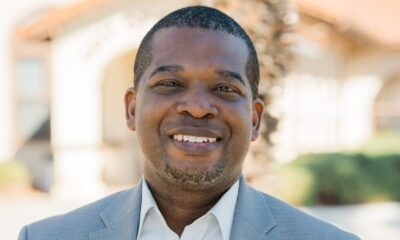
NNPA NEWSWIRE — A nationally-recognized criminal defense attorney, Jackson has gained notoriety as perhaps the most respected legal analyst on television where he provides insight on legal matters for HLN and CNN.

By Stacy M. Brown, NNPA Newswire Correspondent
@StacyBrownMedia

Upon receiving the Harvard Law School Center on the Legal Profession’s Award for Global Leadership two years ago during a celebration of the history of Black Lawyers, acclaimed attorney Vernon E. Jordan Jr. spoke fervently about how he once sat in a courtroom and watched in awe of other legal giants.
Robert Carter, Julius Coleman and Thurgood Marshall were among the names Jordan rattled off. Some would argue that the list could have also included Joey Jackson, of Watford Jackson, PLLC in New York.
A nationally-recognized criminal defense attorney, Jackson has gained notoriety as perhaps the most respected legal analyst on television where he provides insight on legal matters for HLN and CNN.
It’s a career that almost didn’t happen because Jackson told NNPA Newswire that he had little desire to become an attorney and even less interest in television. “My mom insisted I go to college and really guided me in that direction … thank goodness,” he said. “Once there, I learned a whole lot about myself and my tolerance for work and how to be disciplined enough to complete a task.”
He graduated Hofstra Law School in 1995 and worked for the New York State Assembly Speaker as a legislative analyst, the New York State Education Department and Congressman Charles B. Rangel’s office in Washington.
Later, he taught business and Civil Rights Law at Monroe College.
At Watford Jackson, where his focus is two federal districts and the Supreme Court, Jackson works on cases that include the criminal defense, regulatory enforcement, government investigations, labor union arbitration and complex litigation practice areas.
“What inspires me is the ability to make a difference in people’s lives,” Jackson said. “Winning a case often gives someone a new life because it protects their freedom and gives them a more favorable view of the justice system.”
He gave a profound nod to the late Johnnie Cochran, the famed lawyer who successfully defended O.J. Simpson during “The Trial of the Century.”
“[Cochran] died about 13 years ago, yet his name comes up in legal circles regularly as a person who stood for justice, would go to the end of the earth for his clients, and never took no for an answer,” Jackson said of Cochran.
“In his eyes, no case was impossible to win – and that’s how he lived and the example he set. ‘Look for the opportunities and the possibilities,’” he said, adding, “Let’s face it, O.J. was guilty.”
As well-liked and respected as he is on television, Jackson said becoming a legal analyst happened by accident. “I received a phone call from the Fox News Channel out of the blue about 10 years ago. They were looking for someone to comment on a criminal case,” Jackson recalled.
“I had no clue what they were talking about or asking of me since I was not connected to the case. I nearly talked my way out of a television career by asking them why someone unconnected to the case would speak about it.”
Jackson continued:
“The caller explained that they customarily have legal panels and debates about cases and that they researched my background and thought I would be a good candidate.”
Jackson provided commentary for Fox News for nearly 5 years, without compensation but other networks realized his talent and wealth of knowledge. Jackson was offered a contract with Court TV’s “In Session,” which eventually led to a deal with HLN and later CNN where he’s often called upon for celebrity cases.
“If reality TV teaches us anything, it is that people love soap operas. People enjoy learning that celebrities are as imperfect as the rest of us are,” Jackson said.
“They enjoy even more knowing that the long arm of justice can wrap its arms around even those we believe to be so larger as to be larger than life itself.
“We think of celebrities as being rich people with perfect lives, who are untouchable. Following their cases shows us that this is far from true.”
Jackson continued:
“And let’s not forget that sometimes the magnitude of the crime itself makes the person a celebrity – Jodi Arias, Casie Anthony, George Zimmerman.
“We can relate to the stories and drama that unfolds as we all weigh in as jurors, putting in our 3 cents and expressing our point of view.”
Once a prosecutor, Jackson said as a defense attorney he prepares his clients by “being the agent of reality.”
“I am a cheerleader, a booster, a supporter, and a soldier – but I am also a realist, and always try to be straightforward with a client regarding their chances or prevailing,” he said.
In describing some of his tougher cases, Jackson recalled that, as a prosecutor, he was once put in charge of prosecuting a football player who had just signed a multi-million dollar deal and was in New York celebrating at the China Club.
“He ended up beating up the victim pretty bad because the victim was trying to talk to his girlfriend. I could not downgrade the charges because the victim was hospitalized and beaten pretty badly,” Jackson said.
“His defense attorney was an experienced veteran from a major firm, who belittled me, shamed me, and tried to get into my head at every turn. I wasn’t being unreasonable, just thought he had to be held accountable. We went to trial and he was convicted,” Jackson said.
As a defense attorney, Jackson described one oddly adjudicated case where his client was being prosecuted in two jurisdictions for various crimes, including attempted murder.
“The prosecutor reached a global plea deal, meaning they got approval from the other county to resolve his case with a plea in the jurisdiction we were in. It was a sweet deal. Five years to cover three violent felony cases (the others were armed robbery with violent assault).
“My client could not make up his mind as to whether he wanted to go to trial or take the deal. I implored him to take the deal, but he said he wasn’t sure. I am very sensitive to a client who doesn’t want a deal because I never want to give the impression that I am forcing him to do so.
“I asked the judge for more time and the judge gave my client until after the lunch recess to take the deal or go to trial. I spent the entire lunch speaking with my client and his family.
“He finally said it made sense and he would take the deal.
“When we came back after lunch, the prosecutor doubled the offer and said he wanted ten years unless my client told on his associates.
“A two-hour lunch would cost my client 5 more years. He took the deal. The judge scolded the prosecutor for being so dishonorable but it was to no avail. My client got the 10 years anyway (he was facing 25)… I felt miserable.”
With heightened awareness of sexual harassment and assaults, Jackson applauded the #MeToo movement, but also offered caution. “The #MeToo movement and #TimesUp are important in allowing women to express themselves without shame or fear of reprisals,” he said. “It’s high-time that women are able to tell their stories – without being denigrated, disbelieved, ridiculed and belittled, so kudos to the movement.”
“That said, it’s perfectly appropriate to challenge evidence, scrutinize every situation thoroughly, and evaluate every case on a case-by-case basis,” Jackson said. “That’s what our judicial system is all about, and will continue to be about.”
Jackson called it a privilege to work in law and to educate television viewers.
“My regret is that I cannot help everyone who reaches out, but we do the best to provide as much assistance as we can,” he said.
To that end, Jackson named three of what he called the most important things he’d want everyone to know about him.
“That I try to face life with optimism and energy by seeing the good over the bad; that I try to treat all people with dignity and respect no matter their station; and that I try to wake up every day, and leave no stone unturned in trying to make an impact in whatever I do,” Jackson said.









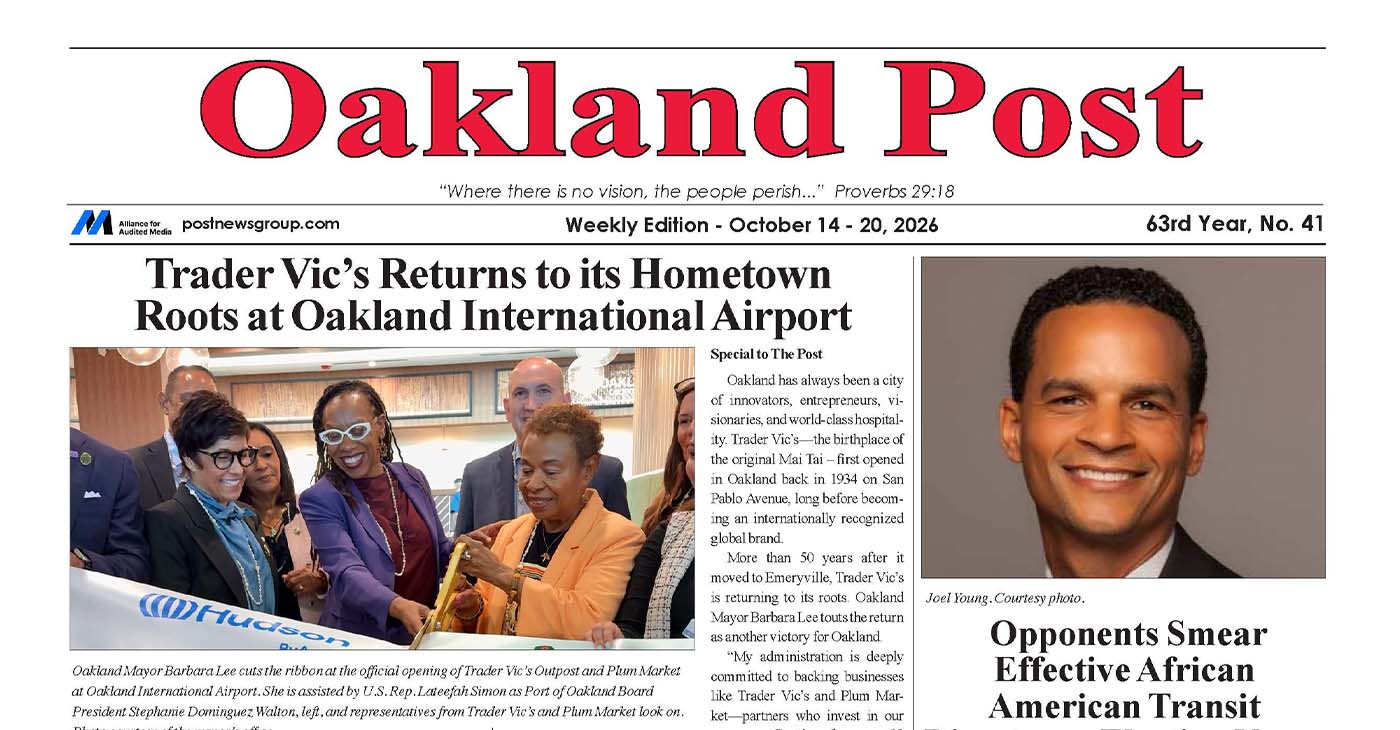
To enlarge your view of this issue, use the slider, magnifying glass icon or full page icon in the lower right corner of the browser window.
Black History
OP-ED: The Black Church Writes AI’s Next Chapter
BLACKPRESSUSA NEWSWIRE — I implore my fellow faith leaders to use these tools. Start now and use them with wisdom. We count on each and every one of you to make sure our communities help write the next chapter of this story. This rapid change is not as unfamiliar as it may sound. My first understanding of AI came from using a calculator for the first time in grade school. We did not call it AI, but it was a tool that helped me work through mathematical equations hours more efficiently.


For generations, the Black church has stood strong in our communities through every historical change this country has experienced. During the civil rights movement and in recent times, faith leaders have helped uplift Black sanctuaries to register voters, keep food pantries open for people in need, and sit with families in hospital rooms in their most desperate moments. When our people faced new trials, they could always look to our faith leaders and the church to lean in to help us be included in these transformative changes.
Artificial intelligence is the latest revolutionary change to impact our society, and much like other transformations before us, underserved communities often get left behind.
I was recently featured in a report entitled “Faith, Community & AI” and it found that people send ChatGPT more than 70 million messages a week about religion. Nearly 22 million involve studying sacred texts, and 16 million ask about religious practices and holy days. Our members make up part of those numbers. They bring questions of faith to these tools every day.
Pastors have noticed, and according to a September 2025 Lifeway Research survey of 1,003 Protestant pastors, 42 percent said they use or experiment with AI in ministry. I count myself among them.
I write my sermons by hand, through prayer and study. When I finish a draft, I ask ChatGPT this question: “Where might this sermon become unclear or difficult to follow for someone early in their walk of faith?” It shows me gaps in my preparation, like where I incorrectly assumed everyone would know the context of who the Pharisees were. Then, change comes from my own pen, not the robot. The tool helps me reach the person in the back pew while the message still comes from me.
If I could have my wish, our whole community would take a similar posture. We must use these tools, understand them, and most importantly be present to help shape them if we want to be included in the coming change.
I implore my fellow faith leaders to use these tools. Start now and use them with wisdom. We count on each and every one of you to make sure our communities help write the next chapter of this story. This rapid change is not as unfamiliar as it may sound. My first understanding of AI came from using a calculator for the first time in grade school. We did not call it AI, but it was a tool that helped me work through mathematical equations hours more efficiently.
It starts with training; there is no involvement without understanding. Free AI trainings have begun in our churches and community centers across the nation. Every faith leader should sign up and, when possible, encourage members of your congregations to join you. By learning how to use AI, we can better understand what it can do, make up our own minds about its impact, and have a say in how it shapes our communities.”
Next, we must be at the tables where the builders of these tools make decisions. Presence is the first step toward understanding, and that gap is only bridged through a coordinated effort. How can any tool serve a community well if that community is not part of the conversation? Our traditions, needs, and concerns must be accounted for, and Black faith leaders are already making that happen. OpenAI’s recent Faith report states plainly that AI should never become an arbiter of religious truth. I fully intend to hold the company to its word, and the most effective way I can do that is from inside.
I will close with this––we must diligently protect what only the church can give. A believer in Seoul, Korea quoted in the report warned, “if you pour every struggle into a private chat, your pastor and your friends may never learn you need help.” A chatbot will not sit with a grieving family or pray with you at two in the morning. As we adopt this technology, it is up to us to ensure it keeps people connected to each other and to their church.
Rev. Dr. Adolphus Lacey is senior pastor of Bethany Baptist Church in Brooklyn, New York.

Black History
OP-ED: The Black Church Writes AI’s Next Chapter
BLACKPRESSUSA NEWSWIRE — I implore my fellow faith leaders to use these tools. Start now and use them with wisdom. We count on each and every one of you to make sure our communities help write the next chapter of this story. This rapid change is not as unfamiliar as it may sound. My first understanding of AI came from using a calculator for the first time in grade school. We did not call it AI, but it was a tool that helped me work through mathematical equations hours more efficiently.

For generations, the Black church has stood strong in our communities through every historical change this country has experienced. During the civil rights movement and in recent times, faith leaders have helped uplift Black sanctuaries to register voters, keep food pantries open for people in need, and sit with families in hospital rooms in their most desperate moments. When our people faced new trials, they could always look to our faith leaders and the church to lean in to help us be included in these transformative changes.
Artificial intelligence is the latest revolutionary change to impact our society, and much like other transformations before us, underserved communities often get left behind.
I was recently featured in a report entitled “Faith, Community & AI” and it found that people send ChatGPT more than 70 million messages a week about religion. Nearly 22 million involve studying sacred texts, and 16 million ask about religious practices and holy days. Our members make up part of those numbers. They bring questions of faith to these tools every day.
Pastors have noticed, and according to a September 2025 Lifeway Research survey of 1,003 Protestant pastors, 42 percent said they use or experiment with AI in ministry. I count myself among them.
I write my sermons by hand, through prayer and study. When I finish a draft, I ask ChatGPT this question: “Where might this sermon become unclear or difficult to follow for someone early in their walk of faith?” It shows me gaps in my preparation, like where I incorrectly assumed everyone would know the context of who the Pharisees were. Then, change comes from my own pen, not the robot. The tool helps me reach the person in the back pew while the message still comes from me.
If I could have my wish, our whole community would take a similar posture. We must use these tools, understand them, and most importantly be present to help shape them if we want to be included in the coming change.
I implore my fellow faith leaders to use these tools. Start now and use them with wisdom. We count on each and every one of you to make sure our communities help write the next chapter of this story. This rapid change is not as unfamiliar as it may sound. My first understanding of AI came from using a calculator for the first time in grade school. We did not call it AI, but it was a tool that helped me work through mathematical equations hours more efficiently.
It starts with training; there is no involvement without understanding. Free AI trainings have begun in our churches and community centers across the nation. Every faith leader should sign up and, when possible, encourage members of your congregations to join you. By learning how to use AI, we can better understand what it can do, make up our own minds about its impact, and have a say in how it shapes our communities.”
Next, we must be at the tables where the builders of these tools make decisions. Presence is the first step toward understanding, and that gap is only bridged through a coordinated effort. How can any tool serve a community well if that community is not part of the conversation? Our traditions, needs, and concerns must be accounted for, and Black faith leaders are already making that happen. OpenAI’s recent Faith report states plainly that AI should never become an arbiter of religious truth. I fully intend to hold the company to its word, and the most effective way I can do that is from inside.
I will close with this––we must diligently protect what only the church can give. A believer in Seoul, Korea quoted in the report warned, “if you pour every struggle into a private chat, your pastor and your friends may never learn you need help.” A chatbot will not sit with a grieving family or pray with you at two in the morning. As we adopt this technology, it is up to us to ensure it keeps people connected to each other and to their church.
Rev. Dr. Adolphus Lacey is senior pastor of Bethany Baptist Church in Brooklyn, New York.


Mayor Barbara Lee Holds Special State of the City Address in Deep East Oakland

Practitioners of African Traditional Spirituality Offer Ancestral Reverence Ritual Oct. 31

It’s Time to Lose Weight Before the Holidays

Trader Vic’s Returns to Its Oakland Roots

Oakland Coal Terminal Backed by Trump Would Be Bigger, Dirtier Than Promised, Says Report

Opponents Smear Effective African American Transit Director as Election Nears

Oakland Post: Week of October 14 – 20, 2026

OP-ED: The Black Church Writes AI’s Next Chapter

OP-ED: The Black Church Writes AI’s Next Chapter

WCCUSD Joins Statewide Organic School Food Purchasing Cooperative

Democrats, Community Groups Back Measure EE to Change How Oakland Is Governed

Four Tips to Help You Plan a Holiday “Staycation”

Veterans Housing Project Proposed for South Richmond
PRESS ROOM: Transformative Justice Coalition 2026 Voting Rights Champion Awards Reception ‘Yesterday Is Today: The Battle For Voting Rights

Mayor Lee Delivers 2026 State of the City Address: ‘Oakland Continues to Be on the Move’

Misnamed ‘Parent’ PAC Seeks to Influence Oakland School Board Elections

Poll: Becerra Widens His Lead Over Hilton; Californians Split on Wealth Tax

Oakland Post: Week of September 9 – 15, 2026

County Office of Education Says OUSD Finances Are Getting Healthier, Materially Stronger

Listening as a Lifeline: A Doula’s Witness to Black Maternal Health

Richmond Tiny House Village Farm & Garden Set to Open Gates on Sept. 26

Latest Massacre in Haiti Reveals Cruelty U.S. Deportations

Mayor Lee Announces $1 Million Kaiser Permanente Grant for Pilot Program to Address Homelessness, Clean Up Public Spaces throughout Oakland

OPINION: Nolan Wells’ Death One of Several Signifying Racial Terror Lives on in U.S. South

Zakiya Jendayi Arrested, Locked Out of Home by Sheriff’s Deputies

BLACspace Cooperative Invites Bay Area to Experience Oakland’s Black Cultural Ecosystem Through a BLAC Map Tour + Party

Oakland Post: Week of September 16 – 22, 2026

Doulas Are Helping Black California Moms Navigate Pregnancy–Even as High Mortality Rates Persist

Democratic Clubs Interview Candidates for Oakland School Board

Oakland People’s Arms Embargo Coalition Demands End to Military Shipments Thru Oakland

The Conversation With Al McFarlane 6/23/26

Media Monday 6/22/26

LIVE! ASK ALMA! — TUES. 6.23.26 7PM EST

Car Buying Secrets: 4 Hidden Checks Before You Sign!

Is This 550 HP Charger Worth YOUR Money? AutoNetwork Review

Celebrating Juneteenth – Frederick Douglass on education and resistance

LIVE! — ASK ALMA! — TUES. 6.19.26 7PM EST

Hyundai Ioniq 5 Parking, Safety, and 360 View #shorts

2025 Ioniq 5 New Wiper & Powerful Performance! #shorts

Electric SUV Range: Is 259 Miles Enough? #shorts

EV Charging: How Fast Can You Charge an Electric Vehicle? #shorts

Biometric Cooling… Messaging Seats…Come on! 2025 Infiniti QX80 Autograph 4WD

Charged Up: Witness the Magic of a Fully Electric Car! #shorts

Range Rover Sport PHEV Included…: See What’s Inside This Luxury SUV! #shorts

Invisible Hood View: Perfect Parking with X-Ray Vision! #shorts
-
 Economy4 weeks ago
Poll: Becerra Widens His Lead Over Hilton; Californians Split on Wealth Tax
-
 Business4 weeks ago
County Office of Education Says OUSD Finances Are Getting Healthier, Materially Stronger
-
 Black History3 weeks ago
Listening as a Lifeline: A Doula’s Witness to Black Maternal Health
-
 Lead Story3 weeks ago
Zakiya Jendayi Arrested, Locked Out of Home by Sheriff’s Deputies
-
 Art4 weeks ago
BLACspace Cooperative Invites Bay Area to Experience Oakland’s Black Cultural Ecosystem Through a BLAC Map Tour + Party
-
 Black History4 weeks ago
Doulas Are Helping Black California Moms Navigate Pregnancy–Even as High Mortality Rates Persist
-
 Business4 weeks ago
From Historic Memories to New Possibilities: Oakland Celebrates Coliseum 60
-
 Community4 weeks ago
Asm. Corey Jackson Announces Launch of 24-Hour Childcare in His District

2 Comments