
Activism
Leaders Push Pardons, Payouts for “Port Chicago 50” Black Sailors U.S. Navy ‘Unjustly’ Punished
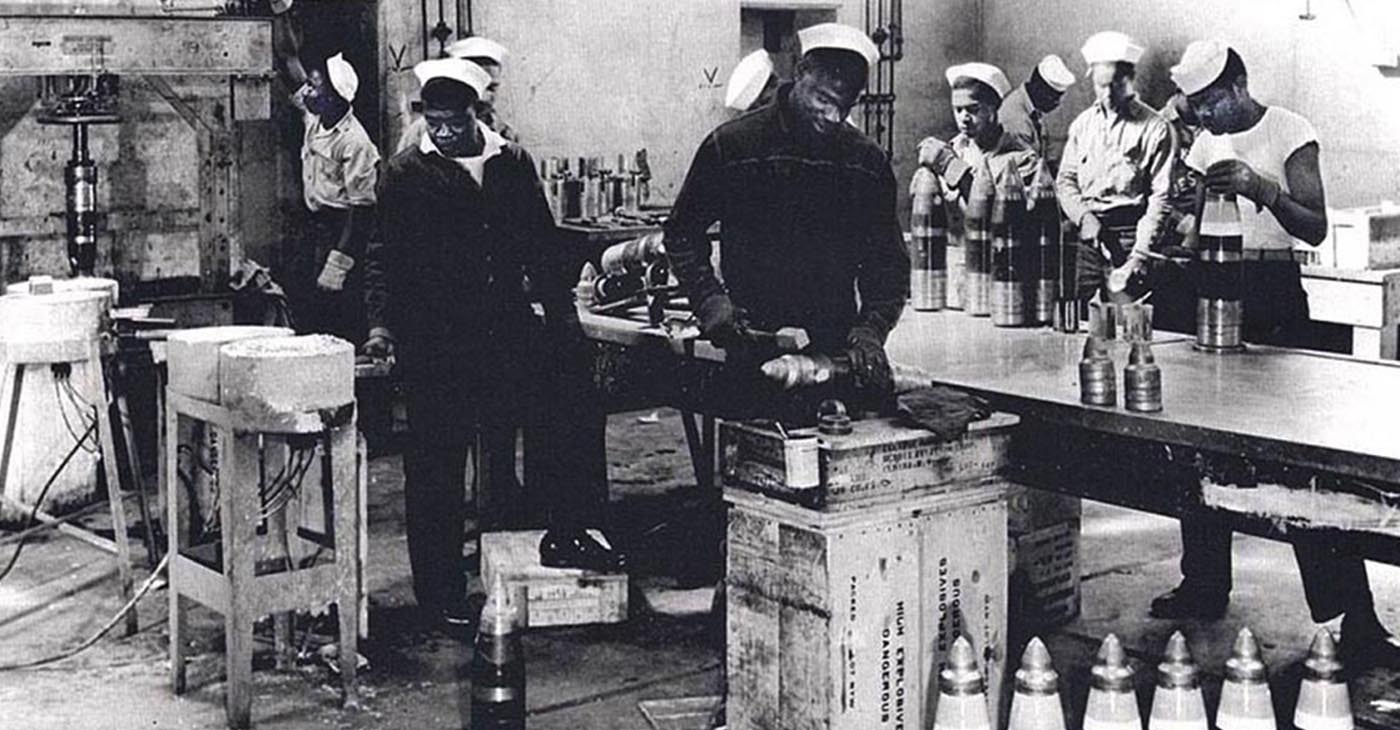
According to a 2009 California Senate Joint Resolution (SJR-21), authored by former state Sen. Roderick Wright (D-Inglewood), on the night of July 17, 1944, two transport vessels loading ammunition bound for the war in the Pacific at the Port Chicago naval base on the Sacramento River in California were suddenly engulfed in a gigantic explosion.

By Antonio Ray Harvey | California Black Media
A growing chorus of Black leaders and activists in California is calling on the federal government to pardon 50 Black sailors they allege the U.S. Navy wrongfully punished nearly 80 years ago.
Advocates are pushing for payments to the families of sailors who died in the 1944 explosion in Port Chicago that was the underlying cause for the Navy taking action against the servicemen.
They say the sailors’ families deserve more than an apology or posthumous pardon. They should get monetary compensation as well.
“The 50 African American sailors at Port Chicago who took a stand against discrimination should be remembered as heroes,” said Congresswoman Barbara Lee (D-CA-13).
In July of 1944, Port Chicago Naval Magazine, a few miles from the city of Martinez, was the scene of the largest explosion on the mainland of the United States. The blast shook the San Francisco Bay Area and the disturbance was felt as far away as Nevada.
About 320 sailors were killed instantly in the explosion. More than 200 of the midshipmen and commissioned officers were young African Americans.
Another 390 military and civilian personnel were injured, including 226 African American enlisted men. Only Black sailors were assigned the dangerous job of loading ammunition with no prior training in weapons handling.
“The Port Chicago tragedy is another painful reminder of how our nation must confront its history of systemic racism,” Lee said.
The people killed or injured in the disaster were loading highly explosive bombs, anti-submarine weapons, torpedoes, shells, and naval mines totaling 4,606 tons of ammunition onto the merchant ships SS Quinault Victory and SS E.A. Bryant.
According to a 2009 California Senate Joint Resolution (SJR-21), authored by former state Sen. Roderick Wright (D-Inglewood), on the night of July 17, 1944, two transport vessels loading ammunition bound for the war in the Pacific at the Port Chicago naval base on the Sacramento River in California were suddenly engulfed in a gigantic explosion.
“What I am pushing for is that everything of public record where Black folks were wronged needs to be righted,” Rev. Amos Brown, vice-chair of California’s Task Force to Study and Develop Reparation Proposals for African Americans, told California Black Media (CBM). Brown is the pastor of Third Baptist Church in San Francisco and president of the city’s NAACP branch.
“We must do our due diligence and get all the facts on this explosion. It’s definitely a case where Black folks had been wronged and injured. There was a culture of negligence here and was prevalent when it came to Black folks,” Brown added.
The exact cause of the Port Chicago explosion is still unknown.
People familiar with the explosion say incidents leading up to the disaster unfolded in a culture rife with negligence and racism.
A string of injustices followed it, as well. After the explosion, the Black sailors working at Port Chicago were ordered to continue loading ships under the supervision of an all-white crew of officers. Many of the surviving Black sailors felt that their commanders had not addressed the safety problems that triggered the blast but still asked them to continue loading ammunition.
Soon, the Black sailors, who had been trained for U.S Navy combat, decided to stage a protest. Afraid their lives were at risk, they stopped working. In September 1944, the Navy charged 50 of the Port Chicago sailors with disobeying orders and initiating a mutiny.
A court-martial was convened to try the men who staged what was called “the largest mutiny in the history of the Navy.” It was held for several weeks on Treasure Island outside of San Francisco.
The Black sailors were found guilty and sentenced to 15 years of hard labor in prison. Forty-seven of the 50 sailors were released in January 1946 while the remaining three served additional months in incarceration.
Only one member of the Port Chicago 50, Freddie Meeks, received a Presidential pardon from Bill Clinton in December 1999. Meeks, who was discharged in 1946, passed away in 2003 in Los Angeles.
“I knew we had a good president and I figured he would do the right thing, and he did the right thing with this pardon,” Meeks, 80, said in an Associated Press article published Dec. 24, 1999. “I’m not bitter because it’s something happened so long ago, you just outlive it, that’s all.”
Brown, 80, says the Port Chicago disaster was the result of carelessness, disregard for humans’ safety, and racism.
“All of the evidence is there,” Brown told CBM, speaking via phone from his San Francisco home.
People’s World, a publication that provides news and analysis of labor and democratic movements, reported that discrimination even played out in the compensation awarded to the families of those killed.
The Navy paid out $5,000 to white families but only $3,000 to Black families, the 2009 article reported.
Brown made the statement about the Port Chicago incident after learning that a group of Democratic lawmakers is attempting to revive an effort to pay the families of Black service members who fought on behalf of the nation during World War II for benefits they were denied or barred from receiving.
The federal legislative effort would compensate surviving spouses and all living descendants of Black WWII veterans whose families were denied the opportunity to build wealth with housing and educational benefits through the Government Issue (GI) Bill.
The site of the disaster is now called the Port Chicago Naval Magazine National Memorial, dedicated in 1994 to recognize the sailors who perished in the deadly blast. The memorial, managed by the National Park Service, is located at the Concord Naval Weapons Station near Concord.
Last summer, in honor of the 77th anniversary of the Port Chicago Disaster, U.S. Representatives Barbara Lee (D-CA-13) and Mark DeSaulnier (CA-11-Walnut Creek) introduced a House Resolution, recognizing the victims of the explosion.
The resolution called for the exoneration of the 50 African American sailors they say were unjustly court-martialed by the Navy.
“By calling for the exoneration of the Port Chicago 50, our resolution would bring justice to these sailors and recognize their courage as well as honor the service and sacrifice of the victims of this disaster,” DeSaulnier said.












Activism
Oakland Post: Week of September 23 – 29, 2026
The printed Weekly Edition of the Oakland Post: Week of September 23 – 29, 2026

To enlarge your view of this issue, use the slider, magnifying glass icon or full page icon in the lower right corner of the browser window.
Activism
Oakland Post: Week of September 16 – 22, 2026
The printed Weekly Edition of the Oakland Post: Week of September 16 – 22, 2026

To enlarge your view of this issue, use the slider, magnifying glass icon or full page icon in the lower right corner of the browser window.
Activism
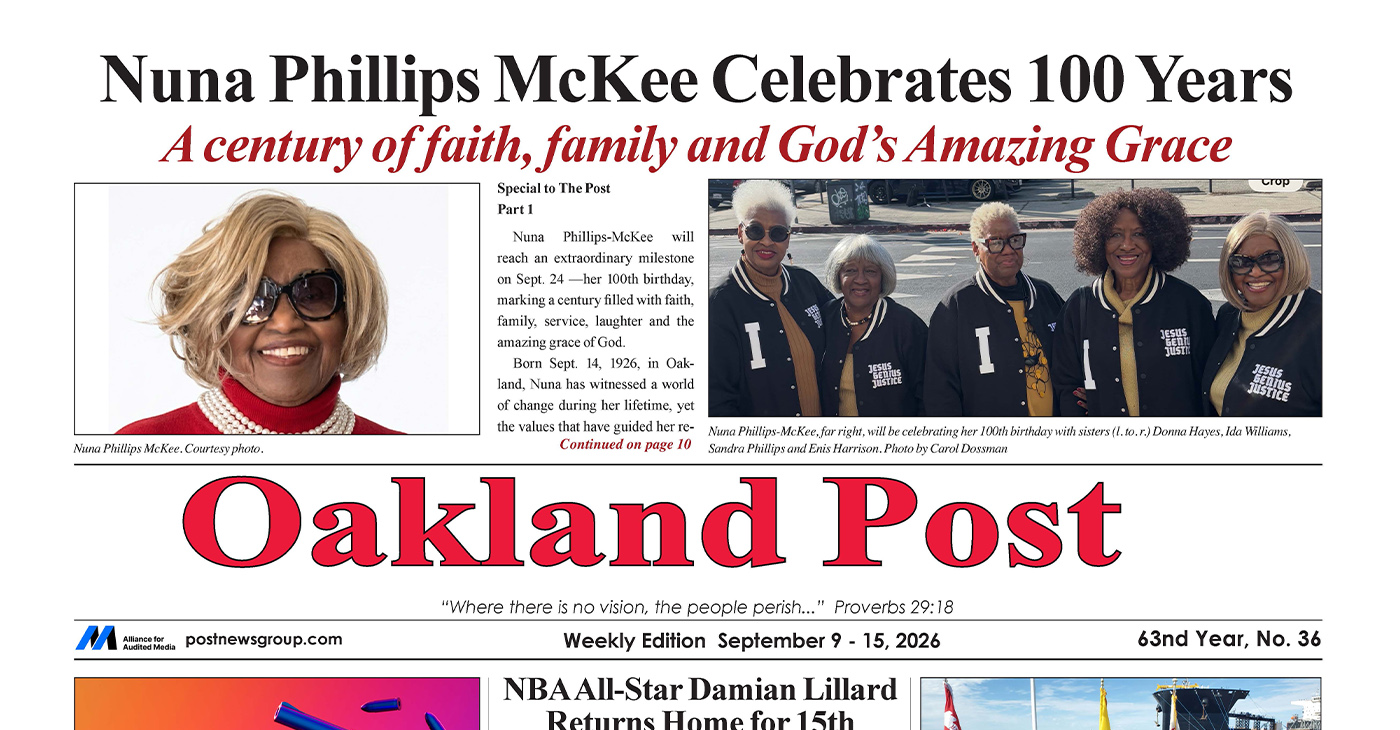
Oakland Post: Week of September 9 – 15, 2026
The printed Weekly Edition of the Oakland Post: Week of September 9 – 15, 2026
To enlarge your view of this issue, use the slider, magnifying glass icon or full page icon in the lower right corner of the browser window.



Asm. Corey Jackson Announces Launch of 24-Hour Childcare in His District

IN MEMORIAM: The Rev. Leon “Sonny” Clark, Longtime Orange County Pastor and Community Leader, Dies at 72

Poll: Becerra Widens His Lead Over Hilton; Californians Split on Wealth Tax

From Historic Memories to New Possibilities: Oakland Celebrates Coliseum 60

County Office of Education Says OUSD Finances Are Getting Healthier, Materially Stronger

LIVE FREE Sunday Dinner Brings Faith, Fellowship and Civic Conversation to Oakland

Remembering Chauncey Bailey as Student Journalists Face Threats to Truth-Telling

BLACspace Cooperative Invites Bay Area to Experience Oakland’s Black Cultural Ecosystem Through a BLAC Map Tour + Party

In Wake of Death on Doorstep, Williams Chapel Baptist Church Calls for Better Care, Funding for Unhoused

Oakland Centenarian Nuna McKee Honored!

Caribbean Nations Produce Action Plan Calling for UK Reparations Over Slavery

Oakland Post: Week of September 23 – 29, 2026

Doulas Are Helping Black California Moms Navigate Pregnancy–Even as High Mortality Rates Persist

Newsom Signs Addictive Social Media Law to Protect Kids

On Your November Ballot: Prop 38 Would Allocate $8.4 Billion to Immunology and Immunotherapy Funding

Standoff for Justice: Our Homes Are Worth Fighting For

Oakland Post: Week of August 26 – September 1, 2026

Frontier Airlines’ Return to Oakland Airport Brings Flights, Jobs and Opportunity

Gubernatorial Candidate Steve Hilton Blasts California New Tire Rules; Newsom Hits Back

Chef Sharon Lee Blends Culinary Excellence, Education and Empowerment

Jackie Wright Champions Bay Area Stories, Filmmakers and Cultural Institutions

Big City Mayors Ask for “Yes” Vote on Housing Bond Measure; Conservatives Say “No”

Oakland Coliseum Project Opens Door for Small Businesses to Build Bigger

Gov. Newsom’s Latest Appointees Include Sacramento Advocate for Formerly Incarcerated Students; State’s New Tech Chief

Misnamed ‘Parent’ PAC Seeks to Influence Oakland School Board Elections

Longtime BWOPA Member Brendalyn Goodall Appointed to California Workforce Development Board

Gov. Newsom Signs Law Shielding Immigration Aid Workers From Doxing Threats

Secretary of State Shirley N. Weber Urges Californians to Vote Early as Voter ID Battle Intensifies

Oakland Post: Week of September 2 – 8, 2026

IN MEMORIAM: Dolly Parton Dead at 80 — How She Built a Legacy of Love and Earned Her Place in Black Culture

The Conversation With Al McFarlane 6/23/26

Media Monday 6/22/26

LIVE! ASK ALMA! — TUES. 6.23.26 7PM EST

Car Buying Secrets: 4 Hidden Checks Before You Sign!

Is This 550 HP Charger Worth YOUR Money? AutoNetwork Review

Celebrating Juneteenth – Frederick Douglass on education and resistance

LIVE! — ASK ALMA! — TUES. 6.19.26 7PM EST

Hyundai Ioniq 5 Parking, Safety, and 360 View #shorts

2025 Ioniq 5 New Wiper & Powerful Performance! #shorts

Electric SUV Range: Is 259 Miles Enough? #shorts

EV Charging: How Fast Can You Charge an Electric Vehicle? #shorts

Biometric Cooling… Messaging Seats…Come on! 2025 Infiniti QX80 Autograph 4WD

Charged Up: Witness the Magic of a Fully Electric Car! #shorts

Range Rover Sport PHEV Included…: See What’s Inside This Luxury SUV! #shorts

Invisible Hood View: Perfect Parking with X-Ray Vision! #shorts
-
 Community3 weeks ago
Misnamed ‘Parent’ PAC Seeks to Influence Oakland School Board Elections
-
 Activism4 weeks ago
Oakland Post: Week of September 2 – 8, 2026
-

 Community3 weeks ago
Richmond Tiny House Village Farm & Garden Set to Open Gates on Sept. 26
-

 Activism3 weeks ago
Oakland Post: Week of September 9 – 15, 2026
-

 Black History3 weeks ago
Latest Massacre in Haiti Reveals Cruelty U.S. Deportations
-

 Black History3 weeks ago
OPINION: Nolan Wells’ Death One of Several Signifying Racial Terror Lives on in U.S. South
-

 Community3 weeks ago
Democratic Clubs Interview Candidates for Oakland School Board
-

 Business2 weeks ago
Mayor Lee Announces $1 Million Kaiser Permanente Grant for Pilot Program to Address Homelessness, Clean Up Public Spaces throughout Oakland
