
Activism
Lawmakers Push Bill to Grant Prisoners Right to Vote
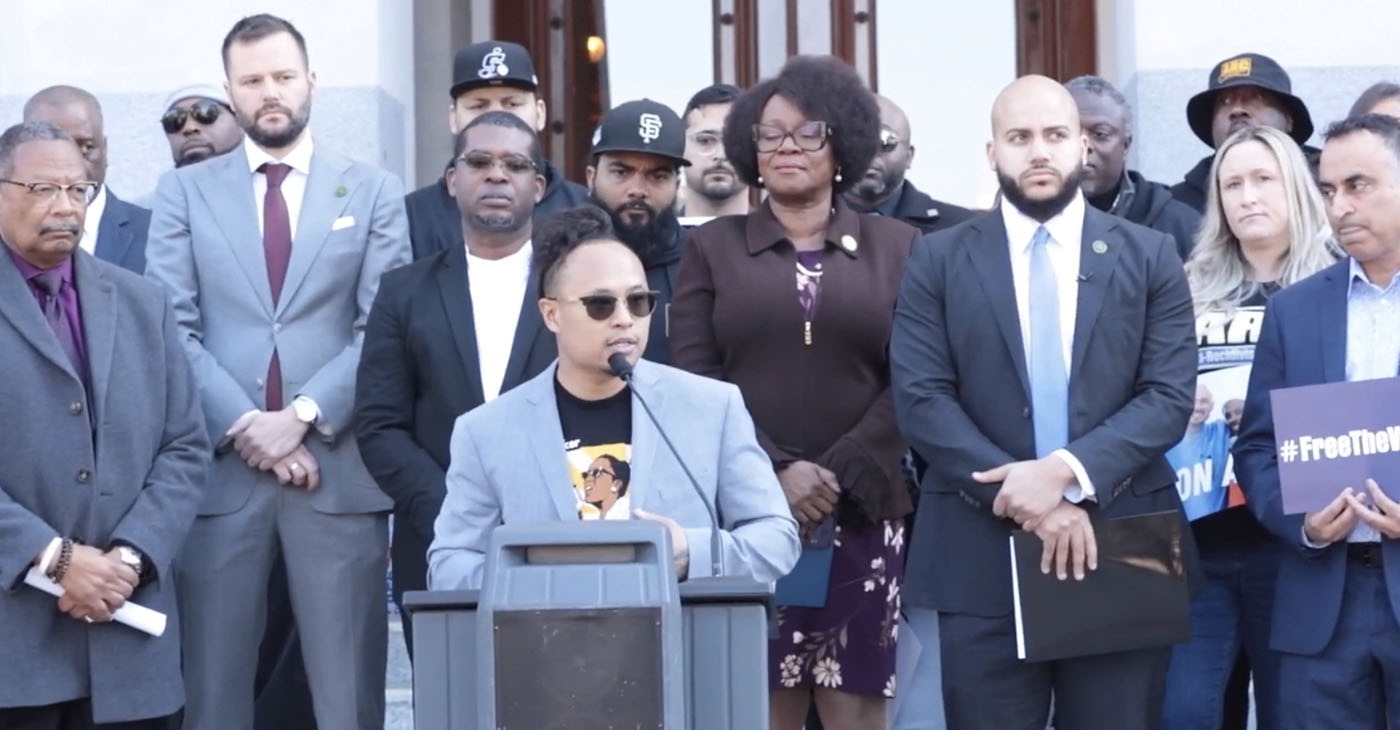
Last week, Assemblymember Isaac Bryan (D-Los Angeles) the chair of the Assembly’s Committee on Elections introduced Assembly Constitutional Amendment 4 (ACA-4). The legislation proposes amending the California Constitution to allow felons serving time in state and federal prisons to vote.

By Maxim Elramsisy
California Black Media
Last week, Assemblymember Isaac Bryan (D-Los Angeles) the chair of the Assembly’s Committee on Elections introduced Assembly Constitutional Amendment 4 (ACA-4). The legislation proposes amending the California Constitution to allow felons serving time in state and federal prisons to vote.
Proposition 17, approved in 2020 by California voters, enabled persons convicted of felonies on parole to vote.
If the bill passes the Assembly and Senate, and the governor approves it, voters in California could vote to join Vermont, Maine, and Washington, D.C. in allowing incarcerated individuals to vote.
“After the 13th Amendment liberated the slaves, we started to see different types of voter disenfranchisement occurring,” Bryan explained in an interview with California Black Media (CBM).
“We saw Black codes, we saw Jim Crow, poll taxes, literacy tests, felony disenfranchisement, becoming more commonplace in statewide constitutions and so it’s through that legacy that we’ve been trying to roll back all of these years and make sure that our democracy is inclusive of everybody,” Bryan commented on the systemic discrimination and disenfranchisement African Americans have endured over centuries.
Lawmakers opposing the legislation say allowing incarcerated felons to vote is a slap in the face to victims of the crimes they committed.

“I believe that it discounts the impact that this will have on people who have suffered being a victim of a very violent offense,” Assemblymember Tom Lackey (R-Palmdale) told CBM.
“Part of rehabilitation is going through a process of recognizing the seriousness of what has been done, and I think when we allow someone to exercise the most sacred privilege that we have in this country, that people have died so that we can exercise that privilege, that is an affront against those who have suffered ill, and a lot of times eternal pain,” Lackey said.
Responding to Lackey’s objection, Bryan said, “That’s like saying allowing incarcerated persons to breathe is an affront to their victims, allowing incarcerated persons to drink water, allowing incarcerated persons to hold conversations with one another.”
“There is no reason that that should be coupled with disenfranchisement and the expelling of individuals as citizens of this country.”
“There’s a difference between suspending a privilege and dehumanizing someone,” Lackey said. “Certainly no one expects someone to go through inappropriate suffering. That is not part of justice. That’s not part of our judicial process.”
David Liamsi Cruz, an advocate from Initiate Justice, was released in September after serving 13 years in prison.
“One problem that I constantly came across was that people serving their sentences alongside me felt that they didn’t have the means to improve their environment that controlled their lives or to contribute to their families’ wellness outside. Despite what many people assume, people in prison care about the same political issues that we outside do,” Cruz said.
“Those who were willing to become civically engaged with me were diligent in their work, they even brought me bill ideas that could have solved issues that were longstanding in their communities. I was honored to witness their passion for change, for an opportunity to grow, and to contribute to something way bigger than themselves. Even though I am home [from] prison now, I have not forgotten the ten thousand voices of people who are still inside and have so much to contribute. I want their voices to be heard.”
Supporters of the plan say that reducing recidivism — or the reincarceration of persons less than three years after they are released from prison — is one of the primary benefits of this plan.
“We already know a lot of the facts, and the facts are that the more someone is engaged in their democracy, they are 50% less likely to reoffend,” said Assemblymember Ash Kalra (D-San Jose) who is a co-sponsor of the bill.
“So, if we already know this, then the policy not allowing those who are incarcerated to vote has nothing to do with public safety.”
Kalra said when he was a public defender it was “plain as day” to see who was given second chances.
“Those who were given probation versus prison, and it was so connected to race and class and the same communities who have been fighting to be free since the inception, and before the inception of this nation,” he said.
Another concern is the ability for those who are incarcerated to hold public officials accountable. “Those who are incarcerated and their families are some of the most educated people in our state, far more educated than the average voter,” said Kalra. “And they will hold us accountable, and maybe that’s what people are afraid of. They don’t want that accountability from those who are suffering the most from decisions that are made traditionally in [the Capital].”
The legislation is backed by a coalition of lawmakers, including California Legislative Black Caucus members — Assemblymembers Lori Wilson (D–Suisun City), Reggie Jones-Sawyer (D-Los Angeles), Tina McKinnor (D–Inglewood), Mia Bonta (D-Oakland), Dr. Akilah Weber (D–San Diego) and Senators Steven Bradford (D-Inglewood) and Lola Smallwood Cuevas (D–Ladera Heights).
“There was a time where women couldn’t vote,” Jones-Sawyer said at the press conference held last week to announce the bill. “There was a time when African Americans couldn’t vote, and just recently we tried to get slavery out of the California state constitution and it failed, because of Democrats.”
“An American citizen’s right to vote is the most powerful right in our nation,” McKinnor said. “Let’s be clear, an incarcerated American citizen is an American citizen, and no law should ever restrict an American citizen’s right to vote. Too many Americans have died, too many Americans have sacrificed, too many Americans have been denied the right to vote for too long.”
Lackey and others who oppose the legislation, however, insist that denying a felon to vote is appropriate punishment.
“There has to be a period of reflection and a period of suspension of certain what I would call privileges or rights in order for the judicial process to be effective,” Lackey said to CBM.
Bryan said the protection of citizens’ rights is paramount.
“There are some basic human rights, and then there are some basic American rights that have to be preserved, even in the systems of accountability,” he emphasized.











Activism
Oakland Post: Week of March 18 – 24, 2026
The printed Weekly Edition of the Oakland Post: Week of March 18 – 24, 2026

To enlarge your view of this issue, use the slider, magnifying glass icon or full page icon in the lower right corner of the browser window.
Activism
Oakland Post: Week of March 11 -17, 2026
The printed Weekly Edition of the Oakland Post: Week of March 11 – 17, 2026
To enlarge your view of this issue, use the slider, magnifying glass icon or full page icon in the lower right corner of the browser window.
Activism
Oakland Post: Week of March 4 – 10, 2026
The printed Weekly Edition of the Oakland Post: Week of March 4 – 10, 2026

To enlarge your view of this issue, use the slider, magnifying glass icon or full page icon in the lower right corner of the browser window.

WORK FROM HOME
Home-based business with potential monthly income of $10K+ per month. A proven training system and website provided to maximize business effectiveness. Perfect job to earn side and primary income. Contact Lynne for more details: Lynne4npusa@gmail.com 800-334-0540


Black Artists in America, Installation Three Wraps at the Dixon Gallery and Gardens

Grief, Advocacy, and Education: A Counselor Reflects on Black Maternal Health

Future of Florida’s Black History Museum in Limbo

New Research Shows the Many Benefits of Early Learning

South Hampton K-8 Students Among Top 10 Finalists for Samsung’s ‘Solve for Tomorrow’ Competition

Cuba: No Negotiation with US on the President or Political System

Brooklyn Academy of Music Names Jamaican-Born Tamara McCaw as President

Trinidad & Tobego – U.S. Launches WhatsApp Channel for American Citizens in the Country

Oakland Post: Week of March 18 – 24, 2026

AI Innovation vs. Ethics and Environmental Impact

AI, Web3, and Digital Reparations

What If You Owned Your AI Agent?

Season 7, Episode 3 – January Reporter’s Roundtable 📱

Season 7, Episode 3 – January Reporter’s Roundtable

AI, Media, and Power | Part 2, Real-World Impacts and Tradeoffs

Oakland Post: Week of February 11 – 17, 2026

Reflecting on Black History Milestones in Birmingham AL

Rising Optimism Among Small And Middle Market Business Leaders Suggests Growth for California

CITY OF SAN LEANDRO STATE OF CALIFORNIA PUBLIC WORKS DEPARTMENT ENGINEERING DIVISION NOTICE TO BIDDERS FOR ANNUAL STREET OVERLAY/REHABILITATION 2019-21 – PHASE III

Oakland Post: Week of February 18 – 24, 2026

PRESS ROOM: NBA Hall of Fame Nominee Terry Cummings Joins 100 Black Men of DeKalb County to Launch Victory & Values Initiative

Oakland Post: Week of February 25 – March 3, 2026

Trump’s MAGA Allies are Creating Executive Order Plan to Steal the 2026 Midterms

U.S. manufacturing rebounds – how foundry services are adapting to rising demand

OP-ED: One Hundred Years of Black Workers Telling the Truth

Advancements in solar technology that are changing the way we power the world

Chase Oakland Community Center Hosts Alley-Oop Accelerator Building Community and Opportunity for Bay Area Entrepreneurs

Poll Shows Support for Policies That Help Families Afford Child Care

Oakland Post: Week of March 4 – 10, 2026

PRESS ROOM: Civil Rights TV Launches in Selma as the World’s First 24/7 Civil Rights Television Network

Hyundai Ioniq 5 Parking, Safety, and 360 View #shorts

2025 Ioniq 5 New Wiper & Powerful Performance! #shorts

Electric SUV Range: Is 259 Miles Enough? #shorts

EV Charging: How Fast Can You Charge an Electric Vehicle? #shorts

Biometric Cooling… Messaging Seats…Come on! 2025 Infiniti QX80 Autograph 4WD

Charged Up: Witness the Magic of a Fully Electric Car! #shorts

Range Rover Sport PHEV Included…: See What’s Inside This Luxury SUV! #shorts

Invisible Hood View: Perfect Parking with X-Ray Vision! #shorts

AI Is Reshaping Black Healthcare: Promise, Peril, and the Push for Improved Results in California

ESSAY: Technology and Medicine, a Primary Care Point of View

Sanctuary Cities

The RESISTANCE – FREEDOM NOW

STATE OF THE PEOPLE: Freddie

ECONOMIC BOYCOTT DAY!!!!!

I told You So

-
 Activism4 weeks ago
Oakland Post: Week of February 25 – March 3, 2026
-
 #NNPA BlackPress4 weeks ago
Poll Shows Support for Policies That Help Families Afford Child Care
-
 Activism3 weeks ago
Oakland Post: Week of March 4 – 10, 2026
-

 #NNPA BlackPress3 weeks ago
Woman’s Search for Family’s Roots Leads to Ancestor John T. Ward – A Successful Entrepreneur and Conductor on the Underground Railroad
-

 #NNPA BlackPress3 weeks ago
OP-ED: NNPA Launches 2026 “Leadership Matters” Video Series
-

 #NNPA BlackPress3 weeks ago
Advocates Raise Alarm Over ICE Operation, MOU and Detention Risks in Baltimore County
-

 #NNPA BlackPress3 weeks ago
COMMENTARY: Women of Color Shape Our Past and Future
-

 #NNPA BlackPress3 weeks ago
Pete Buttigieg to Join Mayor Randall Woodfin for Community Town Hall in Birmingham
