
Equity
Julie Chavez Rodriguez, ‘Visionary’ Berkeley Grad, to Run Biden Campaign
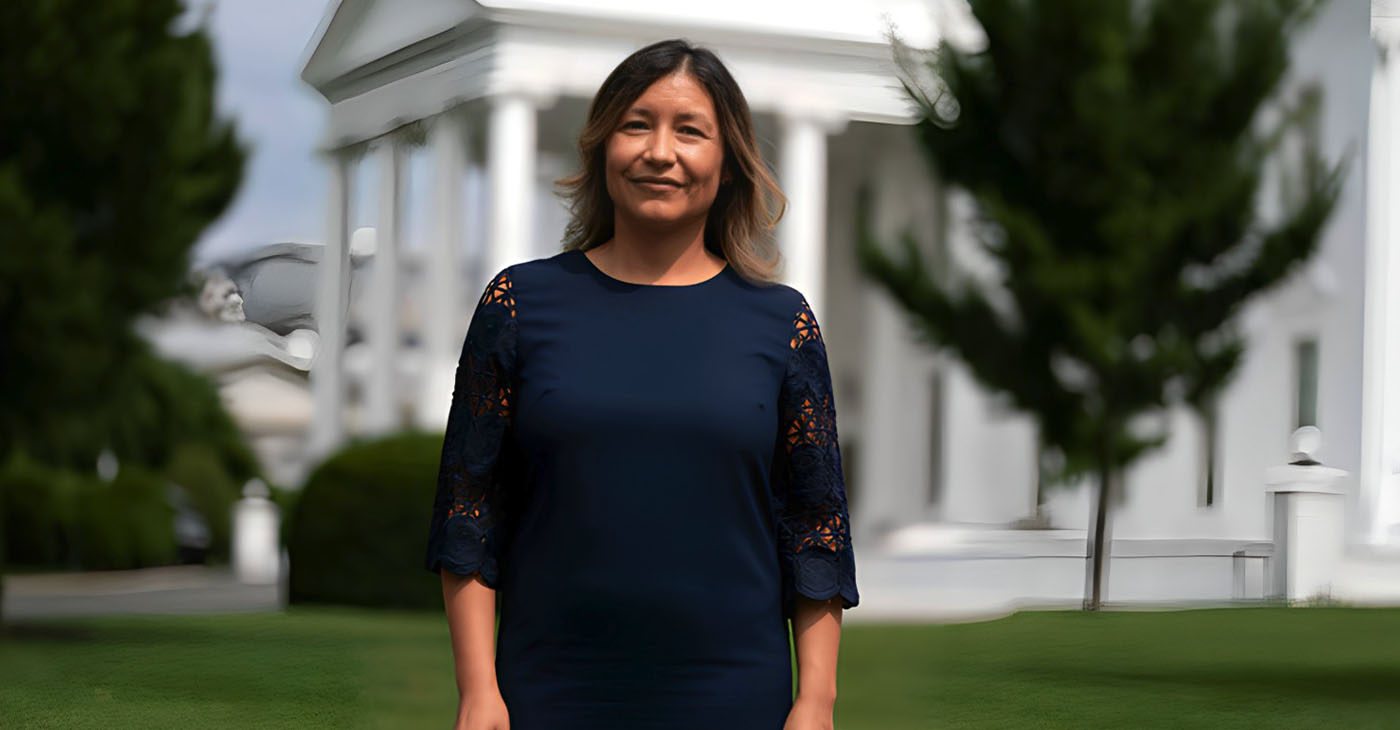
Twenty-five years ago, UC Berkeley Professor Harley Shaiken could not know the future that awaited undergraduate Julie Chavez Rodriguez. But even then, he was struck by her talent, deep commitment to social justice and modesty — and that was before he knew that she was the granddaughter of César Chávez, the iconic American labor organizer and civil rights leader. Now, President Joe Biden has named Chavez Rodriguez to lead his 2024 reelection campaign, and Shaiken sees how a student’s promise has grown into national influence.

By Edward Lempinen
Twenty-five years ago, UC Berkeley Professor Harley Shaiken could not know the future that awaited undergraduate Julie Chavez Rodriguez. But even then, he was struck by her talent, deep commitment to social justice and modesty — and that was before he knew that she was the granddaughter of César Chávez, the iconic American labor organizer and civil rights leader.
Now, President Joe Biden has named Chavez Rodriguez to lead his 2024 reelection campaign, and Shaiken sees how a student’s promise has grown into national influence.
“Julie understood the realities in which we live — the lack of opportunities for so many people of color and poor white people, and particularly Latinos, particularly Black people and immigrants,” Shaiken said yesterday. “But she saw a better world and was willing to work tirelessly…. She had this moral sensibility and this conviction to see these things happen, that have always been impressive.”
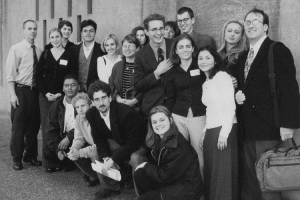
As an undergraduate, Julie Chavez Rodriguez (third from right, in a white sweater) helped to organize a high-level conference at the UC Berkeley Center for Latin American Studies. She distinguished herself through her idealism, her commitment and her hard work, said Harley Shaiken, former chair of the center. (Photo courtesy of the UC Berkeley Center for Latin American Studies)
When Biden formally opened his campaign to win reelection in 2024, Chavez Rodriguez, 45, became the first Latinx woman in U.S. history to run the campaign of an incumbent president. In comments at his announcement on April 25, the president cited her experience and leadership, and the trust she has built across political communities.

“This election is a generational moment for Americans across the country to stand up and fight for our democracy and freedoms,” Biden said. “To win this fight, we need strong leadership that can build and expand our broad, diverse coalition from 2020.”
Chavez Rodriguez graduated from Berkeley in 2000 with a degree in Latin American studies, and the arc of her career since then has been remarkable. She volunteered with the first presidential campaign of Barack Obama in 2008, and then was hired into the administration.
She worked as deputy press secretary to Interior Secretary Ken Salazar, and later as special assistant to Obama and as senior deputy director of public engagement in the White House. In that role, she built high-level networks across a range of communities: LGBTQ, Asian American Pacific Islander, Latinx, veterans, youth, and labor.
After Obama left office, Chavez Rodriguez joined the staff of then-U.S. Senator Kamala Harris of California, serving as California state director. When Harris ran for president, Chavez Rodriguez held a leadership post in her campaign, and then joined the Biden-Harris 2020 campaign as deputy campaign manager.
After Biden’s victory, she was one of a number of advisers with Berkeley connections to join the administration. She served as a senior adviser to the president and as director of the White House Office of Intergovernmental Affairs.
A lifetime of commitment, starting in childhood
In practical terms, however, Chavez Rodriguez’s career was directly shaped in her childhood.
Her grandfather came from an impoverished family of farmworkers; he would go on to be a labor organizer of historic importance and global impact.
Her father, Arturo S. Rodríguez, worked 45 years with the United Farm Workers of America, including 25 as the union’s president. Her mother, Linda Chavez Rodriguez, also was a major UFW figure before her death in October 2000.
At the age of 9, Julie Chavez Rodriguez and others in her family were arrested while demonstrating at a New Jersey supermarket. When she was 10, her grandfather went on a 36-day hunger strike to protest the use of pesticides on table grapes, and she joined his action for three days.
‘Social justice is not an abstraction to her’
Shaiken met her in 1998, when he was chair of Berkeley’s Center for Latin American Studies (CLAS). As an undergraduate, she had volunteered to help organize a CLAS conference that would explore economic integration, globalization and the future of U.S. and Latin American relations.
The event featured former California Gov. Jerry Brown, then mayor-elect of Oakland, along with a cadre of rising stars: future Mexican President Vicente Fox, future U.S. House Speaker Nancy Pelosi, Adolfo Aguilar Zínser, who would serve as Mexico’s ambassador to the United Nations, and Sherrod Brown, who would become a U.S. senator from Ohio.
At the time, and for weeks afterward, Shaiken had no clue about her family background — she wanted to stand on her own, he recalled, and while she was deeply proud of her family, she didn’t mention them initially. Instead, he saw her idealism and her hard work.
“All I knew was that she was Julie Chavez Rodriguez,” he said. “She had a deep concern for other people, including the most marginalized and desperate people. But she was understated and open — she stood out not by being flashy, but by her deep social commitment, her courage, and her values…. She was a visionary.”
Shaiken, now a professor emeritus of geography and education, has stayed in touch with Chavez Rodriguez and followed her career, and he believes that her experience and her networks will be critical assets to Biden. Her idealism is now complemented by the pragmatism of experience, he said. Her knowledge of Latinx culture and politics could be essential in what may be a close contest with former President Donald Trump or another Republican nominee.
“She’ll face countless headwinds and storms — we know that,” Shaiken said. “But she’s a person who’s steady under fire and comes from a background where people did great things under the worst of circumstances.
“Social justice is not an abstraction to her. It is her North Star.”













Activism
Oakland Post: Week of September 16 – 22, 2026
The printed Weekly Edition of the Oakland Post: Week of September 16 – 22, 2026

To enlarge your view of this issue, use the slider, magnifying glass icon or full page icon in the lower right corner of the browser window.
Activism
Oakland Post: Week of September 9 – 15, 2026
The printed Weekly Edition of the Oakland Post: Week of September 9 – 15, 2026

To enlarge your view of this issue, use the slider, magnifying glass icon or full page icon in the lower right corner of the browser window.
Activism
Oakland Post: Week of September 2 – 8, 2026
The printed Weekly Edition of the Oakland Post: Week of September 2 – 8, 2026

To enlarge your view of this issue, use the slider, magnifying glass icon or full page icon in the lower right corner of the browser window.



Doulas Are Helping Black California Moms Navigate Pregnancy–Even as High Mortality Rates Persist

Newsom Signs Addictive Social Media Law to Protect Kids

On Your November Ballot: Prop 38 Would Allocate $8.4 Billion to Immunology and Immunotherapy Funding

Ask California: Golden State Releases New AI Chatbot

Asm. Isaac Bryan’s Bill Banning California Police From ICE Side Jobs Reaches Newsom’s Desk

Assemblymember LaShae Sharp-Collins’s Bill Would Pause Law Enforcement’s Use of Shock Gloves Pending Study

BOOK REVIEW: ‘Laws of Solomon’ Reveals Tender Heart of Former Child Soldier

OPINION: The New American Fear – From 9-11 to AI

Passing for White, Fighting for Black America: The Courage of Walter White

Oakland People’s Arms Embargo Coalition Demands End to Military Shipments Thru Oakland

Barbara Lee Mourns Gloria Steinem, Remembers a Friendship Rooted in Equality

Event Preview: ‘Fashion v. Fascism’ – A Runway Revolution Is Coming to the Bay Area

Two Looming Threats Every Alameda County Elder Should Know About

Oakland Mayor Reads to Children at Bookout Block Party at Marcus Books Store

Tradition Comes to the Streets in 11th Annual Black-Eyed Pea Festival at the Freedom Farmers Market

Less Affluent School Districts, Including Sacramento City, Face Threat of State Takeover

ESSAY: California Can Close Its Colorectal Cancer Gap

California Hispanic Chambers of Commerce Unveils: ‘Powering the Future’ Theme for 47th Annual Statewide Convention

Four Candidates, Including Incumbent Barbara Lee, Qualify for Oakland Mayor’s Race

Oakland Post: Week of August 12 – 18, 2026

From Blueprint to Breakthrough: Tackling Affordable Housing in Oakland

Oakland Observes Black August with Block Parties, Film Showings, Workshops

COMMENTARY: Why Local School Tax Measure G1 Will Not Be on the November Ballot

Standoff for Justice: Our Homes Are Worth Fighting For

Returning to Its Roots, the Oakland Black-Eyed Pea Festival Partners with the Freedom Farmers Market Sept. 12

Oakland Post: Week of August 26 – September 1, 2026

NPRC Scores First Advocacy Victory: David Shaw Finally Gets His Wish to ‘Go Home’

Frontier Airlines’ Return to Oakland Airport Brings Flights, Jobs and Opportunity

Gubernatorial Candidate Steve Hilton Blasts California New Tire Rules; Newsom Hits Back

Chef Sharon Lee Blends Culinary Excellence, Education and Empowerment

The Conversation With Al McFarlane 6/23/26

Media Monday 6/22/26

LIVE! ASK ALMA! — TUES. 6.23.26 7PM EST

Car Buying Secrets: 4 Hidden Checks Before You Sign!

Is This 550 HP Charger Worth YOUR Money? AutoNetwork Review

Celebrating Juneteenth – Frederick Douglass on education and resistance

LIVE! — ASK ALMA! — TUES. 6.19.26 7PM EST

Hyundai Ioniq 5 Parking, Safety, and 360 View #shorts

2025 Ioniq 5 New Wiper & Powerful Performance! #shorts

Electric SUV Range: Is 259 Miles Enough? #shorts

EV Charging: How Fast Can You Charge an Electric Vehicle? #shorts

Biometric Cooling… Messaging Seats…Come on! 2025 Infiniti QX80 Autograph 4WD

Charged Up: Witness the Magic of a Fully Electric Car! #shorts

Range Rover Sport PHEV Included…: See What’s Inside This Luxury SUV! #shorts

Invisible Hood View: Perfect Parking with X-Ray Vision! #shorts
-
 Commentary4 weeks ago
Standoff for Justice: Our Homes Are Worth Fighting For
-
 Activism4 weeks ago
Oakland Post: Week of August 26 – September 1, 2026
-
 Business4 weeks ago
Frontier Airlines’ Return to Oakland Airport Brings Flights, Jobs and Opportunity
-
 Business4 weeks ago
Gubernatorial Candidate Steve Hilton Blasts California New Tire Rules; Newsom Hits Back
-
 Business4 weeks ago
Chef Sharon Lee Blends Culinary Excellence, Education and Empowerment
-

 Community4 weeks ago
Big City Mayors Ask for “Yes” Vote on Housing Bond Measure; Conservatives Say “No”
-

 Black History4 weeks ago
Jackie Wright Champions Bay Area Stories, Filmmakers and Cultural Institutions
-

 Education4 weeks ago
Gov. Newsom’s Latest Appointees Include Sacramento Advocate for Formerly Incarcerated Students; State’s New Tech Chief
