
Entertainment
Jody Watley: New Tour, New Music and New Shalamar


By Mary L. Datcher
Speical to the NNPA via The Chicago Defender
If you grew up in the era of cultural identity, sexual exploration, political uprise and post-Vietnam—most likely you’re either a baby of the late 60’s and 70’s period. Each of us could probably recount a song, album or musical artist that influenced our daily moods. As we developed our musical palette into the 80’s, the world of hip hop, punk rock, funk and post disco transcended into dance—launched the power of a new generation of young women entertainers who took centerstage.
Among this breakout group of artists, was Jody Watley—a former member of the R&B group, Shalamar. A native of Chicago, Watley relocated and was raised in Los Angeles often gracing the Soul Train dance floor. Signed to Dick Griffey’s Solar Records, Shalamar was a regular fixture on Soul Train. Joining the group at the age of 18, Watley shared the spotlight with fellow group members; Jeffrey Daniels and Howard Hewitt. The group topped the R&B charts with hits such as “Second Time Around”, “A Night to Remember” and “There it Is” making them one of the most sought after groups on the international circuit. After a 3-year run with the group and creative differences, Watley left the group.

“As a child I wanted to do a lot of things – sing, dance, design and own my own business. The beginning days of Shalamar was a learning experience for me from ’77-’83 over the course of those albums there was a lot going on. The business was wrong, no one in the group was getting along and my Dad had died in 1982. It changed my life. I didn’t want to take things for granted, not wasting time, not wanting to be around people who were negative.” she said.
Soon after, she moved to England for some soul searching, where she participated on the Band Aid charity concert organized by rockstar, Bob Geldof to raise money for anti-poverty efforts in Ethiopia.
She explained. “When I left the group in ’83, most of all I wanted to be happy in my life. As long as I’m happy, I’m good. I moved to England and lived there for 3 years. I made a plan for myself in what I wanted to do, what kind of music I wanted to do. I was able to do something that not many singers from a group are able to do. To establish your own identity and create hits on your own. It doesn’t happen that often.”
Returning to the U.S., after a couple of years performing at the Band Aid charity concert, she pursued her dream of going solo as an artist. At the time, Jheryl Busby was the President of the Black Music Division at MCA Records and signed Watley knowing she had a unique appeal with the potential of crossing over into the Pop music market. Watley trusted him immensely.
“Coming back to the U.S. and I met with the various companies. When I met with Jheryl Busby, we just connected right away. He got my creativity, he instantly appreciated the fact that I knew what I wanted. All of artists at the time, had looked the same to me.” she said.
“My first album cover, I wanted to be black and white because it’s timeless. I like classic Hollywood glamour. He said, ‘black and white’ album covers don’t sale and I told him mine was going to sell. He loved it and had so much respect for me from the beginning. It wasn’t because I was girl, or just trusting the label but as a woman he empowered me. He empowered MCA Records to rally with us and me to make it happen.”
As we witnessed her rise as one of the most influential Pop music entertainers during the late 80’s into the 90’s, Watley earned a Grammy for Best New Artist, for her debut single, “Looking for a New Love” following up with another hit, “Still a Thrill”. She’s been recognized for numerous accolades for a style fashionista, gracing international magazine covers and holding her place among Pop music royalty like Madonna, Janet Jackson and Tina Turner.
“Through the moments when some people at the company didn’t think I sounded Black enough or I wasn’t street enough. Not everyone is going to get it but that’s how you become a trendsetter. I’m not trying to be Janet Jackson. I’m a freestyle girl, I’m doing fashion – the jumbo hoop eye rings, the ripped jeans so they were like, ‘what is this?’”
Most of us can remember her collabo with Hip Hop Gods, Eric B. and Rakim on “Friends” infusing R&B Dance with Hip Hop meshing the two worlds together.
With the music industry changing, being married, divorced and raising two children as a single mom—has not stopped Watley’s continual drive in her career. She’s taken time out in between projects to raise her children, nurture her independent label and release music throughout the last couple of decades.
“My daughter just graduated from college. My son is currently in college so in the midst of being ‘Jody Watley’ , to be a sane person and to have grounded children is really number one. I’ve never been afraid to step away from the spotlight and take my son and daughter to their school events. To be there to cheer them on because time goes very fast.”
Today, we still see her influence with the next generation rocking the mega hoop earrings, chunky gold jewelry, ripped jeans and a freestyle spirit of creating trends from Beyonce, Nicki Minaj, Miley Cyrus and others. Everything goes full circle.
“I was determined to have it to be my own style–how I looked, the songs I was writing, who the photographers were and who I was working with. It was an easy transition and I still enjoy being a solo artist. The unique thing with the new Shalamar it feels very collaborative. It’s refreshing for me to not think of every detail.”
Watley not only has a new project gearing up for a summer release but she has recently brought together new members to launch the new Shalamar. After years of re-issues of the Shalamar catalog through various companies between the U.S. and abroad, Watley was frustrated at her likeness and image being misused. After a long search and the advice of her attorney, she found out the group’s name had not been trademarked.
“In life and in business, you have to have good people around you that are trying to protect you. That’s what led me to it. It was a thorough process for two years so that there was no shady business going on. With a trademark, it’s a long and exhaustive process. So, with a brand – what do you do with it? How can you make it fresh and honor the legacy of it but also bring some younger people on board? Make it something that is marketable and not for just the older fans – the classics.” she said.
###







Art
Oakland Director Boots Dazzles Once Again in ‘I Love Boosters’
Riley’s creative output is influenced by progressive ideals. His work, which includes six albums, the 2018 film “Sorry to Bother You,” and the 2023 comedy series “I’m a Virgo,” always shows that the alienation working-class people feel is inevitable under capitalism, he recently told The Guardian.

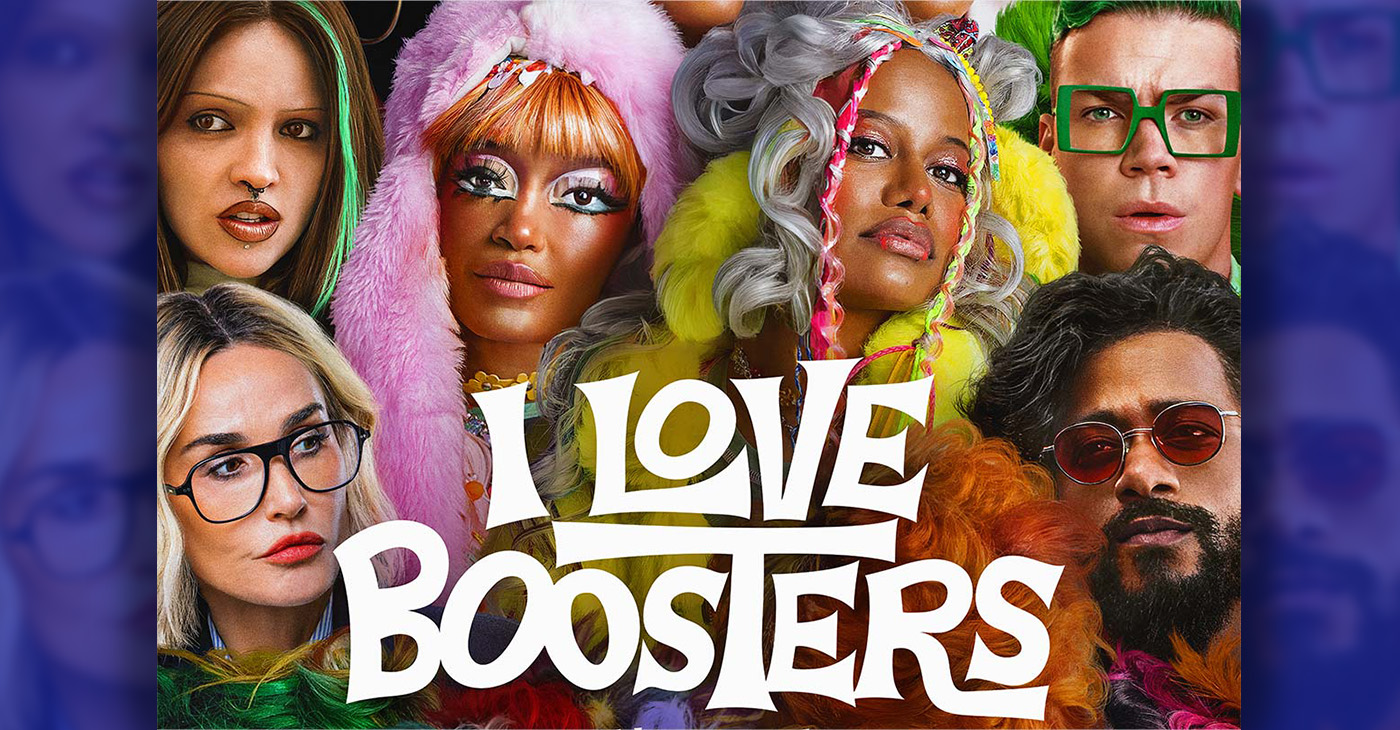
“I feel lonely,” Keke Palmer’s character Corvette says in the first few minutes “I Love Boosters,” the new comedy adventure film from Oakland-based director Boots Riley.
“I wish I could feel lonely,” Naomi Ackie’s character Sade responds. “Try having kids.”
“I Love Boosters” teems with kaleidoscopic colors, sharp playful social critique, otherworldly plot twists, and fast-paced action, but it’s grounded in its main characters’ simple and relatable motivations: They want to be less isolated, and more free to pursue their own creative endeavors.
They’d like to design clothes and run a fashion boutique, but, unfortunately, they’re mostly busy surviving. Corvette and Sade, along with Mariah, played by Taylour Page, hustle and scheme through their brilliant scrappy organized crime group, the Velvet Gang. The gang regularly boosts clothes in the Bay Area and sells them at discounted prices.
Riley portrays the gang in a positive light in “I Love Boosters,” echoing the sentiment and title of a song he recorded 20 years ago with his hip-hop band, The Coup, where he praises boosters for providing poor communities with nice clothes they can afford: like a Robin Hood of the ’hood. But while morally righteous, materially, the gang is troubled. Corvette is haunted by unpaid bills and fears getting kicked out of the building where she squats, a shuttered fast-food chicken joint.
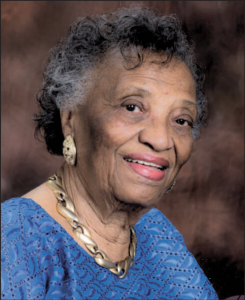
One thing that separates Riley’s film from most others about criminal gangs is that the Velvet Gang’s members work for a living. Theirs isn’t a greedy fantasy of becoming filthy rich, or for one last hit: Boosting is a job that still doesn’t pay nearly enough.
Riley’s creative output is influenced by progressive ideals. His work, which includes six albums, the 2018 film “Sorry to Bother You,” and the 2023 comedy series “I’m a Virgo,” always shows that the alienation working-class people feel is inevitable under capitalism, he recently told The Guardian.
Visually, the film is a mix of psychedelia, afro-surrealism, noir, and perhaps a comic book.
The villain, Christie Smith, played by Demi Moore, an evil genius billionaire and fashion designer who runs the expensive clothing company the gang boosts from. She repeatedly appears on the news to put a target on the Velvet Gang members’ backs. When the gang ends up connecting with those who Christie directly exploits –workers here in the Bay Area, but also those in sweatshops overseas– the fight against Christie can commence; and uncoincidentally, Corvette starts to feel less lonely.
I don’t want to say much about that fight, but it’s delightful. Sci-Fi elements (which appear connected to Marxist theory) enter into the narrative to tie what’s become a pretty scatterbrained story together. Grounded by Palmer’s acting, “I Love Boosters” is a total joy and a refreshing break from the typical narratives we see these days. It’s totally over-the-top, but it knows it is.

Art
After 10-Year Wait, Fillmore Heritage Center Reopens in San Francisco
After serving as the economic and cultural hub of the Fillmore’s historically Black community for more than a decade, the center’s closure ended what was called the “Rebirth of the Cool,” referring to the neighborhood’s role during the height of Black Jazz in the United States.
By Linda Parker Pennington, Special to The Post
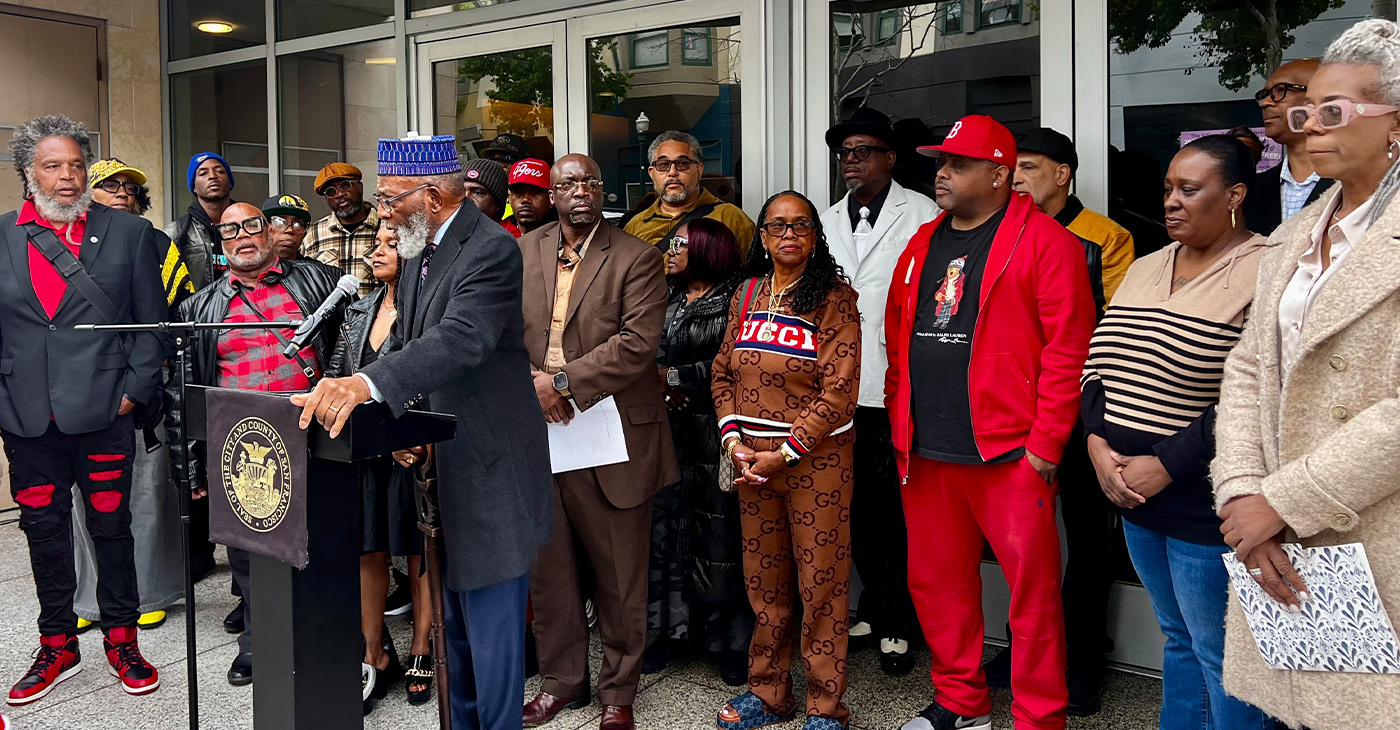
Last Saturday morning, the cloudy skies cleared just as the highly anticipated ribbon-cutting ceremony began, marking the reopening of the Fillmore Heritage Center at 1330 Fillmore and Eddy.
The complex – which had once included Yoshi’s Jazz Club, the Lush Life Art Gallery, the Koret Heritage Lobby, a 54-seat microcinema, and the Black-owned 1300 On Fillmore restaurant – shuttered in 2015.
After serving as the economic and cultural hub of the Fillmore’s historically Black community for more than a decade, the center’s closure ended what was called the “Rebirth of the Cool,” referring to the neighborhood’s role during the height of Black Jazz in the United States.
San Francisco Mayor Daniel Lurie announcing the reopening of the Fillmore Heritage Center. Erika Scott, owner of Honey Art Studio, looks on with pride. Photo by Linda Parker Pennington.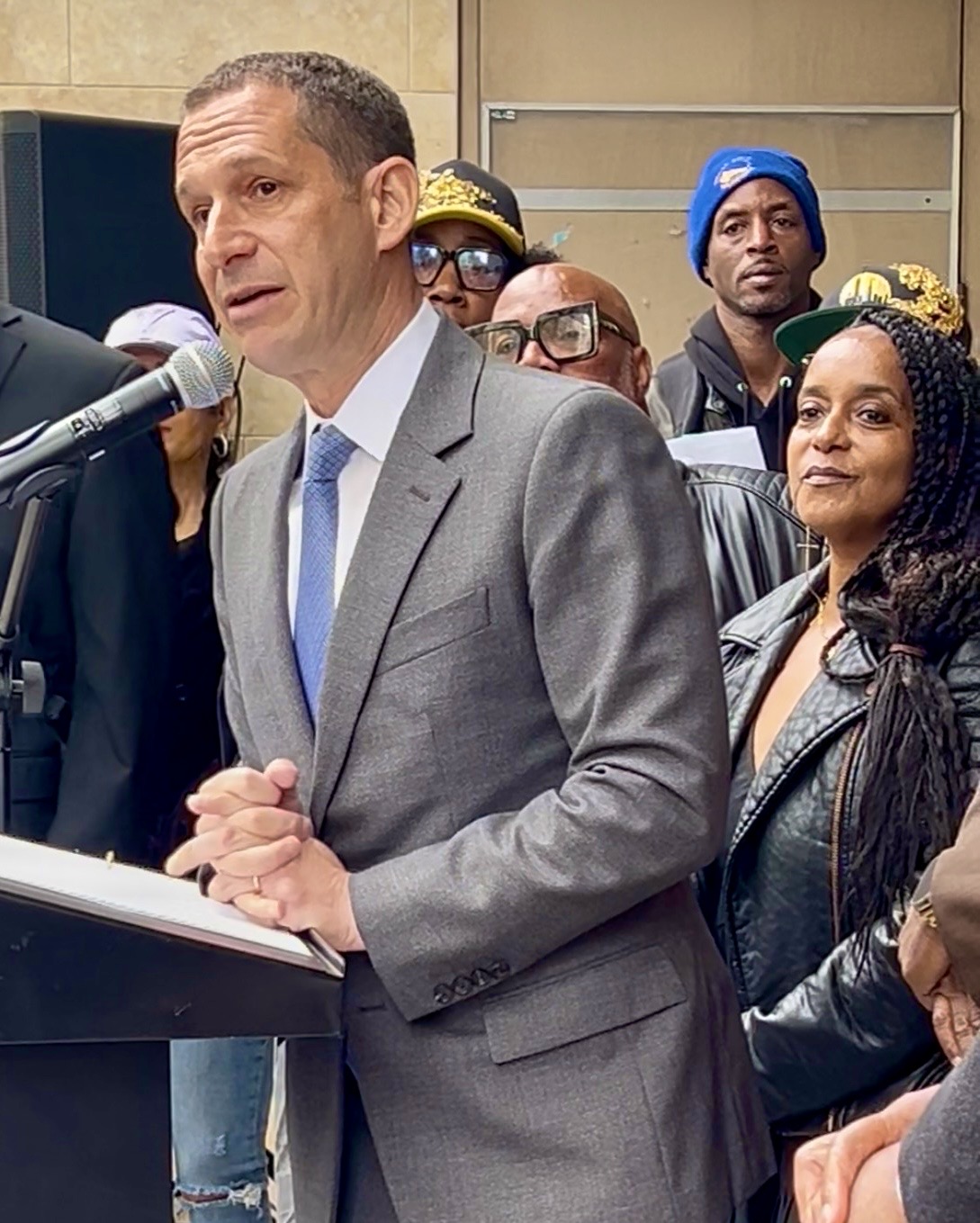
“The Fillmore is the most important neighborhood in San Francisco’s history for centering Black culture, music, business, and community, and has shaped this City and influenced the entire country,” said San Francisco Mayor Daniel Lurie to the gathering of more than 100 community leaders, business owners, and public officials. “This building reflects the deep roots of the Fillmore. Urban renewal left deep scars that are still felt today. This Center celebrates a strong Black community that continues to shape San Francisco. I am proud to join the community as we reopen the Fillmore Heritage Center.”

Although the previous stakeholders will not be returning to the center, spaces are available for nonprofit organizations and ventures, such as Fillmore native Ericka Johnson’s Honey Art Studio.
“This Center will be an economic engine and a thriving venue that shines a light on the Black-owned businesses in this neighborhood and lifts the entire district,” Lurie continued. “Our City is committed to this community for the long term.”
“We’re excited to collaborate with the City to finally reopen these doors,” said Ken Johnson, a videographer and community leader who’d been lobbying for the reopening of the center. “It’s an opportunity to showcase the entrepreneurship and creative spirit of this ‘Harlem of the West’ and the ‘Rebirth of the Cool,’ grounded in our uniquely gifted Fillmore community.”
This month, through its Office of Economic and Workforce Development, the city will begin renting the building’s noncommercial spaces for pop-up events celebrating local talent, arts, and entertainment primarily centered in the Fillmore.
Arts and Culture
COMMENTARY: Black Music is the Sound of Black Freedom: Let Us Reclaim Both This Juneteenth
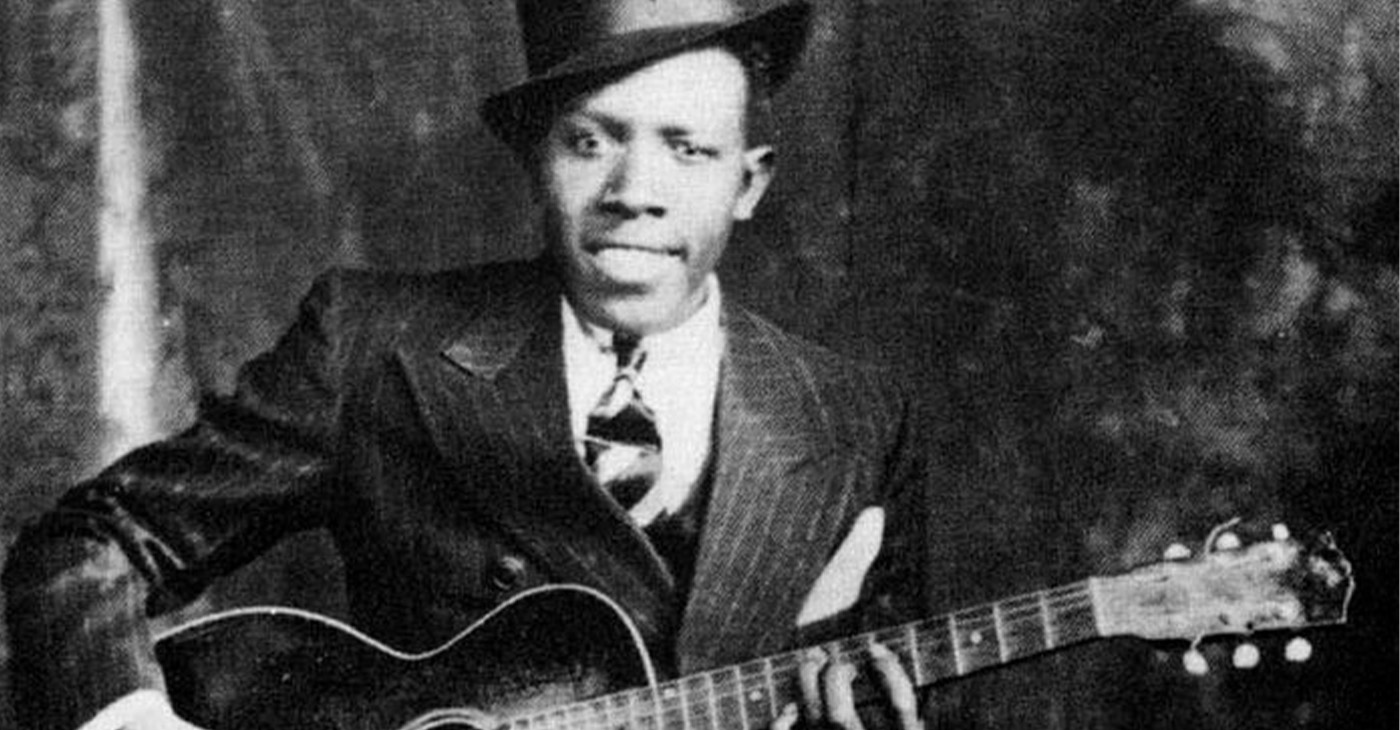
Black Music Month started when Black Music Association members Ed Wright, Kenny Gamble and his wife, journalist and radio host Dyanna Williams were able to persuade President Jimmy Carter to establish the observation on June 7, 1979.

By Wanda Ravernell
Black Music Month and Juneteenth are inextricably linked – Black music is the sound of our freedom.
From the plaintive moans of the enslaved Africans’ ‘sorrow songs,’ to the fields of Civil War battle where Black soldiers picked up abandoned bugles, to the upright piano played in juke joints on Saturday night and churches come Sunday morning, our ancestors’ innovation in the face of want, fear, degradation, and hopelessness has yielded genres of music imitated ’round the world.
Black Music Month started when Black Music Association members Ed Wright, Kenny Gamble and his wife, journalist and radio host Dyanna Williams were able to persuade President Jimmy Carter to establish the observation on June 7, 1979.
In 2000, Congress made it official. In 2009, Pres. Barack Obama changed the name to African American Music Heritage Month and in 2023, Pres. Joe Biden changed it back to Black Music Month, two years after he declared Juneteenth a national holiday, the result of a movement led by Opal Lee.
Our ancestors battle for freedom over these last 400 years and the music that allowed them expression of their humanity deserved to be honored.
But we may be losing sight of the value of their sacrifices.
‘Sing a Song Full of the Faith That the Dark past Has Taught Us…’
Along with the long-known exploitation of Black musicians whose recordings were stolen by record companies, the commercialization of Juneteenth feels like another kind of theft.
I had never heard of Juneteenth until I moved to the Bay Area from my hometown of Philadelphia. I didn’t know it was one of many freedom festivals celebrated by descendants of enslaved people in the United States.
Emancipation Day was Jan. 1 in Pennsylvania, April 16 in Wash., D.C., May 20 in Florida, and Aug. 8 in Kentucky. But Juneteenth, June 19, has the most renown, known in Texas as the ‘colored peoples’ Fourth of July.’
It was marked by parades, beauty pageants, rodeos, backyard barbecues and church picnics.
Yes, church.
The formerly enslaved began the day praying in thanks for their freedom just as they had prayed for Jubilee – the day of freedom – when they had chains on their feet and hands. They ‘testified’ about their past suffering and how they had managed to overcome.
And they sang.
Although, we will not hold it this year, Omnira Institute’s Juneteenth Ritual of Remembrance recalled this part of Juneteenth with prayers in the languages of the African captives. In the middle of the ceremony, a soloist would lead us in singing “Many Thousand Gone” while we took turns reciting portions of the Emancipation Proclamation, the news of freedom that took more than two years to reach Texas – two months after the Civil War ended.
“Many Thousand Gone” was famously recorded by Black luminary Paul Robeson in 1947:
“No more auction block for me,
No more, no more
No more auction black for me
Many thousand gone.”
Other verses refer to the ‘pint of salt’ and the ‘driver’s lash,’ the realities of enslavement that they had survived.
‘Sing a Song Full of the Hope That the Present has Brought Us’
All of the genres of African American music have at their root songs like that, the essence being, as Stevie Wonder, wrote, “the joy inside our pain.” So Black music is not just music. It is our story, our history, our very strength.
During the Civil Rights Movement, which peaked 100 years after slavery ended, the people testified that it was the freedom songs – based on spirituals – that gave them the heart to march, face attack dogs, fire hoses, beatings, and shootouts with vigilantes.
The music reminded them that power was in the people. That music, our music, can do so again. We don’t have to accept the commodification of the products of our culture.
The power of those songs is showing a resurgence across the South as we battle again for the right to self-determination through the ballot box.
Those songs are the voices of our ancestors, voices forged in their blood, their sweat, their tears, joy and, above all, faith. Those songs, those prayers live in our blood and our very breath.
This Juneteenth, let us reclaim those holy voices expressed in Black music for ourselves. It is our birthright. It can neither be bought nor sold. No more. Never again.
Wanda Ravernell is the executive director of Omnira Institute, sponsor for 18 years of the Juneteenth Ritual of Remembrance and Oakland’s 11th Annual Black-Eyed Pea Festival, which will take place on Sept. 12.


WORK FROM HOME
Home-based business with potential monthly income of $10K+ per month. A proven training system and website provided to maximize business effectiveness. Perfect job to earn side and primary income. Contact Lynne for more details: Lynne4npusa@gmail.com 800-334-0540


Oakland Director Boots Dazzles Once Again in ‘I Love Boosters’

After 10-Year Wait, Fillmore Heritage Center Reopens in San Francisco

COMMENTARY: Black Music is the Sound of Black Freedom: Let Us Reclaim Both This Juneteenth

Oakland Post: Week of June 3 – 9, 2026

Study: Waiting Lists for Child Care Assistance Nearly Doubled

Venus Williams Calls a Sabalenka Exit a Tragedy

COMMENTARY: Using Art, Healing, And Community to Transform Mental Health Dialogue

Uptown Music Theatre Summer Camp Returns to Inspire the Next Generation of Performers

5 Cleveland Police Officers Injured, Gunfire Erupts During East Side Pursuit

15-YEAR-OLD COLUMBUS GIRL DIES, Community Mourns as Authorities Urge Water Safety Awareness

Let’s Talk Karmelo Anthony!

2026 World Cup is Here and Atlanta is Ready For It

COMMENTARY: What Andrew Young Reminded Me About Baltimore

COMMENTARY: When Politics Intersects with Professional Sports

K4: Crucial Driving Advice BEFORE You Buy! #shorts

Book Review: Books for College-Bound Students

Against All Odds: Mary Jackson’s Journey to NASA Engineer

Q&A with Steven Bradford: Why He Wants Your Vote for California Insurance Commissioner

OPINION: The Fire of Oakland’s Justin Jones

The Marin City Flea Market Is Back

California Launches Free Diaper Program for Newborns Statewide

EBMUD Enshrines the Legacy of its First Black Board Member William ‘Bill’ Patterson

The Ladies of Delta Sigma Theta Hold Day of Advocacy at the Capitol in Sacramento

Oakland Mayor Pushes Charter Overhaul to Clarify Roles in City Government, Increase Accountability and Improve Service Delivery

Mayor Barbara Lee Declares ‘Delroy Lindo Day,’ Presents Acclaimed Actor with Key to the City

Oakland Post: Week of May 6 – 12, 2026

How Is AI Affecting California? The State Wants You to Share Your Story

Rep. Kamlager-Dove Introduces Bill to Protect Women in Custody After Reports Detailing Miscarriages and Neglect

OP-ED: Small Businesses Need Minnesota to Act on Pass-Through Tax Policy

Snoop Dogg Celebrates 10 Til’ Midnight at the Compound

Hyundai Ioniq 5 Parking, Safety, and 360 View #shorts

2025 Ioniq 5 New Wiper & Powerful Performance! #shorts

Electric SUV Range: Is 259 Miles Enough? #shorts

EV Charging: How Fast Can You Charge an Electric Vehicle? #shorts

Biometric Cooling… Messaging Seats…Come on! 2025 Infiniti QX80 Autograph 4WD

Charged Up: Witness the Magic of a Fully Electric Car! #shorts

Range Rover Sport PHEV Included…: See What’s Inside This Luxury SUV! #shorts

Invisible Hood View: Perfect Parking with X-Ray Vision! #shorts

AI Is Reshaping Black Healthcare: Promise, Peril, and the Push for Improved Results in California

ESSAY: Technology and Medicine, a Primary Care Point of View

Sanctuary Cities

The RESISTANCE – FREEDOM NOW

STATE OF THE PEOPLE: Freddie

ECONOMIC BOYCOTT DAY!!!!!

I told You So
-
 Advice4 weeks ago
Book Review: Books for College-Bound Students
-
 Bay Area4 weeks ago
Q&A with Steven Bradford: Why He Wants Your Vote for California Insurance Commissioner
-
 Activism4 weeks ago
OPINION: The Fire of Oakland’s Justin Jones
-
 Activism4 weeks ago
California Launches Free Diaper Program for Newborns Statewide
-
 Activism4 weeks ago
The Ladies of Delta Sigma Theta Hold Day of Advocacy at the Capitol in Sacramento
-
 Bay Area4 weeks ago
Oakland Mayor Pushes Charter Overhaul to Clarify Roles in City Government, Increase Accountability and Improve Service Delivery
-
 Bay Area4 weeks ago
How Is AI Affecting California? The State Wants You to Share Your Story
-
 Activism4 weeks ago
Rep. Kamlager-Dove Introduces Bill to Protect Women in Custody After Reports Detailing Miscarriages and Neglect
