
Bay Area
IN MEMORIAM: Elberta Eriksson’s Life Honored in Marin City
Mrs. Elberta Julia Eriksson, BCD, MFT, LCSW was born on March 19, 1930 in Nashville, Tennessee, and grew up in Oakland. She graduated from Sacramento and San Francisco State Universities and was on the faculty at Dominican College and the California Graduate School of Psychology.


By Godfrey Lee

The life of the late Mrs. Elberta Julia Eriksson, BCD, MFT, LCSW was honored at the Marin City Senior Center in Marin City on the afternoon of Saturday, Sept. 10, 2022. She passed away on May 9, 2022.
The service was well attended by the community. Terrie Green, Indie B, Kahaya Adams, Ricardo Moncrief and his Music is Health Band, Johnathan Logan, Jr, Ida Times, Maralisa Mack, and Felecia Chavez participated in the service.
Eriksson was born on March 19, 1930 in Nashville, Tennessee, and grew up in Oakland. She graduated from Sacramento and San Francisco State Universities and was on the faculty at Dominican College and the California Graduate School of Psychology.
Eriksson was a social worker, family therapist, and a leader in child advocacy and family issues. She worked as the Director of the Multi-Cultural Outreach Project at the Family Service Agency in Marin, and as a family therapy consultant at Operation Give a Damn. Eriksson has received twenty-year service awards from both organizations.
Eriksson was actively involved in the Marin City Project, participating in the design of the social services to be provided. She served her third term on the Human Rights Commission and is the founder of the Marin African-American Coalition, which provides social, political, educational and cultural exchange. She has received awards for her contributions to the prevention of child abuse from both the State of California and the Marin County Board of Supervisors.

Eriksson was a Board-Certified Diplomat, a State Delegate on the Democratic Committee to advance family and children’s rights, and a charter member of the American Family Therapy Academy. Eriksson was also the head of the Southern Marin Community Connectors Internship Program, and is creator of the Family Functioning Scale.
Felecia Chavez wrote a blog: “Operation Give A Damn — A Former Wrap-Around Organization in Marin City — A Very Brief History,” that describes Eriksson’s passion for resurrecting “wrap-around services” for families in Marin City, and Southern Marin.
The organization that provided “wrap-around services” for families was called ‘Operation Give A Damn,’ or OGAD, which existed in Marin City from 1968 to 1995.
OGAD was a modified ‘Big Brother Big Sisters’ Program that worked in concert with mentors, education, social workers and the family. It addressed the individual client’s needs, and understood that the role, interactions and impact of family dynamics should also be addressed in order for a successful outcome. This often resulted in improving the functioning level of the whole family, says Chavez.
The focus on relationships is primary. “Traditionally, services had been dispersed to clients by social workers who acted as decision-makers working with little input from the client or his community. With organizations such as OGAD, intervention became a group effort; the child, his family, the community at large, all worked together to decide what was best for the child and where to seek help,” said Elberta.
“Building bridges, building high quality human relationships is the very heart of making the world a better place,” writes Chavez.














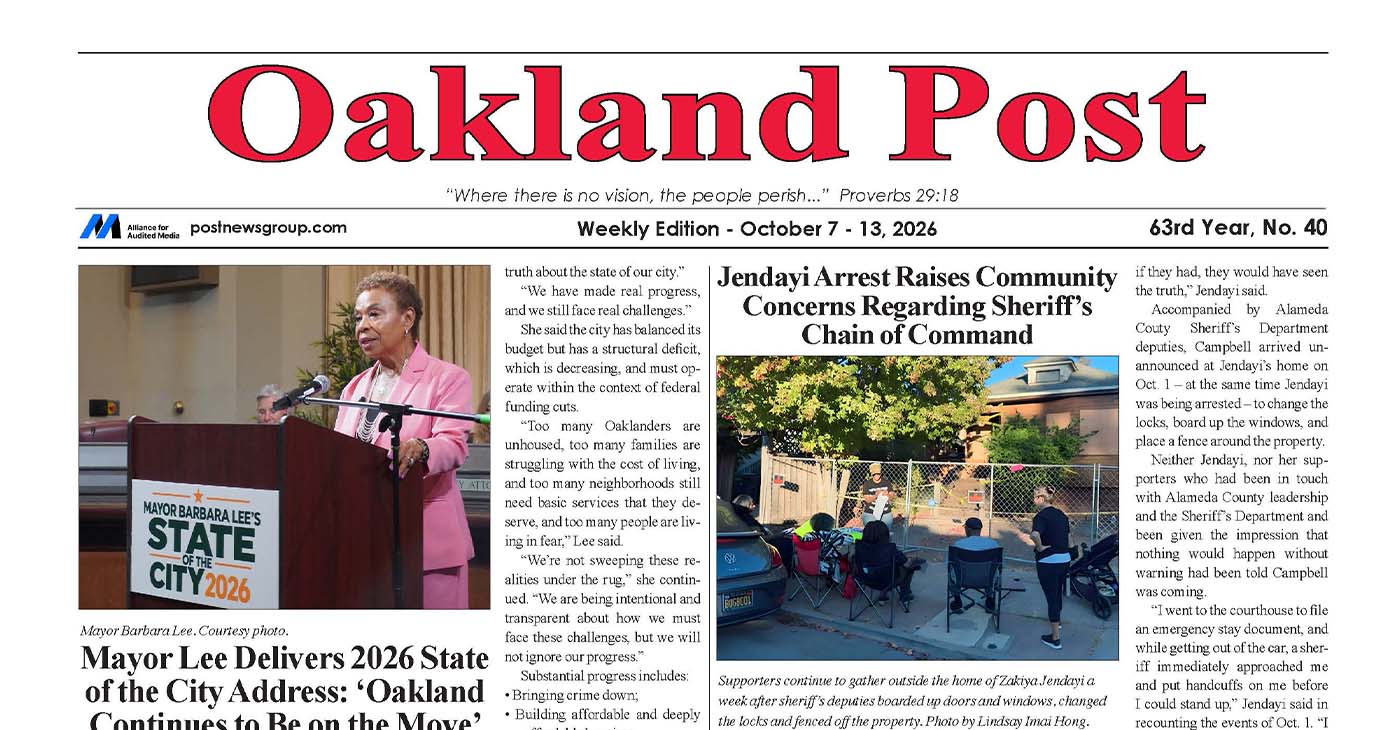
To enlarge your view of this issue, use the slider, magnifying glass icon or full page icon in the lower right corner of the browser window.
Activism
Oakland Post: Week of September 30 – October 6, 2026
The printed Weekly Edition of the Oakland Post: Week of September 30 – October 6, 2026

To enlarge your view of this issue, use the slider, magnifying glass icon or full page icon in the lower right corner of the browser window.
Activism
Oakland Post: Week of September 23 – 29, 2026
The printed Weekly Edition of the Oakland Post: Week of September 23 – 29, 2026

To enlarge your view of this issue, use the slider, magnifying glass icon or full page icon in the lower right corner of the browser window.


WCCUSD Joins Statewide Organic School Food Purchasing Cooperative

Democrats, Community Groups Back Measure EE to Change How Oakland Is Governed

Four Tips to Help You Plan a Holiday “Staycation”

Veterans Housing Project Proposed for South Richmond
PRESS ROOM: Transformative Justice Coalition 2026 Voting Rights Champion Awards Reception ‘Yesterday Is Today: The Battle For Voting Rights

Mayor Lee Delivers 2026 State of the City Address: ‘Oakland Continues to Be on the Move’

Oakland Awarded More than $14 Million in State Funding

Jendayi Arrest Raises Community Concerns Regarding Sheriff’s Chain of Command

Marin County Supes Expand Small Business Options with Home Kitchen Pilot Program

Allen Temple Baptist Church Hosts Free Prostate Cancer Screenings on Oct. 17

AC Transit Labor Unions Back Director Joel Young

Locals Can Get Locally Grown Produce Delivered Through Urban Tilth

‘ICE-Free Marin’ Supporters Press Supervisors as County Drafts Enforcement Restrictions

Oakland Post: Week of October 7 – 13, 2026

Ghana’s Ministry of Foreign Affairs Publishes Global Circle’s Vatican Reparations Call in Special Edition Alongside Heads of State

Misnamed ‘Parent’ PAC Seeks to Influence Oakland School Board Elections

Oakland Post: Week of September 2 – 8, 2026

Oakland Post: Week of September 9 – 15, 2026

Richmond Tiny House Village Farm & Garden Set to Open Gates on Sept. 26

Latest Massacre in Haiti Reveals Cruelty U.S. Deportations

OPINION: Nolan Wells’ Death One of Several Signifying Racial Terror Lives on in U.S. South

Poll: Becerra Widens His Lead Over Hilton; Californians Split on Wealth Tax

Mayor Lee Announces $1 Million Kaiser Permanente Grant for Pilot Program to Address Homelessness, Clean Up Public Spaces throughout Oakland

County Office of Education Says OUSD Finances Are Getting Healthier, Materially Stronger

Democratic Clubs Interview Candidates for Oakland School Board

Oakland People’s Arms Embargo Coalition Demands End to Military Shipments Thru Oakland

Oakland Post: Week of September 16 – 22, 2026

Two Looming Threats Every Alameda County Elder Should Know About

BLACspace Cooperative Invites Bay Area to Experience Oakland’s Black Cultural Ecosystem Through a BLAC Map Tour + Party

Zakiya Jendayi Arrested, Locked Out of Home by Sheriff’s Deputies

The Conversation With Al McFarlane 6/23/26

Media Monday 6/22/26

LIVE! ASK ALMA! — TUES. 6.23.26 7PM EST

Car Buying Secrets: 4 Hidden Checks Before You Sign!

Is This 550 HP Charger Worth YOUR Money? AutoNetwork Review

Celebrating Juneteenth – Frederick Douglass on education and resistance

LIVE! — ASK ALMA! — TUES. 6.19.26 7PM EST

Hyundai Ioniq 5 Parking, Safety, and 360 View #shorts

2025 Ioniq 5 New Wiper & Powerful Performance! #shorts

Electric SUV Range: Is 259 Miles Enough? #shorts

EV Charging: How Fast Can You Charge an Electric Vehicle? #shorts

Biometric Cooling… Messaging Seats…Come on! 2025 Infiniti QX80 Autograph 4WD

Charged Up: Witness the Magic of a Fully Electric Car! #shorts

Range Rover Sport PHEV Included…: See What’s Inside This Luxury SUV! #shorts

Invisible Hood View: Perfect Parking with X-Ray Vision! #shorts
-
 Economy2 weeks ago
Poll: Becerra Widens His Lead Over Hilton; Californians Split on Wealth Tax
-
 Business3 weeks ago
Mayor Lee Announces $1 Million Kaiser Permanente Grant for Pilot Program to Address Homelessness, Clean Up Public Spaces throughout Oakland
-
 Business2 weeks ago
County Office of Education Says OUSD Finances Are Getting Healthier, Materially Stronger
-
 Uncategorized3 weeks ago
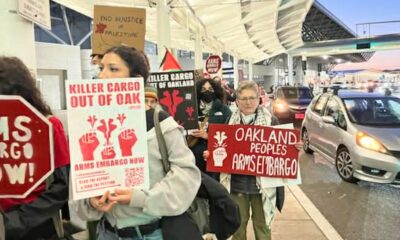
Oakland People’s Arms Embargo Coalition Demands End to Military Shipments Thru Oakland
-
 Activism3 weeks ago
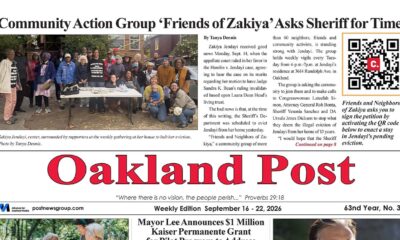
Oakland Post: Week of September 16 – 22, 2026
-
 Community3 weeks ago
Two Looming Threats Every Alameda County Elder Should Know About
-
 Art2 weeks ago
BLACspace Cooperative Invites Bay Area to Experience Oakland’s Black Cultural Ecosystem Through a BLAC Map Tour + Party
-
 Lead Story1 week ago
Zakiya Jendayi Arrested, Locked Out of Home by Sheriff’s Deputies
