
Politics
In a Change from 2008, Clinton Talking Often about Race


In this July 23, 2015, photo, Democratic presidential hopeful Hillary Rodham Clinton speaks at a campaign event in Columbia, S.C. (AP Photo/Stephen B. Morton)
Bill Barrow, ASSOCIATED PRESS
GREENVILLE, South Carolina (AP) — In her second bid for the presidency, Hillary Rodham Clinton is discussing “systemic racism” and making the issue a hallmark of her campaign, as she looks to connect with the black voters who supported rival Barack Obama in 2008.

At multiple stops in South Carolina this week, the former secretary of state and current Democratic front-runner in the 2016 presidential campaign bemoaned “mass incarceration,” an uneven economy, increasingly segregated public schools and poisoned relations between law enforcement and the black community.
The former first lady praised South Carolina leaders, including Republican Gov. Nikki Haley, for removing the Confederate battle flag from statehouse grounds after a white gunman’s massacre of nine people at a historic black church in Charleston, but she warned that the act is only symbolic.
“America’s long struggle with racism is far from finished,” she said before a mostly white audience at a Greenville technical college. Hours earlier, with a majority black audience at a West Columbia church, she declared, “Anybody who says we don’t have more progress to make is blind.”
The bold approach, which also includes previous addresses on voting rights and the criminal justice system, is a contrast to her 2008 campaign, when she didn’t talk so directly about race as she faced off against Obama, who would go on to become the nation’s first black president. Instead, she ran as the battle-tested, experienced counter to the first-term U.S. senator from Illinois.
Clinton doesn’t frame her unabashed commentary in a political context; aides repeatedly explain her strategy as “working to win every vote” and nothing more. Yet it’s clear that Clinton feels no constraints, as perhaps she did eight years ago. It’s also no surprise that she prominently features the strategy in South Carolina. African-Americans make up about 28 percent of the population and a majority of the Democratic primary electorate, the first of the early-voting states to feature a significant bloc of black voters.
Obama trounced Clinton here in 2008, 56 percent to 27 percent, as many black voters flocked to his candidacy once he demonstrated white support in the Iowa caucuses and New Hampshire primary. That leaves Clinton to reverse a bitter primary defeat, while using South Carolina as a test run for a potential general election in which she would need strong black support to reassemble Obama’s coalition in states like Virginia, Florida and Ohio.
If Clinton’s approach is born of necessity, it also comes with potential pitfalls.
The complexities were clear within hours of her South Carolina stops, as social media users and commentators parsed her comments, including her statement that “for a lot of well-meaning, open-minded white people, the sight of a young black man in a hoodie still evokes a twinge of fear.” She made the observation that racism goes beyond public policy and into “the fabric of how people think and feel and act.”
Last month, she angered some activists by using the phrase “all lives matter” during a speech a few miles from Ferguson, Missouri, where Michael Brown died at the hands of a white police officer. Clinton used those words as part of an anecdote about her mother, whom she said taught her that “all lives matter,” but some activists thought it demeaned the significance of the “Black Lives Matter” effort.
Her Democratic rivals Martin O’Malley and Bernie Sanders drew similar outrage at the recent Netroots Nation convention. O’Malley, the former Maryland governor, ended up apologizing after snapping at hecklers: “Black lives matter. White lives matter. All lives matter.”
Clinton also faces questions about her advocacy for tougher sentencing laws that her husband signed as president. Bill Clinton recently expressed regret over the laws, but his wife stopped short of calling the laws a mistake.
“We were facing different problems in the ’80s and ’90s,” she told reporters, saying crime in cities “was causing an outcry across the nation,” including in minority neighborhoods. “I think now, 20 years on, we can say some things worked and some things didn’t work,” she continued. “One of the big problems that didn’t work is that we had too many people, particularly African-American men, who were being incarcerated for minor offenses.”
Clinton also must avoid any residue from Bill Clinton’s remarks during the 2008 campaign. After Obama won South Carolina, the former president, who remains very popular among black voters, dismissed the victory as akin to Rev. Jesse Jackson’s victory in 1988. A black South Carolina native, Jackson won the state’s caucus that year, but didn’t sustain the momentum.
___
Follow Bill Barrow on Twitter at https://www.twitter.com/BillBarrowAP.
Copyright 2015 The Associated Press. All rights reserved. This material may not be published, broadcast, rewritten or redistributed.
###











Activism
Oakland Post: Week of March 18 – 24, 2026
The printed Weekly Edition of the Oakland Post: Week of March 18 – 24, 2026
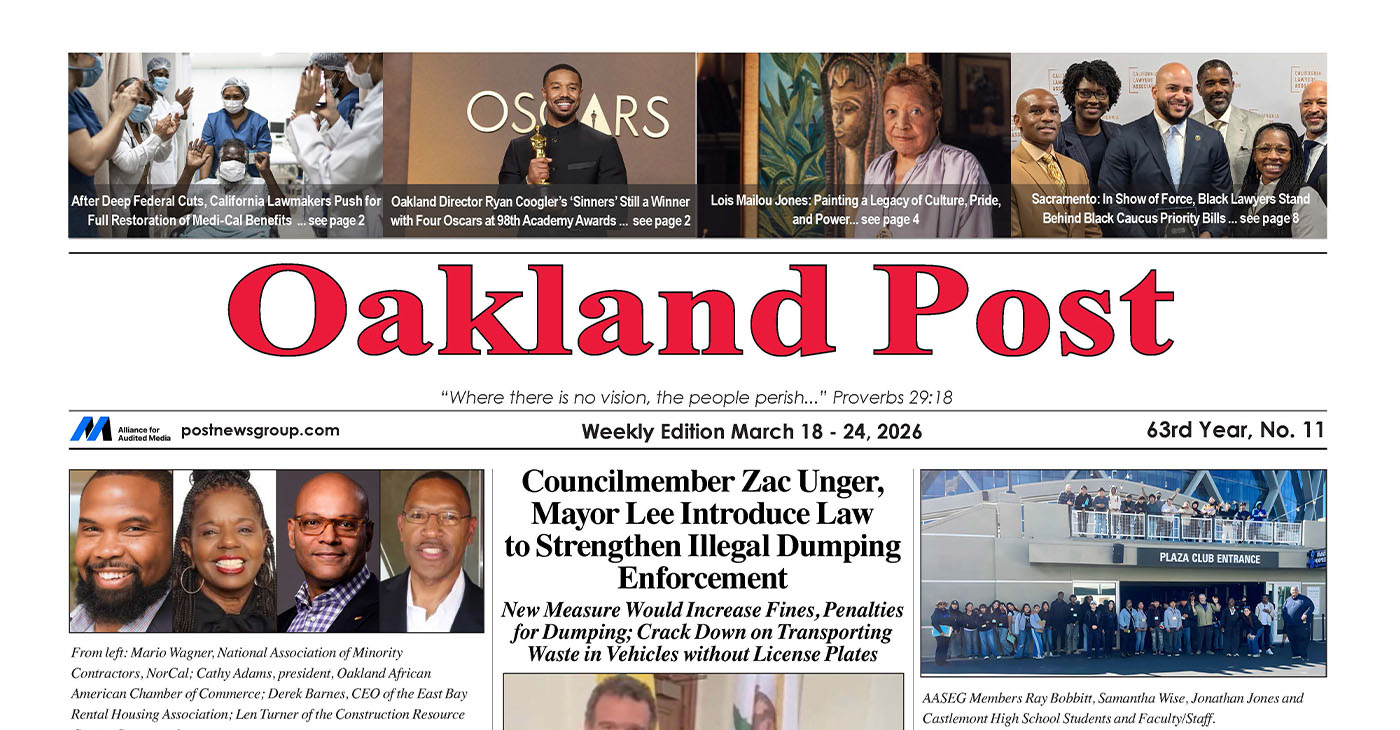
To enlarge your view of this issue, use the slider, magnifying glass icon or full page icon in the lower right corner of the browser window.
Activism
Oakland Post: Week of March 11 -17, 2026
The printed Weekly Edition of the Oakland Post: Week of March 11 – 17, 2026
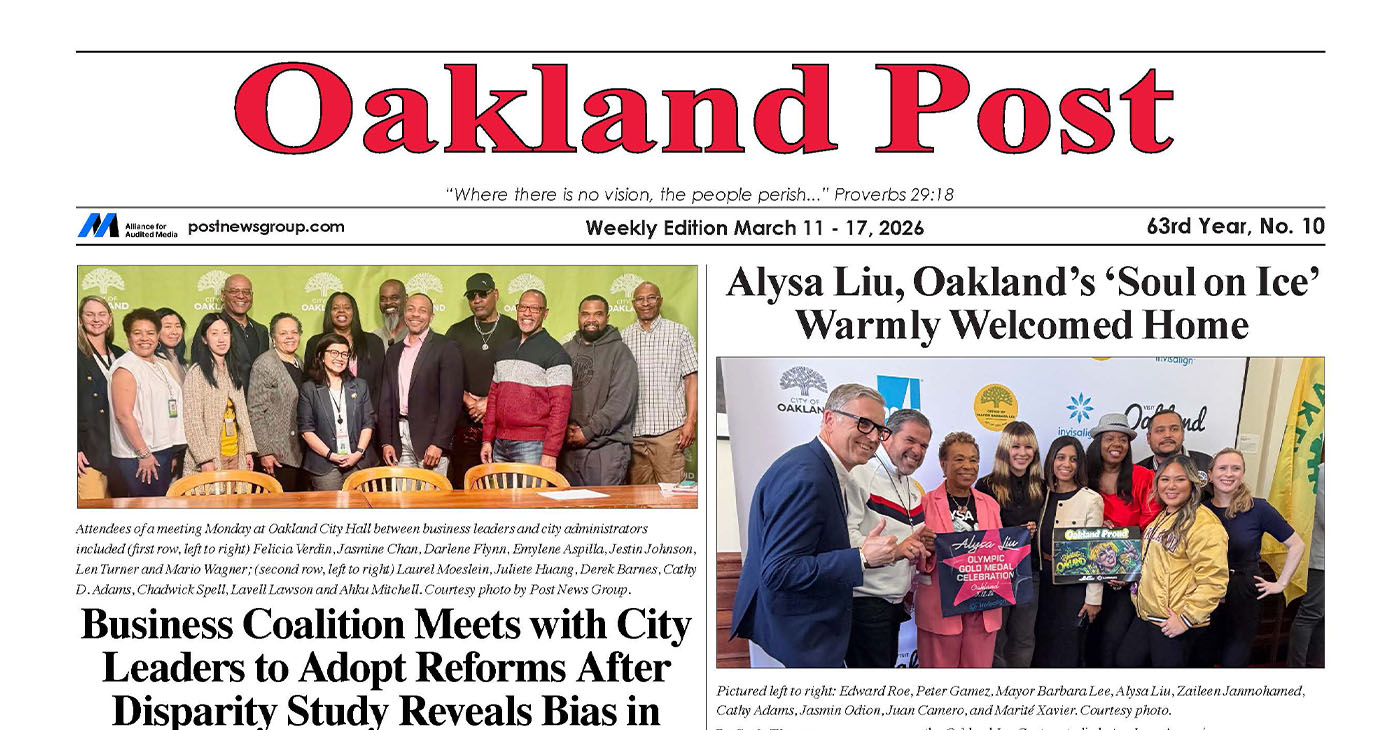
To enlarge your view of this issue, use the slider, magnifying glass icon or full page icon in the lower right corner of the browser window.
Activism
Oakland Post: Week of March 4 – 10, 2026
The printed Weekly Edition of the Oakland Post: Week of March 4 – 10, 2026
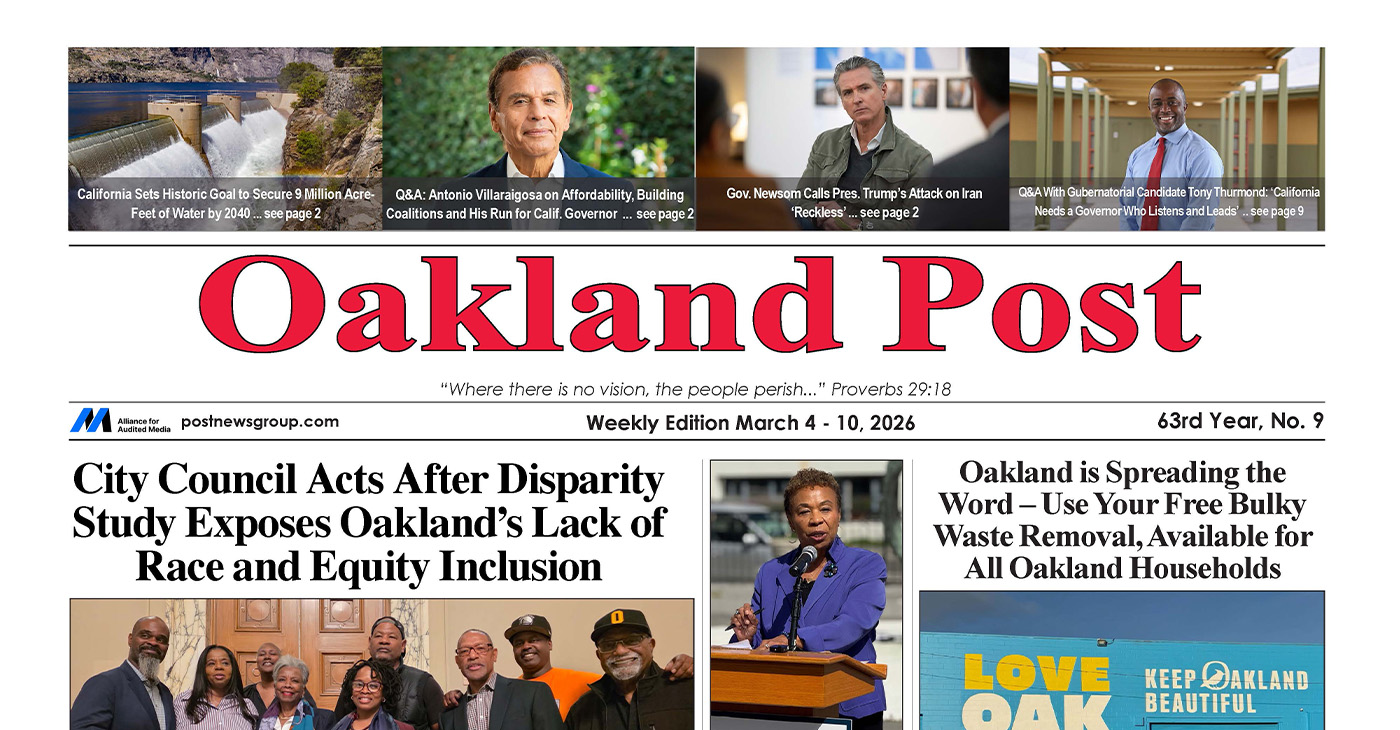
To enlarge your view of this issue, use the slider, magnifying glass icon or full page icon in the lower right corner of the browser window.

WORK FROM HOME
Home-based business with potential monthly income of $10K+ per month. A proven training system and website provided to maximize business effectiveness. Perfect job to earn side and primary income. Contact Lynne for more details: Lynne4npusa@gmail.com 800-334-0540


Black Artists in America, Installation Three Wraps at the Dixon Gallery and Gardens

Grief, Advocacy, and Education: A Counselor Reflects on Black Maternal Health

Future of Florida’s Black History Museum in Limbo

New Research Shows the Many Benefits of Early Learning

South Hampton K-8 Students Among Top 10 Finalists for Samsung’s ‘Solve for Tomorrow’ Competition

Cuba: No Negotiation with US on the President or Political System

Brooklyn Academy of Music Names Jamaican-Born Tamara McCaw as President

Trinidad & Tobego – U.S. Launches WhatsApp Channel for American Citizens in the Country

Oakland Post: Week of March 18 – 24, 2026

AI Innovation vs. Ethics and Environmental Impact

AI, Web3, and Digital Reparations

What If You Owned Your AI Agent?

Season 7, Episode 3 – January Reporter’s Roundtable 📱

Season 7, Episode 3 – January Reporter’s Roundtable

AI, Media, and Power | Part 2, Real-World Impacts and Tradeoffs

Reflecting on Black History Milestones in Birmingham AL

CITY OF SAN LEANDRO STATE OF CALIFORNIA PUBLIC WORKS DEPARTMENT ENGINEERING DIVISION NOTICE TO BIDDERS FOR ANNUAL STREET OVERLAY/REHABILITATION 2019-21 – PHASE III

Oakland Post: Week of February 18 – 24, 2026

Oakland Post: Week of February 25 – March 3, 2026

PRESS ROOM: NBA Hall of Fame Nominee Terry Cummings Joins 100 Black Men of DeKalb County to Launch Victory & Values Initiative

Trump’s MAGA Allies are Creating Executive Order Plan to Steal the 2026 Midterms

U.S. manufacturing rebounds – how foundry services are adapting to rising demand

Oakland Post: Week of March 4 – 10, 2026

Chase Oakland Community Center Hosts Alley-Oop Accelerator Building Community and Opportunity for Bay Area Entrepreneurs

Poll Shows Support for Policies That Help Families Afford Child Care

OP-ED: One Hundred Years of Black Workers Telling the Truth

Advancements in solar technology that are changing the way we power the world

Woman’s Search for Family’s Roots Leads to Ancestor John T. Ward – A Successful Entrepreneur and Conductor on the Underground Railroad

PRESS ROOM: Civil Rights TV Launches in Selma as the World’s First 24/7 Civil Rights Television Network

OP-ED: NNPA Launches 2026 “Leadership Matters” Video Series

Hyundai Ioniq 5 Parking, Safety, and 360 View #shorts

2025 Ioniq 5 New Wiper & Powerful Performance! #shorts

Electric SUV Range: Is 259 Miles Enough? #shorts

EV Charging: How Fast Can You Charge an Electric Vehicle? #shorts

Biometric Cooling… Messaging Seats…Come on! 2025 Infiniti QX80 Autograph 4WD

Charged Up: Witness the Magic of a Fully Electric Car! #shorts

Range Rover Sport PHEV Included…: See What’s Inside This Luxury SUV! #shorts

Invisible Hood View: Perfect Parking with X-Ray Vision! #shorts

AI Is Reshaping Black Healthcare: Promise, Peril, and the Push for Improved Results in California

ESSAY: Technology and Medicine, a Primary Care Point of View

Sanctuary Cities

The RESISTANCE – FREEDOM NOW

STATE OF THE PEOPLE: Freddie

ECONOMIC BOYCOTT DAY!!!!!

I told You So
-
 Activism4 weeks ago
Oakland Post: Week of March 4 – 10, 2026
-
 #NNPA BlackPress3 weeks ago
Woman’s Search for Family’s Roots Leads to Ancestor John T. Ward – A Successful Entrepreneur and Conductor on the Underground Railroad
-
 #NNPA BlackPress4 weeks ago
OP-ED: NNPA Launches 2026 “Leadership Matters” Video Series
-

 #NNPA BlackPress3 weeks ago
COMMENTARY: Women of Color Shape Our Past and Future
-

 #NNPA BlackPress3 weeks ago
Advocates Raise Alarm Over ICE Operation, MOU and Detention Risks in Baltimore County
-

 Activism2 weeks ago
Oakland Post: Week of March 11 -17, 2026
-

 #NNPA BlackPress3 weeks ago
Pete Buttigieg to Join Mayor Randall Woodfin for Community Town Hall in Birmingham
-

 Advice2 weeks ago
Financial Wellness and Mental Health: Managing Money Stress in College
