
Activism
How the Crack Cocaine Epidemic Led to Mass Sex Exploitation of Black People PART 3: The Case Against SB357: Black, Vulnerable and Trafficked
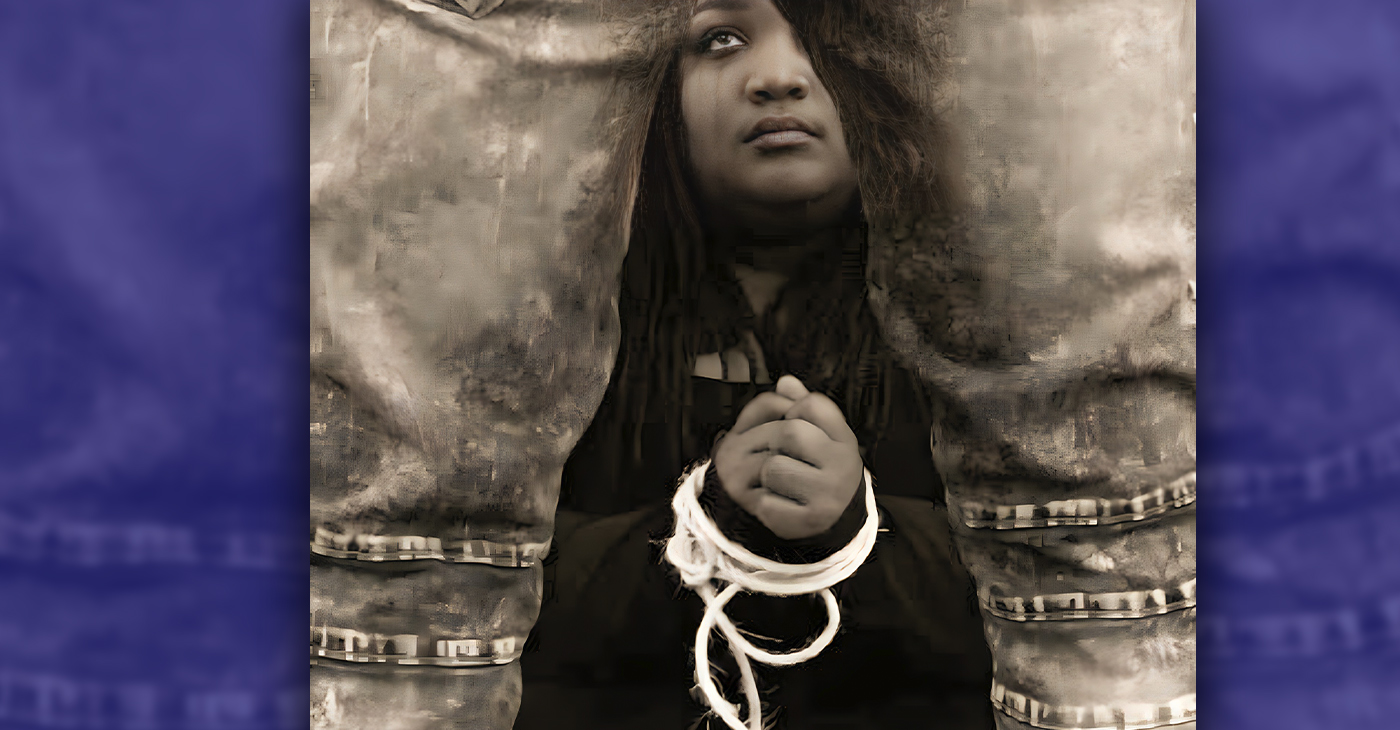
Although California Senate Bill 357 was intended to alleviate arrests of willing sex workers under anti-loitering laws, it opened up a Pandora’s box loophole that hinders the ability of law enforcement to halt human trafficking, especially of young Black and Brown girls. This segment continues to explore the history that led to this latest form of exploitation in Oakland.

By Tanya Dennis and Vanessa Russell
Although California Senate Bill 357 was intended to alleviate arrests of willing sex workers under anti-loitering laws, it opened up a Pandora’s box loophole that hinders the ability of law enforcement to halt human trafficking, especially of young Black and Brown girls. This segment continues to explore the history that led to this latest form of exploitation in Oakland.
It was 1980: The beginning of the end for the Black family and Black community as we knew it.
Crack cocaine was introduced to the United States that year and it rendered unparalleled devastation on Black folks. Crack is a solid smokable form of cocaine made by boiling baking soda, cocaine, and water into a rock that crackles when smoked.
The tremendous high — especially when first smoked — and the low cost brought temporary relief to the repeatedly and relentlessly traumatized members of the Black community.
What was unknown at the time was how highly addictive this form of cocaine would be and how harmful the ensuing impact on the Black family when the addicted Black mother was no longer a haven of safety for her children.
The form made it easy to mass produce and distribute, opening the market to anyone and everyone, including many Black men who viewed selling crack as their way out of poverty.
These two factors — addicted Black women and drug-dealing Black men — would lead to the street exploitation for sex as we know it today.
Encouraged to try it free initially, most poor, Black women in the 1980s used crack cocaine in a social setting with friends. When the free samples disappeared the drug dealer offered to supply the women crack in exchange for allowing him to sell their bodies to sex buyers.
The increase in the supply of women willing to exchange sex for crack — a.k.a. the “sex for crack barter system” — caused the price of sex to decrease and at the same time increased the demand for sex because more buyers could afford it.
The desperation of the women to get their hit of crack made them willing to endure any form of abuse and treatment from buyers during sex, including unprotected and violent sex.
It also pushed desperate Black women onto the street to pursue sex buyers, flagging down cars and willing to have sex anywhere actively and desperately. Street prostitution grew and buyers were able to buy oral sex for as little as $5.
This sex-for-crack barter system resulted in a dramatic increase in sexually transmitted diseases including HIV and AIDS, both of which are disproportionately represented among Black people.
It also resulted in unplanned pregnancies by unknown fathers, which then resulted in children born addicted to crack who were immediately placed in the foster care system where they were often abused and/or neglected.
For his part, the Black man who engaged in the mass production and distribution of crack was often killed by gun violence while fighting over drug territory or incarcerated for long periods of time as use and sales and distribution of crack carried longer sentences than powdered cocaine.
Crack unleashed an entire chain of new trauma upon the Black family which then all but collapsed under this latest social attack that had started with chattel slavery, followed by Jim Crow, redlining, school segregation, food deserts, et. al.
Exploitation was and is at the root of the crack cocaine epidemic. It is the latest weapon used to prey upon Black people since the beginning of our time in the United States.
The sex industry and legislation like SB357 have only increased harm to Black people who have been historically oppressed with racist laws and epidemics including crack. More must be done to restore the Black community.
Tanya Dennis serves on the Board of Oakland Frontline Healers (OFH) and series co-author Vanessa Russell of “Love Never Fails Us” and member of OFH.












Activism
Oakland Post: Week of August 5 – 11, 2026
The printed Weekly Edition of the Oakland Post: Week of August 5 – 11, 2026
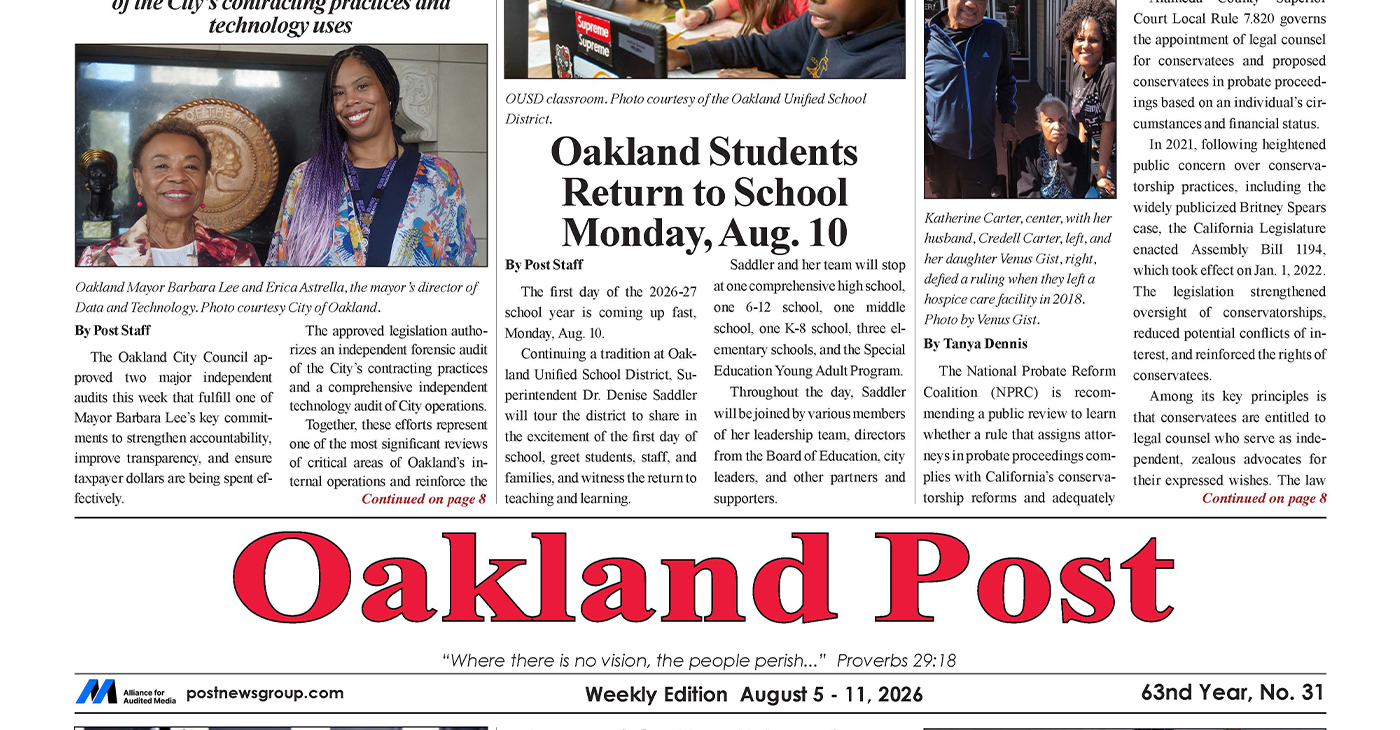
To enlarge your view of this issue, use the slider, magnifying glass icon or full page icon in the lower right corner of the browser window.
Activism
Oakland Post: Week of July 29 – August 4, 2026
The printed Weekly Edition of the Oakland Post: Week of July 29 – August 4, 2026
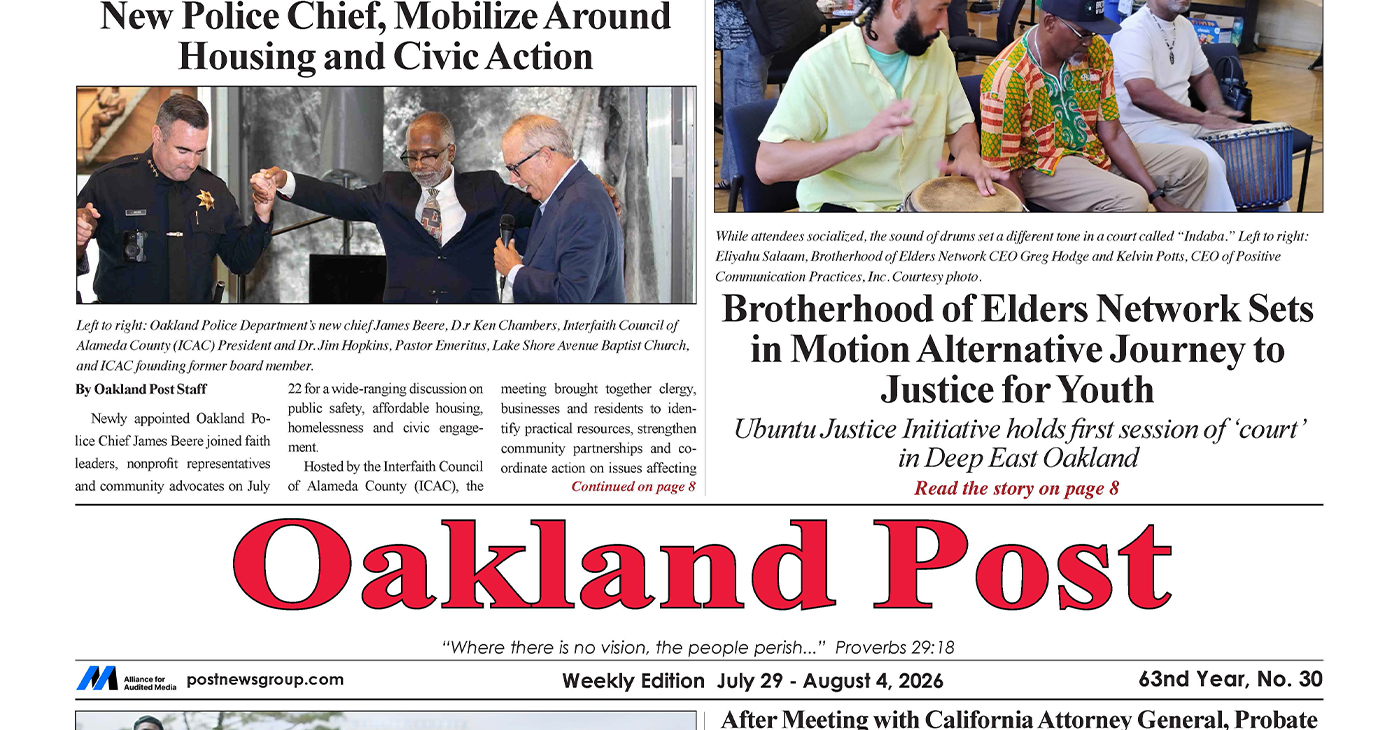
To enlarge your view of this issue, use the slider, magnifying glass icon or full page icon in the lower right corner of the browser window.
Activism
Oakland Post: Week of July 22 – 28, 2026
The printed Weekly Edition of the Oakland Post: Week of July 22 – 28, 2026

To enlarge your view of this issue, use the slider, magnifying glass icon or full page icon in the lower right corner of the browser window.
WORK FROM HOME
Home-based business with potential monthly income of $10K+ per month. A proven training system and website provided to maximize business effectiveness. Perfect job to earn side and primary income. Contact Lynne for more details: Lynne4npusa@gmail.com 800-334-0540


Car Wash Workers Cope with Lingering Impacts of ICE Raids

Misty Copeland Shapes Ballet’s Tomorrow

As Part of Your Back-to- School Checklist, Vaccinate

As Part of Your Back-to- School Checklist, Vaccinate

Congresswoman Simon Demands Investigation into Trump’s Abuse of Emergency Powers for Coal Export Terminal in West Oakland

OPINION: The Philippines Isn’t Foreign When Your Family Still Lives There

Asm. McKinnor’s Bill Banning Drones Above Outdoor Entertainment Events Awaits Senate Decision

California Sen. Padilla Joins Colleagues to Introduce Bill Imposing Term Limits on Supreme Court Justices

Department of Homeland Security Demands California Secretary of State Shirley N. Weber Scrub Voter Rolls

George Cook: The Inventor Who Made Fishing Smarter

Gov. Newsom Announces $109.6 Million in Funding for 278 Supportive Homes in Bakersfield, Contra Costa, Sacramento and Fresno

Rep. Kamlager Dove Demands Care, Justice for Man Shot by ICE

“The Power to See Threats Sooner”: Gov. Newsom, Safety Officials Showcase California’s Investments in Hi-Tech Wildfire Prevention

100 Black Wings’ Team Oakland Youth Athletes Heading to Taiwan for 2026 International Children’s Games

Oakland ‘Port Serves as a Powerful Engine for Good Jobs and Economic Development
Department of Homeland Security Demands California Secretary of State Shirley N. Weber Scrub Voter Rolls

Oakland Children’s Hospital Workers and Patients Rally for Pediatric Medical Care
“The Power to See Threats Sooner”: Gov. Newsom, Safety Officials Showcase California’s Investments in Hi-Tech Wildfire Prevention

New Judge Could Decide if Karmelo Anthony Gets a New Trial

Surveillance Pricing Fight: State Senate Debates Bill Banning Retailers from Using AI to Set Prices Based on a Buyer’s Profile

Alpha Kappa Alpha Sorority, Inc. Celebrates New North Atlantic Regional Director

Mount Zion MBC, Church of Jesus Christ of Latter-day Saints Partner to Bring 29,000 Meals to Alameda County
California Sen. Padilla Joins Colleagues to Introduce Bill Imposing Term Limits on Supreme Court Justices

Starting This Summer, California Car Buyers Can Get an Instant $3500 Off the Cost of Electric Vehicles

COMMENTARY: You Are Already Paying for the AI Boom

California Bill Would Let Abuse Victims Use Trauma as Legal Defense for Violent Crime

Fed Court to Decide Landmark First Amendment Case

Gov. Gavin Newsom Signs Law Streamlining Affordable Housing Rules

Oakland Celebrates $125 Million Coliseum Sale

Saving Black Mothers Starts Outside the Hospital

The Conversation With Al McFarlane 6/23/26

Media Monday 6/22/26

LIVE! ASK ALMA! — TUES. 6.23.26 7PM EST

Car Buying Secrets: 4 Hidden Checks Before You Sign!

Is This 550 HP Charger Worth YOUR Money? AutoNetwork Review

Celebrating Juneteenth – Frederick Douglass on education and resistance

LIVE! — ASK ALMA! — TUES. 6.19.26 7PM EST

Hyundai Ioniq 5 Parking, Safety, and 360 View #shorts

2025 Ioniq 5 New Wiper & Powerful Performance! #shorts

Electric SUV Range: Is 259 Miles Enough? #shorts

EV Charging: How Fast Can You Charge an Electric Vehicle? #shorts

Biometric Cooling… Messaging Seats…Come on! 2025 Infiniti QX80 Autograph 4WD

Charged Up: Witness the Magic of a Fully Electric Car! #shorts

Range Rover Sport PHEV Included…: See What’s Inside This Luxury SUV! #shorts

Invisible Hood View: Perfect Parking with X-Ray Vision! #shorts
-
 Featured4 days ago
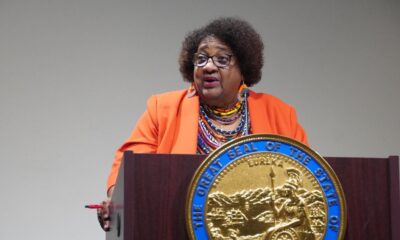
Department of Homeland Security Demands California Secretary of State Shirley N. Weber Scrub Voter Rolls
-
 Business3 weeks ago
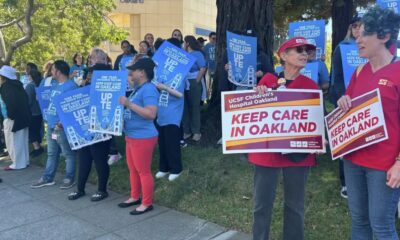
Oakland Children’s Hospital Workers and Patients Rally for Pediatric Medical Care
-
 Environment4 days ago
“The Power to See Threats Sooner”: Gov. Newsom, Safety Officials Showcase California’s Investments in Hi-Tech Wildfire Prevention
-
 #NNPA BlackPress2 weeks ago
New Judge Could Decide if Karmelo Anthony Gets a New Trial
-
 Business3 weeks ago
Surveillance Pricing Fight: State Senate Debates Bill Banning Retailers from Using AI to Set Prices Based on a Buyer’s Profile
-
 Black History1 week ago
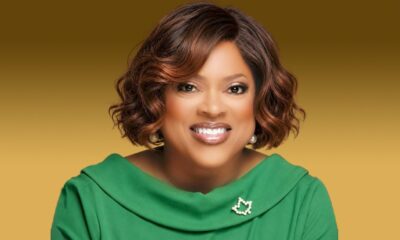
Alpha Kappa Alpha Sorority, Inc. Celebrates New North Atlantic Regional Director
-
 Business3 weeks ago
Mount Zion MBC, Church of Jesus Christ of Latter-day Saints Partner to Bring 29,000 Meals to Alameda County
-
 Featured4 days ago
California Sen. Padilla Joins Colleagues to Introduce Bill Imposing Term Limits on Supreme Court Justices
