
Crime
How Los Angeles Became the Capital of Incarceration


For several years, UCLA history professor Kelly Lytle Hernández has reached into Los Angeles history, back before the city was even city or California was even a state, to unearth evidence of how local and national governments, police and jail systems operated as a machine of conquest and elimination targeting native, poor and non-white people.
Her new book, “City of Inmates: Conquest, Rebellion, and The Rise of Human Caging in Los Angeles 1771–1965,” concludes just before the Watts Rebellion to reveal the roots of the “Age of Mass Incarceration” in the city, the time period since 1965 that has filled Los Angeles’ and the nation’s jails and prisons and continues to bring police and community relations to a boiling point.
UCLA Newsroom talked to Lytle Hernández about how her book lays a historical foundation for the story of Los Angeles’ systemically discriminatory structure of incarceration.
What launched your interest in telling this story? When you were writing your first book “Migra! A History of the U.S. Border Patrol,” were there elements that sparked your interest in digging deeper into the prison and jail system of the U.S.?
Migra! is a story about race and policing in the United States, specifically the the rise of the U.S. Border Patrol in the U.S.-Mexican border region and the border patrol’s nearly exclusive focus on policing unauthorized immigration from Mexico.
After completing it, I wanted to examine another dimension of race and law enforcement. Living in Los Angeles, I knew that Los Angeles operates the largest jail system in the United States. In fact, some researchers say no city on Earth jails more people than Los Angeles.
Therefore, Los Angeles, the City of Angels, is, in fact, the City of Inmates, the punitive capital of the world. We know very little about the making and meaning of incarceration in Los Angeles. It’s a history that has never been told. So, I began to research how Los Angeles, my hometown, built one of the largest systems of human caging that the world has ever known.
I found in the archives that since the very first days of U.S. rule in Los Angeles — the Tongva Basin — incarceration has persistently operated as a means of purging, removing, caging, containing, erasing, disappearing and otherwise eliminating indigenous communities and racially targeted populations.
I tell this tale with six stories that demonstrate how incarceration was used to first clear Tongva and other indigenous populations from the region and cage a variety of racially marginalized populations, ranging from white males disparaged as “tramps and “hobos” to Chinese immigrants, African Americans and Mexican Immigrants.
You reveal that mass incarceration is in fact mass elimination of these non-conforming groups. Why is Los Angeles’ particular history so illustrative of this?
Los Angeles opens a window to see untold histories of incarceration, namely those that can best be told from the perspective of the American West. What the American West teaches us about the rise of incarceration in the United States is that conquest matters.
In particular, the 19th-century efforts to expand the United States across the North American continent and build white settler communities on the nation’s western frontier are deeply imprinted in the nation’s police and incarceration practices.
By focusing on the western town that built the nation’s largest jail system, City of Inmates unlocks how the dynamics of conquest shaped, and continue to shape, the priorities and tactics of human caging in the United States.
Read the full Q&A here.














Community
Alameda County Supervisor Miley to Propose Illegal Dumping Ordinance
POST NEWS GROUP — The proposed ordinance would add Chapter 6.121 to the County’s General Ordinance Code, establishing an administrative enforcement process that would allow the County to hold more parties accountable without relying solely on criminal prosecution.

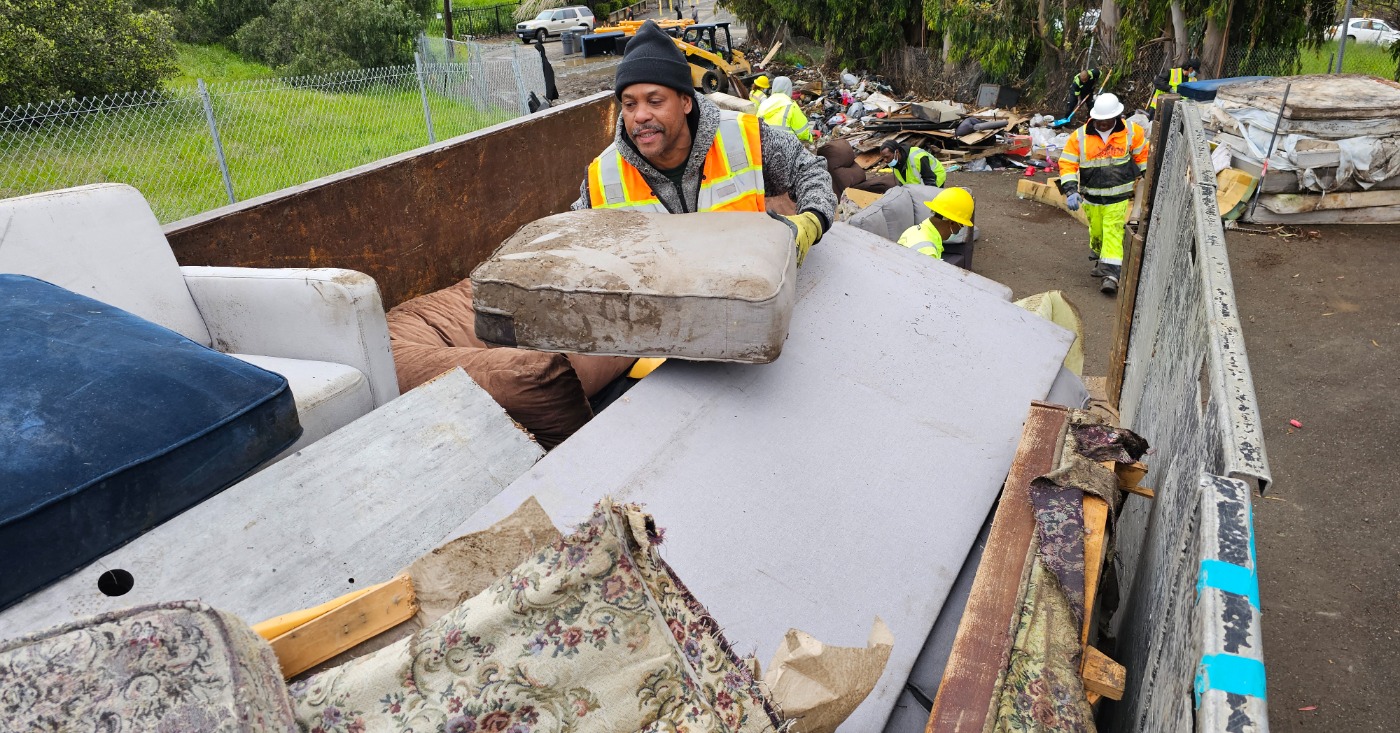
Proposal expands accountability, establishes administrative penalties, and ties fines to cleanup costs
On Tuesday, Nov. 17, the Alameda County Board of Supervisors is scheduled to consider the first reading of an ordinance proposed by Supervisor Nate Miley to strengthen enforcement against illegal dumping in unincorporated Alameda County, including Ashland, Cherryland, Castro Valley, San Lorenzo and Fairview.
Illegal dumping places a significant financial burden on residents and taxpayers. In 2024, Alameda County spent $3.8 million addressing 1,483 illegal dumping incidents, an average of approximately $2,562 per incident. Yet no illegal dumping cases from the unincorporated county were charged that year.
The proposed ordinance would add Chapter 6.121 to the County’s General Ordinance Code, establishing an administrative enforcement process that would allow the County to hold more parties accountable without relying solely on criminal prosecution.
Key provisions include:
- Expanded accountability: Penalties could apply to individuals who dump waste, those who provide waste to unlicensed haulers who illegally dispose of it, and vehicle owners who knowingly consent to their vehicles being used for illegal dumping.
- Administrative enforcement: Authorized County personnel could issue penalties and abatement orders, with opportunities for administrative hearings and judicial review.
- Penalties tied to cleanup costs: Fines would start at $2,500 for a first violation, increase to $5,000 for a second and $10,000 for a third. Enhanced penalties of up to $10,000 per violation could apply to large-scale dumping, hazardous waste, or dumping near sensitive locations such as creeks, schools and storm drains.
The ordinance includes safeguards for people acting in good faith. Residents and businesses using licensed haulers would be exempt from waste-generator liability, while vehicle owners whose vehicles were used without their consent and property owners unaware of dumping on their land would also be protected.

Cited individuals could request community service in lieu of penalties, with ability to pay among the factors considered. The proposal would also allow property owners, business improvement districts and community groups to pursue recovery of cleanup costs and authorize the Board to establish a reward fund for tips identifying illegal dumpers.
“Every mattress and every truckload of construction debris dumped in Ashland, Cherryland and Castro Valley gets paid for by the people who live there, and right now the people responsible almost never face a consequence,” Miley said. “This ordinance closes the loopholes that let people hand off their waste and walk away. It gives the County a fair and swift way to hold dumpers accountable, protects people who do the right thing, and makes the penalty match what it costs us to clean up after them.”
Modeled on Santa Cruz County’s illegal dumping ordinance, which took effect in July 2025, the proposal was recommended for approval by the Board’s Unincorporated Services Committee.
Miley is also urging cities and counties throughout the region to adopt similar standards. His office has released a Model Illegal Dumping Enforcement Ordinance developed through the Alameda County Illegal Dumping (ACID) Task Force to support coordinated regional enforcement.
If the Board conducts the first reading on Nov. 17, the ordinance will return for adoption at a subsequent meeting and take effect 30 days after adoption.
Paul Sanftner is the director of communications and special projects for the office of Alameda County Supervisor Nate Miley.

Business
AG Bonta Announces Action on Cryptocurrency, Sextortion Fraud – Increasingly Targeting Gen-Z
California Attorney General Rob Bonta is warning residents about a surge in cryptocurrency fraud and online sextortion schemes that increasingly target Gen Z through social media platforms. With internet-based scams costing Americans nearly $21 billion in 2023, Bonta highlighted how artificial intelligence and deepfakes allow criminals to impersonate loved ones and promote fraudulent investment groups. The Attorney General’s Office has already shut down over 100 fraudulent websites and is now utilizing new legislative tools to recover assets for victims. Read more.

California Attorney General Rob Bonta warned residents about rising cryptocurrency fraud and online sextortion scams, urging Californians to recognize warning signs and protect themselves as scammers increasingly target younger people through social media.
Speaking at a news conference on Oct. 19, Bonta said Americans lost $20.9 billion to internet-based scams in 2025, including $11.4 billion to cryptocurrency scams. He said artificial intelligence, deepfakes, and malicious smart contracts have made fraud easier to carry out and more difficult to detect and prevent.
While older Californians remain targets, Bonta said his office has seen a sharp rise in reports of Gen Z consumers being targeted on platforms such as Twitch, TikTok, and Instagram.
One growing scheme involves so-called rug-pull scams, in which fraudsters promote low-priced stocks or volatile cryptocurrencies through online investment groups and streaming communities. After generating interest and driving up prices, scammers sell their holdings, causing values to collapse and leaving investors with losses.
Bonta also warned about sextortion, in which scammers trick or coerce victims into sharing explicit images before threatening to distribute them to friends and family unless they pay. He advised victims not to give in to demands, saying scammers often do not release the images when victims refuse to pay. Instead, he recommended ignoring and blocking the perpetrators.
Another scheme, known as recovery fraud, targets people who have already lost money to cryptocurrency scams. Fraudsters impersonate blockchain recovery specialists or law enforcement officials and demand additional payments while promising to recover stolen assets.
Bonta urged Californians to be skeptical of promises of large returns on small investments, fake cryptocurrencies resembling established ones, and celebrity endorsements that may have been generated using artificial intelligence. He also warned that scammers can use AI to impersonate loved ones through manipulated video and audio.
“Never use a crypto ATM,” Bonta said, emphasizing that transactions can be difficult to trace and reverse and that the machines lack adequate consumer protections.
His office has shut down more than 100 fraudulent websites over the past two years that collectively scammed victims out of at least $8.3 million, he said.
Bonta also highlighted Senate Bill 1208, which he said was recently signed into law. The measure allows law enforcement to petition a court to return seized cryptocurrency to victims, including when alleged perpetrators are outside U.S. jurisdiction.
Residents who have fallen victim to scams can report them to the California Department of Justice at oag.ca.gov/report.
Bonta also urged victims not to feel embarrassed, stressing that scammers are responsible for the harm they cause.
Activism
Oakland Post: Week of October 28 – November 3, 2026
Oakland Post: Week of October 28 – November 3, 2026

To enlarge your view of this issue, use the slider, magnifying glass icon or full page icon in the lower right corner of the browser window.



Alameda County Supervisor Miley to Propose Illegal Dumping Ordinance

Oakland City Council Extends AI Data Center Moratorium for 10 Months.

On Veterans Day, U.S. Rep. Simon Demands Answers on Status of Veterans Affairs Clinic, Columbarium Project

OPINION: Mario Juarez’s Courtroom Admissions Raise Questions About Allegations That Fueled Recall of Pamela Price

Hutchinson Concedes: Ballots Still Being Counted in Oakland Board Elections

Mayor Lee and Schools’ Supt. Saddler Issue Joint Statement on Recent ICE Activity in Oakland

Mississippi Congressman Bennie Thompson Congratulates Scott Colom on Historic Victory

Farms to Grow, Inc. Hosts the 8th Annual Sweet Potato Pie Tasting Contest

How the Sandwich Generation Can Help Protect Aging Parents’ Finances

As Progressive Democrats Celebrate ‘Blue Tsunami,’ Oakland Counts Victories

Golden State Valkyries Become Bay Area Legends Winning WNBA Championship on Halloween Night

IN MEMORIAM: Marcia Ann Gillespie, Editor of Essence and Ms. Magazines, Dies at 82

U.S. Rep. John Garamendi Honors local ‘Women of the Year’ at Annual Awards Ceremony

Richmond Neighbors Put Pantry Power on the Map

Oakland Latino Chamber of Commerce Hosts Statewide Convention, Generating $3 Million in Economic Impact

COMMENTARY: Valarie Bachelor and Jennifer Brouhard are Excellent School Board Members and Deserve to Be Reelected

Listening as a Lifeline: A Doula’s Witness to Black Maternal Health

OUSD Receives State Review of District Finances; Outlines Progress Since January

HISTORY MADE: Keisha Lance Bottoms Becomes First Black Woman Elected Governor in American History

Zakiya Jendayi Arrested, Locked Out of Home by Sheriff’s Deputies

SEIU Local 1000 and State of California Will Continue to Negotiate New Labor Contract
Golden State Valkyries Become Bay Area Legends Winning WNBA Championship on Halloween Night

COMMENTARY: Your California Living Trust Could Be Next: When Evidence Isn’t Enough

Fate of Bay Area Public Transit Hinges on Regional Transit Measure

Oakland Post: Week of September 30 – October 6, 2026

It’s Time to Lose Weight Before the Holidays

Mayor Barbara Lee Holds Special State of the City Address in Deep East Oakland

Democrats, Community Groups Back Measure EE to Change How Oakland Is Governed

Oakland Awarded More than $14 Million in State Funding

OP-ED: Proposition 44 Would Put a Price on Trust

The Conversation With Al McFarlane 6/23/26

Media Monday 6/22/26

LIVE! ASK ALMA! — TUES. 6.23.26 7PM EST

Car Buying Secrets: 4 Hidden Checks Before You Sign!

Is This 550 HP Charger Worth YOUR Money? AutoNetwork Review

Celebrating Juneteenth – Frederick Douglass on education and resistance

LIVE! — ASK ALMA! — TUES. 6.19.26 7PM EST

Hyundai Ioniq 5 Parking, Safety, and 360 View #shorts

2025 Ioniq 5 New Wiper & Powerful Performance! #shorts

Electric SUV Range: Is 259 Miles Enough? #shorts

EV Charging: How Fast Can You Charge an Electric Vehicle? #shorts

Biometric Cooling… Messaging Seats…Come on! 2025 Infiniti QX80 Autograph 4WD

Charged Up: Witness the Magic of a Fully Electric Car! #shorts

Range Rover Sport PHEV Included…: See What’s Inside This Luxury SUV! #shorts

Invisible Hood View: Perfect Parking with X-Ray Vision! #shorts
-
 Commentary2 weeks ago
COMMENTARY: Valarie Bachelor and Jennifer Brouhard are Excellent School Board Members and Deserve to Be Reelected
-
 Education2 weeks ago
OUSD Receives State Review of District Finances; Outlines Progress Since January
-
 Black History2 weeks ago
HISTORY MADE: Keisha Lance Bottoms Becomes First Black Woman Elected Governor in American History
-
 Business2 weeks ago
SEIU Local 1000 and State of California Will Continue to Negotiate New Labor Contract
-
 Community1 week ago
Golden State Valkyries Become Bay Area Legends Winning WNBA Championship on Halloween Night
-
 Business2 weeks ago
COMMENTARY: Your California Living Trust Could Be Next: When Evidence Isn’t Enough
-
 Business3 weeks ago
Fate of Bay Area Public Transit Hinges on Regional Transit Measure
-
 Community4 weeks ago
It’s Time to Lose Weight Before the Holidays
