
Education
How Daagye Hendricks Serves Community, City Schools and UAB
Daagye Hendricks is not one to remain stationary. The Birmingham Board of Education member, businesswoman and mom of a 16-year-old, had an opportunity to become a part of the Living Donor Navigator Program at the University of Alabama at Birmingham (UAB)—and she didn’t hesitate to join.THE BIRMINGHAM TIMES —

By Ameera Steward
Daagye Hendricks is not one to remain stationary. The Birmingham Board of Education member, businesswoman and mom of a 16-year-old, had an opportunity to become a part of the Living Donor Navigator Program at the University of Alabama at Birmingham (UAB)—and she didn’t hesitate to join.
Hendricks wanted to not only try something different but also do something she believes in: “Diversify yourself, stay fresh, and make sure you sharpen your toolbox and your skill set.”
“The opportunity to create a [Living Donor Navigator] program or be a part of that was, of course, exciting. More importantly, … I knew I could make a difference, and that is gratifying,” she said.
More than 110,000 people in the United States are on waiting lists to receive life saving organs, and nearly 100,000 of those are awaiting a kidney. The Living Donor Navigator Program, founded in 2017, works with both recipients and donors to identify needs and guide each through the process, from transplantation to post-transplant. Hendricks is one of two patient navigators in the program.
“This body of work has never existed,” she said. “It is evolving every day as we continuously improve our standards driven by our patient outcomes.”

The initial goal was to have two transplants from the first set of classes in the first year—they ended up with more than 20.
Outreach
Because of the program’s importance, Hendricks often works weekends: “On a Saturday, even.”
“I sometimes hate losing that time away from my family, but it is always a joy to be able to help someone along the way. The benefits we have been able to receive since this program started are very gratifying, to be able to reduce somebody’s wait time for a kidney transplant to six months to a year from four to 10 years is huge,” said Hendricks.
Her duties include educational outreach, letting people know how easy it is to donate a kidney and talking about the needs for kidney donation. She also works with people who have signed up for her class and helps them navigate the process of identifying and attracting live donors. The class is designed primarily for family members of the patient, she said.
“It is hard enough to go through dialysis and fight the emotional struggles that go along with that to stay healthy enough to get transplanted,” Hendricks said. “Our goal is to teach the family members—the wife, the husband, the coworker, the church member—how to stand up and be an advocate for the other person’s care. Let us help them stay healthy enough to get transplanted. Let me teach you how to do the outreach to help save your friend or your family member’s life.”
Learning the Business
Public service is part of Hendricks’s DNA.
“That is inherently who I am,” she said. “The best part of me and my day is public service. I want to help someone else. I want to make a difference. I want to be impactful. I want to make someone else’s day or way easier for them. That is gratifying. That is why I serve.”
Hendricks, 44, learned to help others growing up with her family in Birmingham. She watched her grandfather run his restaurant, Bud’s Deli, on Finley Boulevard in North Birmingham’s Acipco neighborhood. Her grandfather’s brothers and sisters owned the Hendricks Brothers restaurant on the same block. One of her grandmothers owned a beauty shop and her other grandmother helped operate the deli business. Her parents, Elias and Gaynell Hendricks, own the Wee Care Academy day care center.
“I really didn’t know anything different,” said Hendricks. “When I was a little girl, my grandfather owned a delicatessen. … When I was about 4 or 5, I learned how to count money because he had me working his cash register. I was enthralled by that process of actually counting money and … the process of selling those goods—sandwiches, hot dogs, sodas. … That’s what really attracted me to doing business.”
Hendricks, currently in her second term as a board member, attended pre-kindergarten through fourth grade in New Jersey at Oak Knoll, a Montessori school. When the family moved to Birmingham, she went to Cherokee Bend and St. Paul’s elementary schools. She attended Altamont School from sixth through ninth grades and Homewood High School in her sophomore year, and she graduated from Shades Valley High School.
“I went to three different high schools, and that’s part of the reason why I got on the [Birmingham] School Board,” she said. “I have a very diverse academic background, and I wish I could see those types of advancements happen in public education, as well.”
After high school, Hendricks enrolled at Clark Atlanta University, thinking she was going to major in marketing, but she really wanted to be a social worker. Eventually, she changed her major to finance.
“I come from a family of entrepreneurs,” she said.
After earning a bachelor’s degree in finance, Hendricks later attended the University of Alabama to obtain an Executive Master of Business Administration degree; she has one more class to finish before graduating.
Around 2001, she moved to the Norwood community and embarked on another chapter in her life of service when she joined other residents to generate buzz, to create “… excitement about Norwood and get people interested in wanting to relocate … [to the neighborhood],” she said.
Norwood had two schools, Norwood Elementary School and Kirby Middle School, and both closed: “We realized over the years the impact that made in the neighborhood,” she said.
Hendricks worked to reopen one of those schools, and that gave her insight about the needs of her community.
“I was able to go into the [school board] position knowing some of the critical needs of my district,” she said.
Elected to School Board
In 2013, Hendricks was elected to the Birmingham Board of Education representing District 4; she was re-elected in 2017.
“The state took over the leadership [of the school system], and that’s what motivated me to run. … I really wanted to make a difference right where I am for my child and for all the students,” said Hendricks, whose son is a student at Ramsay High School and was attending Phillips Academy when she decided run for the school board.
Hendricks said Birmingham City Schools are headed in the right direction and have their finances in better order than when she first joined the board. Her district has five schools—Hayes K-8, Hudson K-8, Inglenook School, Norwood Elementary School, and Woodlawn High School—that serve 19 neighborhoods.
“Not only are the students within those schools my customers, but the neighborhood, the parents, the community are, too,” she said, explaining that board members don’t get assistants, so she has to answer each phone call.
“There’s an expectation to be available and accessible to the community. That is critical and necessary.”
“Board members have the responsibility of not only hiring, firing, and governing the superintendent but also being public servants in our communities and being stakeholders with our parents and our corporate partners.”
Mentoring
In addition to serving on the school board, Hendricks serves as a mentor—something she began long before being elected. She meets many of her students while they are in high school and stays with them through college.
“That’s just a part of me because I know the struggles academically,” Hendricks said. “I was not the smartest student in class. I had to work hard. I had to struggle sometimes. When I see my students … transitioning into that position, I do anything I can to help.”
Hendricks’s style of help includes scholarships, subsidies, “and just being there.”
“[When they say], ‘Hey, look, it’s getting hard out here, I don’t know if I’m going to make it through next semester.’ [I’m there] being that support, saying, ‘Hey, you can keep doing it,’ or aligning resources.”
Opportunity to Succeed
Oftentimes, Hendricks believes, the only thing separating children in terms of success is the opportunity to succeed.
“If you can bridge resources, oftentimes our children will reach up and grab them,” she said. “They just don’t know where to go. … I like to connect those dots, so we can make these things easier and work together to transform the community.”
Hendricks’s love of working with students began at her family’s Wee Care Academy, where she served as vice president of operations from 1999 to 2005 before taking a position at Birmingham-Shuttlesworth Airport; she returned to the day care from 2013 to 2017.
“Working with children keeps you energized,” she said. “It makes you keep changing your perspective. It makes you broaden your opinions. Our students, our children are the future. If you want to know where you’re going, you need to talk to the folks that are going there with you. I think we often ignore or overlook the words of children. I interact better with children.”
Hendricks has worked with Wee Care in different capacities since her college years.
“That made me not only realize how important it is to listen to children … but also realize the importance of service … [and] education,” she said. “Our children who graduated through Wee Care in the past 30 years … probably have almost 98 or 99 percent college-[attendance] rate. … Seeing that in [our] business, I feel compelled to try to translate that into public education.”
This article originally appeared in The Birmingham Times.














Education
As Progressive Democrats Celebrate ‘Blue Tsunami,’ Oakland Counts Victories
As national Democrats celebrate a significant shift in the midterm elections, local leaders in Oakland are tracking early results from the Alameda County Registrar of Voters. While Mayor Barbara Lee and several City Council incumbents have secured decisive victories, attention remains fixed on high-stakes school board contests. Progressive candidates currently face strong challenges from opponents backed by corporate funding and local political organizations. With many ballots still uncounted, the final composition of the board and several regional transit measures remain in the balance. Read more.

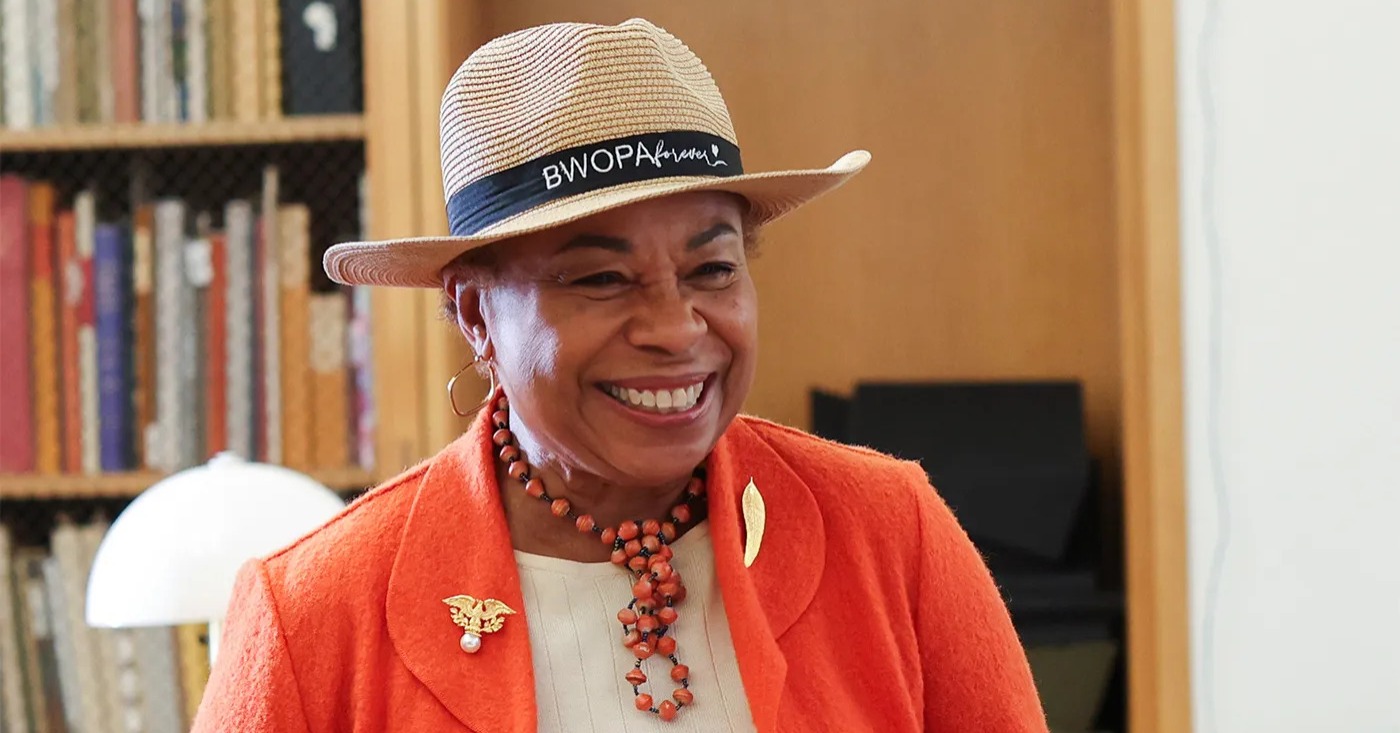
Concerns remain over school board races as ‘moderates’ lead progressives
The Alameda County Registrar of Voters has released the first round of election results, though many ballots remain uncounted and results are still incomplete.
Nationally, Democrats, liberals and progressives celebrated Tuesday evening as President Donald Trump was dealt a devastating blow in the midterm election. The Republican Party lost control of the Senate and the House as “Maga” candidates were swept away not just by a ‘blue wave,’ but a ‘blue tsunami.’
In Oakland, incumbent Mayor Barbara Lee, who served two years and ran for a full four-year term, won decisively.
A proposal backed by Lee, Measure EE, also won. The Charter amendment will create a strong mayor system of government while providing the City Council with new checks and balances on mayoral power.
District 2 Councilmember Charlene Wang is leading with 65.62% of the vote. Opponent Nate Adams trails with 34.38%.
District 4 Councilmember Janani Ramachandran, ran unopposed for reelection, receiving 14,029 votes.
District 6 Councilmember Kevin Jenkins bested opponent Nancy Sidebotham and District 2’s Charlene Wang also won reelection.
City Auditor Michael Houston is running unopposed for reelection and won 60,773 votes.
Progressive school board members, Jennifer Brouhard (D2) and Valarie Bachelor (D6), supported by teachers and school activists, face serious challenges from candidates backed by pro-corporate funders and the political organization, Empower Oakland.
Arielle Fleisher leads Brouhard 53.49% to 46.51%.
In District 6 with three contending candidates, Alexandra Williams leads with 38.06% of the vote. Incumbent Bachelor has 36.89%, and Leana Powell is trailing with 25.04%.
In District 4, incumbent Mike Hutchinson is narrowly leading a field of three candidates. He received 40.87% of the vote, while Kathryn Camp has 39.92%, and Sylvia Pfeiffer Williams has 19.21%.
In the races for AC Transit Board, Director Joel Young (Ward 3) leads with 53.11% of the vote, Sarah Syed (Ward 4) is ahead with 78.37% of the vote, and Murphy McCalley (Ward 5) leads with 63.07%.
Regional Transit Measure RTM, which would increase sales taxes in five Bay Area counties to shore up BART and other regional transit, was leading in five counties by a combined 62% of the vote.

Commentary
COMMENTARY: Oakland’s Black Students Have Gained Ground: We Shouldn’t Stop Now
New state data reveals that Black students in the Oakland Unified School District are making academic gains in reading and math at rates significantly faster than their peers statewide. These improvements follow a 2023 decision by board leadership to cancel school closures and instead invest in the Black Thriving Community Schools program. While the district continues to address budget challenges, proponents argue that maintaining these targeted resources is essential to narrowing long-standing achievement gaps. Read more about the specific policies driving these results.
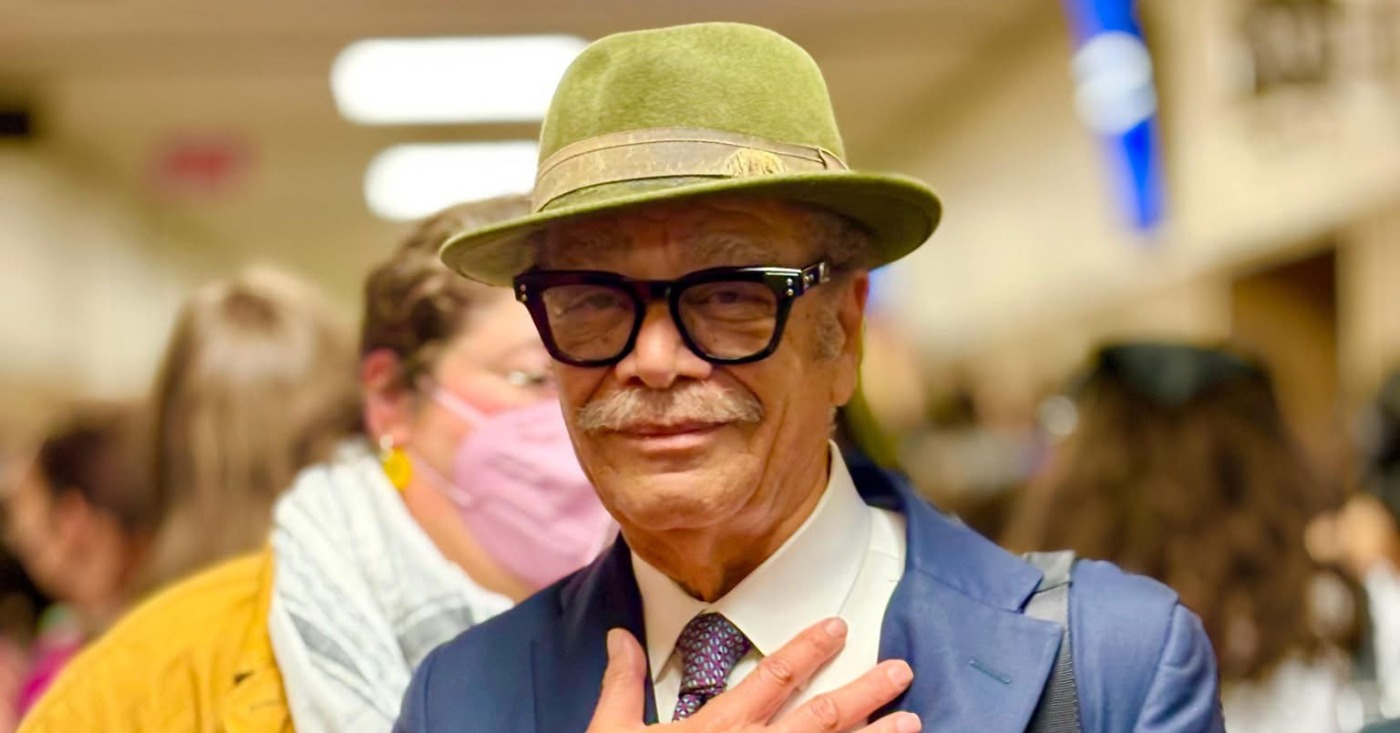
Oakland’s Black students are making faster gains in reading and math than Black students statewide, according to state data released Oct. 15.
Those gains followed decisions by school board President Jennifer Brouhard and Vice President Valarie Bachelor to keep schools open, invest in Black students and support teachers.
Since 2023, Black students in Oakland Unified School District have gained about 31 points in English and math on the California School Dashboard — roughly three times the statewide English gain and more than twice the math gain. Our students still trail their statewide peers, but they have narrowed that gap by about a third.
In 2022, the previous board voted to close or reduce grades at 11 schools, mostly serving Black and Brown families. A state civil rights investigation later found the plan would have unlawfully discriminated against Black, low-income and disabled students. Brouhard and Bachelor opposed those closures and, after winning election, voted to cancel remaining plans in January 2023.
The board then expanded support through Black Thriving Community Schools, providing additional resources where Black enrollment exceeds 40%, and funded teachers dedicated to Black students and families. Its reparations policy requires schools to develop plans for Black student achievement.
Meanwhile, the district reduced a $100 million budget shortfall to about $30 million without closing schools, cut central office positions and approved its first balanced budget in 22 years. More than 99% of teaching positions were filled when this school year began.
These investments must grow. Black Thriving Community Schools still reach only some students who need them. Every Oakland child deserves a safe, racially just neighborhood school staffed by qualified teachers who can afford to stay.
The opposing slate argues closures should remain an option to address budget pressures. But a Stanford study found closures do not improve district finances because departing families take student funding with them. Other research links closures to lower college attendance and adult earnings. Majority-Black schools nationally are more than three times as likely to close.
Oakland knows the consequences. There is another path. Brouhard and Bachelor have begun moving Oakland in that direction, protecting classroom investments while confronting financial pressures.
Progress deserves continued public support. We cannot afford to reverse course.
About the Author
Walter Riley is a civil rights attorney and longtime community organizer in Oakland.
Commentary
OPINION: OUSD Kids Are Eager to Learn. Our Board Is Holding Them Back
Oakland Unified School District students are facing a literacy crisis, with fewer than one in three reading at grade level. Despite receiving significant per-pupil funding, the district is struggling with what county officials describe as a decision-making problem rather than a lack of revenue. Oakland Parents for Quality Education and the local NAACP are now sounding the alarm over fiscal instability, alleging that board leadership has failed to identify necessary budget cuts while ignoring warnings from school principals. To understand how these leadership decisions are impacting campus resources and student equity, read more.
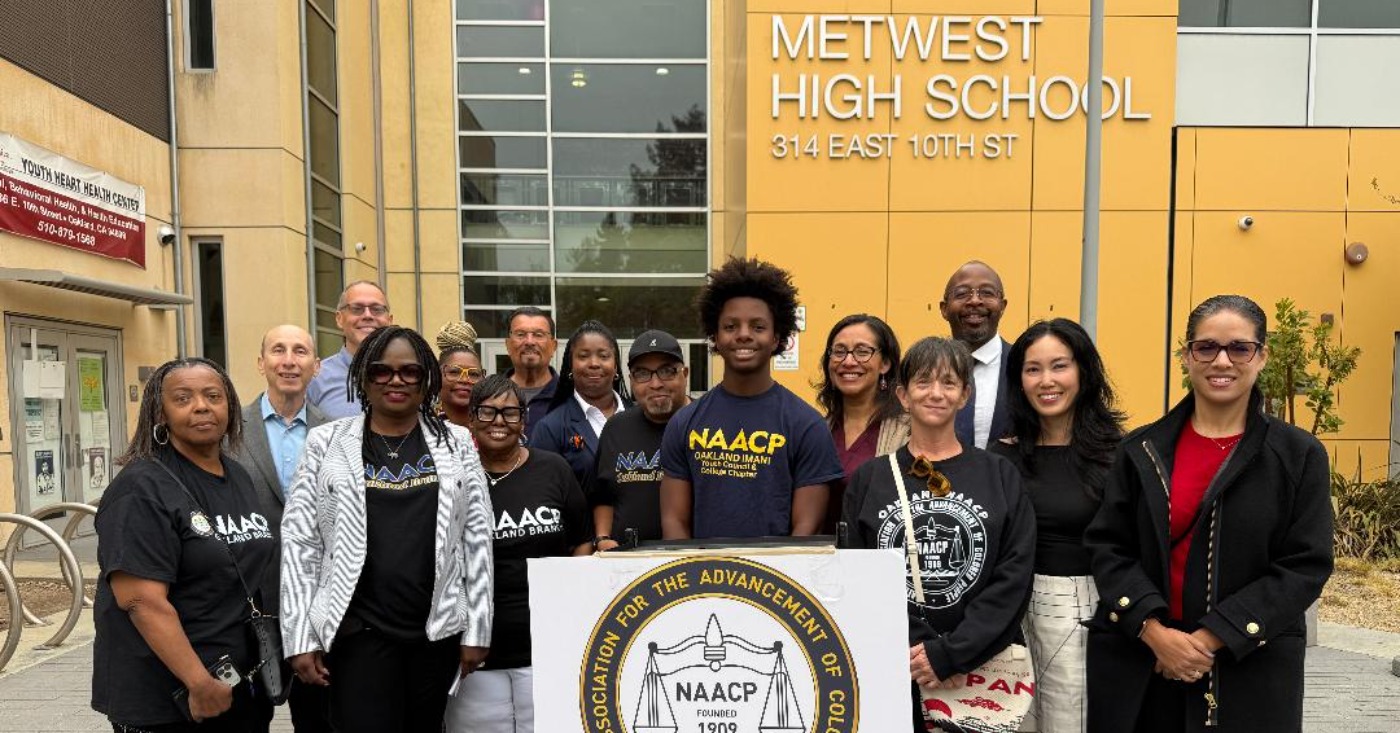
Oakland Unified students are falling behind: fewer than 1 in 3 read at grade level, and the numbers are worse for Black and Latino students. This is happening in a district that has received more per student than even the highest-funded states. As Alameda County Superintendent of Schools Alysse Castro has said, “OUSD’s biggest problem isn’t a revenue problem. It’s a decision-making problem.”
That is why Grace Park-Bradbury and I, two OUSD parents, started Oakland Parents for Quality Education, the ParentPAC. We believe our kids deserve a school board that faces hard decisions honestly. This board has not.
The county has warned them repeatedly. Earlier this year Castro said the new teachers’ contract “endangers” the district’s fiscal stability. That wasn’t because of the raises, but because the district was counting on cuts it had not identified.
Days later the board passed a budget that assumed $30 million in still-unnamed reductions. Board President Jennifer Brouhard and Vice President Valarie Bachelor voted yes. Director Mike Hutchinson voted no. The plan to name those cuts isn’t scheduled until mid-December, after the election.

The Oakland NAACP called for public forums and honest answers about the management of public funds. This fall Castro approved the budget only conditionally, noting that “a budget can be balanced but not be good for kids.”
Principals have spoken out as well. In January, 30 school leaders wrote that asking schools to do more with less “erodes the dignity of our profession” and “unconscionably compromises the quality of education our students receive.”
In April, 60 principals raised concerns that “have diminished our confidence in our current leadership,” warning that district decisions had produced “a structural deficit and cash-strapped schools.”
In June, all 15 high school principals objected to using voter-approved Measure N and H reserves for expenses already in the budget. The district did it anyway. The measures’ citizen oversight commission has demanded the money back. Auditors found the board had the legal authority, but as Castro observed, legality does not settle whether it was what voters thought they were approving.
Opponents claim we want to close schools. Our candidates do not all agree on consolidation. Hutchinson has fought closures for years, yet he also wrote the 3Rs proposal examining how many schools the district should operate.
What our candidates share is a willingness to weigh every option openly. This board told the superintendent not to even consider consolidation, and every school is being cut instead. As principals representing two-thirds of OUSD schools wrote, “the gradual starvation of our schools is also an equity issue.” Closures disrupt families, especially in Black and Brown neighborhoods. So does starving every campus.
You may have seen ads calling us a front for out-of-town billionaires. Every contribution is publicly reported, and 140 Oakland families have given. The people sounding the alarm are principals, citizen commissioners, the county superintendent, and the NAACP. None of them are billionaires. They are the people who see our schools up close.
Oakland schools are staffed by excellent principals and teachers. Our kids are like kids everywhere: eager to learn if given a real chance. They are being held back by a board that will not make hard choices.
In District 2, vote for Arielle Fleisher. In District 4, rank Kathryn Camp and Mike Hutchinson first and second. In District 6, rank Alexandra Williams and LeAna Powell first and second. Leave your third choice blank.
Vote like our children’s future depends on it. Because it does.
Edmund Chun co-founded Oakland Parents for Quality Education and is an OUSD parent.



How the Sandwich Generation Can Help Protect Aging Parents’ Finances

As Progressive Democrats Celebrate ‘Blue Tsunami,’ Oakland Counts Victories

Golden State Valkyries Become Bay Area Legends Winning WNBA Championship on Halloween Night

IN MEMORIAM: Marcia Ann Gillespie, Editor of Essence and Ms. Magazines, Dies at 82

U.S. Rep. John Garamendi Honors local ‘Women of the Year’ at Annual Awards Ceremony

Richmond Neighbors Put Pantry Power on the Map

Oakland Latino Chamber of Commerce Hosts Statewide Convention, Generating $3 Million in Economic Impact

HISTORY MADE: Keisha Lance Bottoms Becomes First Black Woman Elected Governor in American History

HISTORY MADE: Keisha Lance Bottoms Becomes First Black Woman Elected Governor in American History

Five Hospitals Said No! Who Will Help Annette Henry Recover?

Oakland NAACP, BWOPA Speak Out Against Alleged Harassment of Black Women Political Leaders

COMMENTARY: Oakland’s Black Students Have Gained Ground: We Shouldn’t Stop Now

From Backyard Grilling to Jack London Square: Jamale Carlyle’s Chicken Wing Success Story

SEIU Local 1000 and State of California Will Continue to Negotiate New Labor Contract

OPINION: We Can Restore Checks and Balances on Trump

COMMENTARY: Valarie Bachelor and Jennifer Brouhard are Excellent School Board Members and Deserve to Be Reelected

Listening as a Lifeline: A Doula’s Witness to Black Maternal Health

OUSD Receives State Review of District Finances; Outlines Progress Since January
HISTORY MADE: Keisha Lance Bottoms Becomes First Black Woman Elected Governor in American History

Zakiya Jendayi Arrested, Locked Out of Home by Sheriff’s Deputies
SEIU Local 1000 and State of California Will Continue to Negotiate New Labor Contract
Golden State Valkyries Become Bay Area Legends Winning WNBA Championship on Halloween Night

COMMENTARY: Your California Living Trust Could Be Next: When Evidence Isn’t Enough

Fate of Bay Area Public Transit Hinges on Regional Transit Measure

Oakland Post: Week of September 30 – October 6, 2026

It’s Time to Lose Weight Before the Holidays

Mayor Barbara Lee Holds Special State of the City Address in Deep East Oakland

Democrats, Community Groups Back Measure EE to Change How Oakland Is Governed

Oakland Awarded More than $14 Million in State Funding

OP-ED: Proposition 44 Would Put a Price on Trust

The Conversation With Al McFarlane 6/23/26

Media Monday 6/22/26

LIVE! ASK ALMA! — TUES. 6.23.26 7PM EST

Car Buying Secrets: 4 Hidden Checks Before You Sign!

Is This 550 HP Charger Worth YOUR Money? AutoNetwork Review

Celebrating Juneteenth – Frederick Douglass on education and resistance

LIVE! — ASK ALMA! — TUES. 6.19.26 7PM EST

Hyundai Ioniq 5 Parking, Safety, and 360 View #shorts

2025 Ioniq 5 New Wiper & Powerful Performance! #shorts

Electric SUV Range: Is 259 Miles Enough? #shorts

EV Charging: How Fast Can You Charge an Electric Vehicle? #shorts

Biometric Cooling… Messaging Seats…Come on! 2025 Infiniti QX80 Autograph 4WD

Charged Up: Witness the Magic of a Fully Electric Car! #shorts

Range Rover Sport PHEV Included…: See What’s Inside This Luxury SUV! #shorts

Invisible Hood View: Perfect Parking with X-Ray Vision! #shorts
-
 Commentary2 weeks ago
COMMENTARY: Valarie Bachelor and Jennifer Brouhard are Excellent School Board Members and Deserve to Be Reelected
-
 Education2 weeks ago
OUSD Receives State Review of District Finances; Outlines Progress Since January
-
 Black History1 week ago
HISTORY MADE: Keisha Lance Bottoms Becomes First Black Woman Elected Governor in American History
-
 Business2 weeks ago
SEIU Local 1000 and State of California Will Continue to Negotiate New Labor Contract
-
 Community1 week ago
Golden State Valkyries Become Bay Area Legends Winning WNBA Championship on Halloween Night
-
 Business2 weeks ago
COMMENTARY: Your California Living Trust Could Be Next: When Evidence Isn’t Enough
-
 Business3 weeks ago
Fate of Bay Area Public Transit Hinges on Regional Transit Measure
-
 Community4 weeks ago
It’s Time to Lose Weight Before the Holidays

1 Comment