
Politics
House GOP Approves Cuts to Amtrak Budget Despite Crash


Emergency and transportation personnel work at the scene of a deadly train wreck, Wednesday, May 13, 2015, in Philadelphia. An Amtrak train headed to New York City derailed and crashed in Philadelphia on Tuesday night killing at least seven people and injuring dozens more. (AP Photo/Matt Slocum)
Andrew Taylor, ASSOCIATED PRESS
WASHINGTON (AP) — A Republican-controlled House panel on Wednesday approved deep spending cuts to Amtrak’s budget just hours after a deadly crash in Philadelphia.
The Appropriations Committee backed a $55 billion transportation and housing measure after rejecting Democratic attempts to boost spending on Amtrak by more than $1 billion, including $556 million targeted for the railroad’s Northeast corridor, site of the derailment. The vote was 30-21 along party lines.
The GOP bill would cut Amtrak’s budget by $251 million, to $1.1 billion, for the upcoming fiscal year.
“Every day, tens of thousands of passengers travel our nation’s railways on Amtrak — a majority of those along the Northeast Corridor where yesterday’s tragic accident occurred,” said Rep. Chaka Fattah, who represents Philadelphia. “These riders deserve safe, secure, and modern infrastructure.”

President Barack Obama asked for almost $2.5 billion for Amtrak in his February budget, much more than he’d requested in previous years. Obama’s proposed boost is mostly dedicated to capital investment in track, tunnels and bridges and includes $400 million in grants for capital construction along Amtrak’s Northeast corridor.
There were early indications that Tuesday night’s tragedy may have been due to excessive speed. An Associated Press analysis of a surveillance tape found that the train was going about 107 MPH as it approached a curve where the speed limit less than half that.
“We must pass a multi-year transportation funding bill that increases — not decreases — federal investment in highway, transit and rail programs before other disaster occurs,” said Rep. Dutch Ruppersberger, D-Md.
The vote came as Congress stares down a deadline in 18 days to reauthorize legislation to pay for highways and transit programs.
Amtrak is one of many flash points in the underlying measure, which Democrats say shortchanges important programs for the poor and contains giveaways to the trucking industry.
In recent years, cuts by House Republicans have been restored in House-Senate negotiations, but the railroad’s budget has remained generally flat.
Fattah’s $1.3 billion amendment to fully fund Obama’s Amtrak request failed along party lines after Republicans pointed out that it would have broken budget limits and left the bill vulnerable to procedural challenges.
Top panel Democrat Nita Lowey of New York said the measure undercuts important accounts, including those dedicated to transportation safety and capital construction. Lowey said the bill “drastically short-changes job-creating investments critical to hardworking American families, like roads, bridges, and rail systems and access to safe and affordable housing.”
But Chairman Harold Rogers of Kentucky said majority Republicans are hamstrung by automatic spending cuts known as sequestration that are forcing a freeze in the operating budgets of domestic agencies funded by lawmakers each year. These cuts are the result of a hard-fought 2011 budget deal between Obama and Republicans and are more punishing than originally intended because Congress has yet to find substitute cuts or revenues to replace them.
“We have no choice but to abide by the law,” Rogers said.
The White House and Democrats are pushing to boost domestic programs and insist that they’ll thwart GOP efforts to increase the Pentagon’s budget if domestic agencies aren’t given comparable relief. Republicans have padded war accounts — which are exempt from spending limits — to add to the Pentagon’s budget by $38 billion, a 7 percent increase that matches Obama’s overall request.
The measure is the largest of 12 spending bills considered so far by the GOP-controlled House and includes cuts to an almost $2 billion account for rehabilitating public housing and grants to states and local governments for housing for the poor. In a letter delivered Monday, the White House reminded lawmakers of recent rioting in Baltimore’s poorest neighborhoods and said the measure would hurt efforts to end homelessness and hurt families.
But the White House didn’t specifically object to the Amtrak cuts in the letter, sent by Office of Management and Budget Director Shaun Donovan.
On Wednesday White House Press Secretary Josh Earnest wasn’t pointing fingers about the accident, though he said more Amtrak funding would “benefit the traveling public and be good for our economy.”
Copyright 2015 The Associated Press. All rights reserved. This material may not be published, broadcast, rewritten or redistributed.
###





Community
LIVE FREE Sunday Dinner Brings Faith, Fellowship and Civic Conversation to Oakland
Approximately 50 members and guests gathered at Imani Community Church for a LIVE FREE Sunday Dinner, sharing a meal with Pastor Michael McBride. The event, hosted by Imani Community Church Pastor Jeremy McCants, focused on faith, community preparedness, and civic participation. Participants discussed “sacred resistance” and how communities can collectively respond to challenges, including practical suggestions for emergencies. The conversation also touched upon the importance of civic engagement and voting in the upcoming election. Read more to learn about the specific actions discussed.

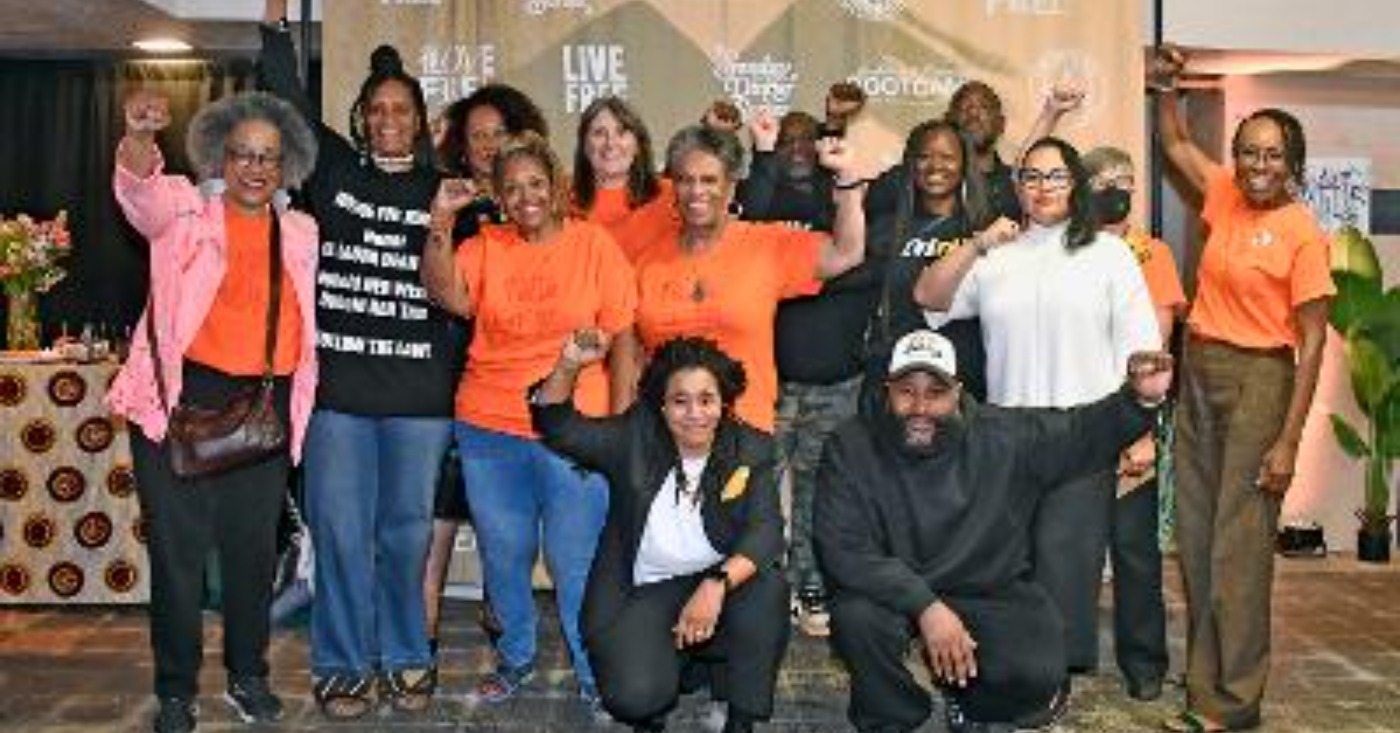
Pastor Michael McBride joins Imani Community Church Members for Food, Faith and Conversation about Community Action
Approximately 50 members and guests of Imani Community Church gathered Sunday afternoon for a LIVE FREE Sunday Dinner, sharing a meal with Pastor Michael McBride while discussing faith, community preparedness and civic participation.
Hosted by Imani Community Church Pastor Jeremy McCants, the Sept. 20 gathering was part of LIVE FREE’s Sunday Dinner initiative, which draws upon the tradition of families, neighbors and faith communities gathering around the Sunday dinner table to break bread and discuss issues affecting their lives.
McBride is founder of LIVE FREE and lead pastor of The Way Christian Center on University Avenue in Berkeley. His Bay Area ministry has deep roots. The congregation traces its history to a church planted by McBride’s grandmother in 1969. McBride returned to the Bay Area in 2005 and became its fourth pastor.
His ministry later expanded into community organizing and national advocacy. McBride founded LIVE FREE in 2011 following organizing work in Oakland and has been involved in efforts addressing gun violence, mass incarceration and civic engagement.
At Imani, the Sunday dinner concept was simple: sit down together, eat together and talk.
McBride recalled a time when Sunday dinner provided families and neighbors an opportunity to discuss what was happening in their communities. LIVE FREE has adapted that tradition into gatherings where faith communities and neighbors can meet, communicate, and consider how to respond collectively to current challenges.
Much of Sunday’s conversation centered on what McBride described as “sacred resistance,” bringing faith into discussions about how communities respond during difficult and uncertain times.
Participants considered a fundamental question: How do we make sense of what is happening around us, and how do we move forward?
The conversation was grounded in faith and prayer, but participants also discussed action and preparation. Attendees talked about not assuming that institutions and everyday systems will always function as expected.
Practical suggestions included keeping basic food staples such as rice and beans available during emergencies. Participants cited the water crisis in Flint, Michigan, as an example as they discussed communities that have experienced disruptions to essential services.
The broader message was one of preparedness and connection: neighbors should know and support one another before a crisis occurs.
The conversation also turned to civic participation and the upcoming election.
McBride’s message was brief: “Vote. We must vote.”
Participants were encouraged to register to vote, verify that their registration is current, and learn what will appear on their ballots. The discussion included researching candidates and ballot measures, voting early, and making a voting plan.
An Oct. 3 workshop was announced as another opportunity for community members to learn more about candidates, volunteer phone banking, ballot measures, and issues before voters.
For Imani’s Social Justice Team, the gathering provided another opportunity to share information with the congregation and surrounding community regarding Imani member Zakiya Jendayi, fighting for her home, and how the community can support her by attending a vigil at her Oakland home every Tuesday from 6-7 p.m. at 3614 Randolph Ave. 94610.

Black History
Caribbean Nations Produce Action Plan Calling for UK Reparations Over Slavery
Caribbean nations are developing an action plan with legal options to press the United Kingdom for negotiations regarding slavery reparations. Officials at a recent conference indicated that regional leaders hope for targeted talks at upcoming Commonwealth and UN summits. However, if diplomatic efforts are resisted, the Caribbean nations are prepared to pursue international court action. A spokesperson for the British government recently reiterated its long-held position against paying reparations. Read more about the unified strategy being pursued.
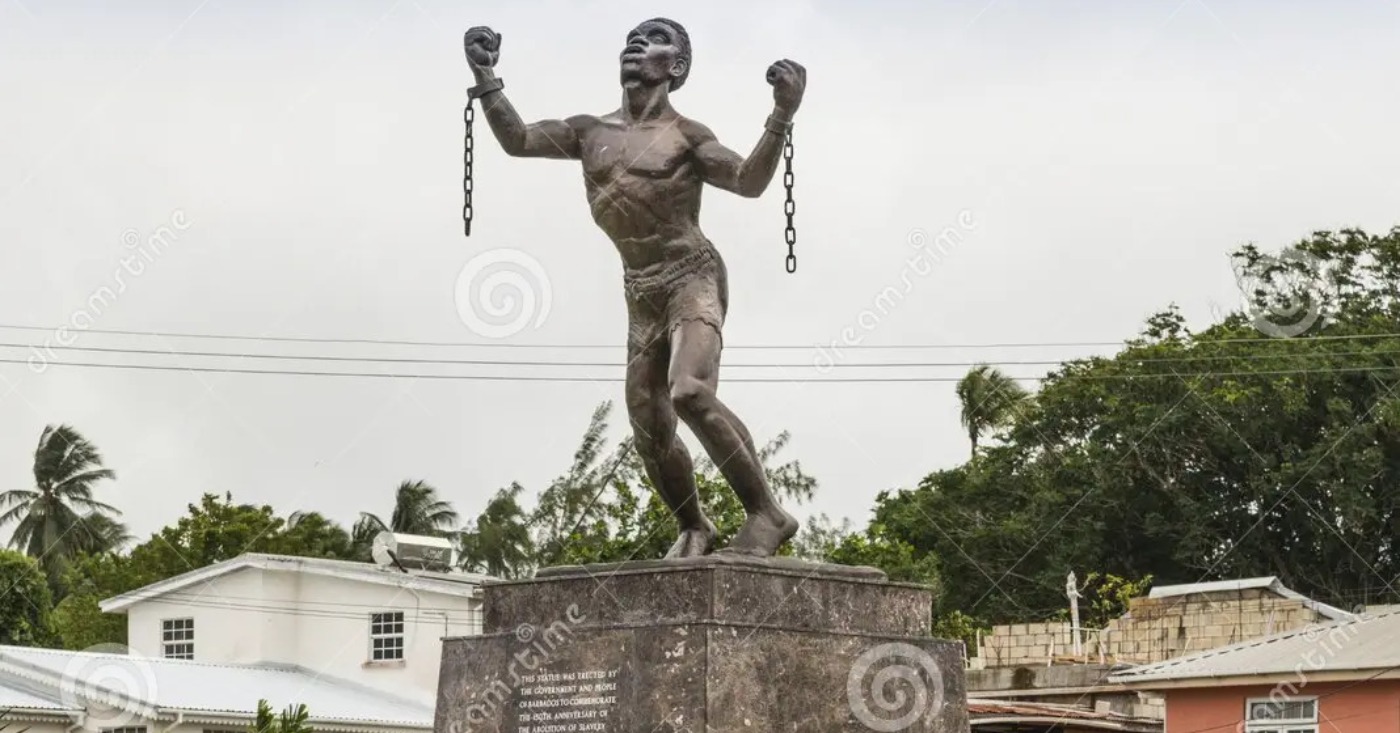
Caribbean nations are producing an “action plan” with legal options to push the United Kingdom (UK) into negotiating a decades-long slavery reparations deal, according to officials at a reparations conference.
Leaders in the region are hoping the UK would agree to targeted and constructive negotiation talks at upcoming Commonwealth and UN summits, but they are ready to take the matter to international courts if Britain continues to resist diplomatic options, according to the Guardian.
Earlier this month, a spokesperson reiterated the British government’s long‑held position that “the UK does not and will not pay reparations”.
Ralph Gonsalves, the former prime minister of St. Vincent and the Grenadines, said the Caricom Regional Conference on Reparations, which was hosted last week by Barbados with the Caricom Reparations Commission (CRC), was key for agreeing to a unified strategy to bring Britain to the negotiating table. Gonsalves is now an elder and adviser for the Repair Campaign, a social movement for reparatory justice.
He said that slavery happened over centuries and reparations had to be realistic and set over decades. “We need a concrete, multigenerational plan,” he said.

On the legal options available to the Caribbean, Gonsalves challenged arguments that Britain did not violate historical laws during transatlantic slavery, adding that the UK’s signature on contemporary UN conventions had established a binding legal obligation for reparative justice.
“The fact is that the consequences of slavery fall squarely under the Committee on the Elimination of Racial Discrimination, which obliges states to help address the consequences of native genocide and slavery,” Gonsalves said.
Activism
Oakland Post: Week of September 23 – 29, 2026
The printed Weekly Edition of the Oakland Post: Week of September 23 – 29, 2026

To enlarge your view of this issue, use the slider, magnifying glass icon or full page icon in the lower right corner of the browser window.



LIVE FREE Sunday Dinner Brings Faith, Fellowship and Civic Conversation to Oakland

Remembering Chauncey Bailey as Student Journalists Face Threats to Truth-Telling

BLACspace Cooperative Invites Bay Area to Experience Oakland’s Black Cultural Ecosystem Through a BLAC Map Tour + Party

In Wake of Death on Doorstep, Williams Chapel Baptist Church Calls for Better Care, Funding for Unhoused

Oakland Centenarian Nuna McKee Honored!

Caribbean Nations Produce Action Plan Calling for UK Reparations Over Slavery

Oakland Post: Week of September 23 – 29, 2026

Doulas Are Helping Black California Moms Navigate Pregnancy–Even as High Mortality Rates Persist

Newsom Signs Addictive Social Media Law to Protect Kids

On Your November Ballot: Prop 38 Would Allocate $8.4 Billion to Immunology and Immunotherapy Funding

Ask California: Golden State Releases New AI Chatbot

Asm. Isaac Bryan’s Bill Banning California Police From ICE Side Jobs Reaches Newsom’s Desk

Assemblymember LaShae Sharp-Collins’s Bill Would Pause Law Enforcement’s Use of Shock Gloves Pending Study

BOOK REVIEW: ‘Laws of Solomon’ Reveals Tender Heart of Former Child Soldier

OPINION: The New American Fear – From 9-11 to AI

Less Affluent School Districts, Including Sacramento City, Face Threat of State Takeover

ESSAY: California Can Close Its Colorectal Cancer Gap

California Hispanic Chambers of Commerce Unveils: ‘Powering the Future’ Theme for 47th Annual Statewide Convention

Four Candidates, Including Incumbent Barbara Lee, Qualify for Oakland Mayor’s Race

Oakland Post: Week of August 12 – 18, 2026

From Blueprint to Breakthrough: Tackling Affordable Housing in Oakland

Oakland Observes Black August with Block Parties, Film Showings, Workshops

COMMENTARY: Why Local School Tax Measure G1 Will Not Be on the November Ballot

Standoff for Justice: Our Homes Are Worth Fighting For

Returning to Its Roots, the Oakland Black-Eyed Pea Festival Partners with the Freedom Farmers Market Sept. 12

Oakland Post: Week of August 26 – September 1, 2026

NPRC Scores First Advocacy Victory: David Shaw Finally Gets His Wish to ‘Go Home’

Frontier Airlines’ Return to Oakland Airport Brings Flights, Jobs and Opportunity

Gubernatorial Candidate Steve Hilton Blasts California New Tire Rules; Newsom Hits Back

Chef Sharon Lee Blends Culinary Excellence, Education and Empowerment

The Conversation With Al McFarlane 6/23/26

Media Monday 6/22/26

LIVE! ASK ALMA! — TUES. 6.23.26 7PM EST

Car Buying Secrets: 4 Hidden Checks Before You Sign!

Is This 550 HP Charger Worth YOUR Money? AutoNetwork Review

Celebrating Juneteenth – Frederick Douglass on education and resistance

LIVE! — ASK ALMA! — TUES. 6.19.26 7PM EST

Hyundai Ioniq 5 Parking, Safety, and 360 View #shorts

2025 Ioniq 5 New Wiper & Powerful Performance! #shorts

Electric SUV Range: Is 259 Miles Enough? #shorts

EV Charging: How Fast Can You Charge an Electric Vehicle? #shorts

Biometric Cooling… Messaging Seats…Come on! 2025 Infiniti QX80 Autograph 4WD

Charged Up: Witness the Magic of a Fully Electric Car! #shorts

Range Rover Sport PHEV Included…: See What’s Inside This Luxury SUV! #shorts

Invisible Hood View: Perfect Parking with X-Ray Vision! #shorts
-
 Commentary4 weeks ago
Standoff for Justice: Our Homes Are Worth Fighting For
-
 Activism4 weeks ago
Oakland Post: Week of August 26 – September 1, 2026
-
 Business4 weeks ago
Frontier Airlines’ Return to Oakland Airport Brings Flights, Jobs and Opportunity
-
 Business4 weeks ago
Gubernatorial Candidate Steve Hilton Blasts California New Tire Rules; Newsom Hits Back
-
 Business4 weeks ago
Chef Sharon Lee Blends Culinary Excellence, Education and Empowerment
-

 Community4 weeks ago
Big City Mayors Ask for “Yes” Vote on Housing Bond Measure; Conservatives Say “No”
-

 Black History4 weeks ago
Jackie Wright Champions Bay Area Stories, Filmmakers and Cultural Institutions
-

 Education4 weeks ago
Gov. Newsom’s Latest Appointees Include Sacramento Advocate for Formerly Incarcerated Students; State’s New Tech Chief
