
Bay Area
Homelessness Committee and Advocates Urge City to Stop Confiscating Unhoused People’s Belongings
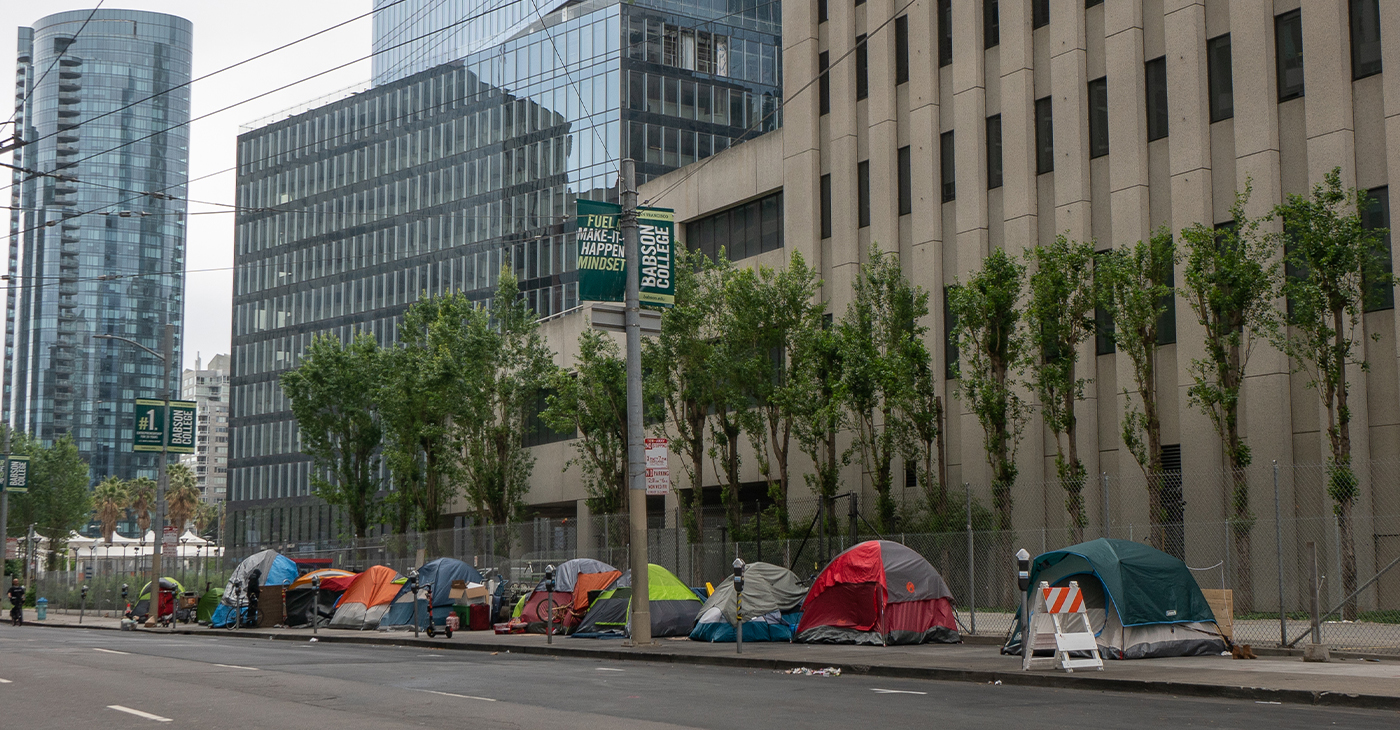
Encampment sweeps are not a new method of action to evict people from living and sleeping on the streets in San Francisco. However, recent reports indicate that city staff are not following proper policy, exacerbating the problems for unhoused people. Homeless advocates and allies held a press conference on Thursday at City Hall, condemning staff workers for destroying people’s property during encampment evictions and asking officials to ensure that important documents and medication are not being stripped from these individuals.

By Magaly Muñoz
Encampment sweeps are not a new method of action to evict people from living and sleeping on the streets in San Francisco. However, recent reports indicate that city staff are not following proper policy, exacerbating the problems for unhoused people.
Homeless advocates and allies held a press conference on Thursday at City Hall, condemning staff workers for destroying people’s property during encampment evictions and asking officials to ensure that important documents and medication are not being stripped from these individuals.
“By destroying the very items that could help people regain stability, the city is not just punishing people for being poor, but actively making it harder for them to escape homelessness,” Jennifer Friedenbach, executive director of the Coalition on Homelessness, said.
Friedenbach criticized the city for not fixing their housing problem or finding new ways to shelter people, instead they are further adding to the harm of the “humanitarian crisis that San Francisco is facing.”

The press conference was held before the monthly Homelessness Oversight Commission (HOC) meeting, where commissioners discussed a draft resolution to submit to city staff highlighting the importance of not separating people from their items as this might cause further distress.
The resolution lists ssential items that workers should be cautious of not destroying or throwing away including medical documents and medication, work permits, identification, and survival gear, such as blankets or tents.
City policy instructs workers to “bag and tag” items left behind after an encampment sweep. These items are labeled by Public Works and kept at their operations yard for 90 days before being discarded.
But according to several reports and videos of the sweeps, the city has not always followed this policy and has on numerous occasions thrown away people’s medications or tents, leaving individuals without their essentials.
During the meeting, commissioners suggested adding school records and family related support items, such as diapers, to the resolution because of the increasing number of families living on the streets.
Virginia Taylor, senior policy advisor for Safe & Sound, said 531 families are waiting for housing in San Francisco. Many of these families are living out of their cars or in RVs, yet the city has limited safe parking spots where people can situate themselves.
Along with not throwing out people’s belongings, advocates are also continuing to ask the city to stop the encampment sweeps because all they are accomplishing is moving unhoused folks block to block without solving the root problem of lack of consistent housing.
“We need urgent action, more family shelter beds, a stop to vehicle sweeps, expanded safe parking programs and housing solutions that keep our multi-generational families together. Our children’s futures depend on it. Let’s build a San Francisco where no family falls through the crack and every child has the opportunity to thrive,” Taylor said.
Speakers referenced the RV sweep conducted in early August on Zoo Road, where dozens of people, many of them non-English speaking immigrants, were asked to leave the parking lot or else their vehicles would be towed and they would be cited.
While people were offered shelter beds or housing vouchers, some worried about where they would stay while the city processed their applications. This drew criticism of San Francisco’s method of not always having immediate options for people yet continuing to sweep unhoused folks with nowhere to go.
Commissioners of HOC agreed that the city is not trying to exacerbate the issue and the resolution is one of many steps to ensure that there are no setbacks in the progress to ending homelessness in San Francisco.
The HOC will approve the resolution at a later meeting once amendments and changes are made.












Activism
Oakland Post: Week of September 30 – October 6, 2026
The printed Weekly Edition of the Oakland Post: Week of September 30 – October 6, 2026

To enlarge your view of this issue, use the slider, magnifying glass icon or full page icon in the lower right corner of the browser window.
Activism
Oakland Post: Week of September 23 – 29, 2026
The printed Weekly Edition of the Oakland Post: Week of September 23 – 29, 2026

To enlarge your view of this issue, use the slider, magnifying glass icon or full page icon in the lower right corner of the browser window.
Activism
Oakland Post: Week of September 16 – 22, 2026
The printed Weekly Edition of the Oakland Post: Week of September 16 – 22, 2026

To enlarge your view of this issue, use the slider, magnifying glass icon or full page icon in the lower right corner of the browser window.



OP-ED: Proposition 44 Would Put a Price on Trust

OP-ED: Proposition 40: It’s Time to Play Chess, Not Checkers

Listening as a Lifeline: A Doula’s Witness to Black Maternal Health

New Protections for Ticket Buyers: Gov. Newsom Signs Assemblymember Isaac Bryan’s Bill

‘We Don’t Talk Trash — We Pick Up Trash!’

Zakiya Jendayi Arrested, Locked Out of Home by Sheriff’s Deputies

Oakland Post: Week of September 30 – October 6, 2026

Asm. Corey Jackson Announces Launch of 24-Hour Childcare in His District

IN MEMORIAM: The Rev. Leon “Sonny” Clark, Longtime Orange County Pastor and Community Leader, Dies at 72

Poll: Becerra Widens His Lead Over Hilton; Californians Split on Wealth Tax

From Historic Memories to New Possibilities: Oakland Celebrates Coliseum 60

County Office of Education Says OUSD Finances Are Getting Healthier, Materially Stronger

LIVE FREE Sunday Dinner Brings Faith, Fellowship and Civic Conversation to Oakland

Remembering Chauncey Bailey as Student Journalists Face Threats to Truth-Telling

BLACspace Cooperative Invites Bay Area to Experience Oakland’s Black Cultural Ecosystem Through a BLAC Map Tour + Party

Standoff for Justice: Our Homes Are Worth Fighting For

Oakland Post: Week of August 26 – September 1, 2026

Frontier Airlines’ Return to Oakland Airport Brings Flights, Jobs and Opportunity

Gubernatorial Candidate Steve Hilton Blasts California New Tire Rules; Newsom Hits Back

Chef Sharon Lee Blends Culinary Excellence, Education and Empowerment

Jackie Wright Champions Bay Area Stories, Filmmakers and Cultural Institutions

Misnamed ‘Parent’ PAC Seeks to Influence Oakland School Board Elections

Oakland Coliseum Project Opens Door for Small Businesses to Build Bigger

Big City Mayors Ask for “Yes” Vote on Housing Bond Measure; Conservatives Say “No”

Gov. Newsom’s Latest Appointees Include Sacramento Advocate for Formerly Incarcerated Students; State’s New Tech Chief

Longtime BWOPA Member Brendalyn Goodall Appointed to California Workforce Development Board

Gov. Newsom Signs Law Shielding Immigration Aid Workers From Doxing Threats

Secretary of State Shirley N. Weber Urges Californians to Vote Early as Voter ID Battle Intensifies

Oakland Post: Week of September 2 – 8, 2026

IN MEMORIAM: Dolly Parton Dead at 80 — How She Built a Legacy of Love and Earned Her Place in Black Culture

The Conversation With Al McFarlane 6/23/26

Media Monday 6/22/26

LIVE! ASK ALMA! — TUES. 6.23.26 7PM EST

Car Buying Secrets: 4 Hidden Checks Before You Sign!

Is This 550 HP Charger Worth YOUR Money? AutoNetwork Review

Celebrating Juneteenth – Frederick Douglass on education and resistance

LIVE! — ASK ALMA! — TUES. 6.19.26 7PM EST

Hyundai Ioniq 5 Parking, Safety, and 360 View #shorts

2025 Ioniq 5 New Wiper & Powerful Performance! #shorts

Electric SUV Range: Is 259 Miles Enough? #shorts

EV Charging: How Fast Can You Charge an Electric Vehicle? #shorts

Biometric Cooling… Messaging Seats…Come on! 2025 Infiniti QX80 Autograph 4WD

Charged Up: Witness the Magic of a Fully Electric Car! #shorts

Range Rover Sport PHEV Included…: See What’s Inside This Luxury SUV! #shorts

Invisible Hood View: Perfect Parking with X-Ray Vision! #shorts
-
 Community3 weeks ago
Misnamed ‘Parent’ PAC Seeks to Influence Oakland School Board Elections
-
 Activism4 weeks ago
Oakland Post: Week of September 2 – 8, 2026
-

 Activism3 weeks ago
Oakland Post: Week of September 9 – 15, 2026
-

 Community3 weeks ago
Richmond Tiny House Village Farm & Garden Set to Open Gates on Sept. 26
-

 Black History3 weeks ago
Latest Massacre in Haiti Reveals Cruelty U.S. Deportations
-

 Black History3 weeks ago
OPINION: Nolan Wells’ Death One of Several Signifying Racial Terror Lives on in U.S. South
-

 Business2 weeks ago
Mayor Lee Announces $1 Million Kaiser Permanente Grant for Pilot Program to Address Homelessness, Clean Up Public Spaces throughout Oakland
-

 Community3 weeks ago
Democratic Clubs Interview Candidates for Oakland School Board
