
Education
Gov. Newsom Signs 46 Bills, Part of $123.9 Billion Education Plan
During the final week before the October 10 deadline for signing bills passed by the state Legislature this year, Gov. Gavin Newsom signed 46 bills supporting public school and college education. Under his California Comeback Plan, the state budget invests more than ever before in public schools and colleges.


During the final week before the October 10 deadline for signing bills passed by the state Legislature this year, Gov. Gavin Newsom signed 46 bills supporting public school and college education. Under his California Comeback Plan, the state budget invests more than ever before in public schools and colleges.
The full plan will cost $123.9 billion.
Newsom turned signing some of the bills into public events. On October 5, he was joined by members of the Legislature and local officials in Fresno for a bill-signing ceremony that celebrated the state’s master plan for early education. The next day, at California State University, Northridge, he led a celebration of the master plan for higher education as he signed a number of bills.
At Sunset elementary school in Fresno, Newsom highlighted the California Comeback Plan’s Pre-K and K-12 education package that includes a framework to achieve universal transitional kindergarten by 2025. The plan reduces class sizes, cutting adult-to-child ratios down from 1 adult for every 24 children to an average of 1 adult for every 12 children.
The plan also invests $1.9 billion to seed college savings accounts beginning in first grade of up to $1,500 for 3.7 million current low-income students, English learners and foster and homeless youth.

“In California, we are committed to transforming our public schools to promote equity, inclusivity and opportunity for every student,” Newsom said before the bill signing commenced.
Among the officials joining Newsom at the Fresno elementary school were Superintendent of Public Instruction Tony Thurmond and Assemblymember Kevin McCarty (D-Sacramento), chair of the Assembly Budget Subcommittee on Education Finance.
“We know from research and from experience that the early years are critical to support a child’s learning and development. Universal Pre-K is California’s opportunity to ensure every child, regardless of background, race, zip code, immigration status or income level, gets the fair start they need and deserve on their path to success,” said Thurmond.
“I’m here to claim that this governor is the best governor in the history of California for early education,” McCarty told a crowded school library of spectators. “We are launching the largest Pre-K for all program through universal transitional kindergarten in the nation. Thank you, Governor Newsom for your unwavering commitment to our youngest learners.”
At Cal State Northridge, the bills that Newsom signed are designed to increase access to higher education for in-state students who would like to attend a school in the California State University (CSU) or University of California (UC) system, create more affordable student housing, particularly for those attending community college, and expand financial aid.
Standing in a gym in front of students, cheerleaders, administrators and state officials, Newsom highlighted his higher education funding plan. According to him, it is the most funding for higher education in California history. The budget has a total funding of $47.1 billion for all higher education entities in 2021-22.
“Californians have thrived at our world class universities for decades, but not everyone has had similar access – today that’s changing. Everyone deserves a shot at the ‘California Dream’ – we’re eliminating equity gaps and increasing opportunities at our universities to make those dreams a reality for more California students,” Newsom said.
McCarty, who was with the governor the day before in Fresno said, “I do want to say that this year was the best year in the history of California, investing in higher education, our UC and CSU and community college system. So, with our governor’s leadership and the Legislature, we were able to pass a budget that fully funds the CSU budget request.”
He went on to say to applause, “You know what, we’re going to fund an additional 9,000 slots for your little sisters and brothers and cousins to go to CSU.”
On October 8, Newsom completed his education bill signing marathon by signing 22 more bills providing K-12 student mental and behavioral health supports in schools, expanding access to broadband across the state — particularly for those in underserved communities — and providing educational support for students to help boost academic achievement.
Among the bills Newsom signed was AB 101, which was introduced by Assemblymember Jose Medina (D-Riverside). It requires school districts and charter schools serving students in grades 9-12 to offer at least a one semester course in ethnic studies, beginning with the 2025-26 school year. It also requires students, beginning with the graduating class of 2029-30, to complete a one semester course in ethnic studies that meets specified requirements in order to receive a high school diploma.
In his signing statement, Newsom wrote, “Ethnic studies courses enable students to learn their own stories, and those of their classmates, and a number of studies have shown that these courses boost student achievement over the long run – especially among students of color.”
While ethnic studies is already being offered in many large school districts like Los Angeles, San Francisco, Fresno and San Diego Unified, the subject has attracted controversy statewide. The Los Angeles Times opposes the bill, citing that it allows school districts too much flexibility to design their own curricula in conflict with the state’s approved model curriculum.
Newsom noted in his signing statement, “The legislation provides a number of guardrails to ensure that courses will be free from bias or bigotry and appropriate for all students.”
“At a time when some states are retreating from an accurate discussion of our history, I am proud that California continues to lead in its teaching of ethnic studies,” said Secretary of State Shirley Weber who authored AB 1460, which Newsom signed last year creating an ethnic studies requirement for all CSU colleges for graduation.









Black History
Alpha Kappa Alpha Sorority, Inc. Celebrates New North Atlantic Regional Director
WASHINGTON INFORMER — As the 36th Regional Director, Dr. Ringgold will serve on the Alpha Kappa Alpha 18-member Board of Directors and will assist in the implementation of policies and programs under the leadership of International President and Chief Executive Officer Charletta Wilson Jacks.

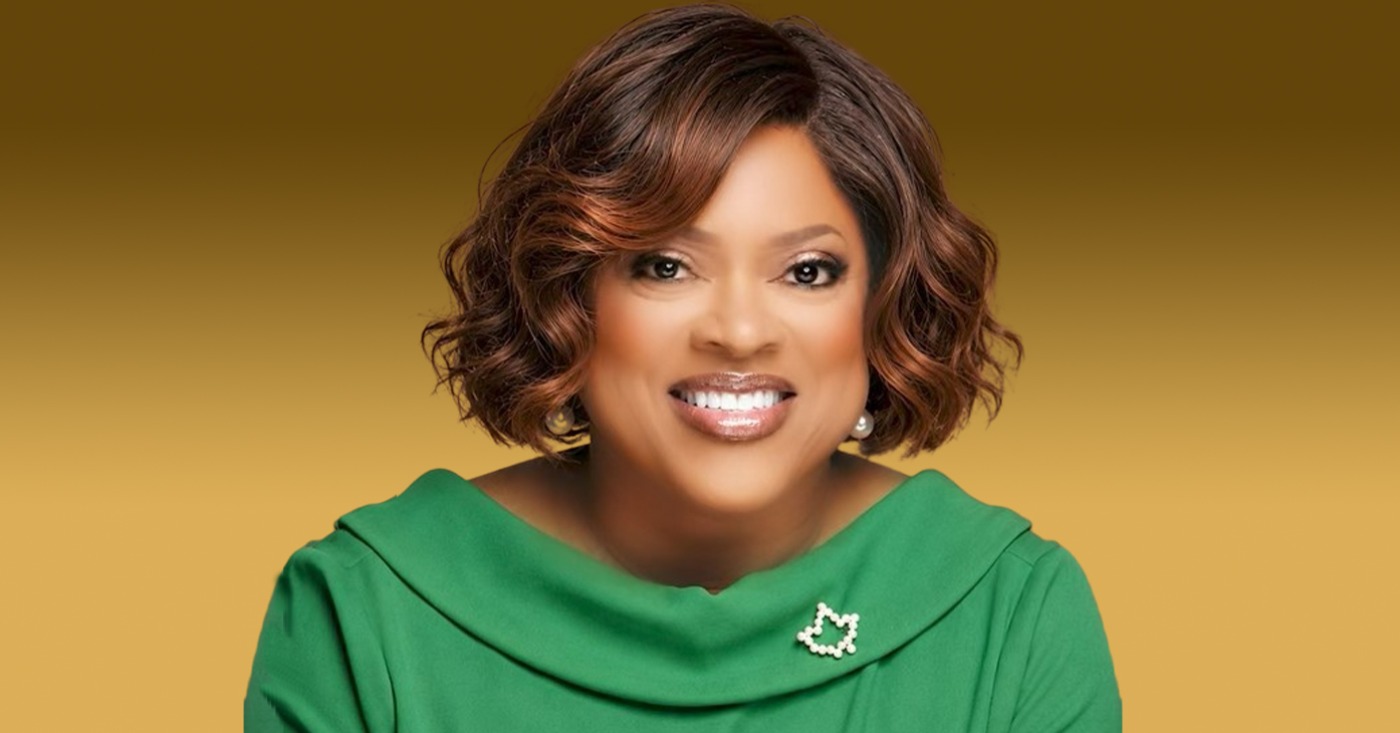
Dr. Tonja L. Ringgold, an educator and Life Member of Alpha Kappa Alpha Sorority, Incorporated® (AKA), was installed as North Atlantic Regional Director during the organization’s 72nd Biennial International Convention on July 23 in Las Vegas.
Dr. Ringgold will serve a two-year term overseeing one of the Sorority’s largest and most historic regions. With more than 17,000 members, the Notable North Atlantic is the birthplace of the sorority, which was established on Jan. 15, 1908, at Howard University in Washington, D.C.
“I am excited and humbled by the faith placed in me to lead,” said Dr. Ringgold. “I welcome the opportunity to give back to this illustrious Sisterhood that has poured so much into me.”
The North Atlantic Region, one of the sorority’s 10 regions in the United States and abroad, comprises undergraduate and graduate chapters in Connecticut, Delaware, the District of Columbia, Maine, Maryland, Massachusetts, New Hampshire, New Jersey, eastern New York, Pennsylvania, Rhode Island, and Vermont.
As the 36th Regional Director, Dr. Ringgold will serve on the Alpha Kappa Alpha 18-member Board of Directors and will assist in the implementation of policies and programs under the leadership of International President and Chief Executive Officer Charletta Wilson Jacks.
Her previous sorority leadership includes serving as the North Atlantic Regional Representative to the International Program Committee and as North Atlantic Region Program Chairman. She also served as president of Epsilon Omega Chapter in Baltimore, Maryland.
Dr. Ringgold represents four generations of Alpha Kappa Alpha women, all initiated into the Alpha Delta Chapter at Morgan State University. She was initiated in 1982, following in the footsteps of her cousin and Alpha Delta Charter member, Mary Anita Short Wheatley, and her mother, Mary Jane Briscoe Short, a life member of the Sorority with 67 years of service. Her daughter Ashley R. Davy was initiated into the Alpha Delta Chapter in 2011.
A nationally recognized educator, Dr. Ringgold has spent more than three decades in higher education. She is a retired Vice President of Academic Affairs within the Community College system and is a faculty member in the Morgan State University’s Community College Leadership Doctoral Program. She also serves as president and CEO of En-Sight Educational and Management Consultants.
She holds a doctorate degree in education, master’s degrees in Applied Psychology, Management, Business Administration, and a bachelor’s degree in Psychology.
In addition to her Alpha Kappa Alpha service, Dr. Ringgold is president of the Baltimore County Chapter of The Pierians, Incorporated; a member of the National Council on Black American Affairs; and a member of the Coalition of 100 Black Women.
She resides in Parkville, Maryland.

Black History
NAACP Announces $20m Voter Registration Drive at National Convention in Chicago
GARY CRUSADER — The NAACP announced a $20 million voter registration campaign at its 117th annual convention in Chicago. The campaign aims to register between six and 10 million voters who did not participate in the last two elections.
With just over three months before the midterm elections, the NAACP at its 117th annual convention in Chicago announced an unprecedented $20 million voter registration campaign ahead of the midterm elections.
The announcement kicked off the NAACP’s national convention at McCormick Place where thousands of visitors and delegates participated in workshops and seminars that stressed the organization’s theme of “We the People” and purpose of educating Blacks about their constitutional rights.
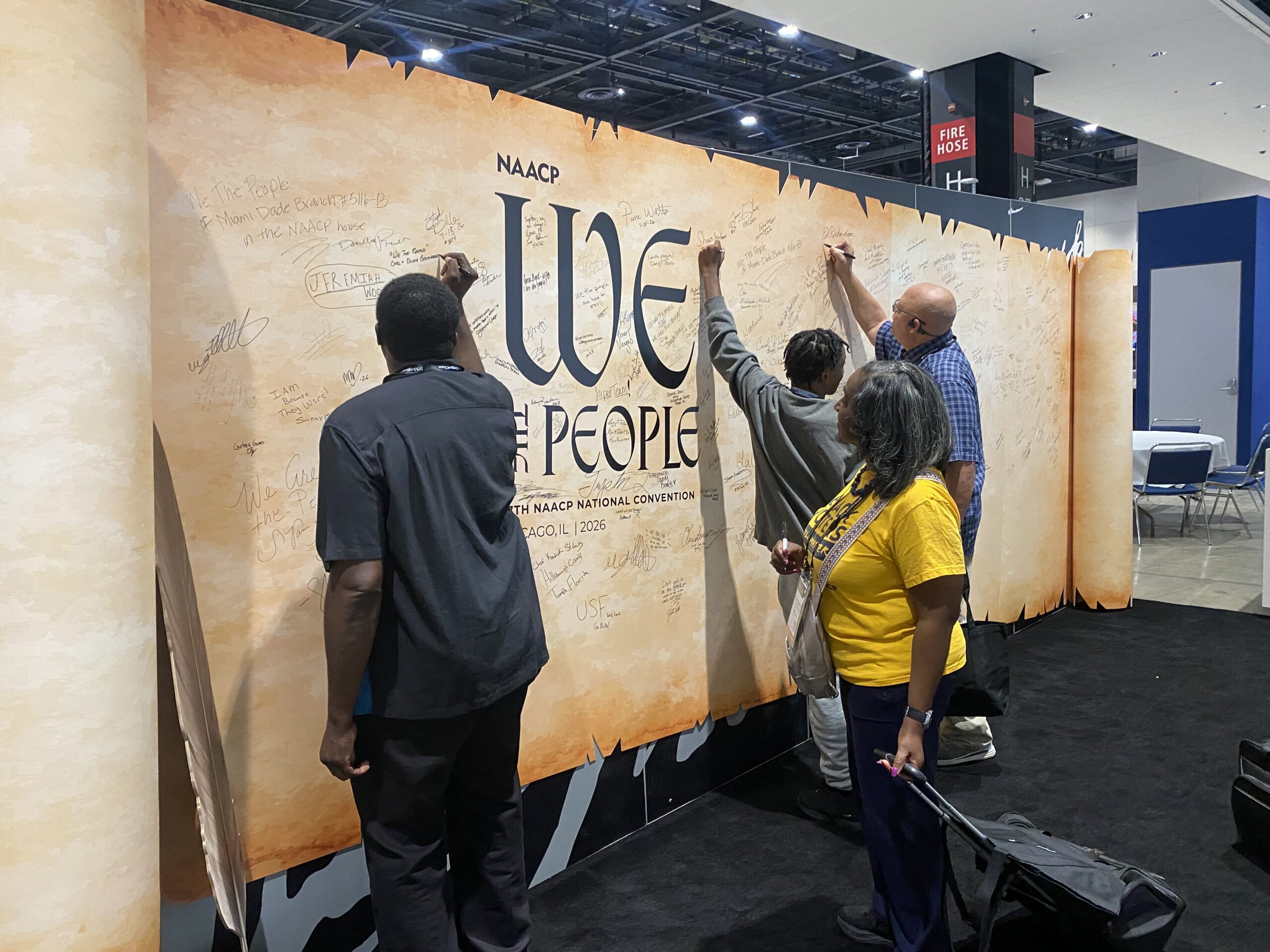
Throughout the week-long convention, vendors sold merchandise, media organizations held onsite interviews in “The HUB,” and visitors signed a massive “We the People” mural.
Governor J.B. Pritzker and Mayor Brandon Johnson were among the dignitaries who reinforced the NAACP’s message during the convention’s opening plenary.
Black voting rights have been under attack in the last several months when Louisiana, Tennessee, Alabama and Florida gutted historic Black congressional districts after the U.S. Supreme Court ruled such districts were unconstitutional and were no longer needed in modern times despite protections under the Voting Rights Act of 1965.
The NAACP, the nation’s oldest civil rights organization, is concerned those decisions will roll back political and economic gains Blacks have made in the last six decades.
NAACP Board Chairman Leon Russell told the opening session that the NAACP would undertake a $20 million voter registration and mobilization drive “to motivate six million to 10 million voters” who did not cast ballots in the last two elections to do so.
As part of the campaign, the NAACP plans to recruit “tens of thousands of volunteers to join the crusade to turn out millions of us this November.”
The plan will target voters in 14 states and 33 congressional districts, with the full list expected to be disclosed later.
“We must move 60 percent or more of all eligible voters to the polls,” Russell said.
The NAACP has a history of leading voter registration drives in Black neighborhoods across America.
In his speech, Pritzker said, “In Washington and across the country, extremists holding high office are working to erase Black history rather than learn from it, to take away voting rights instead of strengthening them, to divide us rather than unite us,” he said.
He added, “These are not simply disagreements over policy. These are challenges to the very idea that democracy belongs to all of us. Challenges to the very idea that we are all created equal.”
Pritzker said the phrase “We the People” reflects America’s ongoing effort to expand equality, noting that the nation’s founding ideals initially excluded enslaved people, women and other groups.
Mayor Brandon Johnson said, “For 117 years this incredible organization has helped bend the arc of history towards justice. And not because progress was inevitable, but because ordinary people made the extraordinary decision to organize, advocate and refuse to accept injustice as the reigning form of governance. That work has never been easy, and today it remains as urgent as it has ever been.
“Across this country we are witnessing wicked efforts to undermine fundamental rights, weaken Democratic institutions, and to turn neighbors against one another.
“We see attempts to silence the truth and erase our history and convince people that somehow division is stronger than solidarity. But history has taught us something very different. Every time people have been told to accept injustice, they have risen together to reject it. “
During Trump’s second term in office, the NAACP has filed more than 70 lawsuits to stop his grasping and often unconstitutional moves to grab total power.
Pritzker said “Illinois has been at the forefront of the struggle for freedom and equality” ever since Jean Baptiste Point du Sable, a non-white, was the first permanent resident of what is now Chicago, Pritzker noted.
Pritzker also said Illinois also gave the nation the crusading African American journalist Ida B. Wells, and it elected more African American members of Congress than any other state. He said Illinois gave the nation the late civil rights leader Jesse Jackson and “a young community organizer” who eventually went from Chicago to the White House, Barack Obama.
“But such progress is not inevitable,” the governor warned. “It requires people willing to sacrifice. None of this is by accident. It is because Black America shows up, reminding us of the painful part of our history while giving us hope for the future.”
Based on reporting by Gary Crusader.
Black History
Opinion: When Politicians Start Sanitizing One Chapter of History, They’re Coming After The Whole Book
OAKLAND POST — The White House recently released a report criticizing the Smithsonian for supposedly promoting “anti-White activism” and other ideological sins. Buried inside is something even more troubling. The report argues Americans shouldn’t think of the Chinese Exclusion Act of 1882 primarily as a racist law. Instead, we’re told it was about national security.

I came to Winnipeg to perform my one-man show, 69, Emil Amok: Anchorman—The News Made Me Do It.
I didn’t expect to leave with another lesson about America.
It came over dim sum.
After the show, Shirley—a Chinese Canadian—and her friend Chris, a Sri Lankan-Mauritian Canadian—insisted on taking me to a restaurant in Winnipeg’s Chinatown.
A Filipino American. A Chinese Canadian. A Sri Lankan-Mauritian Canadian.
The United Nations, if it served dumplings.
Then Shirley told me about her father.
He arrived from China at 14 years old, speaking no English. The school put him in second grade just to learn the language. Once he caught up, they skipped him to ninth grade.
Two years later, he was working.
He opened a restaurant.
It burned down.
He opened another.
Eventually he bought a café in rural Manitoba serving chop suey, burgers, steaks and fries.
The Good Way Café became the place everybody gathered. Rock and roll played from the jukebox until midnight.
Her father, Arthur Mar, built a business, employed people and became part of his community.
Sound familiar?
It should.
It’s the same immigrant story Americans love to celebrate.
Until politics gets involved.
Because before Arthur Mar could build anything, Canada made him pay a $500 Chinese head tax—a fortune in the 1920s.
When that didn’t keep enough Chinese out, Canada passed its own Chinese Exclusion Act.
Different country.
Same racism.
Canada has spent decades admitting what it did.
The Trump administration wants America to do the opposite.
The White House recently released a report criticizing the Smithsonian for supposedly promoting “anti-White activism” and other ideological sins.
Buried inside is something even more troubling.
The report argues Americans shouldn’t think of the Chinese Exclusion Act of 1882 primarily as a racist law.
Instead, we’re told it was about national security.
Funny how those two words have always been available whenever politicians want to discriminate against somebody.
Black Americans have heard that song before.
Slave patrols became public safety.
Jim Crow became states’ rights.
Mass incarceration became law and order.
Same melody.
Different verse.
History has a way of putting racism in a respectable suit.
When politicians begin sanitizing one chapter of history, they’re coming after the whole book.
Communities of color don’t have identical histories.
But we recognize familiar tactics.
About the Author
Emil Guillermo is an award-winning journalist, commentator and comic monologist. He performs “69, Emil Amok: Anchorman—The News Made Me Do It” at the Winnipeg Fringe Festival, July 16–26.
Get Tix: https://www.winnipegfringe.com/performer-detail.aspx?kw=Emil+Amok+Productions
Follow him at YouTube.com/@emilamok1.
WORK FROM HOME
Home-based business with potential monthly income of $10K+ per month. A proven training system and website provided to maximize business effectiveness. Perfect job to earn side and primary income. Contact Lynne for more details: Lynne4npusa@gmail.com 800-334-0540


Car Wash Workers Cope with Lingering Impacts of ICE Raids

Misty Copeland Shapes Ballet’s Tomorrow

As Part of Your Back-to- School Checklist, Vaccinate

As Part of Your Back-to- School Checklist, Vaccinate

Congresswoman Simon Demands Investigation into Trump’s Abuse of Emergency Powers for Coal Export Terminal in West Oakland

OPINION: The Philippines Isn’t Foreign When Your Family Still Lives There

Asm. McKinnor’s Bill Banning Drones Above Outdoor Entertainment Events Awaits Senate Decision

California Sen. Padilla Joins Colleagues to Introduce Bill Imposing Term Limits on Supreme Court Justices

Department of Homeland Security Demands California Secretary of State Shirley N. Weber Scrub Voter Rolls

George Cook: The Inventor Who Made Fishing Smarter

Gov. Newsom Announces $109.6 Million in Funding for 278 Supportive Homes in Bakersfield, Contra Costa, Sacramento and Fresno

Rep. Kamlager Dove Demands Care, Justice for Man Shot by ICE

“The Power to See Threats Sooner”: Gov. Newsom, Safety Officials Showcase California’s Investments in Hi-Tech Wildfire Prevention

100 Black Wings’ Team Oakland Youth Athletes Heading to Taiwan for 2026 International Children’s Games

Oakland ‘Port Serves as a Powerful Engine for Good Jobs and Economic Development
Department of Homeland Security Demands California Secretary of State Shirley N. Weber Scrub Voter Rolls

Oakland Children’s Hospital Workers and Patients Rally for Pediatric Medical Care

New Judge Could Decide if Karmelo Anthony Gets a New Trial
“The Power to See Threats Sooner”: Gov. Newsom, Safety Officials Showcase California’s Investments in Hi-Tech Wildfire Prevention

Alpha Kappa Alpha Sorority, Inc. Celebrates New North Atlantic Regional Director

Surveillance Pricing Fight: State Senate Debates Bill Banning Retailers from Using AI to Set Prices Based on a Buyer’s Profile

Mount Zion MBC, Church of Jesus Christ of Latter-day Saints Partner to Bring 29,000 Meals to Alameda County
California Sen. Padilla Joins Colleagues to Introduce Bill Imposing Term Limits on Supreme Court Justices

Starting This Summer, California Car Buyers Can Get an Instant $3500 Off the Cost of Electric Vehicles

COMMENTARY: You Are Already Paying for the AI Boom

California Bill Would Let Abuse Victims Use Trauma as Legal Defense for Violent Crime

Fed Court to Decide Landmark First Amendment Case

Gov. Gavin Newsom Signs Law Streamlining Affordable Housing Rules

Oakland Celebrates $125 Million Coliseum Sale
Car Wash Workers Cope with Lingering Impacts of ICE Raids

The Conversation With Al McFarlane 6/23/26

Media Monday 6/22/26

LIVE! ASK ALMA! — TUES. 6.23.26 7PM EST

Car Buying Secrets: 4 Hidden Checks Before You Sign!

Is This 550 HP Charger Worth YOUR Money? AutoNetwork Review

Celebrating Juneteenth – Frederick Douglass on education and resistance

LIVE! — ASK ALMA! — TUES. 6.19.26 7PM EST

Hyundai Ioniq 5 Parking, Safety, and 360 View #shorts

2025 Ioniq 5 New Wiper & Powerful Performance! #shorts

Electric SUV Range: Is 259 Miles Enough? #shorts

EV Charging: How Fast Can You Charge an Electric Vehicle? #shorts

Biometric Cooling… Messaging Seats…Come on! 2025 Infiniti QX80 Autograph 4WD

Charged Up: Witness the Magic of a Fully Electric Car! #shorts

Range Rover Sport PHEV Included…: See What’s Inside This Luxury SUV! #shorts

Invisible Hood View: Perfect Parking with X-Ray Vision! #shorts
-
 Featured5 days ago
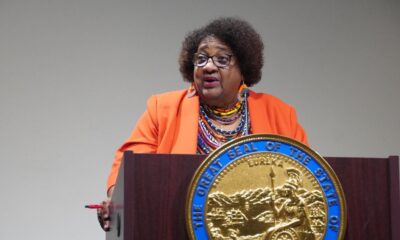
Department of Homeland Security Demands California Secretary of State Shirley N. Weber Scrub Voter Rolls
-
 Business3 weeks ago
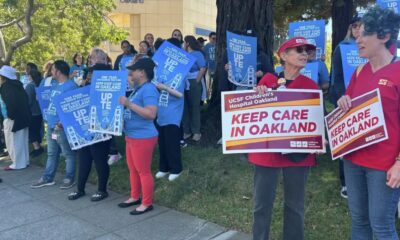
Oakland Children’s Hospital Workers and Patients Rally for Pediatric Medical Care
-
 #NNPA BlackPress2 weeks ago
New Judge Could Decide if Karmelo Anthony Gets a New Trial
-
 Environment5 days ago
“The Power to See Threats Sooner”: Gov. Newsom, Safety Officials Showcase California’s Investments in Hi-Tech Wildfire Prevention
-
 Black History2 weeks ago
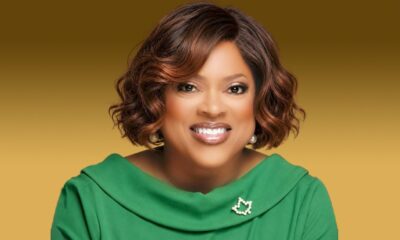
Alpha Kappa Alpha Sorority, Inc. Celebrates New North Atlantic Regional Director
-
 Business3 weeks ago
Surveillance Pricing Fight: State Senate Debates Bill Banning Retailers from Using AI to Set Prices Based on a Buyer’s Profile
-
 Business3 weeks ago
Mount Zion MBC, Church of Jesus Christ of Latter-day Saints Partner to Bring 29,000 Meals to Alameda County
-
 Featured5 days ago
California Sen. Padilla Joins Colleagues to Introduce Bill Imposing Term Limits on Supreme Court Justices
