
News
Fremont Students Design and Build Classroom

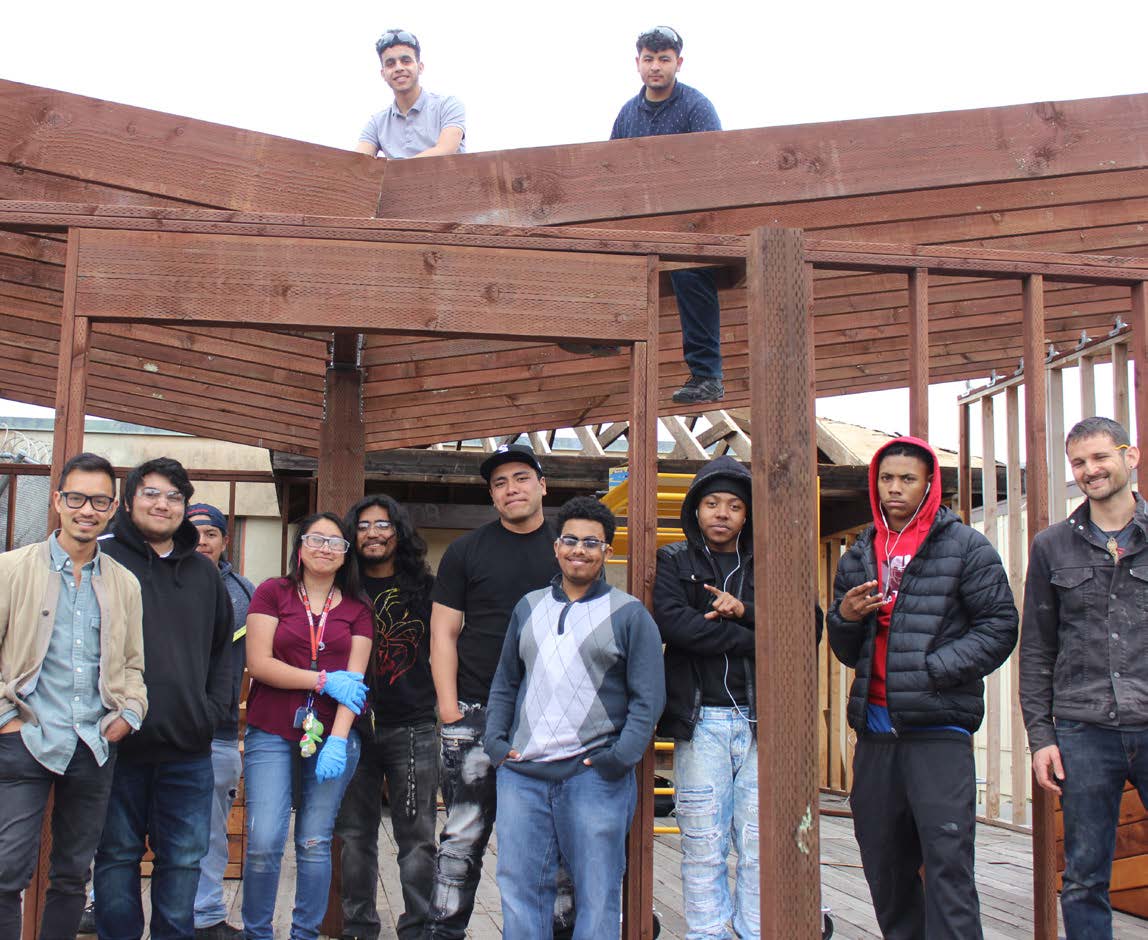
During this 2018-2019 school year, about two dozen Fremont High School seniors are building a new classroom for future students and teachers to use. “I love that I can get pieces of wood and turn them into so many different things,” said Elvira Rivera Soto, who has enjoyed studying wood working since her sophomore year. “Last year’s senior class designed the room, and this year we’re the ones who are building it,” she said.
The project is a year-long class called MC3 Design and Build co-taught by design teacher Phong Hoang and woodworking teacher Drew Prober. Students begin most classes by checking in at Hoang’s quiet classroom full of computers. Then some students move next door to Prober’s classroom filled with the sounds of hammering and sawing while others work just outside, at the construction site of the new room.
“What they’re building is different than a regular classroom because it’s an indoor-outdoor hybrid space,” said Prober. The room will be filled with plants and partially roofed with a large, open area to allow sunlight to stream in. Starting next school year, teachers will be able to sign up to hold their classes in the room if they wish. While classrooms are usually dark and enclosed, Prober sees the room his students are building as “a spacious, green, light-filled” area.
“When you’re in a classroom, you feel confined,” said Bill Luna, another Fremont student who’s working on the project, “so it’ll be nice for students and teachers to have something new and a change of pace.” For design teacher and Fremont High School graduate Hoang, his role at the school and in the project have special significance. “When I went to Fremont I felt that I didn’t get what I needed,” Hoang said.
“So when I came back to teach I wanted to be a part of a movement that taught students skills that would offer them more career choices when they finish high school.” Due to the close proximity of their rooms and the links between their subjects, it didn’t take long for Hoang and Prober to collaborate.
They ran an after-school class together called Design Build where nearby residents would give students projects, like building a bed frame or a stand, that students would then design and build.
After two years, the teachers asked Fremont’s administration if they could expand the after-school class into a regular class. The new class offered them the chance to delve into the two-year project to build a new classroom.
In addition to learning the hard skills, like using a saw and holding a hammer, Hoang and Prober are also happy that the project is teaching students soft skills like teamwork, time management, and applied mathematics. And they’re excited about them taking the skills they learn to apply toward their life, which has begun to happen.
“I’ve seen students use the skills they learn in my or Prober’s classes to rebuild or redesign their garage,” said Hoang. The students and the teachers both see the project as special and different from their other classes. To them, the grades are secondary to the project they’re creating. “It’s a project that is bigger than a grade,” said Prober. “It allows students to see the connection between what they’re doing and how that affects their environment.”


Advice
Financial Wellness and Mental Health: Managing Money Stress in College
While everyone’s financial situation is unique, several common sources of stress have the potential to strain your financial health. These include financial and economic uncertainty, existing debts, unexpected expenses, and mental or physical health changes. Financial stress may differ from situation to situation, but understanding the factors contributing to yours may help you begin to craft a plan for your unique circumstances.


Sponsored by JPMorganChase
As a college student, managing financial responsibilities can be stressful.
If you’ve found yourself staying up late thinking about your finances or just feeling anxious overall about your financial future, you’re not alone. In one survey, 78% of college students who reported financial stress had negative impacts on their mental health, and 59% considered dropping out. While finances can impact overall stress, taking steps to manage your finances can support your mental, emotional and physical well-being.
When it comes to money, the sources of stress may look different for each student, but identifying the underlying causes and setting goals accordingly may help you feel more confident about your financial future.
Consider these strategies to help improve your financial wellness and reduce stress.
Understand what causes financial stress
While everyone’s financial situation is unique, several common sources of stress have the potential to strain your financial health. These include financial and economic uncertainty, existing debts, unexpected expenses, and mental or physical health changes. Financial stress may differ from situation to situation, but understanding the factors contributing to yours may help you begin to craft a plan for your unique circumstances.
2. Determine your financial priorities
Start by reflecting on your financial priorities. For students this often includes paying for school or paying off student loans, studying abroad, saving for spring break, building an emergency fund, paying down credit card debt or buying a car. Name the milestones that are most important to you, and plan accordingly.
3. Create a plan and stick to it
While setting actionable goals starts you on the journey to better financial health, it’s essential to craft a plan to follow through. Identifying and committing to a savings plan may give you a greater sense of control over your finances, which may help reduce your stress. Creating and sticking to a budget allows you to better track where your money is going so you may spend less and save more.
4. Pay down debt
Many students have some form of debt and want to make progress toward reducing their debt obligations. One option is the debt avalanche method, which focuses on paying off your debt with the highest interest rate first, then moving on to the debt with the next-highest interest rate. Another is the debt snowball method, which builds momentum by paying off your smallest debt balance, and then working your way up to the largest amounts.
5. Build your financial resilience
Some financial stress may be inevitable, but building financial resilience may allow you to overcome obstacles more easily. The more you learn about managing your money, for instance, the more prepared you’ll feel if the unexpected happens. Growing your emergency savings also may increase resilience since you’ll be more financially prepared to cover unexpected expenses or pay your living expenses.
6. Seek help and support
Many colleges have resources to help students experiencing financial stress, like financial literacy courses or funds that provide some assistance for students in need. Talk to your admissions counselor or advisor about your concerns, and they can direct you to sources of support. Your school’s counseling center can also be a great resource for mental health assistance if you’re struggling with financial stress.
The bottom line
Financial stress can affect college students’ health and wellbeing, but it doesn’t have to derail your dreams. Setting smart financial goals and developing simple plans to achieve them may help ease your stress. Revisit and adjust your plan as needed to ensure it continues to work for you, and seek additional support on campus as needed to help keep you on track.
JPMorgan Chase Bank, N.A. Member FDIC
© 2026 JPMorgan Chase & Co.

Activism
Oakland Post: Week of March 11 -17, 2026
The printed Weekly Edition of the Oakland Post: Week of March 11 – 17, 2026
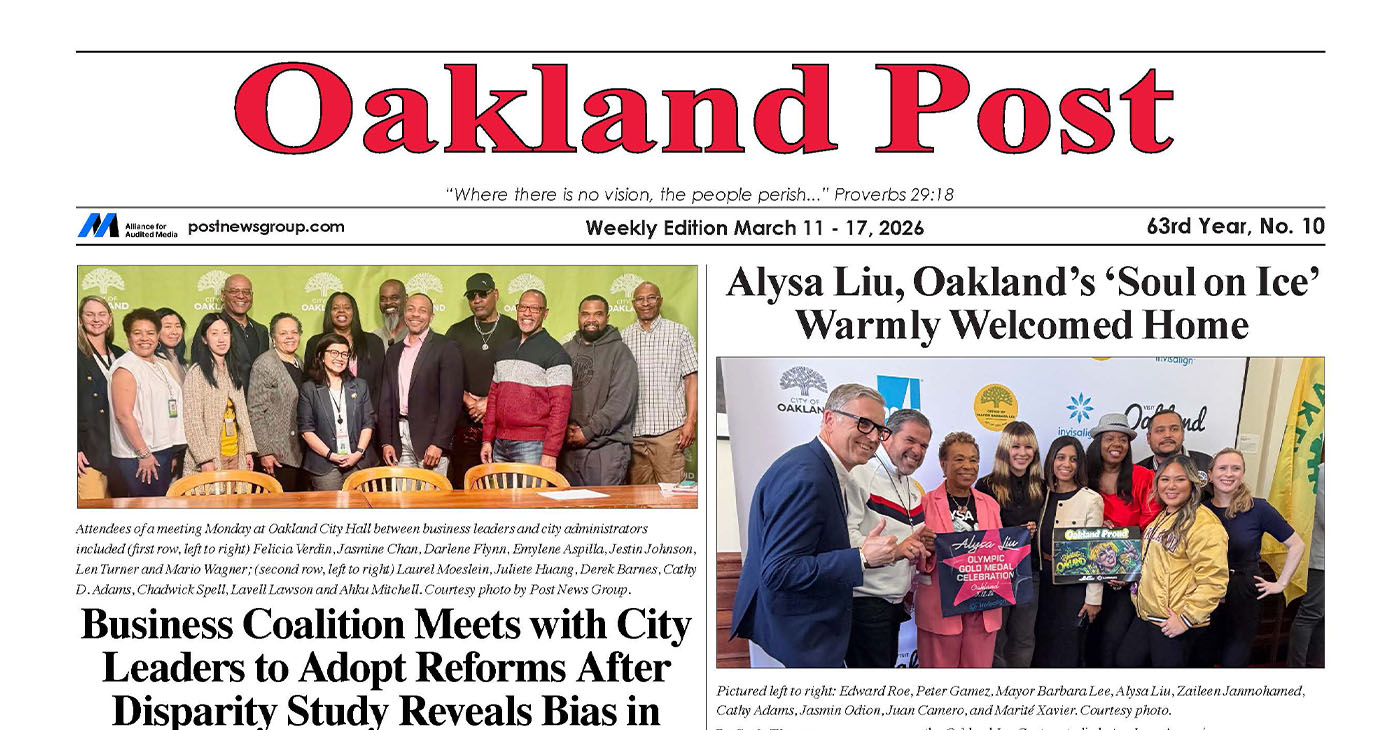
To enlarge your view of this issue, use the slider, magnifying glass icon or full page icon in the lower right corner of the browser window.

Sponsored by J.P. Morgan Wealth Management
We are in the midst of a seismic shift in wealth. This phenomenon, often referred to as the “Great Wealth Transfer,” describes the unprecedented movement of assets from the Baby Boomer generation to their heirs – an estimated $105 trillion by 2048. And women are poised to inherit most of this.
J.P. Morgan Wealth Management’s 2025 Investor Study found that women are not only set to receive significant wealth – they’re actively working to build it on their own. Ninety-three percent of women surveyed who are expecting an inheritance aren’t relying on it to reach their goals.
Here are a few tips for women to consider in their wealth-building journey:
Create a financial roadmap
A detailed, well thought out plan is important. J.P. Morgan’s study found that 90% of those surveyed with a plan feel confident about reaching their financial goals, compared to 49% without one.
Your plan should reflect your unique goals, priorities and circumstances. Consider your investment horizon and risk tolerance, and remember to revisit your plan regularly as life evolves.
Are you saving up for goals like buying a house, sending your kids off to college or retiring early? Where do you want to be in the next five, ten or twenty years? Everyone’s financial situation is unique, so it’s important to think about these questions and build a plan that is unique to your life.
Women tend to live longer than men on average. Many take career breaks or care for family members, which can influence long-term planning. It’s important to adjust your strategy with these factors in mind.

Where to start with investing
Don’t let misconceptions hold you back. Starting to invest doesn’t require a large sum, and beginning early can be beneficial. The earlier you start, the more time your money has to potentially grow over the years. Understand your overall financial situation, set clear goals and develop a long-term plan.
It’s important to also make sure you’re covered for unexpected expenses that come up before you start to invest. Build up a cash emergency fund, typically enough to cover three to six months of expenses, and pay down any high-interest debt.
Taking charge of your finances
The good news is that women are taking charge of their finances. J.P. Morgan’s research found that 75% of women respondents make financial decisions with their partner or take the lead themselves. For those who have a spouse or partner, it’s important for each person in the relationship to play an active role in the process.
Building wealth can be empowering for many women. The same survey found that 73% of women respondents said money gives them “security,” while 64% of Gen Z and Millennial women associated it with “freedom.”
The power of having a team
Some people find it helpful to work with a financial advisor, so you don’t have to tackle things alone. An advisor can help you craft a plan tailored to your needs and keep you on track throughout your lifelong financial journey. If you expect to receive an inheritance, you should also consult with estate planning and tax professionals.
No matter where you are on your wealth-building path, education is key. It’s so important to be an informed investor, and there are plenty of resources out there to help. You can find a library of free educational resources at chase.com/theknow.
As the landscape of wealth continues to evolve, women have a unique opportunity to shape their financial futures and those of generations to come. By staying informed and planning ahead, women have the tools to help them confidently navigate the Great Wealth Transfer and set themselves up for financial freedom.
The views, opinions, estimates and strategies expressed herein constitutes the author’s judgment based on current market conditions and are subject to change without notice, and may differ from those expressed by other areas of J.P. Morgan. This information in no way constitutes J.P. Morgan Research and should not be treated as such. You should carefully consider your needs and objectives before making any decisions. For additional guidance on how this information should be applied to your situation, you should consult your advisor.
JPMorgan Chase & Co., its affiliates, and employees do not provide tax, legal or accounting advice. You should consult your own tax, legal and accounting advisors before engaging in any financial transaction.

WORK FROM HOME
Home-based business with potential monthly income of $10K+ per month. A proven training system and website provided to maximize business effectiveness. Perfect job to earn side and primary income. Contact Lynne for more details: Lynne4npusa@gmail.com 800-334-0540


Financial Wellness and Mental Health: Managing Money Stress in College

Oakland Post: Week of March 11 -17, 2026

Women & Wealth: Tips for Navigating Your Lifelong Financial Journey

COMMENTARY: Women of Color Shape Our Past and Future

Woman’s Search for Family’s Roots Leads to Ancestor John T. Ward – A Successful Entrepreneur and Conductor on the Underground Railroad

Advocates Raise Alarm Over ICE Operation, MOU and Detention Risks in Baltimore County

Pete Buttigieg to Join Mayor Randall Woodfin for Community Town Hall in Birmingham

WATCH: Week One – NNPA’s “Leadership Matters” Video Series

Oakland Post: Week of March 4 – 10, 2026

OP-ED: NNPA Launches 2026 “Leadership Matters” Video Series

PRESS ROOM: PMG and Cranbrook Horizons-Upward Bound Launch Journey Fellowship Cohort 2

Los Angeles Summit Brings Together Leaders to Tackle Poverty and Affordability

Civil Rights TV Launches 24/7 Network Focused on Black History, Education and Equity

REVIEW: The Ultimate Hot Girl Summer Getaway: Sunseeker Resort Florida

COMMENTARY: How You Stop a Prescription Medicine is as Important as How You Start

Oakland Post: Week of January 28, 2025 – February 3, 2026

Life Expectancy in Marin City, a Black Community, Is 15-17 Years Less than the Rest of Marin County

Community Celebrates Turner Group Construction Company as Collins Drive Becomes Turner Group Drive

Book Review: Books on Black History and Black Life for Kids

California Launches Study on Mileage Tax to Potentially Replace Gas Tax as Republicans Push Back

Discrimination in City Contracts

COMMENTARY: The Biases We Don’t See — Preventing AI-Driven Inequality in Health Care

Post Newspaper Invites NNPA to Join Nationwide Probate Reform Initiative

Black History Events in the East Bay

Art of the African Diaspora Celebrates Legacy and Community at Richmond Art Center

Medi-Cal Cares for You and Your Baby Every Step of the Way

COMMENTARY: The National Protest Must Be Accompanied with Our Votes

New Bill, the RIDER Safety Act, Would Support Transit Ambassadors and Safety on Public Transit

Oakland Post: Week of February 4 – 10, 2026

Oakland Post: Week of February 11 – 17, 2026

Hyundai Ioniq 5 Parking, Safety, and 360 View #shorts

2025 Ioniq 5 New Wiper & Powerful Performance! #shorts

Electric SUV Range: Is 259 Miles Enough? #shorts

EV Charging: How Fast Can You Charge an Electric Vehicle? #shorts

Biometric Cooling… Messaging Seats…Come on! 2025 Infiniti QX80 Autograph 4WD

Charged Up: Witness the Magic of a Fully Electric Car! #shorts

Range Rover Sport PHEV Included…: See What’s Inside This Luxury SUV! #shorts

Invisible Hood View: Perfect Parking with X-Ray Vision! #shorts

AI Is Reshaping Black Healthcare: Promise, Peril, and the Push for Improved Results in California

ESSAY: Technology and Medicine, a Primary Care Point of View

Sanctuary Cities

The RESISTANCE – FREEDOM NOW

STATE OF THE PEOPLE: Freddie

ECONOMIC BOYCOTT DAY!!!!!

I told You So
-

 #NNPA BlackPress3 weeks ago
Reflecting on Black History Milestones in Birmingham AL
-

 Bay Area4 weeks ago
CITY OF SAN LEANDRO STATE OF CALIFORNIA PUBLIC WORKS DEPARTMENT ENGINEERING DIVISION NOTICE TO BIDDERS FOR ANNUAL STREET OVERLAY/REHABILITATION 2019-21 – PHASE III
-

 #NNPA BlackPress3 weeks ago
PRESS ROOM: NBA Hall of Fame Nominee Terry Cummings Joins 100 Black Men of DeKalb County to Launch Victory & Values Initiative
-

 Activism4 weeks ago
Oakland Post: Week of February 18 – 24, 2026
-

 #NNPA BlackPress3 weeks ago
U.S. manufacturing rebounds – how foundry services are adapting to rising demand
-

 #NNPA BlackPress3 weeks ago
OP-ED: One Hundred Years of Black Workers Telling the Truth
-

 #NNPA BlackPress3 weeks ago
Advancements in solar technology that are changing the way we power the world
-

 #NNPA BlackPress3 weeks ago
PRESS ROOM: Civil Rights TV Launches in Selma as the World’s First 24/7 Civil Rights Television Network
