
Featured
Opinion: Fight Medicare Fraud — Guard your Card


By Greg Dill
If you have Medicare, you can protect your identity and help prevent health care fraud by guarding your Medicare card like you would a credit card.
Identity theft arising from stolen Medicare numbers is becoming more common. Medicare is in the process of removing Social Security numbers from Medicare cards and replacing them with a new, unique number for each person with Medicare.
Medicare will mail new Medicare cards with the new numbers between April 2018 and April 2019.
The new card won’t change your Medicare coverage or benefits. And there’s no charge for your new card.
But watch out for scammers!
Thieves may try to get your current Medicare number and other personal information by contacting you about your new Medicare card. They may claim to be from Medicare and use various phony pitches to get your Medicare number, such as:
- Asking you to confirm your Medicare or Social Security number so they can send you a new card.
- Telling you there’s a charge for your new card and they need to verify your personal information.
- Threatening to cancel your health benefits if you don’t share your Medicare number or other personal information.
Don’t fall for any of this.
Don’t share your Medicare number or other personal information with anyone who contacts you by phone, email, or by approaching you in person, unless you’ve given them permission in advance.
Medicare, or someone representing Medicare, will only call and ask for personal information in these situations:
- A Medicare health or drug plan can call you if you’re already a member of the plan. The agent who helped you join can also call you.
- A customer service representative from 1-800-MEDICARE can call if you’ve called and left a message or a representative said that someone would call you back.
Only give personal information like your Medicare number to doctors, insurers acting on your behalf, or trusted people in the community who work with Medicare, like counselors from the State Health Insurance Assistance Program (SHIP).
If someone calls you and asks for your Medicare number or other personal information, hang up and call us at 1-800-MEDICARE (1-800-633-4227).
There are other steps you can take to protect yourself from identity theft that can lead to health care fraud.
Don’t ever let anyone borrow or pay to use your Medicare number. And review your Medicare Summary Notice to be sure you and Medicare are being charged only for items and services you actually received.
We’re in the midst of Medicare open enrollment season right now. This is the time every year when you can sign up for, switch, or drop a Medicare health plan (Part C) or a Medicare prescription drug plan (Part D). Open enrollment ends Dec. 7.
Scam artists often try to take advantage of open enrollment season. So if someone calls and tries to get you to sign up for a Medicare plan, keep in mind there are no “early bird discounts” or “limited time offers.”
Don’t let anyone rush you to enroll by claiming you need to “act now for the best deal.” And be skeptical of promises of free gifts, free medical services, discount packages or any offer that sounds too good to be true.

Greg Dill
It probably is.
To learn more about protecting yourself from identity theft and health care fraud, visit www.Medicare.gov/fraud or contact your local Senior Medicare Patrol (www.smpresource.org).
Greg Dill is Medicare’s regional administrator for Arizona, California, Nevada, Hawaii, and the Pacific Territories. You can always get answers to your Medicare questions by calling 1-800-MEDICARE (1-800-633-4227).














Commentary
Oakland Probate Dispute Raises Questions About Court-Ordered Property Transfer and Missing Notice
A legal dispute over an Oakland property has intensified following a tentative ruling that favored occupant Zakiya Jendayi, who claimed she was not properly notified before a judge ordered the property transferred into an estate. After the ruling, the estate’s administrator successfully challenged the presiding judge and requested the case be returned to the judge who signed the original transfer order. The First District Court of Appeal has now intervened to review the disqualification process and recent changes to the court docket. Read more.



Opinion and documentary analysis | Part 2 of 2
A tentative ruling found that Oakland property occupant Zakiya Jendayi had not received notice before a judge ordered its transfer into an estate.
The ruling was not final. Attention shifted to the assigned judge.
The estate’s special administrator, Phillip Campbell, invoked California Code of Civil Procedure Section 170.6 to disqualify Judge Stephanie Sato. The trial court granted the challenge Sept. 9, 2026.
Five days later, Campbell requested reassignment specifically to Judge Sandra Bean, who had signed the property order Jendayi sought to overturn.
The sequence raises questions about procedural fairness.
A Challenge After an Unfavorable Ruling
Sato’s Sept. 8 tentative ruling concluded that California’s notice requirement protected Jendayi as an occupant, regardless of whether Jendayi held a valid ownership interest.
Her proposed decision would have vacated Bean’s Oct. 8, 2025, order.
Section 170.6 permits challenges under certain circumstances. Whether Campbell’s challenge was timely was disputed.
On Sept. 14, Campbell sought Bean’s reassignment, citing her familiarity with related trust litigation, judicial economy and consistency. Jendayi opposed the request the following day.
The timing invites serious public scrutiny but does not establish misconduct.
The Appellate Court Intervenes
In Kaiser Foundation Hospitals v. Superior Court (1987), a California appellate court examined the danger of allowing litigants to learn a judge’s likely decision before seeking disqualification.
The decision also recognized that changed assignments and insufficient notice can affect when a challenge is permissible.
On Sept. 17, 2026, the First District Court of Appeal stayed the order granting Campbell’s challenge and requested briefing addressing Kaiser.
That intervention did not vacate Bean’s property order, restore the invalidated trust or conclusively decide whether Campbell’s challenge was improper.
It did place the reassignment dispute under appellate review.
Questions in the Docket
Two versions of the court docket present another unresolved issue.
A printout preserved through Sept. 15 lacked reassignment entries that appeared in a later version. The later docket listed reassignment to Bean and a clerk’s notice under Sept. 9.
The difference warrants an explanation of when the entries were created, entered and made publicly accessible.
It does not establish deliberate backdating.
Accountability Beyond an Order
Judges generally enjoy immunity from damages claims arising from judicial acts, even when serious error is alleged. That protection does not make their decisions immune from review.
Appellate courts can correct legal errors; California’s Commission on Judicial Performance can investigate misconduct but cannot reverse judgments.
For Jendayi, the central concern remains practical: How much litigation must an occupant undertake to enforce a notice requirement intended to protect participation before property rights are adjudicated?
The U.S. Supreme Court’s decision in Mullane v. Central Hanover Bank & Trust Co. underscores the importance of meaningful notice and an opportunity to object.
The record establishes contested filings, a tentative ruling and appellate intervention, not anyone’s private motives.
The public deserves a transparent, documented explanation of this consequential judicial process.
A judge’s signature should resolve a lawful dispute, not silence legitimate questions about how the decision was reached.
The case is Estate of Laura Dean Head, Alameda County Superior Court case RP20066047. Records are available through the court’s eCourt Public Portal.

Education
‘Raising a Child Shouldn’t Break the Bank’: California Is Helping Families Save on Childcare Costs
California has implemented new fee schedules and expanded programs to reduce the financial burden of childcare for families across the state. Under recent reforms, many households qualifying for subsidized care have seen their annual fees eliminated entirely. The state has also introduced universal transitional kindergarten and increased access to before- and after-school enrichment. Despite these investments in facilities and provider benefits, affordability remains a persistent challenge for many residents as the state works to bridge existing gaps in care. Read more.

California families are paying less for subsidized childcare under new fee schedules introduced since 2019, according to information from the Public Policy Institute of California (PPIC).
The state has expanded subsidized childcare, introduced free transitional kindergarten for 4-year-olds, and increased access to before- and after-school programs as part of broader efforts to reduce the financial burden of raising children. However, childcare affordability remains a challenge for many families.
According to a PPIC chart cited by the administration, a family of three earning $60,000 annually would have paid approximately $7,000 a year in fees for full-time subsidized childcare under the 2019-20 schedule. Under the 2025-26 schedule, the annual fee is zero. The figures are adjusted for inflation.
“Raising a child shouldn’t break the bank,” Newsom said. He added that the state has lowered costs, expanded access to affordable care, and increased educational opportunities to help parents and children thrive.
Since 2019, California has added approximately 149,000 subsidized childcare slots and awarded 3,800 grants to providers to improve facilities and expand capacity. The state has also expanded before-and after-school care and summer programs for students in transitional kindergarten through sixth grade, offering activities such as homework assistance, arts, music, and science enrichment.
Universal transitional kindergarten is another major component of the state’s strategy. The free program is available to all 4-year-olds in California, providing early education while helping families avoid some childcare expenses. California enrolled 213,313 children in transitional kindergarten during the 2025-26 school year. The Newsom administration says the state has invested $12.5 billion since 2019 to implement the program statewide.
Other initiatives include expanding paid family leave from six weeks to eight weeks and increasing wage replacement for eligible workers.
Those earning less than $65,000 annually can receive up to 90% of their regular wages while on leave.
California has also provided free meals to public school students and established the CalKIDS savings program, which provides eligible children with accounts to help cover future college and career training expenses.
The state has further supported childcare providers through collective bargaining, committing more than $800 million to health, retirement, and training benefits for members of Child Care Providers United.
While these initiatives have expanded support for families, the PPIC figures specifically illustrate changes in subsidized childcare fees, not the full cost of care for every household. Ensuring that affordable, accessible childcare is available to families across income levels remains an ongoing challenge for California.
Featured
Secretary of State Shirley Weber Pushes Back Against DOJ Demands Over California Voter Rolls
California Secretary of State Shirley N. Weber is pushing back against U.S. Department of Justice demands to investigate voters suspected of being noncitizens shortly before the general election. Federal authorities are seeking to block mail-in ballots from approximately 20,000 registered voters, but Weber argues the request is an unlawful attempt to purge voter rolls and incite public distrust. Tensions have escalated further following a specific security dispute involving a thumb drive delivered to Los Angeles County officials. Read more for details on the state’s response.
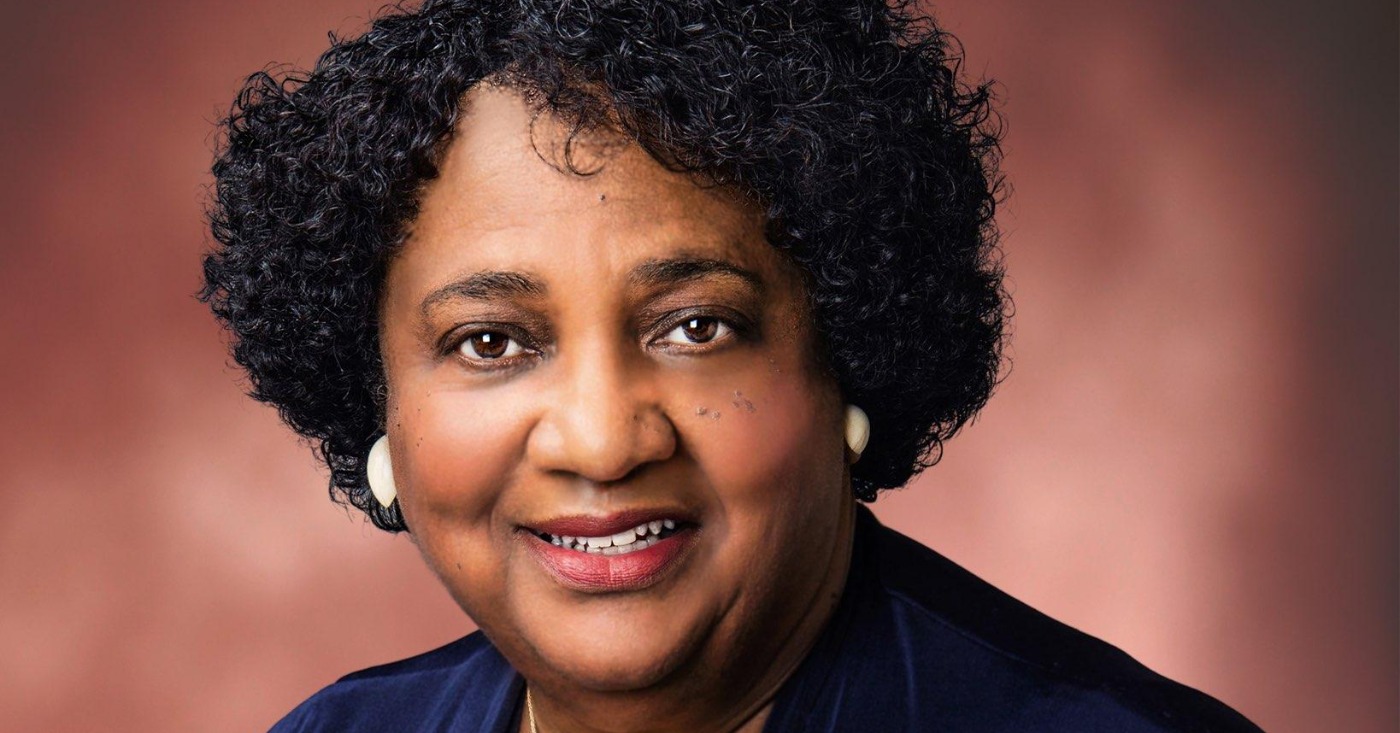
California Secretary of State Shirley N. Weber criticized the U.S. Department of Justice (DOJ) for demanding that state election officials investigate voters suspected of being noncitizens just weeks before the Nov. 3 general election.
“The U.S. DOJ’s relentless efforts to unlawfully gain access to states’ protected voter data and purge voter rolls serve only to cause chaos and fuel public distrust in our elections,” Weber said in an Oct. 14 statement.
Weber said her office received a demand to investigate an unspecified number of individuals the federal government believes are “likely noncitizens.” However, the DOJ did not provide her office with the list and gave California just 48 hours to obtain it, investigate and take action.
The demand comes as the DOJ, working with the Department of Homeland Security (DHS), seeks to block California from counting mail-in ballots from approximately 20,000 registered voters whose citizenship status the federal government has questioned.
“State-facilitated voter fraud is unacceptable in the United States of America,” said U.S. Attorney General Todd Blanche. “If found responsible in a court of law, the State of California will have seriously undermined confidence in our electoral system and violated laws that protect our nation’s representative system of government.”
According to Weber’s office, the Los Angeles County Registrar-Recorder/County Clerk received the federal government’s list on a password-protected thumb drive, with the password written on a sticky note.
Registrar-Recorder/County Clerk Dean C. Logan said his office declined to access the files because the device did not meet established security standards.
“We have not accessed the drive because doing so would conflict with established data privacy and information security protocols,” Logan said. “We do not consider the device a secure medium.”
Weber also challenged earlier federal allegations that California had 190,000 noncitizens on its voter rolls, saying the Trump administration had failed to provide evidence or explain its methodology despite requests from her office.
“California has robust state law requirements that only U.S. citizens can register to vote and that any non-eligible registrants are removed from the state’s voter rolls,” Weber said. “My office and California election officials remain committed – as always – to ensuring a fair and smooth 2026 general election.”
The DOJ’s letters to the California secretary of state and Los Angeles County election officials outline the federal government’s demands.



Oakland Probate Dispute Raises Questions About Court-Ordered Property Transfer and Missing Notice

‘Raising a Child Shouldn’t Break the Bank’: California Is Helping Families Save on Childcare Costs

Secretary of State Shirley Weber Pushes Back Against DOJ Demands Over California Voter Rolls

Chase Launches Fraud & Scam Prevention Month

U.S. Rep. Simon Secures More Than $1 Million for Public Safety at Mills College at Northeastern University Oakland, Surrounding Neighborhood

COMMENTARY: Valarie Bachelor and Jennfier Brouhard are Excellent School Board Members and Deserve to Be Reelected

Oakland Faith Leaders Gather to Revitalize the Interdenominational Ministerial Alliance of Oakland

Statue of ‘La Catrina,’ a Beloved Symbol of Dia de Los Muertos, Visits Oakland

Oakland Honors 60 Years of the Black Panther Party at the All Power to the People Gala

Fate of Bay Area Public Transit Hinges on Regional Transit Measure

Why AC Transit Director Joel Young is My Choice for AC Transit Board Ward 3

Oakland Post: Week of October 21 – 27, 2026

Mayor Barbara Lee Holds Special State of the City Address in Deep East Oakland

Practitioners of African Traditional Spirituality Offer Ancestral Reverence Ritual Oct. 31

It’s Time to Lose Weight Before the Holidays

Misnamed ‘Parent’ PAC Seeks to Influence Oakland School Board Elections

Listening as a Lifeline: A Doula’s Witness to Black Maternal Health

Poll: Becerra Widens His Lead Over Hilton; Californians Split on Wealth Tax

Doulas Are Helping Black California Moms Navigate Pregnancy–Even as High Mortality Rates Persist

County Office of Education Says OUSD Finances Are Getting Healthier, Materially Stronger

Oakland Post: Week of September 9 – 15, 2026

Zakiya Jendayi Arrested, Locked Out of Home by Sheriff’s Deputies

Mayor Lee Announces $1 Million Kaiser Permanente Grant for Pilot Program to Address Homelessness, Clean Up Public Spaces throughout Oakland

Richmond Tiny House Village Farm & Garden Set to Open Gates on Sept. 26

BLACspace Cooperative Invites Bay Area to Experience Oakland’s Black Cultural Ecosystem Through a BLAC Map Tour + Party

Latest Massacre in Haiti Reveals Cruelty U.S. Deportations

OPINION: Nolan Wells’ Death One of Several Signifying Racial Terror Lives on in U.S. South

Oakland People’s Arms Embargo Coalition Demands End to Military Shipments Thru Oakland

Oakland Post: Week of September 16 – 22, 2026

Democratic Clubs Interview Candidates for Oakland School Board

The Conversation With Al McFarlane 6/23/26

Media Monday 6/22/26

LIVE! ASK ALMA! — TUES. 6.23.26 7PM EST

Car Buying Secrets: 4 Hidden Checks Before You Sign!

Is This 550 HP Charger Worth YOUR Money? AutoNetwork Review

Celebrating Juneteenth – Frederick Douglass on education and resistance

LIVE! — ASK ALMA! — TUES. 6.19.26 7PM EST

Hyundai Ioniq 5 Parking, Safety, and 360 View #shorts

2025 Ioniq 5 New Wiper & Powerful Performance! #shorts

Electric SUV Range: Is 259 Miles Enough? #shorts

EV Charging: How Fast Can You Charge an Electric Vehicle? #shorts

Biometric Cooling… Messaging Seats…Come on! 2025 Infiniti QX80 Autograph 4WD

Charged Up: Witness the Magic of a Fully Electric Car! #shorts

Range Rover Sport PHEV Included…: See What’s Inside This Luxury SUV! #shorts

Invisible Hood View: Perfect Parking with X-Ray Vision! #shorts
-
 Black History3 weeks ago
Listening as a Lifeline: A Doula’s Witness to Black Maternal Health
-
 Economy4 weeks ago
Poll: Becerra Widens His Lead Over Hilton; Californians Split on Wealth Tax
-
 Business4 weeks ago
County Office of Education Says OUSD Finances Are Getting Healthier, Materially Stronger
-
 Lead Story3 weeks ago
Zakiya Jendayi Arrested, Locked Out of Home by Sheriff’s Deputies
-
 Art4 weeks ago
BLACspace Cooperative Invites Bay Area to Experience Oakland’s Black Cultural Ecosystem Through a BLAC Map Tour + Party
-

 Business4 weeks ago
From Historic Memories to New Possibilities: Oakland Celebrates Coliseum 60
-
 Community4 weeks ago
Asm. Corey Jackson Announces Launch of 24-Hour Childcare in His District
-

 Black History4 weeks ago
IN MEMORIAM: The Rev. Leon “Sonny” Clark, Longtime Orange County Pastor and Community Leader, Dies at 72
