
Bay Area
Felecia Gaston Publishes New Book on Marin City
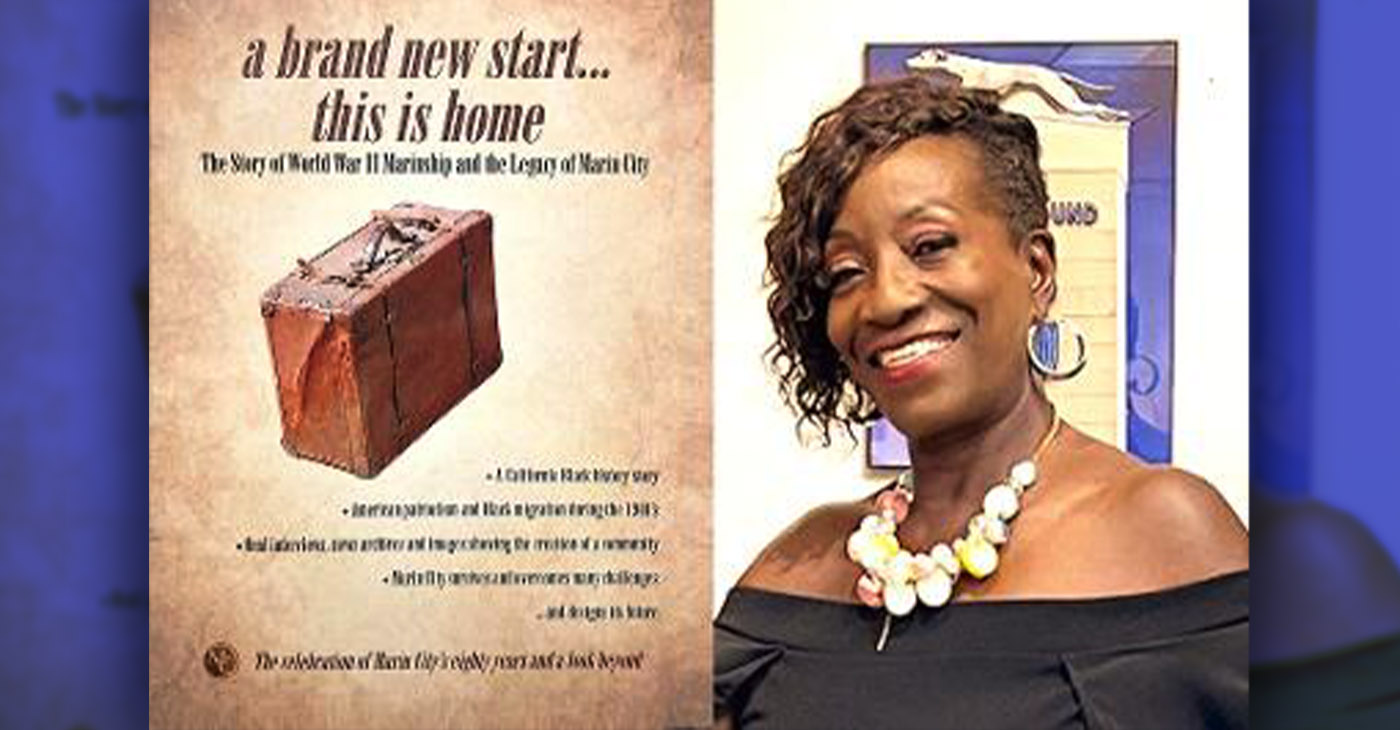
Felecia Gaston, the founder and director of Performing Stars of Marin, and The Marin City Historical and Preservation Society, will be promoting her new book, “a brand new start…this is home – The Story of World War II Marinship and the Legacy of Marin City.” Gaston will be in conversation with Cheryl Popp on Tuesday, April 25 at 6:00 p.m. at Sausalito Books by The Bay, 100 Bay St. in Sausalito.

By Godfrey Lee

Felecia Gaston, the founder and director of Performing Stars of Marin, and The Marin City Historical and Preservation Society, will be promoting her new book, “a brand new start…this is home – The Story of World War II Marinship and the Legacy of Marin City.”
Gaston will be in conversation with Cheryl Popp on Tuesday, April 25 at 6:00 p.m. at Sausalito Books by The Bay, 100 Bay St. in Sausalito.
“A brand new start…this is home” is a commemorative book for the Marin City 80 celebration, and includes “historical images, excerpts of oral histories, archival news, headlines and documents that have been previously published,” said Gaston.
It reveals the untold stories, experiences, and what the Black people in Marin City had endured for 80 years, and highlights the community’s dignity, character, and pride from the 1940s to the present.
The book also talks about the “influences and infringements from outsiders who have historically and continue to impose their vision for the community…and portrays the strength and tenacity of local advocates who wanted to decide their destiny,”
The book begins by casting back to the original inhabitants, the Coast Miwok Indians to the Azorean Portuguese of Southern Marin, Japan’s attack on Pearl Harbor leading to the United States entry into WWII, the Bechtel Corporation’s contract to build the Liberty ships, and the people from near and far who did the work.
Gaston writes about the Marin Housing Authority building temporary homes in 1942, the beginning of a community in Marin City, outside developers, the Ku Klux Klan’s cross burning in Marin City, what the Marin Civic Center was proposing for the future of the land in Marin City in 1952, and how people such as Supervisor Vera Schultz, Mary Summers, Aaron Green, Lawrence Livingston, Jr., Lawrence Halprin, and John Carl Warnecke help to plan and shape Marin City.
The book references Marin City’s Black business owners from 1950s to the present, a professional sports archive, local entertainment groups, and individual entertainers such as George Duke, Tupac Amaru Shakur, Rap Group 51.50 Illegally Insane, and Evard “Avar the Star” Auxila.
The book narrative continues with the legacy of the Black Panthers in Marin City, Geronimo Pratt, the Marin City Community Festivals from 1975 to 1989, the Blues, the Jazz & Soul Festivals in The Park from 1998 to 2012, the Tuskegee Airmen and Veterans’ Day Celebrations, George “Rocky” Graham Park of 2015, Golden Gate Village in 2017, and the Trump Caravan, coronavirus pandemic, George Floyd protests, and the U.S. Census in 2020.
Gaston writes that Marin City community has tackled the “interconnected issues of systemic racism, housing inequity, gentrification, the collapse of the middle class, and (its) resilience.”
She says that after celebrating Marin City’s 80th birthday, now is time introduce the Marin City Historical and Preservation Society in order to recognize her legacy, preserve her history and “contribute to the community’s growing vitality, richly deserved by the many residents who have invested deeply in this unique historical enclave.”













Activism
Oakland Post: Week of September 30 – October 6, 2026
The printed Weekly Edition of the Oakland Post: Week of September 30 – October 6, 2026

To enlarge your view of this issue, use the slider, magnifying glass icon or full page icon in the lower right corner of the browser window.
Activism
Oakland Post: Week of September 23 – 29, 2026
The printed Weekly Edition of the Oakland Post: Week of September 23 – 29, 2026

To enlarge your view of this issue, use the slider, magnifying glass icon or full page icon in the lower right corner of the browser window.
Activism
Oakland Post: Week of September 16 – 22, 2026
The printed Weekly Edition of the Oakland Post: Week of September 16 – 22, 2026

To enlarge your view of this issue, use the slider, magnifying glass icon or full page icon in the lower right corner of the browser window.



Listening as a Lifeline: A Doula’s Witness to Black Maternal Health

New Protections for Ticket Buyers: Gov. Newsom Signs Assemblymember Isaac Bryan’s Bill

‘We Don’t Talk Trash — We Pick Up Trash!’

Zakiya Jendayi Arrested, Locked Out of Home by Sheriff’s Deputies

Oakland Post: Week of September 30 – October 6, 2026

Asm. Corey Jackson Announces Launch of 24-Hour Childcare in His District

IN MEMORIAM: The Rev. Leon “Sonny” Clark, Longtime Orange County Pastor and Community Leader, Dies at 72

Poll: Becerra Widens His Lead Over Hilton; Californians Split on Wealth Tax

From Historic Memories to New Possibilities: Oakland Celebrates Coliseum 60

County Office of Education Says OUSD Finances Are Getting Healthier, Materially Stronger

LIVE FREE Sunday Dinner Brings Faith, Fellowship and Civic Conversation to Oakland

Remembering Chauncey Bailey as Student Journalists Face Threats to Truth-Telling

BLACspace Cooperative Invites Bay Area to Experience Oakland’s Black Cultural Ecosystem Through a BLAC Map Tour + Party

In Wake of Death on Doorstep, Williams Chapel Baptist Church Calls for Better Care, Funding for Unhoused

Oakland Centenarian Nuna McKee Honored!

Standoff for Justice: Our Homes Are Worth Fighting For

Oakland Post: Week of August 26 – September 1, 2026

Frontier Airlines’ Return to Oakland Airport Brings Flights, Jobs and Opportunity

Gubernatorial Candidate Steve Hilton Blasts California New Tire Rules; Newsom Hits Back

Chef Sharon Lee Blends Culinary Excellence, Education and Empowerment

Jackie Wright Champions Bay Area Stories, Filmmakers and Cultural Institutions

Misnamed ‘Parent’ PAC Seeks to Influence Oakland School Board Elections

Oakland Coliseum Project Opens Door for Small Businesses to Build Bigger

Big City Mayors Ask for “Yes” Vote on Housing Bond Measure; Conservatives Say “No”

Gov. Newsom’s Latest Appointees Include Sacramento Advocate for Formerly Incarcerated Students; State’s New Tech Chief

Longtime BWOPA Member Brendalyn Goodall Appointed to California Workforce Development Board

Gov. Newsom Signs Law Shielding Immigration Aid Workers From Doxing Threats

Secretary of State Shirley N. Weber Urges Californians to Vote Early as Voter ID Battle Intensifies

Oakland Post: Week of September 2 – 8, 2026

IN MEMORIAM: Dolly Parton Dead at 80 — How She Built a Legacy of Love and Earned Her Place in Black Culture

The Conversation With Al McFarlane 6/23/26

Media Monday 6/22/26

LIVE! ASK ALMA! — TUES. 6.23.26 7PM EST

Car Buying Secrets: 4 Hidden Checks Before You Sign!

Is This 550 HP Charger Worth YOUR Money? AutoNetwork Review

Celebrating Juneteenth – Frederick Douglass on education and resistance

LIVE! — ASK ALMA! — TUES. 6.19.26 7PM EST

Hyundai Ioniq 5 Parking, Safety, and 360 View #shorts

2025 Ioniq 5 New Wiper & Powerful Performance! #shorts

Electric SUV Range: Is 259 Miles Enough? #shorts

EV Charging: How Fast Can You Charge an Electric Vehicle? #shorts

Biometric Cooling… Messaging Seats…Come on! 2025 Infiniti QX80 Autograph 4WD

Charged Up: Witness the Magic of a Fully Electric Car! #shorts

Range Rover Sport PHEV Included…: See What’s Inside This Luxury SUV! #shorts

Invisible Hood View: Perfect Parking with X-Ray Vision! #shorts
-
 Community3 weeks ago
Misnamed ‘Parent’ PAC Seeks to Influence Oakland School Board Elections
-
 Activism4 weeks ago
Oakland Post: Week of September 2 – 8, 2026
-

 Community3 weeks ago
Richmond Tiny House Village Farm & Garden Set to Open Gates on Sept. 26
-

 Activism3 weeks ago
Oakland Post: Week of September 9 – 15, 2026
-

 Black History3 weeks ago
Latest Massacre in Haiti Reveals Cruelty U.S. Deportations
-

 Black History3 weeks ago
OPINION: Nolan Wells’ Death One of Several Signifying Racial Terror Lives on in U.S. South
-

 Business2 weeks ago
Mayor Lee Announces $1 Million Kaiser Permanente Grant for Pilot Program to Address Homelessness, Clean Up Public Spaces throughout Oakland
-

 Community3 weeks ago
Democratic Clubs Interview Candidates for Oakland School Board
