
Technology
FCC Head Unveils Proposal to Narrow ‘Digital Divide’


In this March 17, 2015 file photo, Federal Communications Commisison (FCC) Chairman Tom Wheeler testifies before the House Oversight and Government Reform Committee hearing on net neutrality on Capitol Hill in Washington. Wheeler is proposing that the FCC expand a phone subsidy program for the poor to include Internet access. (AP Photo/Lauren Victoria Burke, File)
TALI ARBEL, AP Business Writer
NEW YORK (AP) — The head of the Federal Communications Commission is proposing that the government agency expand a phone subsidy program for the poor to include Internet access.
The FCC Chairman Tom Wheeler, has emphasized that Internet access is a critical component of modern life, key education, communication and finding a keeping a job.
With the net neutrality rules released earlier this year, the agency redefined broadband as a public utility, like the telephone, giving it stricter oversight on how online content gets to consumers. That triggered lawsuits from Internet service providers.
The proposal Thursday to expand the Lifeline phone program to Internet service aims to narrow the “digital divide” — those with access to the Internet and other modern technologies and those without.
According to a Pew Research Center report from 2013, 70 percent of U.S. adults have a high-speed Internet connection at home. Only 54 percent of households earnings less than $30,000 a year do. The FCC says low-income Americans are more likely to rely on smartphones for Internet access. According to the Pew report, 67 percent of households that make less than $30,000 a year have home broadband or a smartphone.
Lifeline was started in 1985 and expanded to include wireless phones in 2005. The FCC’s proposal calls for extending Lifeline’s $9.25 monthly credit to give low-income households a choice of phone service or Internet access, via a wire to the home or a smartphone.
“Voice is no longer sufficient to be able to participate in society today,” said Harold Feld of Public Knowledge, a consumer advocacy group. “The broad assumption is that you’ve got broadband access somehow.”
But Lifeline has been criticized for being susceptible to fraud, and the proposal may get pushback from Republicans. The FCC’s proposal says it will build on anti-fraud measures that were put in place in 2012, such as extending the period that providers must keep documents on customers’ eligibility for the programs.
Senator David Vitter, R-La., said in a statement Thursday that the FCC has “failed to manage Lifeline efficiently in its current form, and I cannot support any expansion of a program that has so few safeguards in place to protect the legitimacy of the program and the American taxpayers who pay into it.”
FCC commissioners will vote in June on whether to proceed with expanding Lifeline to broadband service.
In 2014, Lifeline served 12 million households and cost $1.7 billion, paid for by surcharges on the country’s telephone customer bills.
Eligibility depends on income being at or less than 135 percent of the federal government’s poverty line, or participation in programs including Medicaid, food stamps or free school lunch.
As Internet access is often more expensive than $9.25 a month, program participants may have to pay an additional amount for service.
Some broadband providers already offer low-cost Internet to households that get food stamps or are in the school lunch program. But Comcast’s $10-a-month Internet Essentials program, for example, has been criticized as having too-slow speeds of up to 5 megabits per second and for too few people being eligible.
The FCC defines broadband as having download speeds of 25 megabits per second and higher.
Copyright 2015 The Associated Press. All rights reserved. This material may not be published, broadcast, rewritten or redistributed.








Activism
OP-ED: AB 1349 Puts Corporate Power Over Community
Since Ticketmaster and Live Nation merged in 2010, ticket prices have jumped more than 150 percent. Activities that once fit a family’s budget now take significant disposable income that most working families simply don’t have. The problem is compounded by a system that has tilted access toward the wealthy and white-collar workers. If you have a fancy credit card, you get “presale access,” and if you work in an office instead of a warehouse, you might be able to wait in an online queue to buy a ticket. Access now means privilege.

By Bishop Joseph Simmons, Senior Pastor, Greater St. Paul Baptist Church, Oakland
As a pastor, I believe in the power that a sense of community can have on improving people’s lives. Live events are one of the few places where people from different backgrounds and ages can share the same space and experience – where construction workers sit next to lawyers at a concert, and teenagers enjoy a basketball game with their grandparents. Yet, over the past decade, I’ve witnessed these experiences – the concerts, games, and cultural events where we gather – become increasingly unaffordable, and it is a shame.
These moments of connection matter as they form part of the fabric that holds communities together. But that fabric is fraying because of Ticketmaster/Live Nation’s unchecked control over access to live events. Unfortunately, AB 1349 would only further entrench their corporate power over our spaces.
Since Ticketmaster and Live Nation merged in 2010, ticket prices have jumped more than 150 percent. Activities that once fit a family’s budget now take significant disposable income that most working families simply don’t have. The problem is compounded by a system that has tilted access toward the wealthy and white-collar workers. If you have a fancy credit card, you get “presale access,” and if you work in an office instead of a warehouse, you might be able to wait in an online queue to buy a ticket. Access now means privilege.
![[REBROADCAST] What is Moral Injury? David Rabb on the VA](https://www.postnewsgroup.com/wp-content/uploads/2024/04/As4zI6lRjAE-300x225.jpg)
Power over live events is concentrated in a single corporate entity, and this regime operates without transparency or accountability – much like a dictator. Ticketmaster controls 80 percent of first-sale tickets and nearly a third of resale tickets, but they still want more. More power, more control for Ticketmaster means higher prices and less access for consumers. It’s the agenda they are pushing nationally, with the help of former Trump political operatives, who are quietly trying to undo the antitrust lawsuit launched against Ticketmaster/Live Nation under President Biden’s DOJ.
That’s why I’m deeply concerned about AB 1349 in its current form. Rather than reining in Ticketmaster’s power, the bill risks strengthening it, aligning with Trump. AB 1349 gives Ticketmaster the ability to control a consumer’s ticket forever by granting Ticketmaster’s regime new powers in state law to prevent consumers from reselling or giving away their tickets. It also creates new pathways for Ticketmaster to discriminate and retaliate against consumers who choose to shop around for the best service and fees on resale platforms that aren’t yet controlled by Ticketmaster. These provisions are anti-consumer and anti-democratic.
California has an opportunity to stand with consumers, to demand transparency, and to restore genuine competition in this industry. But that requires legislation developed with input from the community and faith leaders, not proposals backed by the very company causing the harm.
Will our laws reflect fairness, inclusion, and accountability? Or will we let corporate interests tighten their grip on spaces that should belong to everyone? I, for one, support the former and encourage the California Legislature to reject AB 1349 outright or amend it to remove any provisions that expand Ticketmaster’s control. I also urge community members to contact their representatives and advocate for accessible, inclusive live events for all Californians. Let’s work together to ensure these gathering spaces remain open and welcoming to everyone, regardless of income or background.
Alameda County
OPINION: Argent Materials Oakland CleanTech Community Asset Helps Those In Need
Alameda County Supervisor Lena Tam had this to say about Argent Materials as an Oakland community asset: “Congratulations to Argent Materials and its President and Founder, Bill Crotinger! The company is now fully operational, recycling an impressive 99.99% of concrete and asphalt debris, which helps divert thousands of tons of construction waste from landfills. They are also proud to announce that 50% of their team consists of local hires. In celebration of Thanksgiving, and despite stormy weather last week, the Alameda County Sheriffs, alongside Mr. Crotinger and Argent Materials’ dedicated staff distributed turkeys and pies as a heartfelt gesture of gratitude to the community.”

Zennie Abraham
CEO, Zennie62Media
Argent Materials, the Oakland business that turns old concrete and asphalt into new construction products, generally goes by “Argent Materials Oakland CleanTech” but should be called “Argent Materials East Oakland CleanTech for The Community”. Here’s why.
First, Argent Materials is located at 8300 Baldwin St, right in the Coliseum Industrial Zone, just a three-minute drive from the Oakland-Alameda County Coliseum Complex. That’s in East Oakland, and just a city-block walk from the Oakland Coliseum BART Station.
Second, Argent Materials has been a friend to East Oakland and what some, like the members of the Oakland Private Industry Council, would call a “community asset”. In 2024, Argent Materials founder and President Bill Crotinger was named Leader of the Year by the Oakland Private Industry Council (OPIC) “I was humbled and honored to be named Leader of the Year by the Oakland Private Industry Council. Truly an honor. My heartfelt thanks to my friend and mentor Pastor Raymond Lankford and all the wonderful people at OPIC.”
Alameda County Supervisor Lena Tam had this to say about Argent Materials as an Oakland community asset: “Congratulations to Argent Materials and its President and Founder, Bill Crotinger! The company is now fully operational, recycling an impressive 99.99% of concrete and asphalt debris, which helps divert thousands of tons of construction waste from landfills. They are also proud to announce that 50% of their team consists of local hires. In celebration of Thanksgiving, and despite stormy weather last week, the Alameda County Sheriffs, alongside Mr. Crotinger and Argent Materials’ dedicated staff distributed turkeys and pies as a heartfelt gesture of gratitude to the community.”

ABI Foundry reports that Argent Materials led a community clean up for the residents and businesses of Russett Street as well as San Leandro Street. An ABI Foundry team member said “Bill Crotinger at Argent Materials spearheaded the initiative to clean San Leandro street, from Hegenburger to 98th Ave. along the side of BART. AB&I enjoyed participating along with Acts Full Gospel C.O.G.I.C (Men of Valor), Good Hope Missionary Baptist Church-Oakland (Reverend Michael Jones) and Argent Materials. You should see how it looks now. It is AMAZING! It takes an ambitious mind to make a difference block by block.”
What Is Cleantech And Why Is It Important to Oakland And Argent Materials?
Clean technology (Clean Tech) refers to products, services, and processes that mitigate negative environmental impacts by increasing energy efficiency, promoting resource sustainability, and minimizing waste and pollution, ultimately contributing to a low-carbon, and more sustainable economy.
What is The Clean Tech of Argent Materials of Oakland?
In Argent Materials’ context, “cleantech” refers to their sustainable business model which includes recycling concrete and asphalt into new aggregate materials, diverting waste from landfills, and using renewable diesel for their fleet to achieve carbon neutrality and protect the environment. This business approach Argent Materials uses aligns with the broader definition of cleantech, which involves products, services, and processes that reduce negative environmental impacts through resource efficiency and environmental protection
Clean Tech, or green tech as Argent Materials of Oakland does it, is defined as any technology that minimizes negative environmental impact by reducing human consumption of natural resources and by promoting more sustainable and efficient resource use.
Argent Materials will continue to be a cleantech community asset to Oakland well into the future.
Stay tuned.
Activism
Golden State Warriors Program Is Inspiring Next Generation of Female Engineers
Breaking down barriers and biases that deter young girls from pursuing STEAM subjects is essential for creating a level playing field and ensuring equal opportunities for all. By challenging stereotypes and promoting a culture of inclusivity and diversity in STEAM fields, experts believe young girls can be empowered to pursue their interests and aspirations without limitations confidently. Encouraging mentorship, providing access to resources, and celebrating girls’ achievements in STEAM are all crucial steps in creating a supportive environment that fosters success.
By Y’Anad Burrell
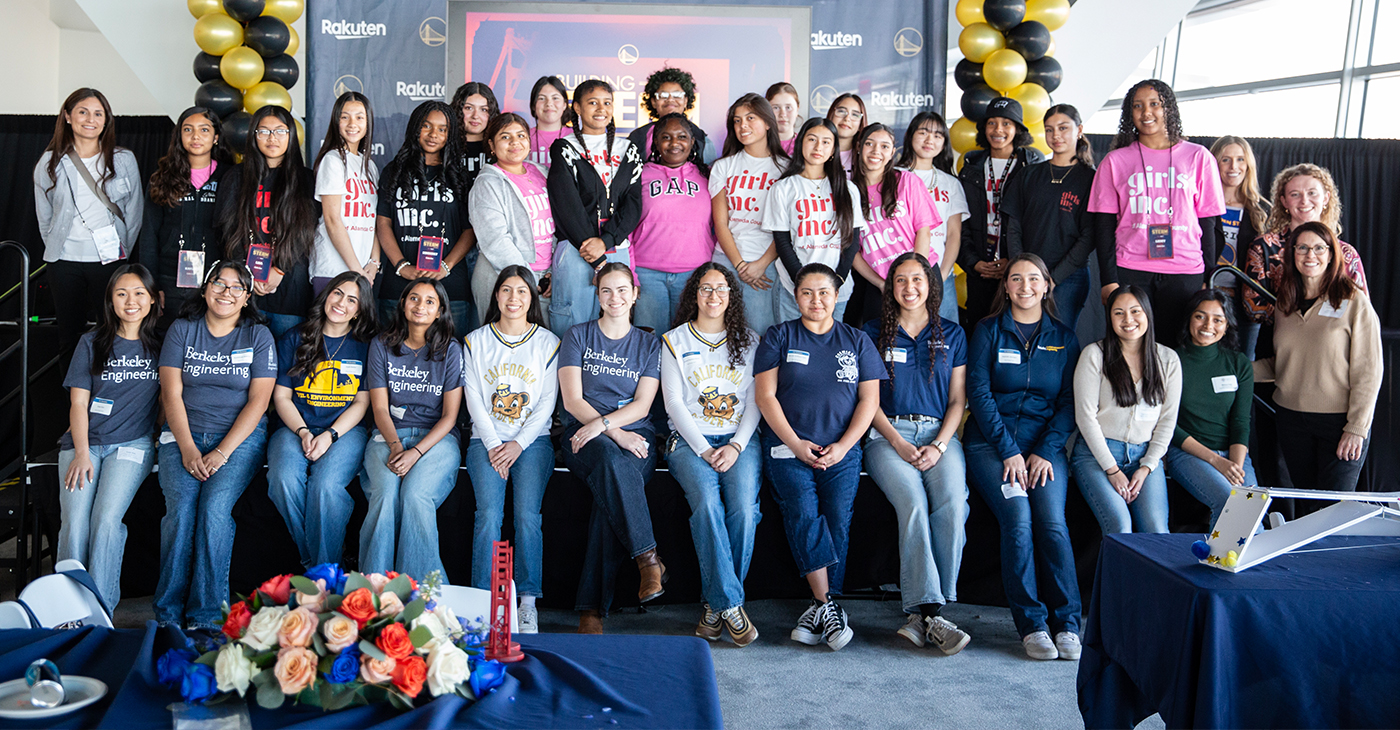
The Golden State Warriors and e-commerce giant Rakuten are joining forces to inspire the next generation of female engineers through Building STEAM Futures, part of The City Calls campaign.
Organizers say the initiative is founded on the idea that science, technology, engineering, arts, and mathematics (STEAM) are crucial fields for innovation and progress, and empowering young girls to pursue careers in these areas is more important than ever. Studies consistently show that girls are underrepresented in STEAM fields, resulting in a gender disparity that limits potential and hinders diversity.
Breaking down barriers and biases that deter young girls from pursuing STEAM subjects is essential for creating a level playing field and ensuring equal opportunities for all. By challenging stereotypes and promoting a culture of inclusivity and diversity in STEAM fields, experts believe young girls can be empowered to pursue their interests and aspirations without limitations confidently. Encouraging mentorship, providing access to resources, and celebrating girls’ achievements in STEAM are all crucial steps in creating a supportive environment that fosters success.
On Saturday, March 8, International Women’s Day, the Warriors and Rakuten hosted 20 middle school girls from Girls Inc. of Alameda County at Chase Center’s Above the Rim for a hands-on bridge-building experience. The young girls from Girls, Inc. of Alameda County had an opportunity to design, build and test their own bridge prototypes and learn the fundamentals of bridge construction from the Engineering Alliance and the UC Berkeley Steel Bridge Team.

This STEAM experience for the girls followed the first session in January, where they took a behind-the-scenes tour of the Golden Gate Bridge, learning about its design and construction from industry experts. The City Calls campaign, tipped off with the unveiling the Warriors’ new bridge-themed City Edition jerseys and court design earlier this year.

WORK FROM HOME
Home-based business with potential monthly income of $10K+ per month. A proven training system and website provided to maximize business effectiveness. Perfect job to earn side and primary income. Contact Lynne for more details: Lynne4npusa@gmail.com 800-334-0540


Oakland Post: Week of April 1 – 7, 2026

Black Artists in America, Installation Three Wraps at the Dixon Gallery and Gardens

Grief, Advocacy, and Education: A Counselor Reflects on Black Maternal Health

Future of Florida’s Black History Museum in Limbo

New Research Shows the Many Benefits of Early Learning

South Hampton K-8 Students Among Top 10 Finalists for Samsung’s ‘Solve for Tomorrow’ Competition

Cuba: No Negotiation with US on the President or Political System

Brooklyn Academy of Music Names Jamaican-Born Tamara McCaw as President

Trinidad & Tobego – U.S. Launches WhatsApp Channel for American Citizens in the Country

Oakland Post: Week of March 18 – 24, 2026

AI Innovation vs. Ethics and Environmental Impact

AI, Web3, and Digital Reparations

What If You Owned Your AI Agent?

Season 7, Episode 3 – January Reporter’s Roundtable 📱

Season 7, Episode 3 – January Reporter’s Roundtable

Reflecting on Black History Milestones in Birmingham AL

Oakland Post: Week of February 25 – March 3, 2026

PRESS ROOM: NBA Hall of Fame Nominee Terry Cummings Joins 100 Black Men of DeKalb County to Launch Victory & Values Initiative

Trump’s MAGA Allies are Creating Executive Order Plan to Steal the 2026 Midterms

Oakland Post: Week of March 4 – 10, 2026

U.S. manufacturing rebounds – how foundry services are adapting to rising demand

Poll Shows Support for Policies That Help Families Afford Child Care

OP-ED: One Hundred Years of Black Workers Telling the Truth

Advancements in solar technology that are changing the way we power the world

Oakland Post: Week of March 11 -17, 2026

Woman’s Search for Family’s Roots Leads to Ancestor John T. Ward – A Successful Entrepreneur and Conductor on the Underground Railroad
Oakland Post: Week of March 18 – 24, 2026

COMMENTARY: Women of Color Shape Our Past and Future

PRESS ROOM: Civil Rights TV Launches in Selma as the World’s First 24/7 Civil Rights Television Network

OP-ED: NNPA Launches 2026 “Leadership Matters” Video Series

Hyundai Ioniq 5 Parking, Safety, and 360 View #shorts

2025 Ioniq 5 New Wiper & Powerful Performance! #shorts

Electric SUV Range: Is 259 Miles Enough? #shorts

EV Charging: How Fast Can You Charge an Electric Vehicle? #shorts

Biometric Cooling… Messaging Seats…Come on! 2025 Infiniti QX80 Autograph 4WD

Charged Up: Witness the Magic of a Fully Electric Car! #shorts

Range Rover Sport PHEV Included…: See What’s Inside This Luxury SUV! #shorts

Invisible Hood View: Perfect Parking with X-Ray Vision! #shorts

AI Is Reshaping Black Healthcare: Promise, Peril, and the Push for Improved Results in California

ESSAY: Technology and Medicine, a Primary Care Point of View

Sanctuary Cities

The RESISTANCE – FREEDOM NOW

STATE OF THE PEOPLE: Freddie

ECONOMIC BOYCOTT DAY!!!!!

I told You So
-
 Activism3 weeks ago
Oakland Post: Week of March 11 -17, 2026
-
 #NNPA BlackPress4 weeks ago
Woman’s Search for Family’s Roots Leads to Ancestor John T. Ward – A Successful Entrepreneur and Conductor on the Underground Railroad
-
 Activism2 weeks ago
Oakland Post: Week of March 18 – 24, 2026
-
 #NNPA BlackPress4 weeks ago
COMMENTARY: Women of Color Shape Our Past and Future
-

 Advice3 weeks ago
Financial Wellness and Mental Health: Managing Money Stress in College
-

 #NNPA BlackPress4 weeks ago
Advocates Raise Alarm Over ICE Operation, MOU and Detention Risks in Baltimore County
-

 #NNPA BlackPress4 weeks ago
Pete Buttigieg to Join Mayor Randall Woodfin for Community Town Hall in Birmingham
-
 #NNPA BlackPress2 weeks ago
Brooklyn Academy of Music Names Jamaican-Born Tamara McCaw as President
