
Featured
Families Celebrate Life-Giving Transplants at Annual UCSF Picnic

By Scott Maier, UCSF News
On a bright summer Saturday, dozens of children and their family members gathered at McNears Beach Park in San Rafael, listening to music, kayaking, having their faces painted, smashing piñatas, even playing with costumed Smurfs. For this group, the outlook wasn’t always this sunny.
The children are part of a special group: they’re pediatric transplant recipients from UCSF Benioff Children’s Hospital San Francisco.
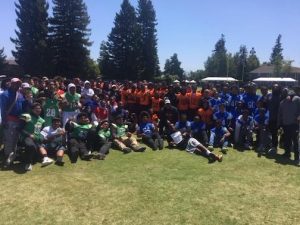
The 19th Annual Chris Mudge UCSF Pediatric Transplant Picnic on Aug. 23 gave children who received transplants from UCSF and their families an opportunity to come together for support, to share knowledge and to celebrate having another chance at life.
The 300 attendees included those who had received pre- and post-liver, kidney and small bowel transplants, as well as physicians, transplant surgeons, nurses and others from the UCSF Transplant Service.
“Some of my patients now are married and come to the picnic,” said Phil Rosenthal, MD, former medical director of the pediatric liver transplant program and current director of pediatric hepatology at UCSF. “A lot of our families look forward to coming back to this picnic each year to reconnect.”
One of those returning patients was Justin Erickson of Redwood City. In 1992, he needed a liver transplant due to biliary atresia, a life-threatening condition in which the bile ducts are blocked.
Twenty-two years later, the 31-year-old City of San Carlos employee is a husband and father of a five-month-old daughter.
“The first five years after the transplant, it was a real rough battle,” said Erickson, who has attended every picnic. “I had a lot of ups and downs, but I’m doing pretty good now. It’s amazing all the things I’ve accomplished and the goals that I’ve met after the transplant.”
In sharing his personal experience, Erickson has advice for pediatric patients and their families awaiting a transplant at UCSF.
“If you are looking to have a transplant at UCSF, hold your hopes up,” he said. “You definitely are talking to the right caregivers. Benioff Children’s Hospital San Francisco is the place to be with the cutting-edge technology and the doctors that have the know-how.”
Erickson is living proof of the growing success of organ transplants. Before, a 50-percent success rate was considered satisfactory. Now, thanks to medical advances and improved immunosuppressive drugs to combat infection and rejection, more than 90 percent of transplant patients are surviving, including children.
Founded in the 1960s, the UCSF Transplant Service is a world leader in clinical transplantation and has developed innovative techniques while producing superior outcomes. UCSF began pediatric kidney transplants in 1964 and pediatric liver transplants in 1989, making it among the oldest children’s transplant services in the country.
“This annual picnic has really grown, and so have the pediatric transplant services at UCSF,” said John Roberts, MD, chief of the UCSF Division of Transplant Surgery. “You see these kids when they’re little, and now that they’re all grown up, it’s truly amazing.”
The picnic featured face painting, music, kayaking, pinatas and more to celebrate the children and their families who were given new life by successful transplants.
Chris Mudge, who retired from UCSF two years ago as a pediatric nurse practitioner, founded the picnic. The event was renamed in her honor in 2013 for her work and dedication to the transplant patients and their families.
“We are coming here to renew life and renew old friendships because many of us have been coming here for 19 years,” Mudge said. “It certainly warms my heart to see children coming back and doing so well.”
The theme for this year’s picnic was the “Tree of Life,” with leaves on the tree representing transplanted organs.
“Today, we’re once again accepting our gift of connectedness with one another and to the world and to be grateful for that,” Mudge said. “It’s a miracle, not only for the children who have had transplants but also for their families.”
Rosenthal added, “I defy you to tell me who has a transplant and who doesn’t have a transplant. You can’t tell just by looking, and that’s the whole idea.”




Black History
OP-ED: The Black Church Writes AI’s Next Chapter
BLACKPRESSUSA NEWSWIRE — I implore my fellow faith leaders to use these tools. Start now and use them with wisdom. We count on each and every one of you to make sure our communities help write the next chapter of this story. This rapid change is not as unfamiliar as it may sound. My first understanding of AI came from using a calculator for the first time in grade school. We did not call it AI, but it was a tool that helped me work through mathematical equations hours more efficiently.


For generations, the Black church has stood strong in our communities through every historical change this country has experienced. During the civil rights movement and in recent times, faith leaders have helped uplift Black sanctuaries to register voters, keep food pantries open for people in need, and sit with families in hospital rooms in their most desperate moments. When our people faced new trials, they could always look to our faith leaders and the church to lean in to help us be included in these transformative changes.

Artificial intelligence is the latest revolutionary change to impact our society, and much like other transformations before us, underserved communities often get left behind.
I was recently featured in a report entitled “Faith, Community & AI” and it found that people send ChatGPT more than 70 million messages a week about religion. Nearly 22 million involve studying sacred texts, and 16 million ask about religious practices and holy days. Our members make up part of those numbers. They bring questions of faith to these tools every day.
Pastors have noticed, and according to a September 2025 Lifeway Research survey of 1,003 Protestant pastors, 42 percent said they use or experiment with AI in ministry. I count myself among them.
I write my sermons by hand, through prayer and study. When I finish a draft, I ask ChatGPT this question: “Where might this sermon become unclear or difficult to follow for someone early in their walk of faith?” It shows me gaps in my preparation, like where I incorrectly assumed everyone would know the context of who the Pharisees were. Then, change comes from my own pen, not the robot. The tool helps me reach the person in the back pew while the message still comes from me.
If I could have my wish, our whole community would take a similar posture. We must use these tools, understand them, and most importantly be present to help shape them if we want to be included in the coming change.
I implore my fellow faith leaders to use these tools. Start now and use them with wisdom. We count on each and every one of you to make sure our communities help write the next chapter of this story. This rapid change is not as unfamiliar as it may sound. My first understanding of AI came from using a calculator for the first time in grade school. We did not call it AI, but it was a tool that helped me work through mathematical equations hours more efficiently.
It starts with training; there is no involvement without understanding. Free AI trainings have begun in our churches and community centers across the nation. Every faith leader should sign up and, when possible, encourage members of your congregations to join you. By learning how to use AI, we can better understand what it can do, make up our own minds about its impact, and have a say in how it shapes our communities.”
Next, we must be at the tables where the builders of these tools make decisions. Presence is the first step toward understanding, and that gap is only bridged through a coordinated effort. How can any tool serve a community well if that community is not part of the conversation? Our traditions, needs, and concerns must be accounted for, and Black faith leaders are already making that happen. OpenAI’s recent Faith report states plainly that AI should never become an arbiter of religious truth. I fully intend to hold the company to its word, and the most effective way I can do that is from inside.
I will close with this––we must diligently protect what only the church can give. A believer in Seoul, Korea quoted in the report warned, “if you pour every struggle into a private chat, your pastor and your friends may never learn you need help.” A chatbot will not sit with a grieving family or pray with you at two in the morning. As we adopt this technology, it is up to us to ensure it keeps people connected to each other and to their church.
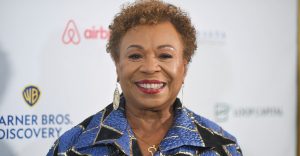
Rev. Dr. Adolphus Lacey is senior pastor of Bethany Baptist Church in Brooklyn, New York.

Black History
OP-ED: The Black Church Writes AI’s Next Chapter
BLACKPRESSUSA NEWSWIRE — I implore my fellow faith leaders to use these tools. Start now and use them with wisdom. We count on each and every one of you to make sure our communities help write the next chapter of this story. This rapid change is not as unfamiliar as it may sound. My first understanding of AI came from using a calculator for the first time in grade school. We did not call it AI, but it was a tool that helped me work through mathematical equations hours more efficiently.

For generations, the Black church has stood strong in our communities through every historical change this country has experienced. During the civil rights movement and in recent times, faith leaders have helped uplift Black sanctuaries to register voters, keep food pantries open for people in need, and sit with families in hospital rooms in their most desperate moments. When our people faced new trials, they could always look to our faith leaders and the church to lean in to help us be included in these transformative changes.
Artificial intelligence is the latest revolutionary change to impact our society, and much like other transformations before us, underserved communities often get left behind.
I was recently featured in a report entitled “Faith, Community & AI” and it found that people send ChatGPT more than 70 million messages a week about religion. Nearly 22 million involve studying sacred texts, and 16 million ask about religious practices and holy days. Our members make up part of those numbers. They bring questions of faith to these tools every day.
Pastors have noticed, and according to a September 2025 Lifeway Research survey of 1,003 Protestant pastors, 42 percent said they use or experiment with AI in ministry. I count myself among them.
I write my sermons by hand, through prayer and study. When I finish a draft, I ask ChatGPT this question: “Where might this sermon become unclear or difficult to follow for someone early in their walk of faith?” It shows me gaps in my preparation, like where I incorrectly assumed everyone would know the context of who the Pharisees were. Then, change comes from my own pen, not the robot. The tool helps me reach the person in the back pew while the message still comes from me.
If I could have my wish, our whole community would take a similar posture. We must use these tools, understand them, and most importantly be present to help shape them if we want to be included in the coming change.
I implore my fellow faith leaders to use these tools. Start now and use them with wisdom. We count on each and every one of you to make sure our communities help write the next chapter of this story. This rapid change is not as unfamiliar as it may sound. My first understanding of AI came from using a calculator for the first time in grade school. We did not call it AI, but it was a tool that helped me work through mathematical equations hours more efficiently.
It starts with training; there is no involvement without understanding. Free AI trainings have begun in our churches and community centers across the nation. Every faith leader should sign up and, when possible, encourage members of your congregations to join you. By learning how to use AI, we can better understand what it can do, make up our own minds about its impact, and have a say in how it shapes our communities.”
Next, we must be at the tables where the builders of these tools make decisions. Presence is the first step toward understanding, and that gap is only bridged through a coordinated effort. How can any tool serve a community well if that community is not part of the conversation? Our traditions, needs, and concerns must be accounted for, and Black faith leaders are already making that happen. OpenAI’s recent Faith report states plainly that AI should never become an arbiter of religious truth. I fully intend to hold the company to its word, and the most effective way I can do that is from inside.
I will close with this––we must diligently protect what only the church can give. A believer in Seoul, Korea quoted in the report warned, “if you pour every struggle into a private chat, your pastor and your friends may never learn you need help.” A chatbot will not sit with a grieving family or pray with you at two in the morning. As we adopt this technology, it is up to us to ensure it keeps people connected to each other and to their church.
Rev. Dr. Adolphus Lacey is senior pastor of Bethany Baptist Church in Brooklyn, New York.
Community
WCCUSD Joins Statewide Organic School Food Purchasing Cooperative
Other districts involved include: Alameda USD, Albany USD, Berkeley USD, Capistrano USD, Cupertino Union SD, Hayward USD, Laguna Beach USD, Lagunitas Elementary SD, Mt. Diablo USD, North Monterey County USD, Pajaro Valley USD, San Leandro USD, San Ramon Valley USD, Santa Clara USD, Sausalito Marin City SD, Tahoe-Truckee USD and West Contra Costa USD.
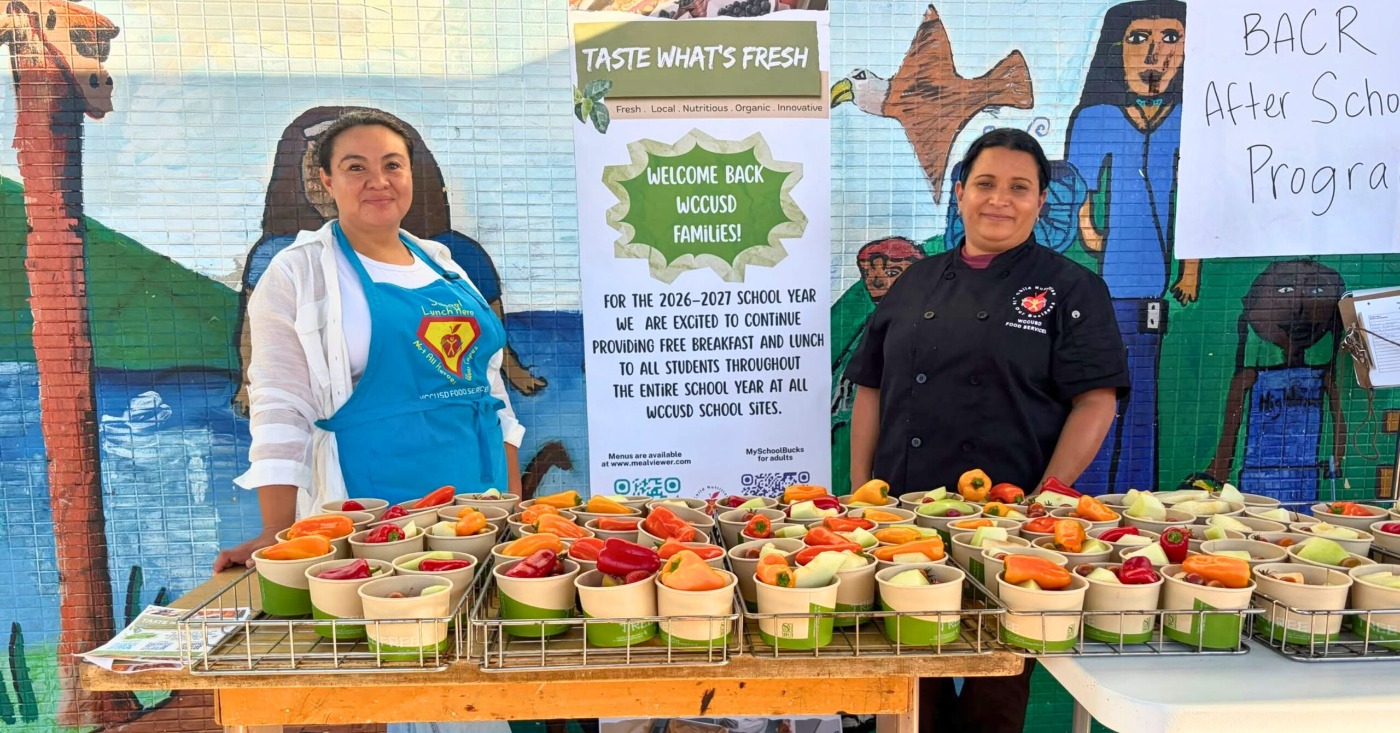
Seventeen California public school districts, including West Contra Costa Unified (WCCUSD), have joined a purchasing cooperative to pool their buying power and expand access to organic food in school meals.
The nonprofit Conscious Kitchen recently announced the launch of the Conscious Organic School Food Purchasing Cooperative. Its founding districts serve more than 300,000 students combined.
The cooperative partnered with food distributors UNFI and Sysco to expand the organic products available to participating districts. Combining schools’ purchasing demand helps distributors plan with suppliers while creating more dependable markets for organic farmers and food makers, according to Conscious Kitchen.
Other eligible California school districts can access the cooperative’s products and pricing through its existing contracts without conducting their own bids. Mt. Diablo Unified School District serves as the lead district for the cooperative’s grocery bid.
Other districts involved include: Alameda USD, Albany USD, Berkeley USD, Capistrano USD, Cupertino Union SD, Hayward USD, Laguna Beach USD, Lagunitas Elementary SD, Mt. Diablo USD, North Monterey County USD, Pajaro Valley USD, San Leandro USD, San Ramon Valley USD, Santa Clara USD, Sausalito Marin City SD, Tahoe-Truckee USD and West Contra Costa USD.
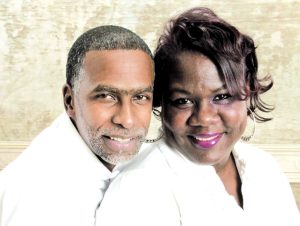
Barbara Jellison, WCCUSD’s executive director of food services, said the cooperative builds on years of work bringing fresh, organic food into school kitchens.
“The next challenge has always been how to make that possible for more districts,” Jellison said. “The Co-op gives schools a way to take what we have learned and move it to a completely different scale.”


OP-ED: The Black Church Writes AI’s Next Chapter

OP-ED: The Black Church Writes AI’s Next Chapter

WCCUSD Joins Statewide Organic School Food Purchasing Cooperative

Democrats, Community Groups Back Measure EE to Change How Oakland Is Governed

Four Tips to Help You Plan a Holiday “Staycation”

Veterans Housing Project Proposed for South Richmond
PRESS ROOM: Transformative Justice Coalition 2026 Voting Rights Champion Awards Reception ‘Yesterday Is Today: The Battle For Voting Rights

Mayor Lee Delivers 2026 State of the City Address: ‘Oakland Continues to Be on the Move’

Oakland Awarded More than $14 Million in State Funding

Jendayi Arrest Raises Community Concerns Regarding Sheriff’s Chain of Command

Marin County Supes Expand Small Business Options with Home Kitchen Pilot Program

Allen Temple Baptist Church Hosts Free Prostate Cancer Screenings on Oct. 17

AC Transit Labor Unions Back Director Joel Young

Locals Can Get Locally Grown Produce Delivered Through Urban Tilth

‘ICE-Free Marin’ Supporters Press Supervisors as County Drafts Enforcement Restrictions

Misnamed ‘Parent’ PAC Seeks to Influence Oakland School Board Elections

Oakland Post: Week of September 2 – 8, 2026

Oakland Post: Week of September 9 – 15, 2026

Richmond Tiny House Village Farm & Garden Set to Open Gates on Sept. 26

Poll: Becerra Widens His Lead Over Hilton; Californians Split on Wealth Tax

Latest Massacre in Haiti Reveals Cruelty U.S. Deportations

County Office of Education Says OUSD Finances Are Getting Healthier, Materially Stronger

OPINION: Nolan Wells’ Death One of Several Signifying Racial Terror Lives on in U.S. South

Mayor Lee Announces $1 Million Kaiser Permanente Grant for Pilot Program to Address Homelessness, Clean Up Public Spaces throughout Oakland

BLACspace Cooperative Invites Bay Area to Experience Oakland’s Black Cultural Ecosystem Through a BLAC Map Tour + Party

Democratic Clubs Interview Candidates for Oakland School Board

Oakland Post: Week of September 16 – 22, 2026

Oakland People’s Arms Embargo Coalition Demands End to Military Shipments Thru Oakland

Zakiya Jendayi Arrested, Locked Out of Home by Sheriff’s Deputies

Two Looming Threats Every Alameda County Elder Should Know About

The Conversation With Al McFarlane 6/23/26

Media Monday 6/22/26

LIVE! ASK ALMA! — TUES. 6.23.26 7PM EST

Car Buying Secrets: 4 Hidden Checks Before You Sign!

Is This 550 HP Charger Worth YOUR Money? AutoNetwork Review

Celebrating Juneteenth – Frederick Douglass on education and resistance

LIVE! — ASK ALMA! — TUES. 6.19.26 7PM EST

Hyundai Ioniq 5 Parking, Safety, and 360 View #shorts

2025 Ioniq 5 New Wiper & Powerful Performance! #shorts

Electric SUV Range: Is 259 Miles Enough? #shorts

EV Charging: How Fast Can You Charge an Electric Vehicle? #shorts

Biometric Cooling… Messaging Seats…Come on! 2025 Infiniti QX80 Autograph 4WD

Charged Up: Witness the Magic of a Fully Electric Car! #shorts

Range Rover Sport PHEV Included…: See What’s Inside This Luxury SUV! #shorts

Invisible Hood View: Perfect Parking with X-Ray Vision! #shorts
-
 Economy3 weeks ago
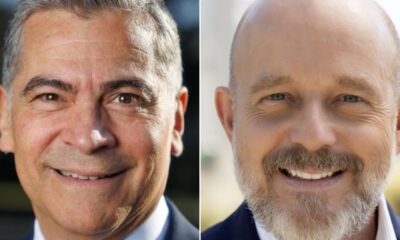
Poll: Becerra Widens His Lead Over Hilton; Californians Split on Wealth Tax
-
 Business3 weeks ago
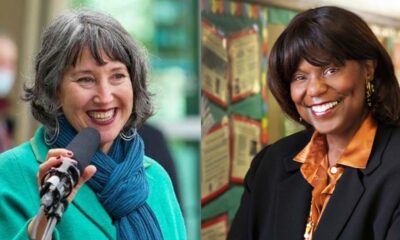
County Office of Education Says OUSD Finances Are Getting Healthier, Materially Stronger
-
 Business4 weeks ago
Mayor Lee Announces $1 Million Kaiser Permanente Grant for Pilot Program to Address Homelessness, Clean Up Public Spaces throughout Oakland
-
 Art3 weeks ago
BLACspace Cooperative Invites Bay Area to Experience Oakland’s Black Cultural Ecosystem Through a BLAC Map Tour + Party
-
 Activism4 weeks ago
Oakland Post: Week of September 16 – 22, 2026
-
 Uncategorized4 weeks ago
Oakland People’s Arms Embargo Coalition Demands End to Military Shipments Thru Oakland
-
 Lead Story2 weeks ago
Zakiya Jendayi Arrested, Locked Out of Home by Sheriff’s Deputies
-
 Community4 weeks ago
Two Looming Threats Every Alameda County Elder Should Know About
