
Environment
Earth’s Natural Force Rangers Show Kids Benefit of Protecting the Environment
WASHINGTON INFORMER — ENF reaches out to children between the ages of 5-12 through school and community performances, television broadcasts, and social media promotion. But be clear, there is plenty of Ranger work to be done, both in front of and behind the scenes.

By Lee Ross and Shantella Y. Sherman
When Xavier Myles first saw the dance moves and uniforms of Earth’s Natural Force (ENF) Rangers, during an environmental program last year, the 7-year-old Northeast resident could hardly contain himself. Xavier’s mother said her son was so concerned about environmental abuses that he had single-handedly convinced the family to adopt recycling and neighborhood clean-up activities at home and in local parks.
“ENF Rangers made him feel right at home for loving the environment and wanting to preserve the wonderful greenery around our city,” Elaine Myles, Xavier’s mother told the Informer. “It is important to have environmentally-conscious young kids, especially African Americans, from your neighborhood, working towards a shared goal, especially when so many environmental issues disproportionately impact people of color.”
Myles’ enthusiasm demonstrates the power and reach of ENF’s mission to teach youth at very young ages and encourage them to take responsibility for the care and protection of the environment.
Raina Coleman, an ENF Ranger, has been with the organization since 2013. Now a freshman in high school, Coleman plays on the girls basketball team, is a visual artist, and a talented performer with the Rangers.
“Being an ENF Ranger helped me learn more about the environment and why it’s important to do things now before it’s too late,” Coleman said. “I have asthma and allergies and so I think we do a good job of teaching kids that the Earth wasn’t always like this and it’s up to us kids to take care of it now so there won’t be any more children being born with asthma and allergies.”

Coleman said that kids have the power to change the world, and with the right tools, they will be become the next line of defense against negative environmental changes.
ENF reaches out to children between the ages of 5-12 through school and community performances, television broadcasts, and social media promotion. But be clear, there is plenty of Ranger work to be done, both in front of and behind the scenes.
“I love performing in front of little kids because it’s really, cool to see them dancing along to our songs,” Coleman told The Informer. “We practice for weeks just for an hour-long show. It’s fun, but a lot of work. I’ve been performing with the Rangers since I was eight and believe it makes a tremendous impact on other young people.”
ENF encourages youth to stop littering, recycle trash and offers them an alternative way of looking at the world around them. They become, in essence, protectors and defenders of the natural world around them and what they call, their fellow “Earth-Mates.”
“We really want to impress upon schools and family participants the importance of doing their small part to save the planet – as small efforts turn into large movements,” ENF Founder and CEO, Allen C. Burriss said. “We’ve incorporated fun, games, and environmental displays and presentations into the day and we are sure it will have a phenomenal impact on attendees. We want our young people to understand they can be a force for good and they have the power to save the planet by being responsible citizens of the Earth.”
This article originally appeared in the Washington Informer.










Bay Area
CITY OF SAN LEANDRO STATE OF CALIFORNIA PUBLIC WORKS DEPARTMENT ENGINEERING DIVISION NOTICE TO BIDDERS FOR ANNUAL STREET OVERLAY/REHABILITATION 2019-21 – PHASE III
WORK DESCRIPTION: The work to be done consists of roadway paving, base cement stabilization, concrete curb ramps, driveways, sidewalks, curbs and gutters, traffic detection loops and pavement striping, and doing all appurtenant work in place and ready for use, all as shown on the plans and described in the specifications with the title indicated in Paragraph 1 above, and on file in the office of the City Engineer. Reference to said plans and specifications is hereby made for further particulars.

PROJECT NO. 2020.0050
BID NO. 25-26.011
- BID OPENING: The bidder shall complete the “Proposal to the City of San Leandro” form contained in the Contract Book. The proposal shall be submitted in its entirety. Incomplete proposals will be considered non-responsive. Sealed bids containing the completed Proposal Section subject to the conditions named herein and in the specifications for ANNUAL STREET OVERLAY/REHABILITATION 2019-21 – PHASE III/PROJECT NO. 2020.0050 addressed to the City of San Leandro will be received at City Hall, 835 East 14th Street, 2nd Floor San Leandro at the office of the City Clerk up to 3:00 p.m. on Thursday, March 19, 2026, at which time they will be publicly opened and read.
- WORK DESCRIPTION: The work to be done consists of roadway paving, base cement stabilization, concrete curb ramps, driveways, sidewalks, curbs and gutters, traffic detection loops and pavement striping, and doing all appurtenant work in place and ready for use, all as shown on the plans and described in the specifications with the title indicated in Paragraph 1 above, and on file in the office of the City Engineer. Reference to said plans and specifications is hereby made for further particulars.
- OBTAINING THE PROJECT PLANS AND CONTRACT BOOK: The project plans and Contract Book may be obtained free of charge from the City’s website at:https://www.sanleandro.org/Bids.aspx Bidders who download the plans are encouraged to contact the City of San Leandro Public Works Department Engineering division at 510-577-3428 to be placed on the project planholder’s list to receive courtesy notifications of addenda and other project information. Project addenda, if any, will be posted on the website. A bidder who fails to address all project addenda in its proposal may be deemed non-responsive.Bidders may also purchase the Project Plans and Contract Book from East Bay Blueprint & Supply Co., at 1745 14th Street, Oakland, CA 94606; Phone Number: (510) 261-2990 or email: ebbp@eastbayblueprint.com.
- PRE-BID CONFERENCE: A mandatory pre-bid conference will be held on Tuesday, February 24, 2026, at 2:00 PM and on Wednesday, February 25, 2026, at 10:00 AM as follows:
Tuesday, February 24, 2026, at 2:00 PM
Zoom Meeting ID: 883 8752 6074
Passcode: 502955
Zoom Link: https://sanleandro-org.zoom.us/j/88387526074?pwd=hZ5rjB8AWdLAUem3CtByFiZxqKarHj.1
And - Wednesday, February 25, 2026, at 10:00 AM
Zoom Meeting ID: 898 2672 0472
Passcode: 091848
Zoom Link: https://sanleandro-org.zoom.us/j/89826720472?pwd=JgZX2nXMpLSRM5xDPr7EJUxl7QIznr.1The information presented at the conferences will be identical, all bidders must attend one of the pre-bid conference and sign the attendance sheet. A firm that didn’t attend the pre-bid conference isn’t qualified to bid on the project.Questions regarding the plans and specifications may be submitted in writing to the project engineer until 5:00 p.m. five (5) days before, excluding Saturdays, Sundays and Holidays, bids must be received by the City. The City will not respond to oral questions outside of the pre-bid conference. The response, if any, will be by written addendum only. Oral responses do not constitute a revision to these plans or specifications. - VALUE OF WORK: The Engineer has estimated that the value of work is between $1,000,000 and $5,000,000.
- SAN LEANDRO BUSINESS PREFERENCE AND PARTICIPATION GOALS: The work performed under this contract is subject to Section 1-6-225 of the San Leandro Municipal Code regarding local business preference and participation. A list of companies that hold a San Leandro business license is located on the City webpage under the finance department, here: https://www.sanleandro.org/340/Business-License
- SAN LEANDRO COMMUNITY WORKFORCE AGREEMENT: The work performed under this contract is subject to the Community Workforce Agreement adopted by City Council Resolution 2015-104. Contractors attention is directed to Section 10.
Dated: February 13, 2026 Sarah Bunting, City Clerk

Activism
New Bill, the RIDER Safety Act, Would Support Transit Ambassadors and Safety on Public Transit
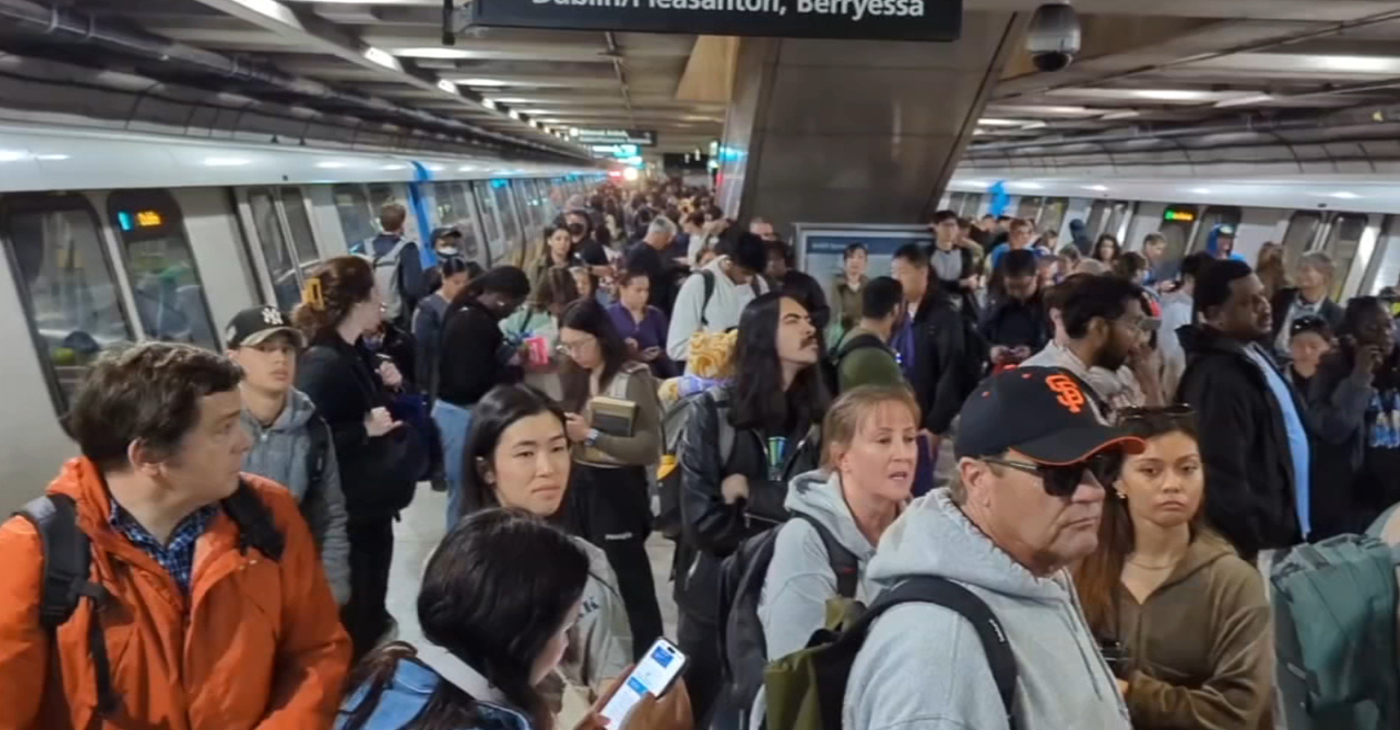
The RIDER Safety Act would allow public transit agencies to hire transit ambassadors trained in de-escalation, crisis response, and rider education and engagement. Acting as a visible, non-enforcement presence to deter low-level incidents and reduce conflict, transit ambassadors would ease the burden from law enforcement and enhance public safety.
By Post Staff
A new federal bill would support transit ambassador, or transit support specialist, programs at public transit agencies across the country.
The bill, (D-CA-12), H.R. 6069, the Rapid Intervention and Deterrence for Enhanced Rider Safety Act, or the RIDER Safety Act, was introduced Jan. 30 by Congresswoman Lateefah Simon. (D-CA-12), H.R. 6069, the Rapid Intervention and Deterrence for Enhanced Rider Safety Act, or the RIDER Safety Act.
This legislation is based on Congresswoman Simon’s work at Bay Area Rapid Transit (BART) to create a first-in-the-nation Transit Ambassador Program, which previously earned a prestigious nationwide award for “Innovation in Public Safety.”
She announced the bill at a press conference at the 19th Street BART Station alongside BART leaders and other supporters.
The RIDER Safety Act would allow public transit agencies to hire transit ambassadors trained in de-escalation, crisis response, and rider education and engagement. Acting as a visible, non-enforcement presence to deter low-level incidents and reduce conflict, transit ambassadors would ease the burden from law enforcement and enhance public safety.
This bill would also create jobs provide meaningful work, training opportunities, and a pathway for career growth in local communities. In the House of Representatives, the bill is also co-led by Representatives Shomari Figures (AL-02), Nellie Pou (NJ-09), Mark DeSaulnier (CA-10), and John Garamendi (CA-08).
“I am incredibly proud to champion the RIDER Safety Act in Congress and continue my work to ensure transit is safe, accessible, and affordable to everyone. We have seen the success of the transit ambassador programs here in the East Bay, and I am dedicated to bringing this proven public safety model to the rest of the country,” said Congresswoman Simon.
“These are strong local jobs for people who want to support public safety on transit and serve as a resource to individuals who may be in crisis or in need of services,” she continued. “Strengthening safety on transit benefits us all and helps ensure our public transportation systems remain places of opportunity, dignity, and trust.”
“This bill is critical to ensure the safety of every passenger who relies on public transportation across the country,” said Congresswoman Nellie Pou. “The RIDER Safety Act builds on successful transit models already implemented in communities, including the Bay Area Rapid Transit (BART) through the leadership of Congresswoman Lateefah Simon during her time as BART President. By providing transit stations with medically trained, unarmed personnel, we can strengthen safety standards, reduce fare evasion, and give riders a greater peace of mind when getting from one place to the next.”
Bo Tefu
Trump’s White House Pushes to Control California Wildfire Recovery
The executive order signed Jan. 27 by President Donald Trump directs federal agencies to explore regulations that could override California and municipal permitting rules for homes and other structures destroyed in the fires. Land-use and rebuilding permits have traditionally been handled by cities and counties, making the move an unprecedented federal intervention into disaster recovery.
By Bo Tefu, California Black Media
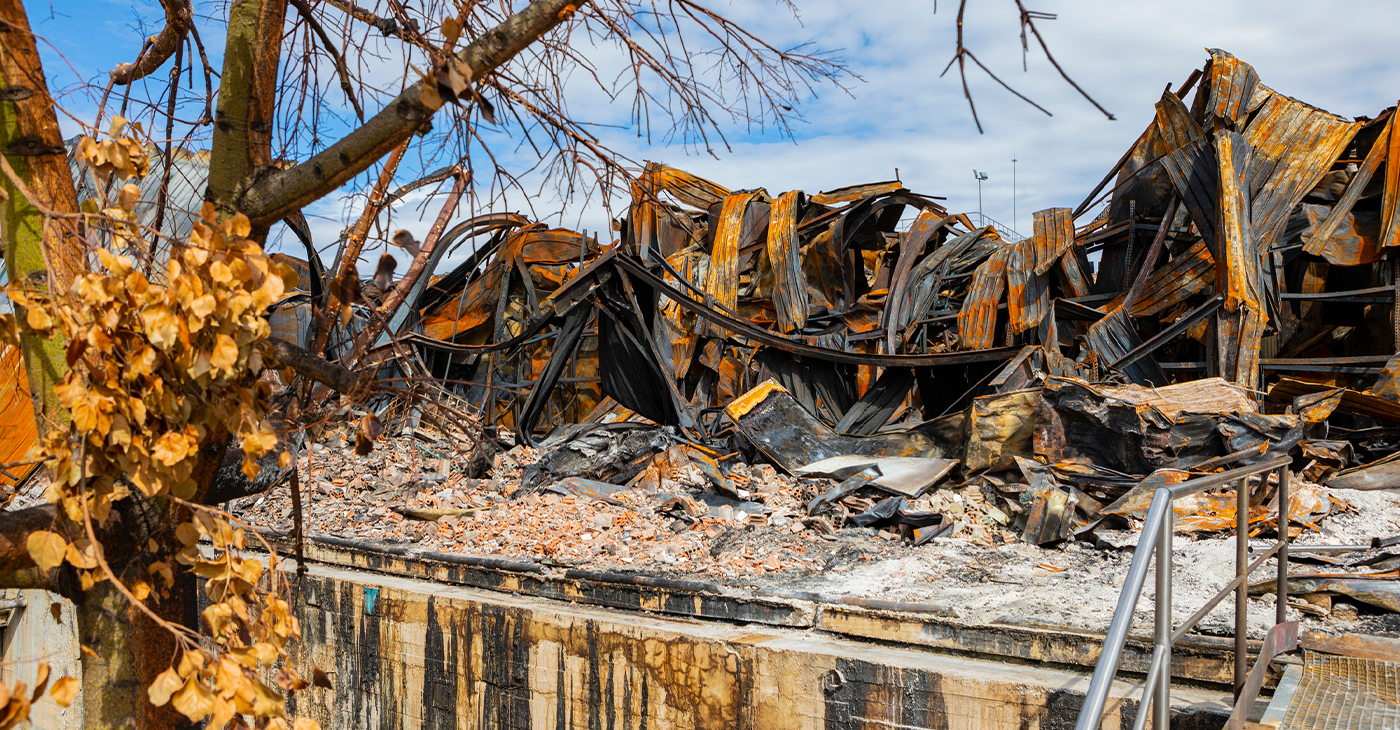
The White House is moving to take control of wildfire recovery efforts in the Los Angeles County area, issuing an executive order that would shift rebuilding permit authority from state and local governments to the federal government following the January 2025 Palisades and Eaton fires.
The executive order signed Jan. 27 by President Donald Trump directs federal agencies to explore regulations that could override California and municipal permitting rules for homes and other structures destroyed in the fires. Land-use and rebuilding permits have traditionally been handled by cities and counties, making the move an unprecedented federal intervention into disaster recovery.
“I want to see if we can take over the city and state and just give the people their permits they want to build,” Trump told the media when signing the order.
The Palisades and Eaton fires destroyed about 16,000 homes, businesses, and other structures across Pacific Palisades, Altadena, and surrounding areas. According to local data, roughly 4,700 applications to rebuild have been submitted, with about 2,000 approved so far. Officials say the pace of rebuilding is consistent with recovery timelines from other major wildfires in California, where reconstruction often takes several years.

Gov. Gavin Newsom and Los Angeles Mayor Karen Bass quickly condemned the order, stating that it is unnecessary and legally questionable. Disaster recovery experts echoed those concerns, pointing to constitutional limits on federal authority over land-use decisions.
Trump’s order calls on the Federal Emergency Management Agency (FEMA) and the Small Business Administration to consider allowing builders to self-certify compliance with health and safety regulations to receive federal approval.
The dispute has become another flashpoint in the ongoing political battle between Trump and Newsom. The governor has requested $33 billion in federal disaster aid that has not yet been approved, while survivors continue to face challenges related to insurance payouts, high rebuilding costs, and legal disputes tied to the cause of the fires.
“Instead of finally sending to Congress the federal relief Los Angeles needs to rebuild from last year’s firestorms, Donald Trump continues to live in fantasy land,” Newsom wrote on X.
Bass said the White House could speed recovery by approving disaster aid and pushing insurers and lenders to support affected residents.
Trump’s order calls for draft regulations within 30 days and final rules within 90 days.

WORK FROM HOME
Home-based business with potential monthly income of $10K+ per month. A proven training system and website provided to maximize business effectiveness. Perfect job to earn side and primary income. Contact Lynne for more details: Lynne4npusa@gmail.com 800-334-0540


Black Artists in America, Installation Three Wraps at the Dixon Gallery and Gardens

Grief, Advocacy, and Education: A Counselor Reflects on Black Maternal Health

Future of Florida’s Black History Museum in Limbo

New Research Shows the Many Benefits of Early Learning

South Hampton K-8 Students Among Top 10 Finalists for Samsung’s ‘Solve for Tomorrow’ Competition

Cuba: No Negotiation with US on the President or Political System

Brooklyn Academy of Music Names Jamaican-Born Tamara McCaw as President

Trinidad & Tobego – U.S. Launches WhatsApp Channel for American Citizens in the Country

Oakland Post: Week of March 18 – 24, 2026

AI Innovation vs. Ethics and Environmental Impact

AI, Web3, and Digital Reparations

What If You Owned Your AI Agent?

Season 7, Episode 3 – January Reporter’s Roundtable 📱

Season 7, Episode 3 – January Reporter’s Roundtable

AI, Media, and Power | Part 2, Real-World Impacts and Tradeoffs

Oakland Post: Week of February 11 – 17, 2026

Reflecting on Black History Milestones in Birmingham AL

CITY OF SAN LEANDRO STATE OF CALIFORNIA PUBLIC WORKS DEPARTMENT ENGINEERING DIVISION NOTICE TO BIDDERS FOR ANNUAL STREET OVERLAY/REHABILITATION 2019-21 – PHASE III

Oakland Post: Week of February 18 – 24, 2026

PRESS ROOM: NBA Hall of Fame Nominee Terry Cummings Joins 100 Black Men of DeKalb County to Launch Victory & Values Initiative

Oakland Post: Week of February 25 – March 3, 2026

Trump’s MAGA Allies are Creating Executive Order Plan to Steal the 2026 Midterms

U.S. manufacturing rebounds – how foundry services are adapting to rising demand

OP-ED: One Hundred Years of Black Workers Telling the Truth

Advancements in solar technology that are changing the way we power the world

Chase Oakland Community Center Hosts Alley-Oop Accelerator Building Community and Opportunity for Bay Area Entrepreneurs

Poll Shows Support for Policies That Help Families Afford Child Care

Oakland Post: Week of March 4 – 10, 2026

PRESS ROOM: Civil Rights TV Launches in Selma as the World’s First 24/7 Civil Rights Television Network

Ghana Mourns a Son of the African World

Hyundai Ioniq 5 Parking, Safety, and 360 View #shorts

2025 Ioniq 5 New Wiper & Powerful Performance! #shorts

Electric SUV Range: Is 259 Miles Enough? #shorts

EV Charging: How Fast Can You Charge an Electric Vehicle? #shorts

Biometric Cooling… Messaging Seats…Come on! 2025 Infiniti QX80 Autograph 4WD

Charged Up: Witness the Magic of a Fully Electric Car! #shorts

Range Rover Sport PHEV Included…: See What’s Inside This Luxury SUV! #shorts

Invisible Hood View: Perfect Parking with X-Ray Vision! #shorts

AI Is Reshaping Black Healthcare: Promise, Peril, and the Push for Improved Results in California

ESSAY: Technology and Medicine, a Primary Care Point of View

Sanctuary Cities

The RESISTANCE – FREEDOM NOW

STATE OF THE PEOPLE: Freddie

ECONOMIC BOYCOTT DAY!!!!!

I told You So
-
 #NNPA BlackPress4 weeks ago
Poll Shows Support for Policies That Help Families Afford Child Care
-
 Activism4 weeks ago
Oakland Post: Week of March 4 – 10, 2026
-

 #NNPA BlackPress3 weeks ago
Woman’s Search for Family’s Roots Leads to Ancestor John T. Ward – A Successful Entrepreneur and Conductor on the Underground Railroad
-

 #NNPA BlackPress4 weeks ago
OP-ED: NNPA Launches 2026 “Leadership Matters” Video Series
-

 #NNPA BlackPress3 weeks ago
Advocates Raise Alarm Over ICE Operation, MOU and Detention Risks in Baltimore County
-

 #NNPA BlackPress3 weeks ago
COMMENTARY: Women of Color Shape Our Past and Future
-

 #NNPA BlackPress3 weeks ago
Pete Buttigieg to Join Mayor Randall Woodfin for Community Town Hall in Birmingham
-

 Activism2 weeks ago
Oakland Post: Week of March 11 -17, 2026
