Connect with us

Bay Area

Dream Fund: Entrepreneurs Can Apply for $10,000 Grants Through $35M State Program

Although a number of reports suggest that the outlook has begun to be more positive as the U.S. economy continues to bounce back defying the odds, and many Black businessowners have also become more optimistic, access to credit and technical support remain a challenge for many who had to dip into their own finances to keep their lights on.

Published

on

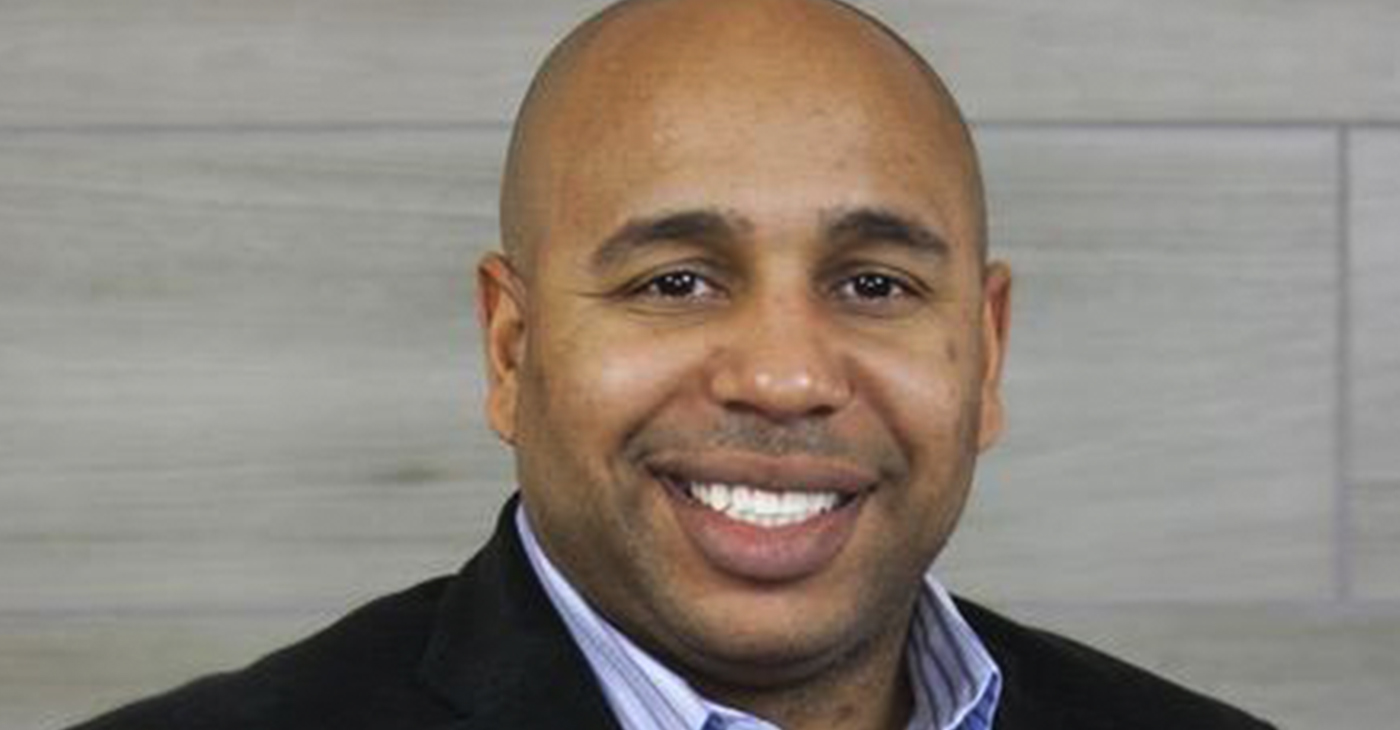
Everett Sands, CEO Lendistry. Lendistry photo. 

By Tanu Henry, California Black Media

Since 2017, there has been a 9.8% increase of new small businesses — firms with less than 500 employees — in the United States. Over the past two years alone, over 10 million applications were submitted to start new small businesses across the country, according to the Small Business Administration.

That growth trend is true for California, too, where there are about 4.1 million small businesses, the most in the country. Those companies make up 99.8% of all business in California and employ about 7.2 million people.

But for Black-owned and other minority owned small businesses across the country, there was a steep decline in numbers, almost 41%, due to the pandemic, a Census Population Survey found in 2020. During that same time, nearly 44% of minority-owned small businesses were at risk of shutting down, a Small Business Majority report found.

Although a number of reports suggest that the outlook has begun to be more positive as the U.S. economy continues to bounce back defying the odds, and many Black businessowners have also become more optimistic, access to credit and technical support remain a challenge for many who had to dip into their own finances to keep their lights on.
Recognizing the outsized contribution small businesses make to the health of the California economy and the hit many of the smallest of small business have taken during the pandemic, the California Office of the Small Business Advocate (CalOSBA) has been making grants of up to $25,000 to small business in the state.

In its latest round of funding called the Dream Fund, which is now accepting applications on a rolling basis, CalOSBA has partnered with Lendistry, a Los Angeles-based, minority-led small business and commercial real estate lender to administer the $35 million grant portion of its program. The fund provides $10,000 to each small business that qualifies.

To become eligible, California-based small business owners will have to complete training at one of the centers run by the state’s Technical Assistance Expansion Program (TAEP) and receive a certificate.

“For the millions of Californians that have dreams of owning their own business, this grant coupled with one-on-one counseling and business expertise from hundreds of counselors at our eighty-seven Technical Assistance Centers, has the power to jumpstart their dreams,” says Tara Lynn Gray, director of CalOSBA.

Jay King, president and CEO of the Sacramento-based California Black Chamber of Commerce, says he applauds Gov. Gavin Newsom for understanding the historic systemic challenges minority businesses face and for “doing something about it.”

But giving Black businesses grants are not a “cure-all,” he says.

“It is like putting a Band-Aid on a bullet wound if we don’t do more to really fix the problems small businesses face,” King explains. “Ninety-six percent of Black businesses are mini- or micro- that means they make less than $100,000 or less than $35,000 a year, respectively,” King continued. “Only 4% of our businesses earn more than $100,000 annually. We have to put more resources and technical support around these businesses.”

King says informing Black business owners about opportunities like the Dream Fund and making sure they know how to apply for or access the funding is critical to making sure the people who need the help gets it.

“You have to get down into our communities,” he said. “You have to reach people through groups that are plugged into our communities to get the word out. We do not hear about these kinds of programs enough. We definitely don’t benefit from them enough.”

Everett K. Sands, the CEO of Lendistry, says he is excited to help California’s new businesses access the capital they need to “begin on their journeys.

“Over the past two years, almost 10 million new businesses have been created in the U.S.,” he says. “With record numbers of new small businesses entering the marketplace, many of which are owned by women and minorities, programs like California Dream Fund pave the way for a more robust and equitable economy as these new businesses make the leap from employing just their founders to employing their communities.”


Tanu Henry | California Black Media

Tanu Henry | California Black Media

Activism

Discrimination in City Contracts

The report was made public by Councilmember Carroll Fife, who brought it this week to the Council’s Life Enrichment Committee, which she chairs. Councilmembers, angry at the conditions revealed, unanimously approved the informational report, which is scheduled to go to an upcoming council meeting for discussion and action. The current study covers five years, 2016-2021, roughly overlapping the two tenures of Libby Schaaf, who served as mayor from January 2015 to January 2023.

Published

on

Dr. Eleanor Ramsey (top, left) founder, and CEO of Mason Tillman Associates, which conducted the study revealing contract disparities, was invited by District 3 Councilmember Carroll Fife (top center) to a Council committee meeting attended by Oakland entrepreneur Cathy Adams (top right) and (bottom row, left to right) Brenda Harbin-Forte, Carol Wyatt, and councilmembers Charlene Wang and Ken Houston. Courtesy photos.

Disparity Study Exposes Oakland’s Lack of Race and Equity Inclusion

Part 1

By Ken Epstein

A long-awaited disparity study funded by the City of Oakland shows dramatic evidence that city government is practicing a deeply embedded pattern of systemic discrimination in the spending of public money on outside contracts that excludes minority- and woman-owned businesses, especially African Americans.

Instead, a majority of public money goes to a disproportionate handful of white male-owned companies that are based outside of Oakland, according to the 369-page report produced for the city by Mason Tillman Associates, an Oakland-based firm that performs statistical, legal and economic analyses of contracting and hiring.

The report was made public by Councilmember Carroll Fife, who brought it this week to the Council’s Life Enrichment Committee, which she chairs. Councilmembers, angry at the conditions revealed, unanimously approved the informational report, which is scheduled to go to an upcoming council meeting for discussion and action.

The current study covers five years, 2016-2021, roughly overlapping the two tenures of Libby Schaaf, who served as mayor from January 2015 to January 2023.

The amount of dollars at stake in these contracts was significant in the four areas that were studied, a total of $486.7 million including $214.6 million on construction, $28.6 million on architecture, and engineering, $78.9 million on professional services, and $164.6 million on goods and services.

While the city’s policies are good, “the practices are not consistent with policy,” said Dr. Eleanor Ramsey, founder and CEO of Mason Tillman Associates.

There have been four disparity studies during the last 20 years, all showing a pattern of discrimination against women and minorities, especially African Americans, she said. “You have good procurement policy but poor enforcement.”

“Most minority- and women-owned businesses did not receive their fair share of city-funded contracts,” she continued.  “Over 50% of the city’s prime contract dollars were awarded to white-owned male businesses that controlled most subcontracting awards. And nearly 65% of the city’s prime contracts were awarded to non-Oakland businesses.”

As a result, she said, “there is a direct loss of revenue to Oakland businesses and to business tax in the city…  There is also an indirect loss of sales and property taxes (and) increased commercial office vacancies and empty retail space.”

Much of the discrimination occurs in the methods used by individual city departments when issuing outside contracts. Many departments have found “creative” ways to circumvent policies, including issuing “emergency” contracts for emergencies that do not exist and providing waivers to requirements to contract with women- and minority-owned businesses, Ramsey said.

Many of the smaller contracts – 59% of total contracts issued – never go to the City Council for approval.

Some people argue that the contracts go to a few big companies because small businesses either do not exist or cannot do the work. But the reality is that a majority of city contracts are small, under $100,000, and there are many Black-, woman- and minority-owned companies available in Oakland, said Ramsey.

“Until we address the disparities that we are seeing, not just in this report but with our own eyes, we will be consistently challenged to create safety, to create equity, and to create the city that we all deserve,” said Fife.

A special issue highlighted in the disparity report was the way city departments handled spending of federal money issued in grants through a state agency, Caltrans. Under federal guidelines, 17.06%. of the dollars should go to Disadvantaged Business Enterprises (DBEs).

“The fact is that only 2.16% of all the dollars awarded on contracts (went to) DBEs,” Ramsey said.

Speaking at the committee meeting, City Councilmember Ken Houston said, “It’s not fair, it’s not right.  If we had implemented (city policies) 24 years ago, we wouldn’t be sitting here (now) waiving (policies).”

“What about us? We want vacations. We want to have savings for our children. We’re dying out here,” he said.

Councilmember Charlene Wang said that she noticed when reading the report that “two types of business owners that are consistently experiencing the most appalling discrimination” are African Americans and minority females.

“It’s gotten worse” over the past 20 years, she said. “It’s notable that businesses have survived despite the fact that they have not been able to do business with their own city.”

Also speaking at the meeting, Brenda Harbin-Forte, a retired Alameda County Superior Court judge, and chair of the Legal Redress Committee for the Oakland NAACP, said, “I am so glad this disparity study finally was made public. These findings … are not just troubling, they are appalling, that we have let  these things go on in our city.”

“We need action, we need activity,” she said. “We need for the City Council and others to recognize that you must immediately do something to rectify the situation that has been allowed to go on. The report says that the city was an active or inactive or unintentional or whatever participant in what has been going on in the city. We need fairness.”

Cathy Adams, president of the Oakland African American Chamber of Commerce, said, “The report in my opinion was very clear. It gave directions, and I feel that we should accept the consultant Dr. Ramsey’s recommendations.

“We understand what the disparities are; it’s going to be upon the city, our councilmembers, and our department heads to just get in alignment,” she said.

Said West Oakland activist Carol Wyatt, “For a diverse city to produce these results is a disgrace. The study shows that roughly 83% of the city contracting dollars went to non-minority white male-owned firms under so-called race neutral policies

These conditions are not “a reflection of a lack of qualified local firms,” she continued. “Oakland does not have a workforce shortage; it has a training, local hire, and capacity-building problem.”

“That failure must be examined and corrected,” she said. “The length of time the study sat without action, only further heightens the need for accountability.”

Continue Reading

Activism

Post Newspaper Invites NNPA to Join Nationwide Probate Reform Initiative

The Post’s Probate Reform Group meets the first Thursday of every month via Zoom and invites the public to attend.  The Post is making the initiative national and will submit information from its monthly meeting to the NNPA to educate, advocate, and inform its readers.

Published

on

iStock.
iStock.

By Tanya Dennis

The National Newspaper Publishers Association (NNPA) represents the Black press with over 200 newspapers nationwide.

Last night the Post announced that it is actively recruiting the Black press to inform the public that there is a probate “five-alarm fire” occurring in Black communities and invited every Black newspaper starting from the Birmingham Times in Alabama to the Milwaukee Times Weekly in Wisconsin, to join the Post in our “Year of Action” for probate reform.

The Post’s Probate Reform Group meets the first Thursday of every month via Zoom and invites the public to attend.  The Post is making the initiative national and will submit information from its monthly meeting to the NNPA to educate, advocate, and inform its readers.

Reporter Tanya Dennis says, “The adage that ‘When America catches a cold, Black folks catch the flu” is too true in practice; that’s why we’re engaging the Black Press to not only warn, but educate the Black community regarding the criminal actions we see in probate court: Thousands are losing generational wealth to strangers. It’s a travesty that happens daily.”

Venus Gist, a co-host of the reform group, states, “ Unfortunately, people are their own worst enemy when it comes to speaking with loved ones regarding their demise. It’s an uncomfortable subject that most avoid, but they do so at their peril. The courts rely on dissention between family members, so I encourage not only a will and trust [be created] but also videotape the reading of your documents so you can show you’re of sound mind.”

In better times, drafting a will was enough; then a trust was an added requirement to ‘iron-clad’ documents and to assure easy transference of wealth.

No longer.

As the courts became underfunded in the last 20 years, predatory behavior emerged to the extent that criminality is now occurring at alarming rates with no oversight, with courts isolating the conserved, and, I’ve  heard, many times killing conservatees for profit. Plundering the assets of estates until beneficiaries are penniless is also common.”

Post Newspaper Publisher Paul Cobb says, “The simple solution is to avoid probate at all costs.  If beneficiaries can’t agree, hire a private mediator and attorney to work things out.  The moment you walk into court, you are vulnerable to the whims of the court.  Your will and trust mean nothing.”

Zakiya Jendayi, a co-host of the Probate Reform Group and a victim herself, says, “In my case, the will and trust were clear that I am the beneficiary of the estate, but the opposing attorney said I used undue influence to make myself beneficiary. He said that without proof, and the judge upheld the attorney’s baseless assertion.  In court, the will and trust is easily discounted.”

The Black press reaches out to 47 million Black Americans with one voice.  The power of the press has never been so important as it is now in this national movement to save Black generational wealth from predatory attorneys, guardians and judges.

The next probate reform meeting is on March 5, from 7 – 9 p.m. PST.  Zoom Details:
Meeting ID: 825 0367 1750
Passcode: 475480

All are welcome.

Continue Reading

Activism

Community Celebrates Turner Group Construction Company as Collins Drive Becomes Turner Group Drive

The event drew family, friends, and longtime supporters of Turner Group Construction, along with a host of dignitaries. The mood was joyful and warm, filled with hugs, handshakes and belated New Year’s greetings. Guests enjoyed hors d’oeuvres and a festive display of gourmet cupcakes as they conversed about the street sign reveal. 

Published

on

The Turner Construction group members.

By Carla Thomas 

It was a family affair on Friday, Jan. 23, at the corner of Hegenberger Road and Collins Drive in East Oakland as community members, local leaders, and elected officials gathered to celebrate the renaming of Collins Drive to Turner Group Drive. The renaming saluted the Turner Group’s 45-plus years of economic development and community investment.

The event drew family, friends, and longtime supporters of Turner Group Construction, along with a host of dignitaries. The mood was joyful and warm, filled with hugs, handshakes and belated New Year’s greetings. Guests enjoyed hors d’oeuvres and a festive display of gourmet cupcakes as they conversed about the street sign reveal.

Special guests included former Alameda County Supervisor Keith Carson, veteran broadcaster Valerie Coleman-Morris, Chevron Senior Public Affairs Representative Andrea Bailey, community leaders Cephus “Uncle Bobby” Johnson and Beatrice “Aunt Bea” Johnson of the Oscar Grant Foundation, and Oakland City Councilmembers Ken Houston, Carroll Fife, and Kevin Jenkins. Members of WEBCORE, the Nor Cal Carpenters Union, the National Association of Minority Contractors (NAMC), Swinerton and Alten construction companies, activists Elaine Brown and David Newton, and many others joined the celebration.

Inside the event tent, an emotional Oakland City Councilmember Ken Houston spoke of his deep connection to the Turner family.

“I grew up on the same street with the Turners,” he said. “When my father passed away, their parents and siblings embraced me like family. This is our city, and it’s an honor to name this street Turner Group Drive because of the love and effort this company and family have given. Many dreams came out of this building. I wouldn’t be where I am today without the Turners.”

Councilmember Kevin Jenkins, whose father once taught the Turner brothers, added, “Len Turner is an amazing person. He’ll help anyone.”

Oakland Mayor Barbara Lee praised the company’s legacy, noting its creation of the Construction Resource Center, which trains and mentors the next generation of builders and developers through partnerships across the region. “This is a great day for Oakland and a profound acknowledgment of the Turner Group’s contribution to our community,” she said.

Fife echoed that sentiment: “This is a day for celebrating Black excellence. The Turner Group has poured into people and the community, showing us what’s possible.”

Among the many family members in attendance was the Turners’ 92-year-old patriarch, whose presence underscored the strength of the family’s legacy.

A touching highlight of the event came when Coleman-Morris was honored for her lasting mentorship of LaTanya Hawkins, now program manager of the Construction Resource Center. In 1979, Hawkins, then a fourth-grader, wrote Coleman-Morris a letter seeking advice. Coleman responded with words of encouragement that inspired Hawkins to pursue her dreams. The two stayed in touch for decades. On stage, they embraced as Coleman reflected on “the power of small acts of kindness to change a life.”

Coleman-Morris also shared reflections on leadership and community spirit, saying, “If we change the way we look at things, the things we see will change.” She then recited the Serenity Prayer, reminding the crowd, “We are a powerful community, we just need to believe it.”

Company leaders Len and Lance Turner closed the ceremony with words of gratitude and humor. Len thanked his mother, wife, family, legal team, and longtime supporters including Carson, Geoffrey Pete, and the late Dorothy King of Everett & Jones Barbecue. He also acknowledged the challenges the company had overcome, saying, “Without all of this support, I wouldn’t be here today.”

Through Turner Group Construction and the Construction Resource Center, the Turners have created new opportunities for underrepresented groups in the construction industry and continue to inspire the next generation of builders.

Continue Reading

Subscribe to receive news and updates from the Oakland Post

* indicates required

CHECK OUT THE LATEST ISSUE OF THE OAKLAND POST

ADVERTISEMENT

WORK FROM HOME

Home-based business with potential monthly income of $10K+ per month. A proven training system and website provided to maximize business effectiveness. Perfect job to earn side and primary income. Contact Lynne for more details: Lynne4npusa@gmail.com 800-334-0540

Facebook

Trending

Copyright ©2021 Post News Group, Inc. All Rights Reserved.