
Activism
Dismantling Pipelines to Prison: Fresh Lifelines for Youth (FLY) Reimagines Opportunity for Young People
“Some of the greatest success stories we’ve had is with youth who have been resistant to the process and wanting support,” said Trevor Arceneaux, Associate Director of FLY’s Alameda County operations. “FLY does a really great job at building authentic and trusting relationships with youth. Seeing the change and the walls being torn down and they’re able to engage with us in a different way and let us into their lives where we can understand and learn their needs. Then, we’re able to tap into their genius and get them to operate in the community with a different way.”

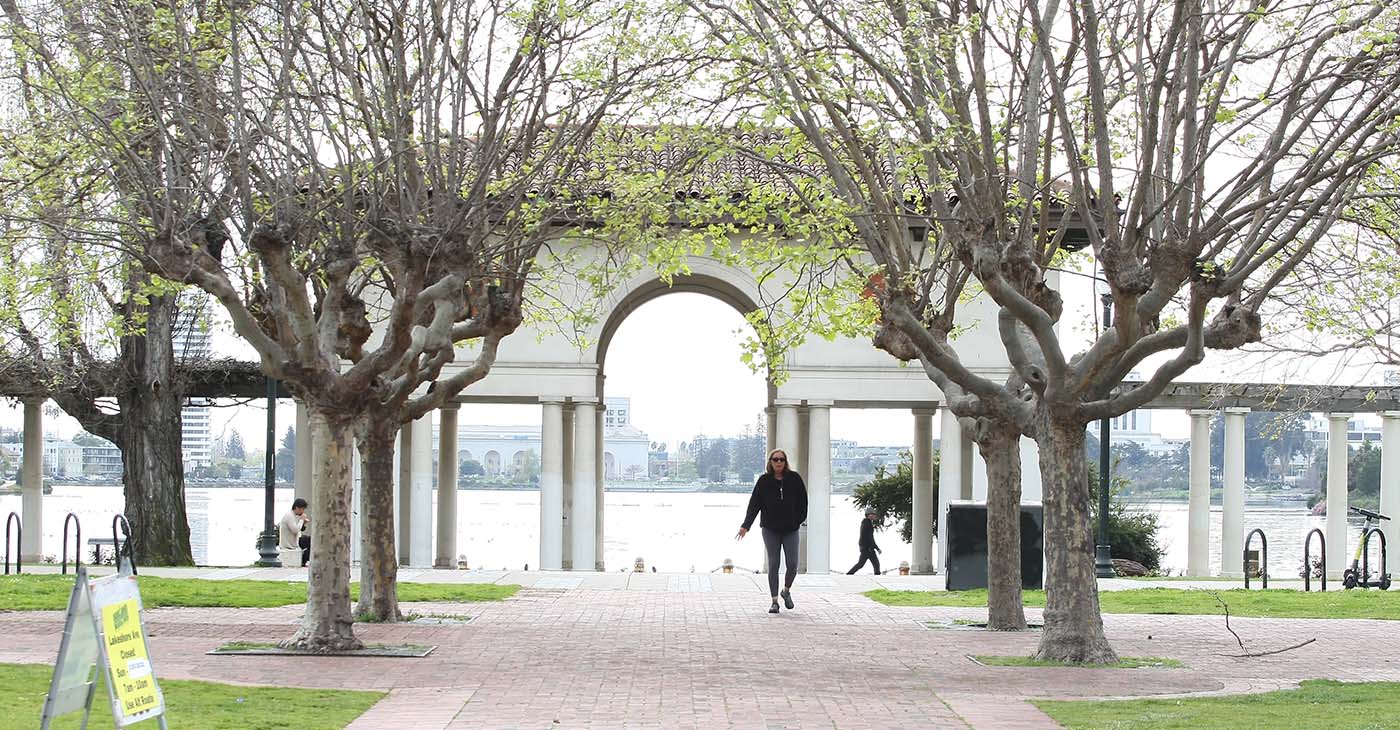
Edward Henderson | Impact Alameda
The ACLU defines the school to prison pipeline as a “national trend wherein children are funneled out of public schools and into the juvenile and criminal justice systems.”
Many of the children that fall into this pipeline have learning disabilities, are victims of neglect, abuse, and would benefit from additional services.
However, too many of them have also been subjected to systematic zero-tolerance policies that criminalize minor infractions and serve as catapults, feeding more children into the pipeline to prison.
Fresh Lifelines for Youth (FLY), is an Oakland-based organization dedicated to dismantling the school to prison pipeline by equipping youth with knowledge of the law and empowering youth with a community of supporters that amplify their voices.

FLY’s mission is poetic in the sense that the voices of youth who fell victim to the prison pipeline served as the foundation for the organization’s creation.
Back in 1995, Christa Gannon, FLY’s founder and Stanford University Law School graduate, would often converse with teens facing significant prison time about services that could steer other children away from incarceration.
In many of their responses, the children mentioned education of the law — to know the consequences of poor choices – as well as having role models and opportunities to be of service to their communities. Those ideas are the pillars that FLY was built on.
“Education is power,” said Trevor Arceneaux, Associate Director of FLY’s Alameda County operations. “There are a lot of opportunities to practice that power. It helps to develop a young person’s critical consciousness of the world and how they see it. A lot of times our young people are actively in this pipeline, and they can name it and see it. We can give them options on how to solve these real-world issues.”
In 2000, FLY transitioned to a non-profit, building on the concepts of law education and empowerment. Today, FLY is now one of the Bay Area’s most respected agencies working with youth who are currently or formerly involved in the juvenile justice system.
With 70 staff and more than 200 volunteers, FLY serves more than 2,000 youth throughout the Bay Area each year, ranging from ages 11 to 24.
“Some of the greatest success stories we’ve had is with youth who have been resistant to the process and wanting support,” said Arceneaux. “FLY does a really great job at building authentic and trusting relationships with youth. Seeing the change and the walls being torn down and they’re able to engage with us in a different way and let us into their lives where we can understand and learn their needs. Then, we’re able to tap into their genius and get them to operate in the community with a different way.”
These authentic connections are fostered in the many programs FLY offers to equip youth with the knowledge and confidence they need to navigate life and avoid pitfalls.
In Alameda County FLY offers 4 core programs that provide pivotal services and education.
The Court Appointed Friend and Advocate (CAFA) Mentor Program pairs youth with mentors to meet weekly and support them in developing new behaviors, ambitions and attitudes. Each mentor/mentee pairing has a FLY case manager for support who also attends monthly group activities organized by FLY. All mentors are also granted legal standing to act as advocates for their mentees in the courtroom and at schools.
The FLY Law Program is an interactive 8-to-12-week course covering topics such as police encounters, accomplice liability, three strikes, theft, vandalism, drugs, gangs, and police arrests. The curriculum also touches on critical life skills like anger management, problem solving, conflict resolution, and resisting negative peer pressure. Mid-way through the semester, youth take a field trip to a local university law school where they tour the campus and act out a mock trial in the moot courtroom.
The Leadership Training Program helps youth build the skills and attitudes they need to live a crime-free, self-sufficient life. The program traditionally kicks off with a three-day wilderness retreat that enables youth to break away from negative influences and stresses and begin bonding with FLY staff and peers, developing trust and teamwork skills. (Because of the pandemic, virtual or socially distanced activities have replaced the retreats.) Following the retreat, youth meet monthly to support each other in group settings and to design projects in which they advocate for positive change and give back to their communities. Each young person receives intensive coaching from a FLY case manager to identify and address their greatest barriers.
The STAY FLY Program is a reentry program that develops social emotional learning skills and knowledge of the law in youth ages 18-25. A three-tier system is implemented to support youth as they transition back into the community. Law-related education, pro-social events and civic engagement activities, along with case management and coaching are offered to participants.
“Youth really love being around FLY staff,” said Arceneaux. “That’s more important to me than anything. They are going to remember the connections they have. When I see youth cracking jokes or hitting up staff to tell them about an accomplishment, that lets me know we’re doing what we’re supposed to be doing. We’re really pushing youth to use their voice. In the next three to five years, you’re going to hear about former or current FLY youth advocating or pushing for systematic change. Tapping into their sense of agency and impacting the entire world.”





Activism
Oakland Post: Week of September 30 – October 6, 2026
The printed Weekly Edition of the Oakland Post: Week of September 30 – October 6, 2026

To enlarge your view of this issue, use the slider, magnifying glass icon or full page icon in the lower right corner of the browser window.
Activism
Oakland Post: Week of September 23 – 29, 2026
The printed Weekly Edition of the Oakland Post: Week of September 23 – 29, 2026

To enlarge your view of this issue, use the slider, magnifying glass icon or full page icon in the lower right corner of the browser window.
Activism
Oakland Post: Week of September 16 – 22, 2026
The printed Weekly Edition of the Oakland Post: Week of September 16 – 22, 2026

To enlarge your view of this issue, use the slider, magnifying glass icon or full page icon in the lower right corner of the browser window.



OP-ED: Proposition 44 Would Put a Price on Trust

OP-ED: Proposition 40: It’s Time to Play Chess, Not Checkers

Listening as a Lifeline: A Doula’s Witness to Black Maternal Health

New Protections for Ticket Buyers: Gov. Newsom Signs Assemblymember Isaac Bryan’s Bill

‘We Don’t Talk Trash — We Pick Up Trash!’

Zakiya Jendayi Arrested, Locked Out of Home by Sheriff’s Deputies

Oakland Post: Week of September 30 – October 6, 2026

Asm. Corey Jackson Announces Launch of 24-Hour Childcare in His District

IN MEMORIAM: The Rev. Leon “Sonny” Clark, Longtime Orange County Pastor and Community Leader, Dies at 72

Poll: Becerra Widens His Lead Over Hilton; Californians Split on Wealth Tax

From Historic Memories to New Possibilities: Oakland Celebrates Coliseum 60

County Office of Education Says OUSD Finances Are Getting Healthier, Materially Stronger

LIVE FREE Sunday Dinner Brings Faith, Fellowship and Civic Conversation to Oakland

Remembering Chauncey Bailey as Student Journalists Face Threats to Truth-Telling

BLACspace Cooperative Invites Bay Area to Experience Oakland’s Black Cultural Ecosystem Through a BLAC Map Tour + Party

Standoff for Justice: Our Homes Are Worth Fighting For

Oakland Post: Week of August 26 – September 1, 2026

Frontier Airlines’ Return to Oakland Airport Brings Flights, Jobs and Opportunity

Gubernatorial Candidate Steve Hilton Blasts California New Tire Rules; Newsom Hits Back

Chef Sharon Lee Blends Culinary Excellence, Education and Empowerment

Jackie Wright Champions Bay Area Stories, Filmmakers and Cultural Institutions

Misnamed ‘Parent’ PAC Seeks to Influence Oakland School Board Elections

Oakland Coliseum Project Opens Door for Small Businesses to Build Bigger

Gov. Newsom’s Latest Appointees Include Sacramento Advocate for Formerly Incarcerated Students; State’s New Tech Chief

Big City Mayors Ask for “Yes” Vote on Housing Bond Measure; Conservatives Say “No”

Longtime BWOPA Member Brendalyn Goodall Appointed to California Workforce Development Board

Oakland Post: Week of September 2 – 8, 2026

Gov. Newsom Signs Law Shielding Immigration Aid Workers From Doxing Threats

Secretary of State Shirley N. Weber Urges Californians to Vote Early as Voter ID Battle Intensifies

IN MEMORIAM: Dolly Parton Dead at 80 — How She Built a Legacy of Love and Earned Her Place in Black Culture

The Conversation With Al McFarlane 6/23/26

Media Monday 6/22/26

LIVE! ASK ALMA! — TUES. 6.23.26 7PM EST

Car Buying Secrets: 4 Hidden Checks Before You Sign!

Is This 550 HP Charger Worth YOUR Money? AutoNetwork Review

Celebrating Juneteenth – Frederick Douglass on education and resistance

LIVE! — ASK ALMA! — TUES. 6.19.26 7PM EST

Hyundai Ioniq 5 Parking, Safety, and 360 View #shorts

2025 Ioniq 5 New Wiper & Powerful Performance! #shorts

Electric SUV Range: Is 259 Miles Enough? #shorts

EV Charging: How Fast Can You Charge an Electric Vehicle? #shorts

Biometric Cooling… Messaging Seats…Come on! 2025 Infiniti QX80 Autograph 4WD

Charged Up: Witness the Magic of a Fully Electric Car! #shorts

Range Rover Sport PHEV Included…: See What’s Inside This Luxury SUV! #shorts

Invisible Hood View: Perfect Parking with X-Ray Vision! #shorts
-
 Community4 weeks ago
Misnamed ‘Parent’ PAC Seeks to Influence Oakland School Board Elections
-

 Activism4 weeks ago
Oakland Post: Week of September 9 – 15, 2026
-

 Community4 weeks ago
Richmond Tiny House Village Farm & Garden Set to Open Gates on Sept. 26
-

 Black History4 weeks ago
Latest Massacre in Haiti Reveals Cruelty U.S. Deportations
-

 Black History4 weeks ago
OPINION: Nolan Wells’ Death One of Several Signifying Racial Terror Lives on in U.S. South
-

 Business3 weeks ago
Mayor Lee Announces $1 Million Kaiser Permanente Grant for Pilot Program to Address Homelessness, Clean Up Public Spaces throughout Oakland
-

 Community4 weeks ago
Democratic Clubs Interview Candidates for Oakland School Board
-
 Uncategorized2 weeks ago
Oakland People’s Arms Embargo Coalition Demands End to Military Shipments Thru Oakland
