
Bay Area
Congresswoman Barbara Lee Introduces Bill to Address Food Insecurity’s Impact on Chronic Health Conditions
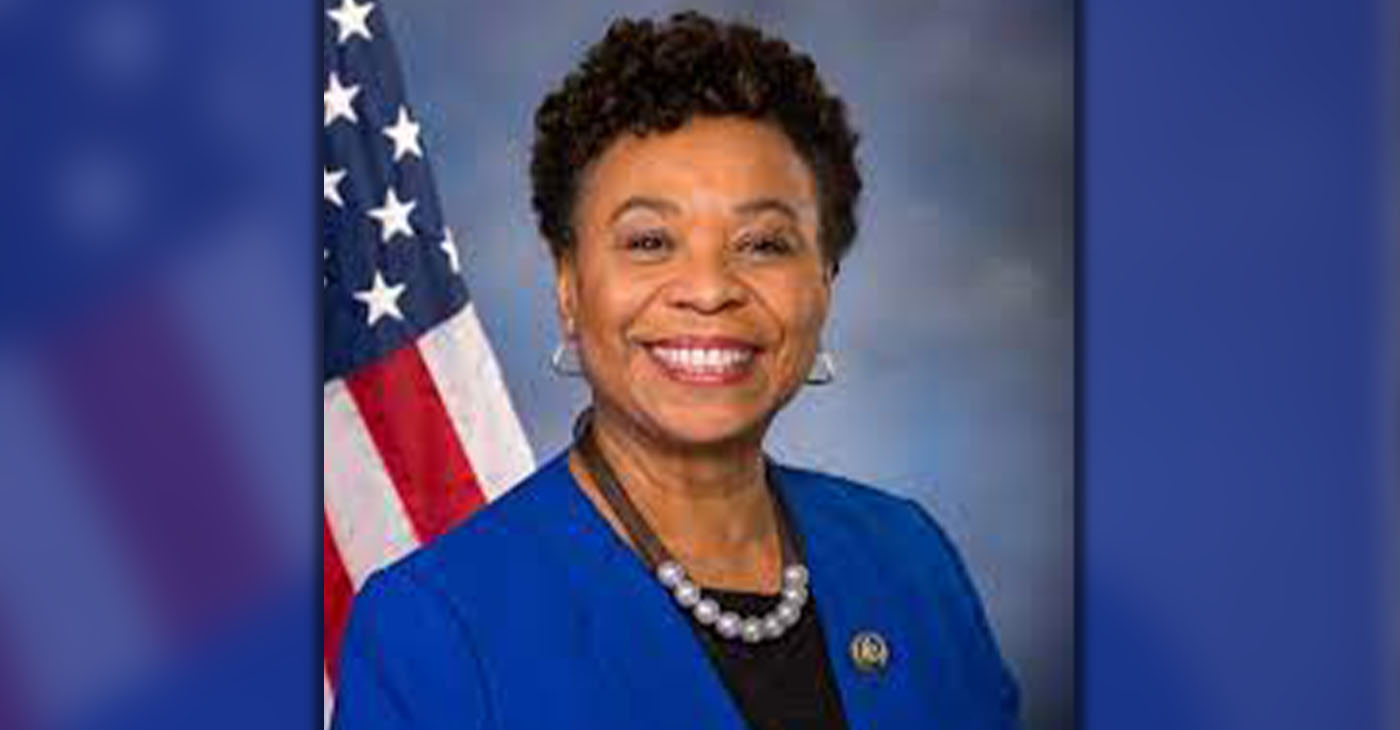
Congresswoman Barbara Lee introduced the National Food as Medicine Act on Wednesday. Food as Medicine affirms the connection between food and health and recognizes that access to high-quality nourishment is essential for well-being. This legislation would reduce nutrition-related chronic diseases and food insecurity and improve health and racial equity in the United States, and would increase Americans’ access to healthy, nutritious, organic, and affordable foods, as well as behavioral services such as health coaching and nutrition counseling, especially in low-income communities.

By Nico Ballón

Special to The Post
Congresswoman Barbara Lee introduced the National Food as Medicine Act on Wednesday. Food as Medicine affirms the connection between food and health and recognizes that access to high-quality nourishment is essential for well-being.
This legislation would reduce nutrition-related chronic diseases and food insecurity and improve health and racial equity in the United States, and would increase Americans’ access to healthy, nutritious, organic, and affordable foods, as well as behavioral services such as health coaching and nutrition counseling, especially in low-income communities.
“Good, nutritious foods are the cornerstone of good health,” said Lee. “Yet far too many Americans, especially in low-income communities and communities of color, lack access to affordable, nutritious food. A national Food as Medicine program will reduce health care costs, improve health outcomes, and improve the quality of life for generations to come, especially for patients with diet-related chronic diseases. It our responsibility to end hunger and begin to transform our “disease care system” to a true health care system. Food as Medicine is the path to do just that.”
In 2023, over 18 million U.S. households were food insecure. A landmark 2018 study demonstrated that an unhealthy diet is the leading cause of death in the United States, surpassing tobacco use, high blood pressure, and obesity, and causing more than half a million deaths per year in the United States. A growing body of research demonstrates that using healthy food, termed “medically supportive food,” in a clinical setting helps the healthcare system address food and nutrition insecurity, chronic disease, racial and health equity, and the intersections between them. This is further evidenced by work being spearheaded in Alameda County and their Recipe4Health “Food as Medicine” model.
The National Food as Medicine Act would:
- Establish a Food as Medicine Waiver Grant program to establish, implement, and expand Food as Medicine interventions to reduce nutrition-related chronic conditions and improve health
- Establish a USDA Food as Medicine Technical Assistant Program to support producers to connect with local health care systems to provide for FAM interventions
- Direct the HHS Secretary to develop and issue Food as Medicine guidance to states and counties to aid in the implementation, planning, and expansion of Food as Medicine programs
- Require a report to Congress from the HHS Secretary regarding the impact of Food as Medicine programs
Steven Chen, chief medical officer for Alameda County Recipe4Health, said: “Alameda County Recipe4Health applauds Congresswoman Barbara Lee’s leadership to amplify the benefits of Food as Medicine through equitable sourcing, which will ensure multiple benefits such as healthy soil, nutritious food, a healthy economy, healthy people, and a healthy planet for all.
“The National Food as Medicine Program Act will prioritize food grown regeneratively and organically by a diverse group of local and regional farmers. Patients with limited financial resources will be prescribed high quality nutrient-dense food by their health care teams to treat and prevent chronic conditions and food insecurity.
“Local farmers, farmworkers, food hubs, and community-based organizations in rural and urban America will have new economic incentives to grow and provide nutritious vegetables, fruit, and meals to benefit their communities,” Chen said.
“At Alameda Health System, we commend and stand with Congresswoman Barbara Lee in her efforts to champion the vital role of Food as Medicine and promote equitable access to healthy and nutritious food,” said James Jackson, CEO of Alameda Health System. “Food insecurity disproportionately impacts low-income communities and communities of color. In Alameda County, we have partnered with the Alameda County Health and community farmers to address those health disparities by offering patients a prescription for healthy, nutritious, locally grown foods. communities.”
Alameda County Health Director Colleen Chawla said she was incredibly grateful to Lee for her unwavering support of their Food as Medicine Program, Recipe4Health. Alameda County has been a leader in the Food as Medicine space for years, and Recipe4Health is a prime example of how innovative programs can reduce food insecurity and improve health outcomes.
Nico Ballón is a member of the staff of Rep. Barbara Lee’s media relations office.













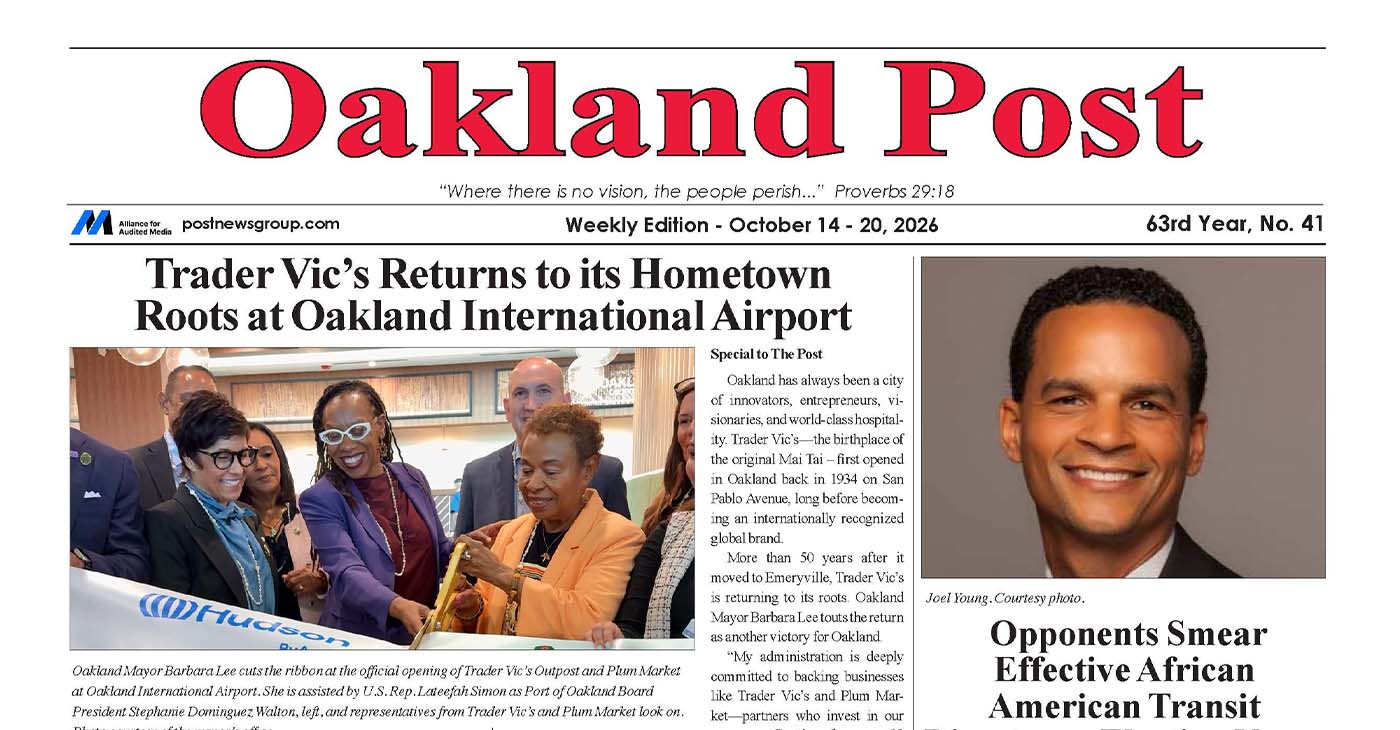
To enlarge your view of this issue, use the slider, magnifying glass icon or full page icon in the lower right corner of the browser window.
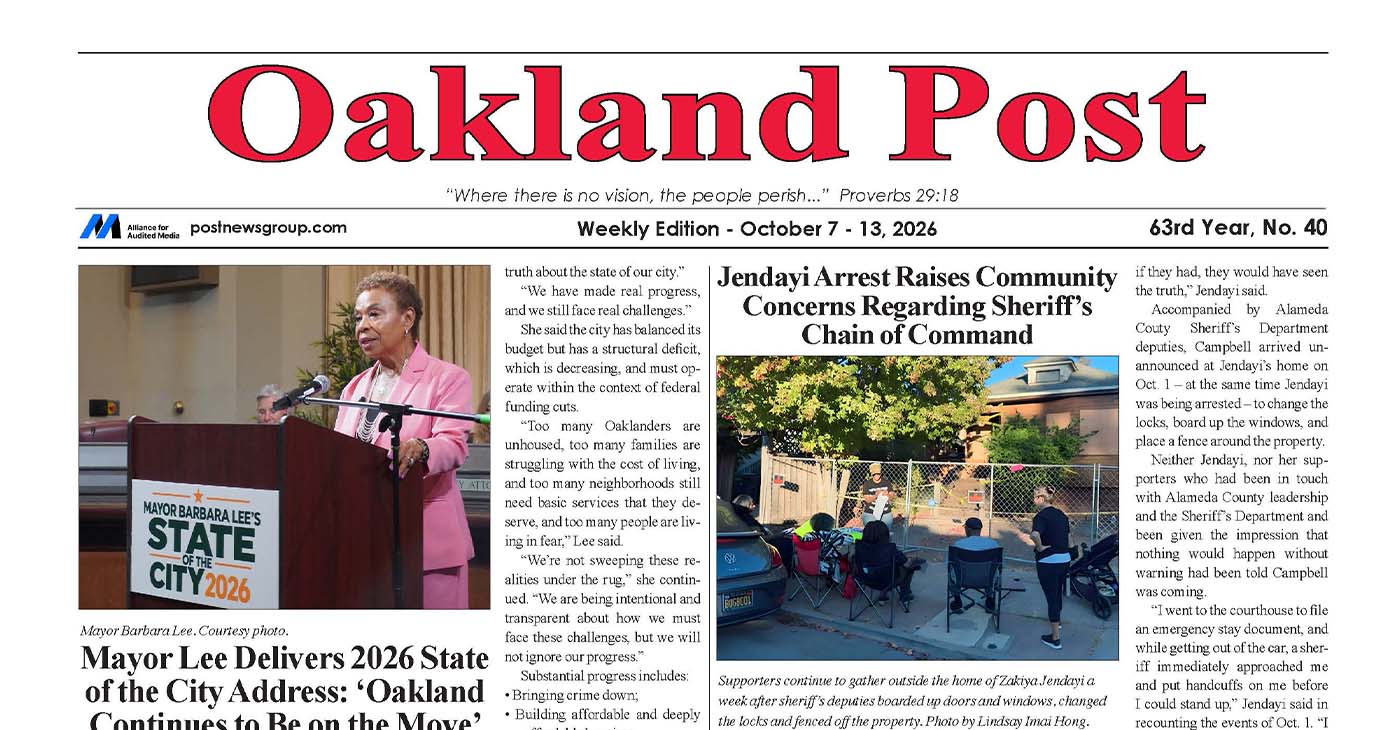
To enlarge your view of this issue, use the slider, magnifying glass icon or full page icon in the lower right corner of the browser window.
Activism
Oakland Post: Week of September 30 – October 6, 2026
The printed Weekly Edition of the Oakland Post: Week of September 30 – October 6, 2026

To enlarge your view of this issue, use the slider, magnifying glass icon or full page icon in the lower right corner of the browser window.


Mayor Barbara Lee Holds Special State of the City Address in Deep East Oakland

Practitioners of African Traditional Spirituality Offer Ancestral Reverence Ritual Oct. 31

It’s Time to Lose Weight Before the Holidays

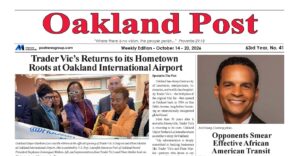
Trader Vic’s Returns to Its Oakland Roots

Oakland Coal Terminal Backed by Trump Would Be Bigger, Dirtier Than Promised, Says Report

Opponents Smear Effective African American Transit Director as Election Nears

Oakland Post: Week of October 14 – 20, 2026

OP-ED: The Black Church Writes AI’s Next Chapter

OP-ED: The Black Church Writes AI’s Next Chapter

WCCUSD Joins Statewide Organic School Food Purchasing Cooperative

Democrats, Community Groups Back Measure EE to Change How Oakland Is Governed

Four Tips to Help You Plan a Holiday “Staycation”

Veterans Housing Project Proposed for South Richmond
PRESS ROOM: Transformative Justice Coalition 2026 Voting Rights Champion Awards Reception ‘Yesterday Is Today: The Battle For Voting Rights

Mayor Lee Delivers 2026 State of the City Address: ‘Oakland Continues to Be on the Move’

Misnamed ‘Parent’ PAC Seeks to Influence Oakland School Board Elections

Oakland Post: Week of September 2 – 8, 2026

Oakland Post: Week of September 9 – 15, 2026

Poll: Becerra Widens His Lead Over Hilton; Californians Split on Wealth Tax

County Office of Education Says OUSD Finances Are Getting Healthier, Materially Stronger

Richmond Tiny House Village Farm & Garden Set to Open Gates on Sept. 26

Listening as a Lifeline: A Doula’s Witness to Black Maternal Health

Latest Massacre in Haiti Reveals Cruelty U.S. Deportations

Mayor Lee Announces $1 Million Kaiser Permanente Grant for Pilot Program to Address Homelessness, Clean Up Public Spaces throughout Oakland

OPINION: Nolan Wells’ Death One of Several Signifying Racial Terror Lives on in U.S. South

Zakiya Jendayi Arrested, Locked Out of Home by Sheriff’s Deputies

BLACspace Cooperative Invites Bay Area to Experience Oakland’s Black Cultural Ecosystem Through a BLAC Map Tour + Party

Oakland Post: Week of September 16 – 22, 2026

Oakland People’s Arms Embargo Coalition Demands End to Military Shipments Thru Oakland

Democratic Clubs Interview Candidates for Oakland School Board

The Conversation With Al McFarlane 6/23/26

Media Monday 6/22/26

LIVE! ASK ALMA! — TUES. 6.23.26 7PM EST

Car Buying Secrets: 4 Hidden Checks Before You Sign!

Is This 550 HP Charger Worth YOUR Money? AutoNetwork Review

Celebrating Juneteenth – Frederick Douglass on education and resistance

LIVE! — ASK ALMA! — TUES. 6.19.26 7PM EST

Hyundai Ioniq 5 Parking, Safety, and 360 View #shorts

2025 Ioniq 5 New Wiper & Powerful Performance! #shorts

Electric SUV Range: Is 259 Miles Enough? #shorts

EV Charging: How Fast Can You Charge an Electric Vehicle? #shorts

Biometric Cooling… Messaging Seats…Come on! 2025 Infiniti QX80 Autograph 4WD

Charged Up: Witness the Magic of a Fully Electric Car! #shorts

Range Rover Sport PHEV Included…: See What’s Inside This Luxury SUV! #shorts

Invisible Hood View: Perfect Parking with X-Ray Vision! #shorts
-
 Economy3 weeks ago
Poll: Becerra Widens His Lead Over Hilton; Californians Split on Wealth Tax
-
 Business3 weeks ago
County Office of Education Says OUSD Finances Are Getting Healthier, Materially Stronger
-
 Black History2 weeks ago
Listening as a Lifeline: A Doula’s Witness to Black Maternal Health
-
 Lead Story2 weeks ago
Zakiya Jendayi Arrested, Locked Out of Home by Sheriff’s Deputies
-
 Art3 weeks ago
BLACspace Cooperative Invites Bay Area to Experience Oakland’s Black Cultural Ecosystem Through a BLAC Map Tour + Party
-
 Uncategorized4 weeks ago
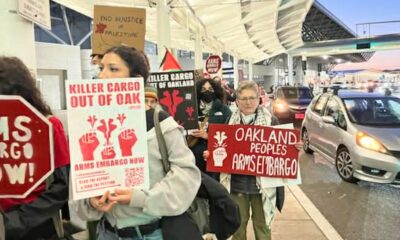
Oakland People’s Arms Embargo Coalition Demands End to Military Shipments Thru Oakland
-

 Black History4 weeks ago
Doulas Are Helping Black California Moms Navigate Pregnancy–Even as High Mortality Rates Persist
-

 Community4 weeks ago
Two Looming Threats Every Alameda County Elder Should Know About
