Connect with us

Activism

COMMENTARY: The Plan for Transforming Public Safety and Policing in the U.S.

One transformative public safety plan is currently moving forward in Ithaca, New York. It will replace the current police department with a new public safety department that will include armed officers and unarmed crisis intervention specialists. It would allow police officers to be more focused and effective while minimizing the chances that police-civilian interactions will spiral unnecessarily into violence. 

Published

on

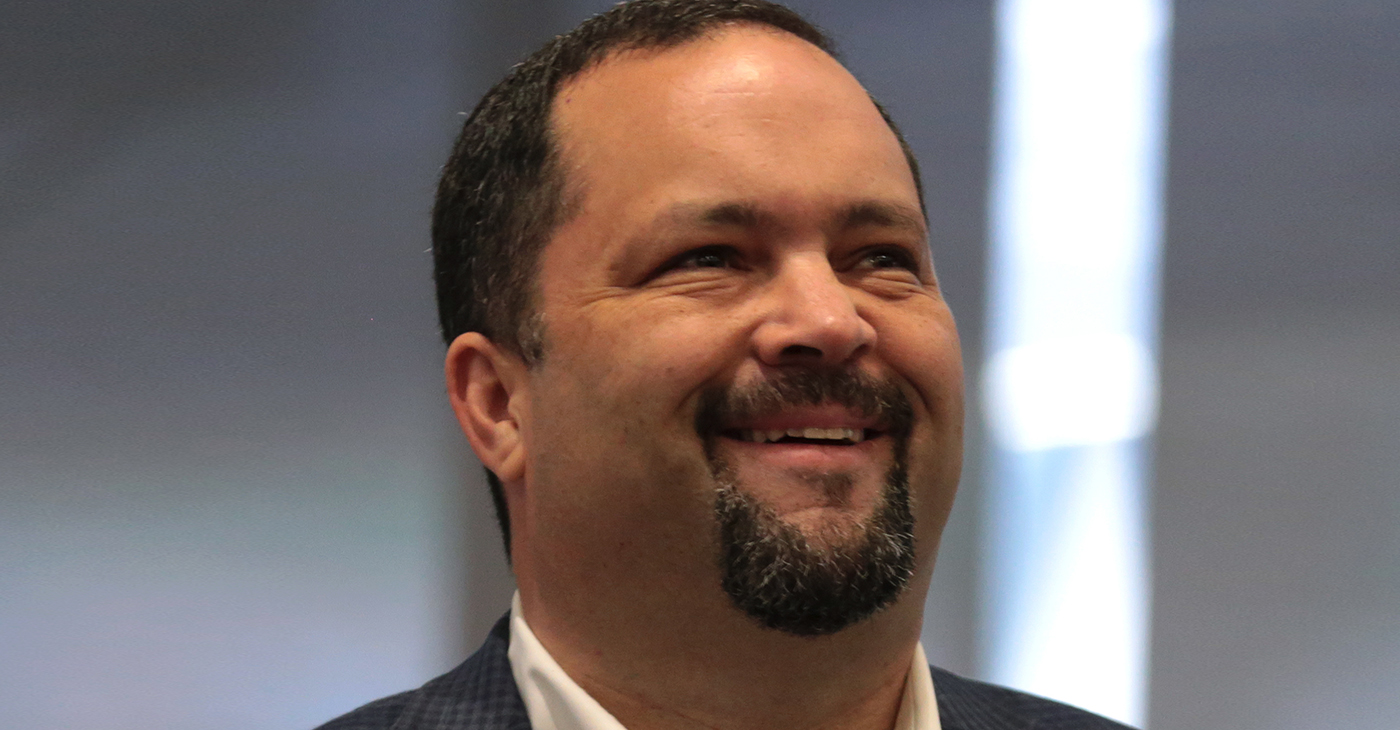
Ben Jealous serves as president of People For the American Way and Professor of the Practice at the University of Pennsylvania.
Ben Jealous serves as president of People For the American Way and Professor of the Practice at the University of Pennsylvania.

By Ben Jealous, President of People For the American Way

Communities all across the country are facing public safety crises.

Crime is rising in ways that leave many people feeling unsafe. At the same time, police violence and killings of unarmed civilians demonstrate that pouring more money into more-of-the-same policing is not the answer.

Here’s some good news. There is a new road map for public officials who are eager for solutions. And there is a growing network of mayors and other officials who are ready to do what it takes.

“All Safe: Transforming Public Safety” is a game plan for transformative change. This massive policy blueprint just published by People For the American Way is grounded in real-world data and the expertise of local elected officials, law enforcement experts, clergy, and other community activists.

There are two truths about authoritarian policing. They do not contradict each other. In fact, they point us toward the possibility of building coalitions that are broad enough to make change happen.

One truth is that Black Americans, Native Americans, and other people of color pay a disproportionate price. Black Americans are more than twice as likely as white people to be shot and killed by police officers. Racial profiling is experienced by communities of color throughout the U.S.

A second truth is that people of color are not the only victims of authoritarian policing. As with so many other issues, Black and Brown communities are the canaries in a much larger American coal mine. White people make up the second-largest group in our prisons, disproportionately low-income white men, and they make up a majority of people killed by police each year.

Four years before George Floyd died under the knee of Minneapolis police officer Derek Chauvin, a white man named Tony Timpa called Dallas police to ask for help during a mental health crisis. He was handcuffed and zip-tied and killed by an officer who pressed his knee into Timpa’s back for 14 minutes while Timpa cried, “You’re gonna kill me!”

Every community is put at risk by systems that resist accountability for those who abuse their power.

Every community is put at risk by a police culture that promotes and tolerates an aggressive “warrior” mentality among law enforcement officers.

Those problems are compounded by communities’ over-reliance on police. Over the decades, we have added additional burdens to police officers that distract them from their primary purpose. That leaves all of us underserved and less safe.

Transforming public safety requires policy change in four major areas: restructuring public safety systems to ensure communities’ underlying safety and social needs are met; holding unfit officers responsible and accountable for their actions; removing unfit officers, particularly those with a demonstrated history of violence, aggression, or other misconduct from police departments; and recruiting well-trained public safety personnel committed to serving and protecting their communities.

One transformative public safety plan is currently moving forward in Ithaca, New York. It will replace the current police department with a new public safety department that will include armed officers and unarmed crisis intervention specialists. It would allow police officers to be more focused and effective while minimizing the chances that police-civilian interactions will spiral unnecessarily into violence.

The “All Safe” roadmap for transforming public safety demolishes the false narrative often promoted by police unions and their political allies to resist change and accountability. They claim that public safety reform is incompatible with effective crime fighting. In reality, the opposite is true.

The system of authoritarian policing that we have inherited from our past is not aligned with our national ideals of equality and justice for all. It is a threat to our people, our communities, and even our democracy. And it is not working to keep us safe.

Making America safer and more just requires a commitment to address root causes of criminal activity and violence, including unjust laws, discriminatory enforcement, and insufficient effective investments in individual and community wellbeing. And it requires a lasting transformation in the U.S. public safety system, including mechanisms to hold officers accountable for excessive use of force.

We know what kind of change is necessary. Let’s make it happen.

Ben Jealous serves as president of People For the American Way and Professor of the Practice at the University of Pennsylvania.

Activism

Ann Lowe: The Quiet Genius of American Couture

Lowe was born in Clayton, Alabama, into a family of gifted seamstresses. Her mother and grandmother were well-known dressmakers who created exquisite gowns for women in the area. By the time Lowe was a young girl, she was already showing extraordinary talent — cutting, sewing, and decorating fabric with a skill that far exceeded her age. When her mother died unexpectedly, Lowe – only 16 years old then – took over her mother’s sewing business, completing all the orders herself.

Published

on

Photos courtesy of National Archives.
Photo courtesy of National Archives.

By Tamara Shiloh

Ann Cole Lowe, born Dec.14, 1898, was a pioneering American fashion designer whose extraordinary talent shaped some of the most widely recognized and celebrated gowns in U.S. history.

Although she designed dresses for society’s wealthiest families and created masterpieces worn at historic events, Lowe spent much of her life in the shadows — uncredited, underpaid, yet unmatched in skill. Today, she is celebrated as one of the first nationally recognized African American fashion designers and a true visionary in American couture.

Lowe was born in Clayton, Alabama, into a family of gifted seamstresses. Her mother and grandmother were well-known dressmakers who created exquisite gowns for women in the area. By the time Lowe was a young girl, she was already showing extraordinary talent — cutting, sewing, and decorating fabric with a skill that far exceeded her age. When her mother died unexpectedly, Lowe – only 16 years old then – took over her mother’s sewing business, completing all the orders herself. This early responsibility would prepare her for a lifetime of professional excellence.

In 1917, Lowe moved to New York City to study at the S.T. Taylor Design School. Although she was segregated from White students and forced to work separately, she, of course, excelled, graduating earlier than expected. Her instructors quickly recognized that her abilities were far above the typical student, especially her skill in hand-sewing, applique, and intricate floral embellishment – techniques that would become her signature.

Throughout the 1920s and 1930s, she designed gowns for high-society women in Florida and New York, operating boutiques and working for prestigious department stores. Her reputation for craftsmanship, originality, and elegance grew increasingly. She was known for creating gowns that moved beautifully, featured delicate hand-made flowers, and looked sculpted rather than sewn. Many wealthy clients specifically requested “an Ann Lowe gown” for weddings, balls, and galas.

Her most famous creation came in 1953: the wedding gown worn by Jacqueline Bouvier when she married Massachusetts Sen. John F. Kennedy. The dress – crafted from ivory silk taffeta with dozens of tiny, pleated rosettes – became one of the most photographed bridal gowns in American history. Despite this achievement, Lowe received no public credit at the time. When a flood destroyed her completed gowns 10 days before the wedding, she and her seamstresses worked day and night to remake everything – at her own expense. Her dedication and perfectionism never wavered.

She eventually opened “Ann Lowe Originals,” her own salon on New York’s Madison Avenue. She served clients such as the Rockefellers, DuPonts, Vanderbilts, and actresses like Olivia de Havilland. Yet even with her wealthy clientele, she struggled financially, often undercharging because she wanted every dress to be perfect, even if it meant losing money.

Lowe’s contributions were finally recognized later in life. Today, her exquisite gowns are preserved in museums, including the Smithsonian National Museum of African American History and Culture and the Metropolitan Museum of Art.

In the last five years of her life, Lowe lived with her daughter Ruth in Queens, N.Y. She died at her daughter’s home on Feb. 25, 1981, at the age of 82, after an extended illness.

Continue Reading

Activism

2025 in Review: Seven Questions for Black Women’s Think Tank Founder Kellie Todd Griffin

As the president and CEO of the California Black Women’s Collective Empowerment Institute, Griffin is on a mission to shift the narrative and outcomes for Black women and girls. She founded the nation’s first Black Women’s Think Tank, securing $5 million in state funding to fuel policy change. 

Published

on

Kellie Todd Griffin. CBM file photo.

By Edward Henderson
California Black Media 

With more than 25 years of experience spanning public affairs, community engagement, strategy, marketing, and communications, Kellie Todd Griffin is recognized across California as a leader who mobilizes people and policy around issues that matter.

As the president and CEO of the California Black Women’s Collective Empowerment Institute, Griffin is on a mission to shift the narrative and outcomes for Black women and girls. She founded the nation’s first Black Women’s Think Tank, securing $5 million in state funding to fuel policy change.

Griffin spoke with California Black Media (CBM) about her successes and setbacks in 2025 and her hopes for 2026.

Looking back at 2025, what stands out to you as your most important achievement and why? 

Our greatest achievement in this year is we got an opportunity to honor the work of 35 Black women throughout California who are trailblazing the way for the next generation of leaders.

How did your leadership, efforts and investments as president and CEO California Black Women’s Collective Empowerment Institute contribute to improving the lives of Black Californians? 

We’re training the next leaders. We have been able to train 35 women over a two-year period, and we’re about to start a new cohort of another 30 women. We also have trained over 500 middle and high school girls in leadership, advocacy, and financial literacy.

What frustrated you the most over the last year?

Getting the question, “why.” Why advocate for Black women? Why invest in Black people, Black communities? It’s always constantly having to explain that, although we are aware that there are other populations that are in great need, the quality-of-life indices for Black Californians continue to decrease. Our life expectancies are decreasing. Our unhoused population is increasing. Our health outcomes remain the worst.

We’re not asking anyone to choose one group to prioritize. We are saying, though, in addition to your investments into our immigrant brothers and sisters – or our religious brothers and sisters – we are also asking you to uplift the needs of Black Californians. That way, all of us can move forward together.

What inspired you the most over the last year?

I’ve always been amazed by the joy of Black women in the midst of crisis.

That is really our secret sauce. We don’t let the current state of any issue take our joy from us. It may break us a little bit. We may get tired a little bit. But we find ways to express that – through the arts, through music, through poetry.

What is one lesson you learned in 2025 that will inform your decision-making next year?

Reset. It’s so important not to be sitting still. We have a new administration. We’re seeing data showing that Black women have the largest unemployment rate. We’ve lost so many jobs. We can have rest – we can be restful – but we have to continue the resistance.

In one word, what is the biggest challenge Black Californians faced in 2025?

Motivation.

I choose motivation because of the tiredness. What is going to motivate us to be involved in 2026?

What is the goal you want to achieve most in 2026?

I want to get Black Californians in spaces and places of power and influence – as well as opportunities to thrive economically, socially, and physically.

Continue Reading

Activism

BRIDGE Housing President and CEO Ken Lombard Scores Top Honors for Affordable Housing Leadership

The Development Company of the Year honor represents a milestone for BRIDGE Housing, which received the Gold award—its top designation—in a category that included both affordable and market-rate developers. The recognition caps what has been one of the strongest growth periods in the organization’s 42-year history.

Published

on

BRIDGE Housing President and CEO Ken Lombard. Courtesy of BRIDGE Housing.

By the Oakland Post Staff

San Francisco-based BRIDGE Housing and its president and CEO, Ken Lombard, have been named among the nation’s housing industry standouts, earning two of the top prizes at the 2025 Multi-Housing News Excellence Awards.

BRIDGE Housing was named Development Company of the Year, while Lombard received Executive of the Year, recognition that places the nonprofit affordable housing provider alongside leading national developers of both affordable and market-rate housing.

The awards were announced in New York for the accomplishments achieved during 2024.

Multi-Housing News is one of the industry’s most respected publications. Award winners are selected by a panel of housing professionals, including multifamily developers, architects, and owners.

“BRIDGE Housing is deeply honored to be recognized by Multi-Housing News and our industry peers,” Lombard said. “These awards are a testament to the high-impact, mission-driven work by BRIDGE’s exceptional team to deliver quality affordable housing and support services that empower residents to improve their lives.”

The Development Company of the Year honor represents a milestone for BRIDGE Housing, which received the Gold award—its top designation—in a category that included both affordable and market-rate developers. The recognition caps what has been one of the strongest growth periods in the organization’s 42-year history.

In 2024, BRIDGE significantly expanded its footprint across California, Oregon, and Washington. That momentum continued into 2025, with portfolio growth of 9%, including the addition of nine new communities and 1,187 new or acquired affordable housing units. The nonprofit also added three new projects to its development pipeline as it nears a portfolio of 16,000 units.

The growth reflects a broader strategy aimed at accelerating both acquisitions and ground-up development, supported by partnerships with major financial institutions and innovative capital markets strategies. BRIDGE has also emphasized high-quality design and deep community engagement as central elements of its approach.

BRIDGE became the first affordable housing developer to issue tax-exempt construction bonds for one of the largest affordable housing projects in Portland, Ore., leveraging its strong credit rating.

Earlier this year, the nonprofit launched the BRIDGE Housing Impact Fund, with a goal of investing $1 billion to preserve and create affordable housing. It also closed on $175 million in taxable general-obligation bonds after increasing the offering in response to strong investor demand.

The company’s performance also underscores the role of Lombard, who has led BRIDGE since 2021 and was honored individually for his leadership.

Under Lombard’s tenure, BRIDGE has built a new leadership team with experience drawn from both the nonprofit and private sectors, with a particular focus on what the organization describes as efforts to “break the status quo,” especially in affordable housing finance. Those initiatives have helped reduce capital and construction costs, strengthen relationships with institutional investors, and expand resident support services.

Today, BRIDGE Housing serves more than 33,000 residents across 139 communities on the West Coast.

“Ken has dedicated his career to innovative real estate solutions that improve the quality of life in underserved neighborhoods,” said Kenneth Novack, chair of BRIDGE Housing’s board of directors. “His visionary leadership and the work of our incredible team have positioned BRIDGE for long-term growth that will extend our impact throughout the West Coast.”

Founded in 1983, BRIDGE Housing has helped create more than 23,000 affordable homes with a total development cost of $6 billion.

Continue Reading

Subscribe to receive news and updates from the Oakland Post

* indicates required

CHECK OUT THE LATEST ISSUE OF THE OAKLAND POST

ADVERTISEMENT

WORK FROM HOME

Home-based business with potential monthly income of $10K+ per month. A proven training system and website provided to maximize business effectiveness. Perfect job to earn side and primary income. Contact Lynne for more details: Lynne4npusa@gmail.com 800-334-0540

Facebook

Shutterstock
Advice2 days ago

Support Your Child’s Mental Health: Medi-Cal Covers Therapy, Medication, and More

Photos courtesy of National Archives.
Activism2 days ago

Ann Lowe: The Quiet Genius of American Couture

Kellie Todd Griffin. CBM file photo.
Activism2 days ago

2025 in Review: Seven Questions for Black Women’s Think Tank Founder Kellie Todd Griffin

BRIDGE Housing President and CEO Ken Lombard. Courtesy of BRIDGE Housing.
Activism2 days ago

BRIDGE Housing President and CEO Ken Lombard Scores Top Honors for Affordable Housing Leadership

OUSD Supt. Denise Saddler. File photo.
Activism2 days ago

Oakland School Board Grapples with Potential $100 Million Shortfall Next Year

The ‘aunties’ playing cards. iStock photo by Andreswd.
Advice2 days ago

COMMENTARY: If You Don’t Want Your ‘Black Card’ Revoked, Watch What You Bring to Holiday Dinners

Saying “Oakland is on the move,” Mayor Barbara Lee announces results of Measure U bond sale, Dec. 9, at Oakland City Hall with city councilmembers and city staff among those present. Photo courtesy of the City of Oakland.
Activism2 days ago

Mayor Lee, City Leaders Announce $334 Million Bond Sale for Affordable Housing, Roads, Park Renovations, Libraries and Senior Centers

The Pride and Joy Band performed at the first annual Kwanzaa celebration sponsored by Fayeth Gardens. Courtesy photo.
Arts and Culture2 days ago

Fayeth Gardens Holds 3rd Annual Kwanzaa Celebration at Hayward City Hall on Dec. 28

Costco. Courtesy image.
Bay Area2 days ago

Post Salon to Discuss Proposal to Bring Costco to Oakland Community meeting to be held at City Hall, Thursday, Dec. 18

Activism3 days ago

Oakland Post: Week of December 10 – 16, 2025

Seth Curry is a point guard on the GSW team.Photo courtesy of the Golden State Warriors.
Alameda County2 weeks ago

Seth Curry Makes Impressive Debut with the Golden State Warriors

#NNPA BlackPress2 weeks ago

A Nation in Freefall While the Powerful Feast: Trump Calls Affordability a ‘Con Job’

#NNPA BlackPress2 weeks ago

The Numbers Behind the Myth of the Hundred Million Dollar Contract

#NNPA BlackPress2 weeks ago

FBI Report Warns of Fear, Paralysis, And Political Turmoil Under Director Kash Patel

#NNPA BlackPress2 weeks ago

ACA Deadline Nears as 20 million Brace for Higher Health Costs

Trending

Copyright ©2021 Post News Group, Inc. All Rights Reserved.