
Activism
COMMENTARY: The Fight to Save Affirmative Action for All of Us
These are the folks within our community who have been used by a white anti-civil rights activist named Ed Blum in an attempt to topple this thing in society that has allowed previous generations of not just Asian Americans, but all people of color, and women, and anyone else who has been qualified, to break through the color barriers in life. They just needed that benevolent boost we’ve known as “affirmative action.”


By Emil Guillermo
Don’t think for a second that Asian Americans are rooting to end affirmative action.
You might get that impression as the Supreme Court heard two cases concerning the use of race in college admissions at Harvard and the University of North Carolina.
The Harvard case in particular has Asian American plaintiffs represented by a group called Students for Fair Admissions, or SFFA.
Don’t be misled. The group isn’t representative of Asian Americans at all. They’re a minority within a minority. National polling data of Asian American voters show that nearly two-thirds actually support affirmative action.
What you’re witnessing is a classic “divide and conquer” strategy, where some Asian Americans are being used by a white anti-civil rights activist named Ed Blum, who has dedicated his life to upending diversity and race equity in society from voting rights to higher ed.
And now it looks like his time has come.
Remember, conservatives aren’t automatically against affirmative action. The late Justice Sandra Day O’Conner wasn’t—totally. To the court’s credit, it’s always allowed for race to be addressed within reason. No quotas, of course. But race has always been allowed as a factor.
Then came 2012, the Fisher v. Texas case, where Blum hand-held a white female plaintiff in an attempt to destroy the use of race in admissions at the University of Texas. It didn’t work, but Blum learned a lesson.
He realized he didn’t have a perfect victim. That was clear when even Antonin Scalia wondered aloud what the damage was to the white Fisher when she was not able to gain admission in a process where she had to compete fairly against people of color.
Indeed, what was the harm? The cost of the application fee?
So, this time, Blum found aggrieved rejections from Harvard and UNC on the internet. And he found a large group of plaintiffs among a new generation of Asian Americans immigrants from the 1990s and after, or rather their sons and daughters.
They were the ones who never quite understood why their little darlings with the straight A’s and perfect scores would be rejected from Harvard.
They have enabled Blum’s yellow-faced attack against affirmative action.
It’s created a civil war between Asian Americans, only the Mason/Dixon line is the year of your family’s immigration. 1980s? ’90s? 2000s?
These are the folks within our community who have been used by Blum in an attempt to topple this thing in society that has allowed previous generations of not just Asian Americans, but all people of color, and women, and anyone else who has been qualified, to break through the color barriers in life.
They just needed that benevolent boost we’ve known as “affirmative action.”
It’s impossible to say exactly how the court will come down on the Harvard and UNC cases. You can’t really tell by the questions asked by the justices.
Clarence Thomas took a swing at UNC by questioning the educational value of diversity.
“I didn’t go to racially diverse schools, but there were educational benefits,” he said. “And I’d like you to tell me expressly when a parent sends a kid to college, that they don’t necessarily send them there to have fun or feel good or anything like that; they send them there to learn physics or chemistry or whatever their study. So, tell me what the educational benefits are.”
North Carolina Solicitor General Ryan Park, arguing for UNC, spoke of the benefits of racial diverse environments, but not to Thomas’ satisfaction. “Well, I guess I don’t put much stock in that because I’ve heard similar arguments in favor of segregation, too.”
Thomas would be indicative of the hardline conservative attitude.
But the court’s first African American female was there, too. Associate Justice Ketanji Brown Jackson questioned the SFFA attorney about the harm the race conscious approach had in admissions. The SFFA attorney couldn’t speak to any significant harm and admitted that even whites benefitted from the system now in place.
So, why even bother with the plaintiff’s SCOTUS appeal if the lower courts have already decided Harvard and UNC’s programs weren’t discriminatory?
Well, the only thing that’s changed is the six solid, unyielding conservative justices in the high court.
You saw what they did to abortion. Would they do the same thing to affirmative action?
In a heartbeat.
That’s what worries people. A decision is expected in 2023. I’m being optimistic while I still can. Affirmative action has been a considerable tool to fight racism. Without it there’d be no BIPOC middle class.
So, what’s the ultimate way to beat a court hell-bent on playing politics?
Emil Guillermo is a journalist and commentator. He does a webshow on www.amok.com










Activism
Oakland Post: Week of March 11 -17, 2026
The printed Weekly Edition of the Oakland Post: Week of March 11 – 17, 2026
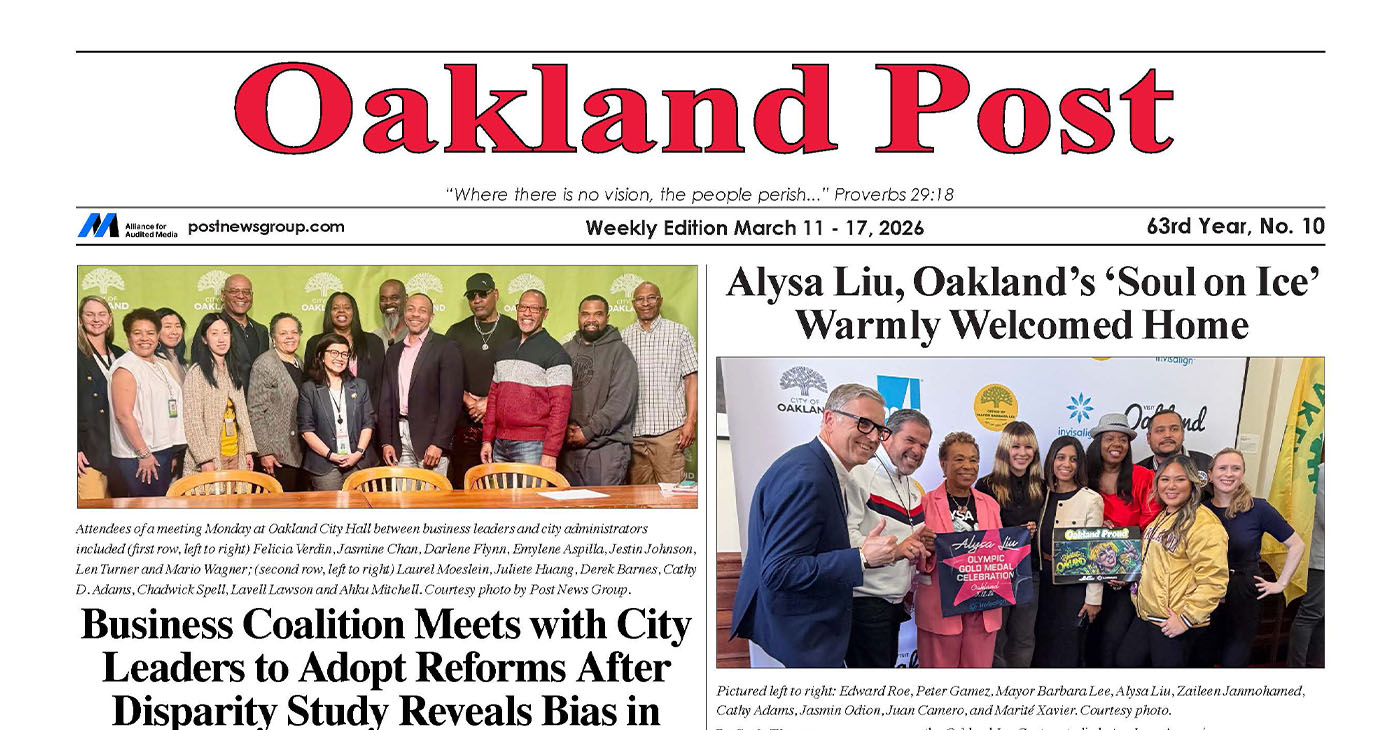
To enlarge your view of this issue, use the slider, magnifying glass icon or full page icon in the lower right corner of the browser window.
Activism
Oakland Post: Week of March 4 – 10, 2026
The printed Weekly Edition of the Oakland Post: Week of March 4 – 10, 2026
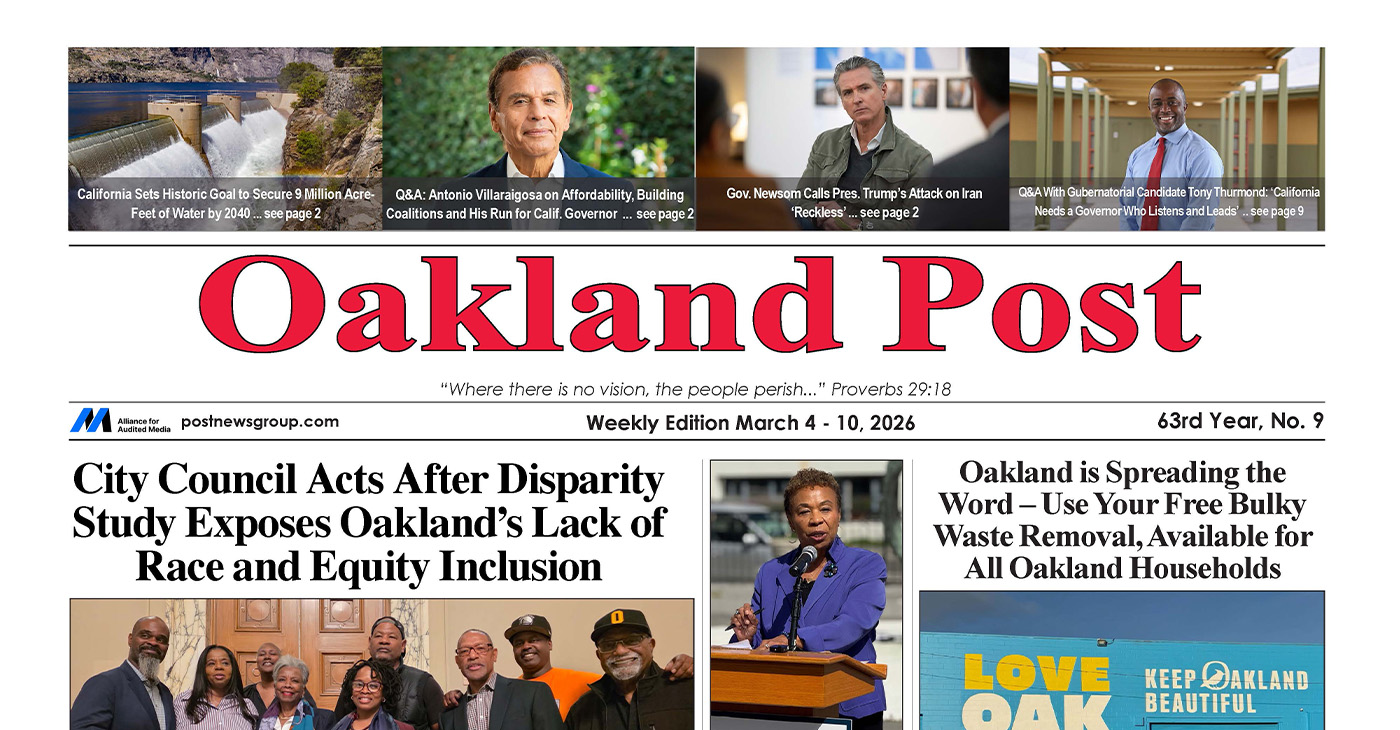
To enlarge your view of this issue, use the slider, magnifying glass icon or full page icon in the lower right corner of the browser window.
Activism
Oakland Post: Week of February 25 – March 3, 2026
The printed Weekly Edition of the Oakland Post: Week of – February 25 – March 3, 2026
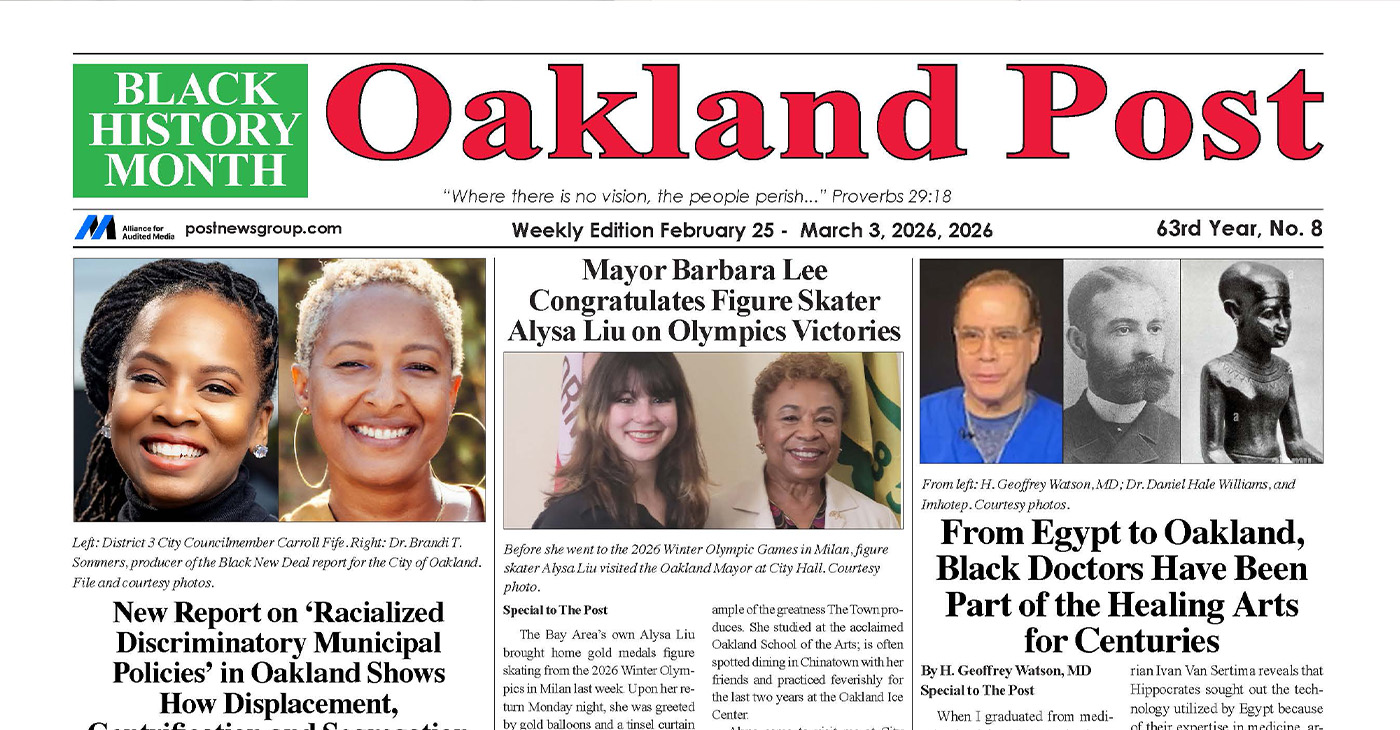
To enlarge your view of this issue, use the slider, magnifying glass icon or full page icon in the lower right corner of the browser window.
WORK FROM HOME
Home-based business with potential monthly income of $10K+ per month. A proven training system and website provided to maximize business effectiveness. Perfect job to earn side and primary income. Contact Lynne for more details: Lynne4npusa@gmail.com 800-334-0540


Financial Wellness and Mental Health: Managing Money Stress in College

Oakland Post: Week of March 11 -17, 2026

Women & Wealth: Tips for Navigating Your Lifelong Financial Journey

COMMENTARY: Women of Color Shape Our Past and Future

Woman’s Search for Family’s Roots Leads to Ancestor John T. Ward – A Successful Entrepreneur and Conductor on the Underground Railroad

Advocates Raise Alarm Over ICE Operation, MOU and Detention Risks in Baltimore County

Pete Buttigieg to Join Mayor Randall Woodfin for Community Town Hall in Birmingham

WATCH: Week One – NNPA’s “Leadership Matters” Video Series

Oakland Post: Week of March 4 – 10, 2026

OP-ED: NNPA Launches 2026 “Leadership Matters” Video Series

PRESS ROOM: PMG and Cranbrook Horizons-Upward Bound Launch Journey Fellowship Cohort 2

Los Angeles Summit Brings Together Leaders to Tackle Poverty and Affordability

Civil Rights TV Launches 24/7 Network Focused on Black History, Education and Equity

REVIEW: The Ultimate Hot Girl Summer Getaway: Sunseeker Resort Florida

COMMENTARY: How You Stop a Prescription Medicine is as Important as How You Start

Book Review: Books on Black History and Black Life for Kids

Community Celebrates Turner Group Construction Company as Collins Drive Becomes Turner Group Drive

Discrimination in City Contracts

California Launches Study on Mileage Tax to Potentially Replace Gas Tax as Republicans Push Back

COMMENTARY: The Biases We Don’t See — Preventing AI-Driven Inequality in Health Care

Black History Events in the East Bay

Post Newspaper Invites NNPA to Join Nationwide Probate Reform Initiative

Art of the African Diaspora Celebrates Legacy and Community at Richmond Art Center

New Bill, the RIDER Safety Act, Would Support Transit Ambassadors and Safety on Public Transit

COMMENTARY: The National Protest Must Be Accompanied with Our Votes

Oakland Post: Week of February 4 – 10, 2026

Oakland Post: Week of February 11 – 17, 2026

Dorothy Lee Bolden: Uniting Domestic Workers

After Don Lemon’s Arrest, Black Officials Raise Concerns About Independent Black Media

Reflecting on Black History Milestones in Birmingham AL

Hyundai Ioniq 5 Parking, Safety, and 360 View #shorts

2025 Ioniq 5 New Wiper & Powerful Performance! #shorts

Electric SUV Range: Is 259 Miles Enough? #shorts

EV Charging: How Fast Can You Charge an Electric Vehicle? #shorts

Biometric Cooling… Messaging Seats…Come on! 2025 Infiniti QX80 Autograph 4WD

Charged Up: Witness the Magic of a Fully Electric Car! #shorts

Range Rover Sport PHEV Included…: See What’s Inside This Luxury SUV! #shorts

Invisible Hood View: Perfect Parking with X-Ray Vision! #shorts

AI Is Reshaping Black Healthcare: Promise, Peril, and the Push for Improved Results in California

ESSAY: Technology and Medicine, a Primary Care Point of View

Sanctuary Cities

The RESISTANCE – FREEDOM NOW

STATE OF THE PEOPLE: Freddie

ECONOMIC BOYCOTT DAY!!!!!

I told You So
-
 #NNPA BlackPress4 weeks ago
Reflecting on Black History Milestones in Birmingham AL
-
 #NNPA BlackPress4 weeks ago
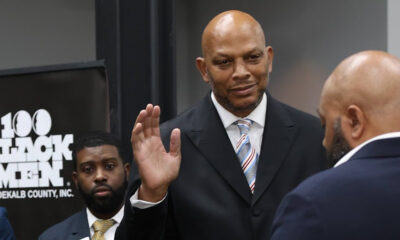
PRESS ROOM: NBA Hall of Fame Nominee Terry Cummings Joins 100 Black Men of DeKalb County to Launch Victory & Values Initiative
-

 #NNPA BlackPress4 weeks ago
U.S. manufacturing rebounds – how foundry services are adapting to rising demand
-
 Activism3 weeks ago
Oakland Post: Week of February 25 – March 3, 2026
-

 #NNPA BlackPress4 weeks ago
OP-ED: One Hundred Years of Black Workers Telling the Truth
-

 #NNPA BlackPress4 weeks ago
Advancements in solar technology that are changing the way we power the world
-

 #NNPA BlackPress4 weeks ago
Trump’s MAGA Allies are Creating Executive Order Plan to Steal the 2026 Midterms
-
 #NNPA BlackPress4 weeks ago
PRESS ROOM: Civil Rights TV Launches in Selma as the World’s First 24/7 Civil Rights Television Network
