
Activism
COMMENTARY: The Big Truth: The Big Problem is the Big Lie
Many if not most Republican officials know that Trump’s Big Lie is not true. But they are cynical and corrupt enough to use it to justify new voter suppression laws and other schemes to overturn the will of the voters. Far-right activists have harassed and threatened election officials across the country. And they are trying to get elected to state and local positions that will give them the power to oversee future elections.

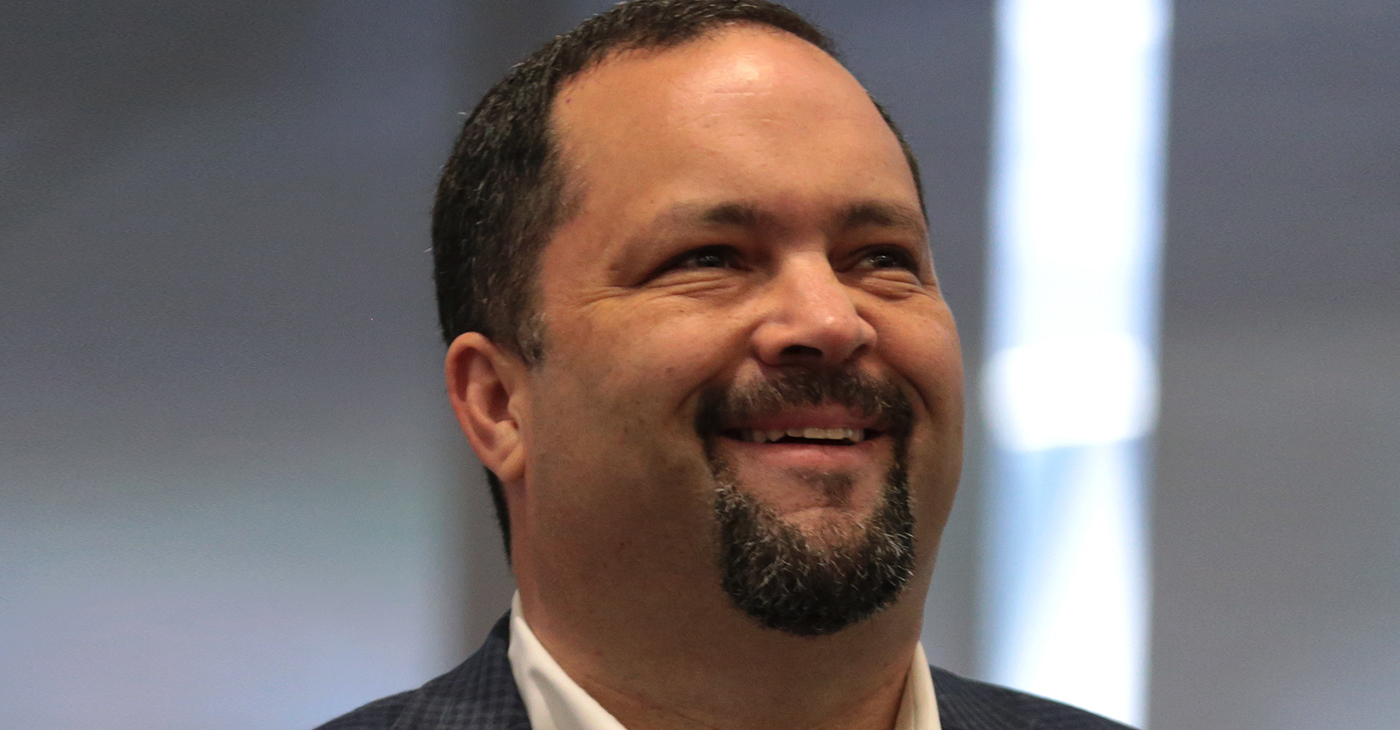
By Ben Jealous, President of People For the American Way
It’s been a year since a mob of Trumpists violently attacked the U.S. Capitol. They wanted to stop Congress from affirming President Joe Biden’s victory. Some of them were out for blood. All of them were motivated by the former president’s Big Lie that he won the election but that his victory was stolen from him and his supporters.
That lie has been debunked by journalists and election officials — both Republicans and Democrats. It has been rejected by courts. But it has never been abandoned by Trump or his right-wing allies. And so, one year after it fueled an attack on Congress and the Constitution, the Big Lie is still a big threat to our democracy.
The Big Lie causes big harms in lots of ways by fueling anger and mistrust about our elections among Trump’s base.
Many if not most Republican officials know that Trump’s Big Lie is not true. But they are cynical and corrupt enough to use it to justify new voter suppression laws and other schemes to overturn the will of the voters.
Far-right activists have harassed and threatened election officials across the country. And they are trying to get elected to state and local positions that will give them the power to oversee future elections.

Donald Trump would love to go into the 2024 elections knowing that he has loyal Trumpists in place to reject or “find” as many votes as he needs to declare victory. That’s why Trump has endorsed the effort by Rep. Jody Hice to replace Georgia’s Republican Secretary of State Brad Raffensperger.
Raffensperger refused to embrace the Big Lie, stood up to Trump’s bullying, and respected the will of the voters. Hice has promoted the Big Lie. That’s the kind of guy Trump wants deciding which votes to count — and not count — in 2024.
Trump has endorsed other secretary of state candidates, and his political henchman Steve Bannon in encouraging Trumpists to try to replace election officials at the local level.
Meanwhile, state legislators are making it easier for partisan Republicans in state legislatures to mess with vote counting by taking control from local officials — and even to simply override the will of the voters.
That is why we urgently need new federal voting rights legislation — and why we need senators and President Biden to work together to overcome “states’ rights” Republicans and their use of filibuster rules to block the Freedom to Vote Act and John Lewis Voting Rights Advancement Act.
Both pieces of legislation take on both voter suppression and election subversion. The John Lewis Act would make it illegal for a public official to “willfully fail or refuse to certify” an election victory by the candidate who gets the most votes.
The Freedom to Vote Act only allows local election administrators to be removed by the state if they have a legitimate cause to do so.
As Sen. Raphael Warnock said on Jan. 4, “Our democracy is in peril and time is running out.”
“This is a moral moment,” Sen. Warnock said. Indeed, it is.
There’s also another moral duty facing our elected leaders. And that’s finding out the truth about the Capitol insurrection and those who incited it, planned it, facilitated it, and have since tried to downplay or cover-up that assault on our democracy.
Criminals need to be held accountable for their crimes — and not just those who smashed windows and attacked Capitol police.
Republicans love to talk tough about the rule of law, but now many of them are resisting the rule of law by trying to undermine and obstruct the House committee investigating the insurrection. And they’re trying to rewrite history, downplaying the violence and portraying its perpetrators as patriots.
The problem for them is that the violent reality of that day has been well documented. The same is true for other casualties of the Big Lie, including harassment and threats against election officials.
The Big Lie and all those who have spread it have created a dangerous reality in which millions of Americans falsely believe that President Joe Biden’s election was illegitimate and that Donald Trump should still be our president.
And that makes them more willing to determine the outcome of elections through violence or the raw exercise of power.
In the year ahead, we need to defend democracy by answering the Big Lie with the truth, and by acting to defend our democracy at the ballot box.
Ben Jealous serves as president of People For the American Way and Professor of Practice in the Africana Studies Department at the University of Pennsylvania where he teaches leadership.











Activism
Oakland Post: Week of March 18 – 24, 2026
The printed Weekly Edition of the Oakland Post: Week of March 18 – 24, 2026
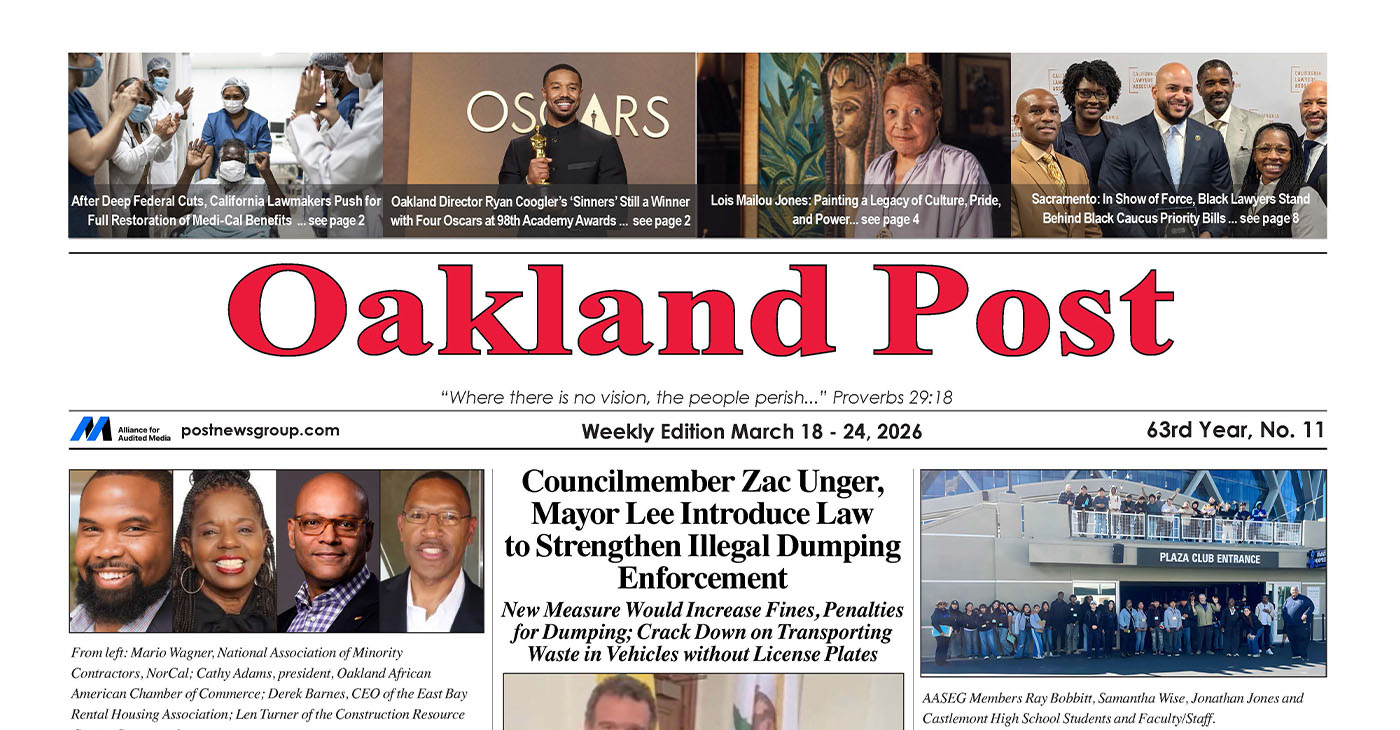
To enlarge your view of this issue, use the slider, magnifying glass icon or full page icon in the lower right corner of the browser window.
Activism
Oakland Post: Week of March 11 -17, 2026
The printed Weekly Edition of the Oakland Post: Week of March 11 – 17, 2026
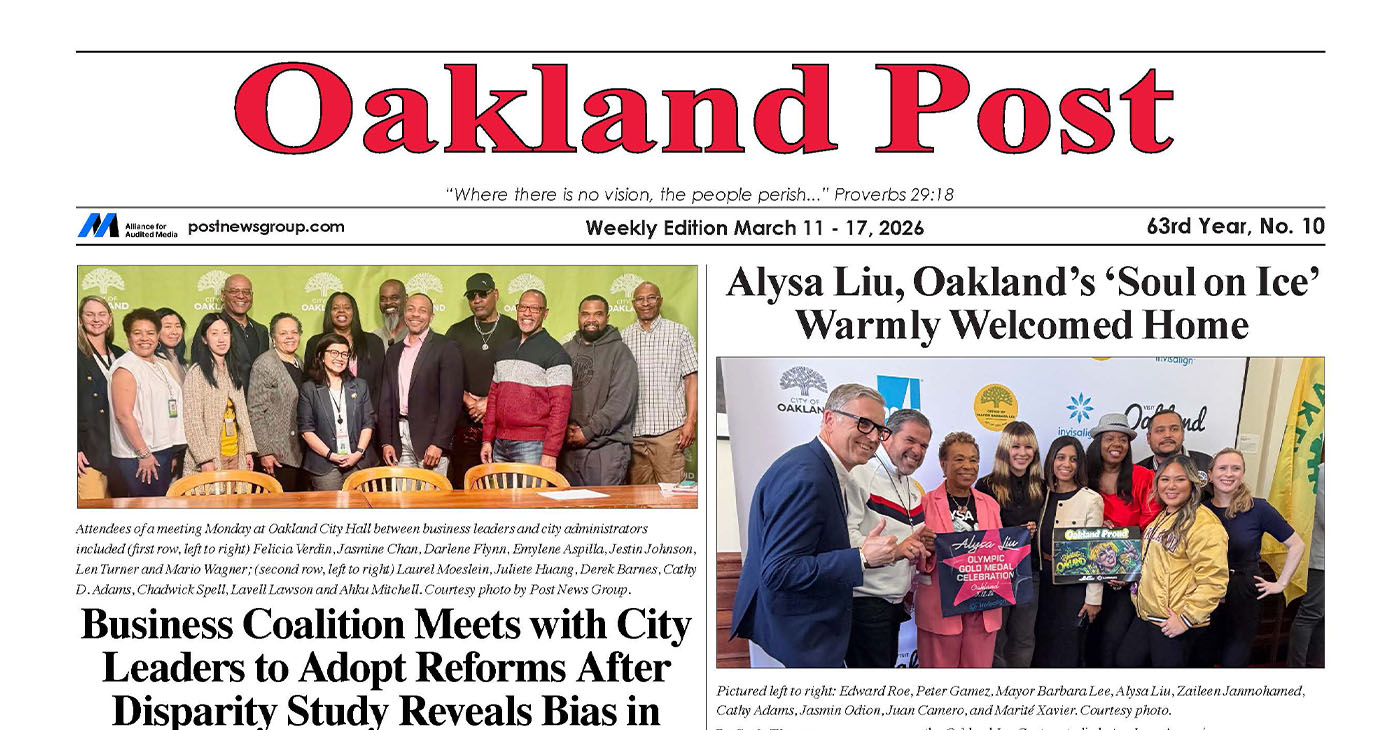
To enlarge your view of this issue, use the slider, magnifying glass icon or full page icon in the lower right corner of the browser window.
Activism
Oakland Post: Week of March 4 – 10, 2026
The printed Weekly Edition of the Oakland Post: Week of March 4 – 10, 2026

To enlarge your view of this issue, use the slider, magnifying glass icon or full page icon in the lower right corner of the browser window.

WORK FROM HOME
Home-based business with potential monthly income of $10K+ per month. A proven training system and website provided to maximize business effectiveness. Perfect job to earn side and primary income. Contact Lynne for more details: Lynne4npusa@gmail.com 800-334-0540


Black Artists in America, Installation Three Wraps at the Dixon Gallery and Gardens

Grief, Advocacy, and Education: A Counselor Reflects on Black Maternal Health

Future of Florida’s Black History Museum in Limbo

New Research Shows the Many Benefits of Early Learning

South Hampton K-8 Students Among Top 10 Finalists for Samsung’s ‘Solve for Tomorrow’ Competition

Cuba: No Negotiation with US on the President or Political System

Brooklyn Academy of Music Names Jamaican-Born Tamara McCaw as President

Trinidad & Tobego – U.S. Launches WhatsApp Channel for American Citizens in the Country

Oakland Post: Week of March 18 – 24, 2026

AI Innovation vs. Ethics and Environmental Impact

AI, Web3, and Digital Reparations

What If You Owned Your AI Agent?

Season 7, Episode 3 – January Reporter’s Roundtable 📱

Season 7, Episode 3 – January Reporter’s Roundtable

AI, Media, and Power | Part 2, Real-World Impacts and Tradeoffs

Discrimination in City Contracts

Oakland Post: Week of February 11 – 17, 2026

Reflecting on Black History Milestones in Birmingham AL

Rising Optimism Among Small And Middle Market Business Leaders Suggests Growth for California

CITY OF SAN LEANDRO STATE OF CALIFORNIA PUBLIC WORKS DEPARTMENT ENGINEERING DIVISION NOTICE TO BIDDERS FOR ANNUAL STREET OVERLAY/REHABILITATION 2019-21 – PHASE III

Oakland Post: Week of February 18 – 24, 2026

PRESS ROOM: NBA Hall of Fame Nominee Terry Cummings Joins 100 Black Men of DeKalb County to Launch Victory & Values Initiative

Oakland Post: Week of February 25 – March 3, 2026

U.S. manufacturing rebounds – how foundry services are adapting to rising demand

Trump’s MAGA Allies are Creating Executive Order Plan to Steal the 2026 Midterms

OP-ED: One Hundred Years of Black Workers Telling the Truth

Advancements in solar technology that are changing the way we power the world

Chase Oakland Community Center Hosts Alley-Oop Accelerator Building Community and Opportunity for Bay Area Entrepreneurs

Poll Shows Support for Policies That Help Families Afford Child Care

PRESS ROOM: Civil Rights TV Launches in Selma as the World’s First 24/7 Civil Rights Television Network

Hyundai Ioniq 5 Parking, Safety, and 360 View #shorts

2025 Ioniq 5 New Wiper & Powerful Performance! #shorts

Electric SUV Range: Is 259 Miles Enough? #shorts

EV Charging: How Fast Can You Charge an Electric Vehicle? #shorts

Biometric Cooling… Messaging Seats…Come on! 2025 Infiniti QX80 Autograph 4WD

Charged Up: Witness the Magic of a Fully Electric Car! #shorts

Range Rover Sport PHEV Included…: See What’s Inside This Luxury SUV! #shorts

Invisible Hood View: Perfect Parking with X-Ray Vision! #shorts

AI Is Reshaping Black Healthcare: Promise, Peril, and the Push for Improved Results in California

ESSAY: Technology and Medicine, a Primary Care Point of View

Sanctuary Cities

The RESISTANCE – FREEDOM NOW

STATE OF THE PEOPLE: Freddie

ECONOMIC BOYCOTT DAY!!!!!

I told You So

-
 #NNPA BlackPress4 weeks ago
Reflecting on Black History Milestones in Birmingham AL
-
 #NNPA BlackPress4 weeks ago
PRESS ROOM: NBA Hall of Fame Nominee Terry Cummings Joins 100 Black Men of DeKalb County to Launch Victory & Values Initiative
-
 Activism4 weeks ago
Oakland Post: Week of February 25 – March 3, 2026
-
 #NNPA BlackPress4 weeks ago
Trump’s MAGA Allies are Creating Executive Order Plan to Steal the 2026 Midterms
-
 #NNPA BlackPress4 weeks ago
Poll Shows Support for Policies That Help Families Afford Child Care
-

 Activism3 weeks ago
Oakland Post: Week of March 4 – 10, 2026
-

 #NNPA BlackPress3 weeks ago
Woman’s Search for Family’s Roots Leads to Ancestor John T. Ward – A Successful Entrepreneur and Conductor on the Underground Railroad
-

 #NNPA BlackPress3 weeks ago
OP-ED: NNPA Launches 2026 “Leadership Matters” Video Series
