
Commentary
COMMENTARY: Reparations NOW! Are Blacks Close to Finally Getting Their “40 Acres and a Mule”?
HOUSTON FORWARD TIMES — it comes to the concept of granting “reparations” to Black people as a form of restitution for the years that Blacks spent subjected to the barbaric institution of slavery in America, it has seemingly been overlooked and ignored by the majority of legislators that have come and gone in the U.S. Congress. Even former U.S. Congressman John Conyers Jr. (D-MI) once proposed to create a Commission to study how to appropriately compensate the descendants of slaves for decades, with those conversations falling on deaf ears.

By Jeffrey L. Boney
it comes to the concept of granting “reparations” to Black people as a form of restitution for the years that Blacks spent subjected to the barbaric institution of slavery in America, it has seemingly been overlooked and ignored by the majority of legislators that have come and gone in the U.S. Congress. Even former U.S. Congressman John Conyers Jr. (D-MI) once proposed to create a Commission to study how to appropriately compensate the descendants of slaves for decades, with those conversations falling on deaf ears.
Blacks have been trying to equal the economic and societal playing fields in this country for some time. Many Blacks have heard and even used the phrase – “40 acres and a mule” – which was a guarantee made to formerly enslaved people of African descent that was the first attempt at seeking to provide some form of reparations to Blacks who had been enslaved.
Of course, history shows us that the decision makers who talked about implementing the idea of providing reparations to those people of African descent, who were previously enslaved, reneged on their promise, leaving Blacks to work harder and longer to achieve success than those who had enslaved them to begin with. This has proved to be extremely challenging for Blacks.
U.S. Congresswoman Sheila Jackson Lee (D-TX) is hoping that a bill she is now championing, in the spirit of former Rep. Conyers, gets the type of support and traction needed to help African Americans finally receive the guarantee once promised to them back in the late 1800s.
Congresswoman Jackson Lee recently announced the introduction of H.R. 40, the Commission to Study and Develop Reparations Proposals for African Americans Act. This piece of legislation would create a Commission aimed at studying the impact of slavery and continuing discrimination against African Americans, resulting directly and indirectly from slavery to segregation to the desegregation process and the present day. The Commission would also make recommendations concerning any form of apology and compensation to begin the long delayed process of atonement for slavery.
“The impact of slavery and its vestiges continues to affect African Americans and indeed all Americans in communities throughout our nation, which is why I am pleased to introduce H.R. 40,” said Congresswoman Lee. “This legislation is intended to examine the institution of slavery in the colonies and the United States from 1619 to the present, and further recommend appropriate remedies.”
Congresswoman Jackson Lee states that since the initial introduction of this legislation, its proponents have made substantial progress in elevating the discussion of reparations and reparatory justice at the national level and joining the mainstream international debate on the issues. She went on to state that some people have tried to deflect the importance of these conversations by focusing on individual monetary compensation, but the real issue is whether and how this nation can come to grips with the legacy of slavery that still infects current society.
According to the bill, the Commission shall be composed of 13 members, who shall be appointed, within 90 days after the date of enactment of this Act, as follows:
• Three members shall be appointed by the President.
• Three members shall be appointed by the Speaker of the House of Representatives.
• One member shall be appointed by the President pro tempore of the Senate.
• Six members shall be selected from the major civil society and reparations organizations that have historically championed the cause of reparatory justice.
In short, the Commission would be tasked with studying the impact of slavery and the continuing discrimination against African Americans, which has come as a direct and indirect result of slavery, as well as from segregation and other present day factors. According to the bill, the Commission would also make recommendations concerning any form of apology and compensation to begin the long delayed process of atonement for slavery.
Congresswoman Jackson Lee believes that through legislation, resolutions, news, and litigation, Congress is moving closer to making more strides in the movement toward reparations.
The U.S. has a history of and has set a precedent for providing reparations to several groups, including Japanese Americans and victims of the Jewish Holocaust, who have suffered their own respective challenges as a group.
People of African descent were enslaved and experienced some of the worst ordeals imaginable through the barbaric institution of slavery and should be looked at no different than any other group, in that they have experienced their own set of unique challenges and issues.
From a historical perspective, approximately 4,000,000 Africans and their descendants were enslaved in the United States and colonies that became the United States from 1619 to 1865. The institution of slavery was constitutionally and statutorily sanctioned by the Government of the United States from 1789 through 1865. African Americans continue to suffer debilitating economic, educational, and health hardships, including but not limited to, having nearly 1,000,000 Black people incarcerated, an unemployment rate that is more than twice the current White unemployment rate, and an average of less than 1⁄16 of the wealth of White families, a disparity which has worsened, not improved over time.
While a focus has been made on highlighting the social effects of slavery and segregation, its continuing economic implications remain largely ignored by mainstream analysis. These economic issues are the root cause of many critical issues in the African American community today, such as education, healthcare and criminal justice policy, including policing practices. The call for reparations represents a commitment to entering a constructive dialogue on the role of slavery and racism in shaping present-day conditions in our community and American society.
Congresswoman Jackson Lee points out that despite the progress that has been made in this country, including the election of the first American President of African descent, the legacy of slavery still lingers heavily in this nation. She believes this bill, which seeks to establish a Commission to examine the moral and social implications of slavery, is both relevant and crucial to restoring trust in governmental institutions in many communities, especially during a time where there are many reoccurring issues that affect members of the African American communities in ways that they don’t affect other communities.
“Today there are more people at the table — more activists, more scholars, more CEO’s, more state and local officials, and more Members of Congress,” said Congresswoman Jackson Lee. “I believe that H.R. 40 is a crucial piece of legislation because it goes beyond exploring the economic implications of slavery and segregation. Though the times and circumstances may change, the principle problem of slavery continues to weigh heavily on this country. A federal commission can help us reach into this dark past and bring us into a brighter future.”
This article appeared in the Houston Forward Times.









Black History
IN MEMORIAM: The Rev. Leon “Sonny” Clark, Longtime Orange County Pastor and Community Leader, Dies at 72
Rev. Leon William “Sonny” Clark, the longtime pastor of New Spirit Baptist Church in Santa Ana and a prominent faith and community leader in Orange County, passed away on September 9 at the age of 72. Born in Bennettsville, South Carolina, Clark was a U.S. Navy veteran who dedicated his life to service. He served various Southern California churches before leading New Spirit Baptist Church for over 22 years, extending his work into counseling, mentoring, and civic engagement, and supporting the African American community. To learn more about his life and contributions, read more.

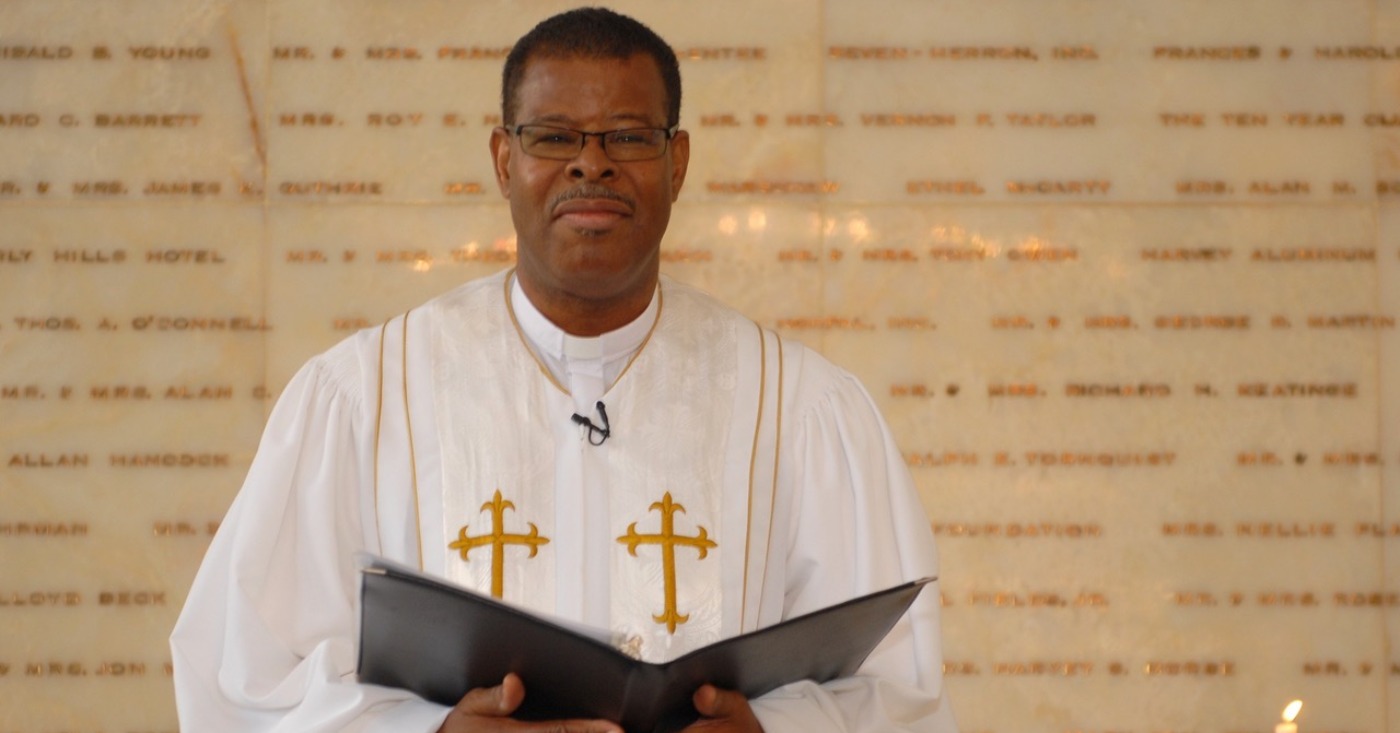
Rev. Leon William “Sonny” Clark, longtime pastor of New Spirit Baptist Church in Santa Ana and a respected faith and community leader in Orange County, died Sept. 9. He was 72.
Born Oct. 2, 1953, in Bennettsville, South Carolina, Clark was a U.S. Navy veteran who later built a life of service centered on family, faith, ministry, and community.
Clark began his formal ministry at Metropolitan Baptist Church in Altadena in 1978. After acknowledging his call to ministry in 1980, he preached his first sermon and went on to serve churches throughout Southern California, including Second Baptist Church in Riverside, Mount Vernon Baptist Church in Rubidoux, Antioch Missionary Baptist Church in Pomona, and Friendship Baptist Church in Yorba Linda.
In November 2003, Clark was called to lead New Spirit Baptist Church in Santa Ana, where he served as pastor for more than 22 years. His work extended beyond the pulpit through counseling, mentoring, civic engagement, and efforts to strengthen Orange County’s African American community.
Clark served on the Orange County Heritage Council and supported efforts to preserve and celebrate African American history and culture. He helped organize the Orange County Black History Parade and Unity Festival, served on the Interfaith Committee and the Orange County Transit Authority, and served as president of the Orange County Ministers Conference.
In 2024, the City of Santa Ana recognized Clark for his contributions to the community. He also received the Orange County Southern Baptist Association Hall of Faith Award and was previously honored as Pastor of the Year by the Orange County Heritage Council.
Clark is survived by his wife, Andrea Joyles Clark; six children, Shawn Williams, Le Ondra Clark Harvey, Kyla Coward, Joshua Clark, Marissa Clark and Ashley Clark; grandchildren and great-grandchildren; siblings; extended family; and the New Spirit Baptist Church congregation.
A wake will be held Thursday, Oct. 1, from 4 to 8 p.m. at New Spirit Baptist Church, 701 S. Sullivan St. in Santa Ana, with a remembrance service from 5 to 6:30 p.m.
A Celebration of Life will be held Friday, Oct. 2, at Friendship Baptist Church, 17145 Bastanchury Road in Yorba Linda. Viewing begins at noon, followed by the service at 1 p.m.
Burial will take place Monday, Oct. 5, at 10:15 a.m. at Riverside National Cemetery.
Clark often shared a guiding principle that shaped his ministry: “Start where you are. Use what you have. Do what you can.”

Black History
Remembering Chauncey Bailey as Student Journalists Face Threats to Truth-Telling
Nearly two decades ago, Oakland Post reporter and editor-in-chief Chauncey Bailey was tragically murdered for investigating a crooked business. His assassination shocked the journalism world and is remembered as student journalists today face increasing threats and censorship. A former classmate of Bailey and chair of the Student Press Law Center notes a significant rise in calls from students seeking legal advice amid a hostile environment. This situation highlights the importance of protecting young journalists and their pursuit of truth. Read more to learn about Bailey’s legacy and current challenges facing student press.
It is nearly 20 years since Chauncey Bailey, a crusading journalist, was murdered
on an Oakland street corner, gunned down to prevent him from writing stories about a
crooked business.
I hope people remember Bailey, a reporter and editor-in-chief for the
Oakland Post, the city’s Black newspaper. He had already written several articles about
the problems of a business called Your Muslim Bakery and was working on another
when the bakery’s owner ordered an employee to kill Bailey.
His murder shocked the journalism world that found the idea of an American
reporter killed for doing his job unfathomable. For me, the shock and sadness were also
personal.
I knew Bailey. In the mid-1970s we were classmates in the Michelle Clark Memorial
Foundation program, the precursor to the Institute for Journalism Education Summer
Program. A program, backed by the Ford Foundation, that provided intensive training
for fledgling minority journalism students and then placed them in jobs at newspapers
and television stations.
I’m reminded of Bailey and that program when I visit the East Bay at the end of
September to discuss the future of student journalism. To me, the visit will not only
evoke memories of Bailey. It will also be an opportunity to hone strategies to protect and
support student journalists who are under attack today, maybe not in the way that took away Chauncey Bailey, but an attack, nonetheless.
Spurred by the hostility toward the free press emanating out of Washington, high
school and college journalists are facing a barrage of censorship and harassment from
school administrators and local officials.
The 24-hour hotline staffed by the Student Press Law Center (SPLC), the non-profit I chair, has seen a 35% increase in calls from student journalists seeking legal advice on censorship, libel and copyright issues during the past two years, as well as a tripling in the number of complaints of harassment, including threats of firing, of faculty advisors.
I am not suggesting today’s national climate is as dangerous as the murderous
intentions of Yusef Bey IV, the man who ordered Bailey’s assassination. But the
harassment of student journalists does kill something else. It can destroy the desire of
student journalists to continue their growth to become professional news gatherers and
producers – something the country will always need.
It is that professional maturation that I’m reminded of when I think back on Chauncey
Bailey.
Truth be told, when we were classmates back in 1974 Bailey was the class clown,
known more for his sardonic wit than his writing or reporting talent. I have vivid
memories of Bailey sitting at his desk in the back of the room regaling us with sarcastic
comments. Sure, he was funny.
And he didn’t exhibit the level of reporting skills of our other classmates such as Milton Coleman who went on to be the Deputy Managing Editor of the Washington Post or Alexis Scott who for years has run the Atlanta Daily World.
After a series of reporting jobs in Hartford, Connecticut, Detroit, Michigan, and Oakland, Bailey had risen in talent and skill to helm this very newspaper. A tip from a source led Bailey to look into the possibility that Bey was running Your Muslim Bakery into bankruptcy. Word that Bailey was working on that story filtered back to Bey who ordered the journalist killed.
On August 2, 2007, Bailey was shot three times at point-blank range as he walked to work.
So, when I think of my trip to the East Bay my thoughts go to journalism’s past
represented by Chauncey Bailey’s sacrifice and what the staff and the board of SPLC
can do to secure the current and future work of student journalists.
Steven A. Holmes is a former Pulitzer Prize-winning journalist. His novel “Black Messiahs” was published in May this year.
Activism
Oakland Post: Week of September 23 – 29, 2026
The printed Weekly Edition of the Oakland Post: Week of September 23 – 29, 2026


To enlarge your view of this issue, use the slider, magnifying glass icon or full page icon in the lower right corner of the browser window.




Asm. Corey Jackson Announces Launch of 24-Hour Childcare in His District

IN MEMORIAM: The Rev. Leon “Sonny” Clark, Longtime Orange County Pastor and Community Leader, Dies at 72

Poll: Becerra Widens His Lead Over Hilton; Californians Split on Wealth Tax

From Historic Memories to New Possibilities: Oakland Celebrates Coliseum 60

County Office of Education Says OUSD Finances Are Getting Healthier, Materially Stronger

LIVE FREE Sunday Dinner Brings Faith, Fellowship and Civic Conversation to Oakland

Remembering Chauncey Bailey as Student Journalists Face Threats to Truth-Telling

BLACspace Cooperative Invites Bay Area to Experience Oakland’s Black Cultural Ecosystem Through a BLAC Map Tour + Party

In Wake of Death on Doorstep, Williams Chapel Baptist Church Calls for Better Care, Funding for Unhoused

Oakland Centenarian Nuna McKee Honored!

Caribbean Nations Produce Action Plan Calling for UK Reparations Over Slavery

Oakland Post: Week of September 23 – 29, 2026

Doulas Are Helping Black California Moms Navigate Pregnancy–Even as High Mortality Rates Persist

Newsom Signs Addictive Social Media Law to Protect Kids

On Your November Ballot: Prop 38 Would Allocate $8.4 Billion to Immunology and Immunotherapy Funding

Standoff for Justice: Our Homes Are Worth Fighting For

Oakland Post: Week of August 26 – September 1, 2026

Frontier Airlines’ Return to Oakland Airport Brings Flights, Jobs and Opportunity

Gubernatorial Candidate Steve Hilton Blasts California New Tire Rules; Newsom Hits Back

Chef Sharon Lee Blends Culinary Excellence, Education and Empowerment

Jackie Wright Champions Bay Area Stories, Filmmakers and Cultural Institutions

Big City Mayors Ask for “Yes” Vote on Housing Bond Measure; Conservatives Say “No”

Oakland Coliseum Project Opens Door for Small Businesses to Build Bigger

Gov. Newsom’s Latest Appointees Include Sacramento Advocate for Formerly Incarcerated Students; State’s New Tech Chief

Misnamed ‘Parent’ PAC Seeks to Influence Oakland School Board Elections

Longtime BWOPA Member Brendalyn Goodall Appointed to California Workforce Development Board

Gov. Newsom Signs Law Shielding Immigration Aid Workers From Doxing Threats

Secretary of State Shirley N. Weber Urges Californians to Vote Early as Voter ID Battle Intensifies

From Palestine to Oakland: Seeds for Liberation Examines Shared Struggles for Freedom

IN MEMORIAM: Dolly Parton Dead at 80 — How She Built a Legacy of Love and Earned Her Place in Black Culture

The Conversation With Al McFarlane 6/23/26

Media Monday 6/22/26

LIVE! ASK ALMA! — TUES. 6.23.26 7PM EST

Car Buying Secrets: 4 Hidden Checks Before You Sign!

Is This 550 HP Charger Worth YOUR Money? AutoNetwork Review

Celebrating Juneteenth – Frederick Douglass on education and resistance

LIVE! — ASK ALMA! — TUES. 6.19.26 7PM EST

Hyundai Ioniq 5 Parking, Safety, and 360 View #shorts

2025 Ioniq 5 New Wiper & Powerful Performance! #shorts

Electric SUV Range: Is 259 Miles Enough? #shorts

EV Charging: How Fast Can You Charge an Electric Vehicle? #shorts

Biometric Cooling… Messaging Seats…Come on! 2025 Infiniti QX80 Autograph 4WD

Charged Up: Witness the Magic of a Fully Electric Car! #shorts

Range Rover Sport PHEV Included…: See What’s Inside This Luxury SUV! #shorts

Invisible Hood View: Perfect Parking with X-Ray Vision! #shorts
-
 Community2 weeks ago
Misnamed ‘Parent’ PAC Seeks to Influence Oakland School Board Elections
-

 Activism3 weeks ago
Oakland Post: Week of September 2 – 8, 2026
-

 Community2 weeks ago
Richmond Tiny House Village Farm & Garden Set to Open Gates on Sept. 26
-

 Black History2 weeks ago
Latest Massacre in Haiti Reveals Cruelty U.S. Deportations
-

 Black History2 weeks ago
OPINION: Nolan Wells’ Death One of Several Signifying Racial Terror Lives on in U.S. South
-

 Activism2 weeks ago
Oakland Post: Week of September 9 – 15, 2026
-

 Community2 weeks ago
Democratic Clubs Interview Candidates for Oakland School Board
-
 Featured2 weeks ago
‘Ready to See These Bills Become Law’: Sen. Weber’s Package of 15 Bills Advance to Gov. Newsom’s Desk

1 Comment