
Activism
COMMENTARY: Project 2025: Trump’s Blueprint for Authoritarian Rule Threatens the Future of Black Californians
For nearly three decades, Proposition 209 has restricted public institutions from considering race, sex, or ethnicity in employment and education. Then, last year, the Supreme Court’s ban of Affirmative Action further constrained those programs. By cutting federal support, Project 2025 would undermine diversity initiatives, decreasing access to employment and contracting opportunities and making it even harder for universities to support minority students even though Black student enrollment and graduation rates remain lowest in California’s higher education institutions.

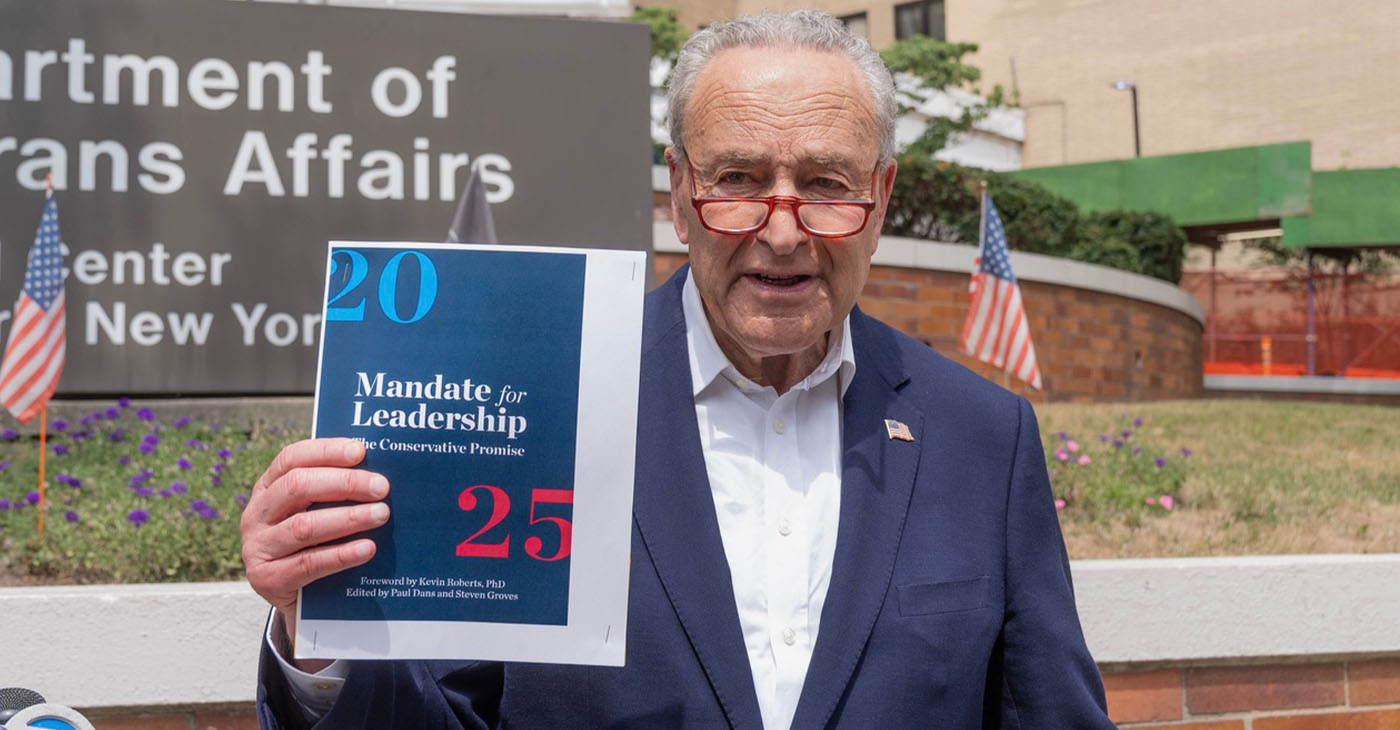
By Joe W. Bowers Jr., California Black Media
As the 2024 Presidential election approaches, Black Californians face a critical moment that could drastically alter their future. Project 2025, a plan crafted by the conservative Heritage Foundation, is intended to guide a potential Trump administration if he returns to office.
The Heritage Foundation touts Project 2025 as a policy agenda aimed at reducing government intervention and returning to “traditional values.” It advocates eliminating federal oversight across various sectors, promising greater efficiency and personal freedom.
However, these policy changes could have devastating consequences for Black Californians.
One of the most alarming aspects of Project 2025 is its call to eliminate the Department of Education. Such a move would likely result in severe cuts to funding for California’s public schools, disproportionately affecting Black and minority communities. These budget cuts would widen educational disparities, further limiting opportunities for Black students.
For nearly three decades, Proposition 209 has restricted public institutions from considering race, sex, or ethnicity in employment and education. Then, last year, the Supreme Court’s ban of Affirmative Action further constrained those programs. By cutting federal support, Project 2025 would undermine diversity initiatives, decreasing access to employment and contracting opportunities and making it even harder for universities to support minority students even though Black student enrollment and graduation rates remain lowest in California’s higher education institutions.
The rollback of student debt relief efforts, another key element of Project 2025, would reverse gains made under the Biden administration. These relief efforts have wiped out $138 billion in student loans. Reversing them would have a particularly harsh impact on Black Californians.
Project 2025’s push for deregulation threatens to weaken employment protections. Without strong federal oversight, the enforcement of California laws like the Fair Employment and Housing Act (FEHA) which provides critical protections against workplace discrimination based on race, gender, and disability, could falter, reducing job opportunities for Black Californians making it harder for Black individuals to advance in their careers and achieve economic stability.
Project 2025 also revives “tough on crime” policies reminiscent of the War on Drugs, which disproportionately targeted Black communities. Increased policing and harsher sentencing guidelines could lead to higher incarceration rates among Black Californians, perpetuating cycles of poverty and disenfranchisement.
Additionally, Project 2025’s stance on election integrity, including stricter voter ID laws and reduced access to early voting, could suppress Black voter turnout and undermine some of the nation-leading gains California has made to enfranchise all state residents.
Presidential candidate Kamala Harris has criticized Project 2025, warning, “This plan is a step backward for our country. It threatens to undo the progress we’ve made in ensuring that every American, regardless of their race or background, has a fair shot at success. Black communities, in particular, stand to lose the most.”
For Black Californians relying on Medi-Cal, Trump’s plans to repeal the Affordable Care Act could severely limit access to healthcare and defund some of the critical expansions in Medi-Cal coverage that California has made over the last year.
For Black Californians, the stakes have never been higher. Project 2025, coupled with an authoritarian Trump presidency, threatens to reverse decades of progress in civil rights, economic inclusion, healthcare, education, and environmental justice.
About the Author
Joe W. Bowers Jr. is a contributing editor to California Black Media. He is a graduate of Stanford University.












To enlarge your view of this issue, use the slider, magnifying glass icon or full page icon in the lower right corner of the browser window.
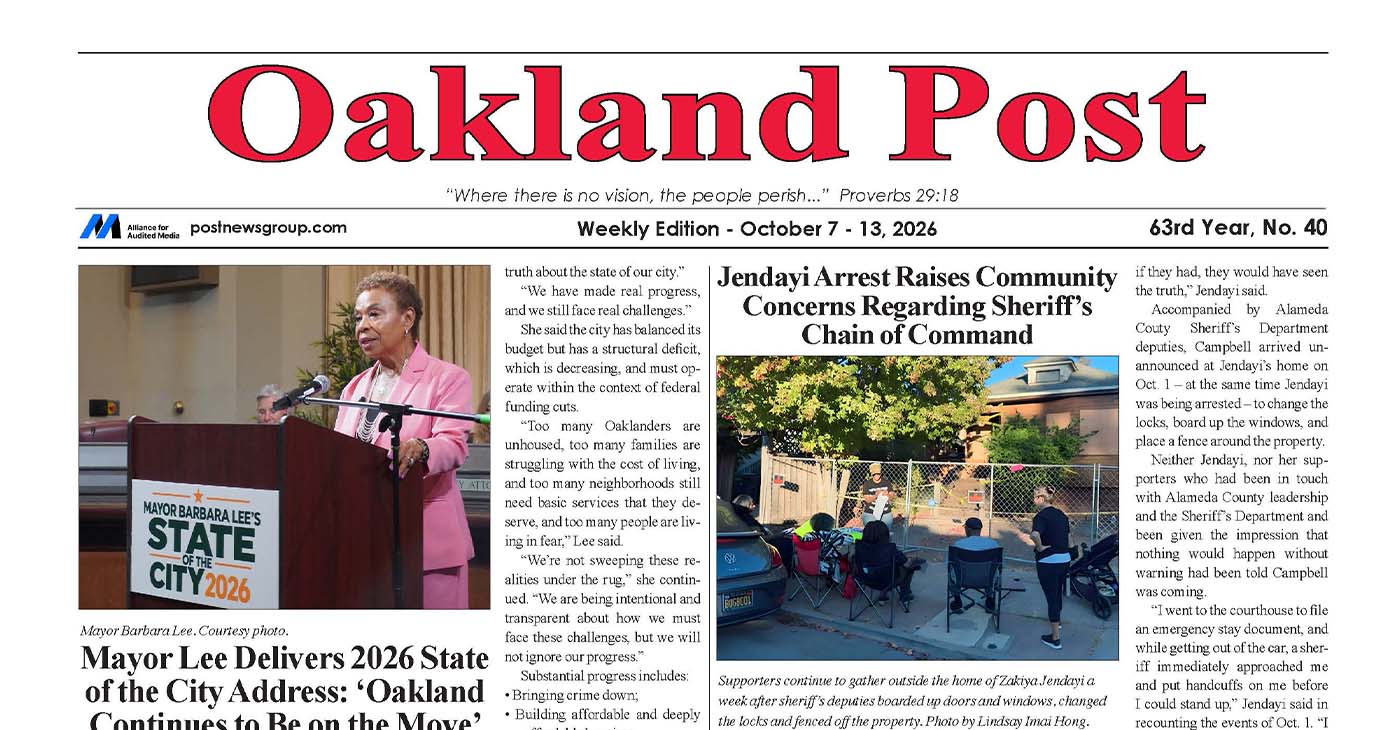
To enlarge your view of this issue, use the slider, magnifying glass icon or full page icon in the lower right corner of the browser window.

Activism
Oakland Post: Week of September 30 – October 6, 2026
The printed Weekly Edition of the Oakland Post: Week of September 30 – October 6, 2026
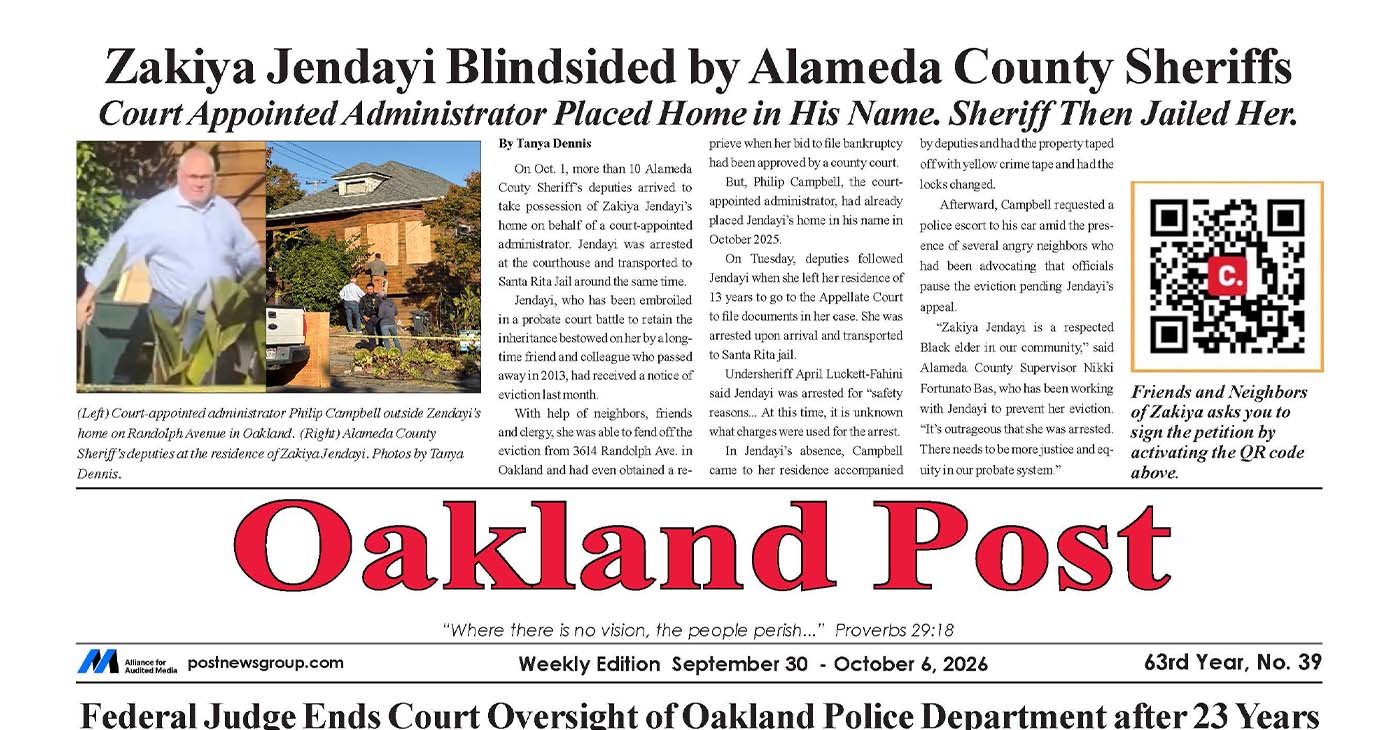
To enlarge your view of this issue, use the slider, magnifying glass icon or full page icon in the lower right corner of the browser window.



Mayor Barbara Lee Holds Special State of the City Address in Deep East Oakland

Practitioners of African Traditional Spirituality Offer Ancestral Reverence Ritual Oct. 31

It’s Time to Lose Weight Before the Holidays

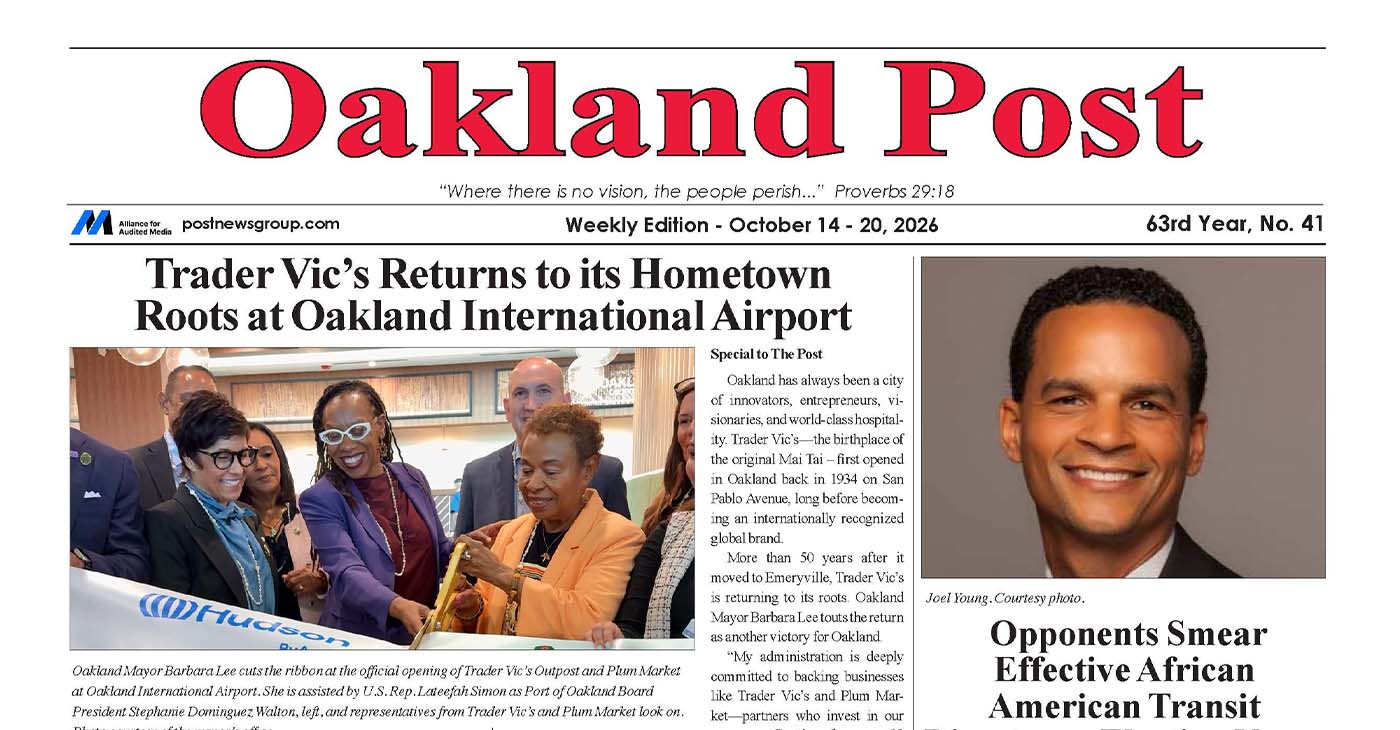
Trader Vic’s Returns to Its Oakland Roots

Oakland Coal Terminal Backed by Trump Would Be Bigger, Dirtier Than Promised, Says Report

Opponents Smear Effective African American Transit Director as Election Nears

Oakland Post: Week of October 14 – 20, 2026

OP-ED: The Black Church Writes AI’s Next Chapter

OP-ED: The Black Church Writes AI’s Next Chapter

WCCUSD Joins Statewide Organic School Food Purchasing Cooperative

Democrats, Community Groups Back Measure EE to Change How Oakland Is Governed

Four Tips to Help You Plan a Holiday “Staycation”

Veterans Housing Project Proposed for South Richmond
PRESS ROOM: Transformative Justice Coalition 2026 Voting Rights Champion Awards Reception ‘Yesterday Is Today: The Battle For Voting Rights

Mayor Lee Delivers 2026 State of the City Address: ‘Oakland Continues to Be on the Move’

Misnamed ‘Parent’ PAC Seeks to Influence Oakland School Board Elections

Oakland Post: Week of September 2 – 8, 2026

Oakland Post: Week of September 9 – 15, 2026

Poll: Becerra Widens His Lead Over Hilton; Californians Split on Wealth Tax

County Office of Education Says OUSD Finances Are Getting Healthier, Materially Stronger

Richmond Tiny House Village Farm & Garden Set to Open Gates on Sept. 26

Latest Massacre in Haiti Reveals Cruelty U.S. Deportations

Mayor Lee Announces $1 Million Kaiser Permanente Grant for Pilot Program to Address Homelessness, Clean Up Public Spaces throughout Oakland

OPINION: Nolan Wells’ Death One of Several Signifying Racial Terror Lives on in U.S. South

Listening as a Lifeline: A Doula’s Witness to Black Maternal Health

BLACspace Cooperative Invites Bay Area to Experience Oakland’s Black Cultural Ecosystem Through a BLAC Map Tour + Party

Zakiya Jendayi Arrested, Locked Out of Home by Sheriff’s Deputies

Democratic Clubs Interview Candidates for Oakland School Board

Oakland Post: Week of September 16 – 22, 2026

Oakland People’s Arms Embargo Coalition Demands End to Military Shipments Thru Oakland

The Conversation With Al McFarlane 6/23/26

Media Monday 6/22/26

LIVE! ASK ALMA! — TUES. 6.23.26 7PM EST

Car Buying Secrets: 4 Hidden Checks Before You Sign!

Is This 550 HP Charger Worth YOUR Money? AutoNetwork Review

Celebrating Juneteenth – Frederick Douglass on education and resistance

LIVE! — ASK ALMA! — TUES. 6.19.26 7PM EST

Hyundai Ioniq 5 Parking, Safety, and 360 View #shorts

2025 Ioniq 5 New Wiper & Powerful Performance! #shorts

Electric SUV Range: Is 259 Miles Enough? #shorts

EV Charging: How Fast Can You Charge an Electric Vehicle? #shorts

Biometric Cooling… Messaging Seats…Come on! 2025 Infiniti QX80 Autograph 4WD

Charged Up: Witness the Magic of a Fully Electric Car! #shorts

Range Rover Sport PHEV Included…: See What’s Inside This Luxury SUV! #shorts

Invisible Hood View: Perfect Parking with X-Ray Vision! #shorts
-
 Economy3 weeks ago
Poll: Becerra Widens His Lead Over Hilton; Californians Split on Wealth Tax
-
 Business3 weeks ago
County Office of Education Says OUSD Finances Are Getting Healthier, Materially Stronger
-
 Business4 weeks ago
Mayor Lee Announces $1 Million Kaiser Permanente Grant for Pilot Program to Address Homelessness, Clean Up Public Spaces throughout Oakland
-
 Black History2 weeks ago
Listening as a Lifeline: A Doula’s Witness to Black Maternal Health
-
 Art3 weeks ago
BLACspace Cooperative Invites Bay Area to Experience Oakland’s Black Cultural Ecosystem Through a BLAC Map Tour + Party
-
 Lead Story2 weeks ago
Zakiya Jendayi Arrested, Locked Out of Home by Sheriff’s Deputies
-
 Activism4 weeks ago
Oakland Post: Week of September 16 – 22, 2026
-
 Uncategorized4 weeks ago
Oakland People’s Arms Embargo Coalition Demands End to Military Shipments Thru Oakland
