
Black History
COMMENTARY: Notes and Footnotes to a Life in Georgetown
WASHINGTON INFORMER — There is a visceral disregard and aggressive muting of the African-American presence in Old Georgetown.

By Thalia Nash-Mwaipaja
In the early ’80s, my mother, younger sister and I went to live with my uncle Rev. Dr. James K. McCants where he presided in the church clergy house in Old Georgetown. What would become my address, 2902 O Street Northwest, was owned and maintained by Mt. Zion United Methodist Church, the historic African American house of worship located just around the corner at 1334 29th Street Northwest. This move, from our East of the River house in Hillcrest (Southeast) to Georgetown represented, perhaps, the biggest and most pivotal change in my life.
I didn’t know a lot about the history of Old Georgetown, I only saw the difference in appearance, which was a totally different from the neighborhood I’d left. The sidewalks were made of red bricks or cobblestone and gave the community a type of quiet village charm. The atmosphere was always very tranquil, except on the outer layers of the neighborhood which catered to college revelry, happy hours, and shoppers. In this way, even as nightfall came, the residents of Georgetown maintained a mostly reserved, lights-out curfew of 10p.m. In a town known for blaring go-go music, an exhaustive nightlife, and a growing commuter system, it felt less and less like I was even in the District.
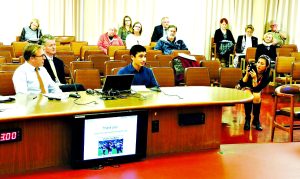
What I remember most fondly were the beautiful tree-lined streets for blocks with colorful flowers along the brick sidewalks. The corner stores were operated by one of two persons, and the neighbors were so well known that shop owners allowed residents to purchase things on a store tab, rather than at point of sale.

Thalia Nash-Mwaipaja revisited her Old Georgetown home recently with Washington Informer staff to discuss the love she maintains for the people and its history.
But by the late 1980s, I rarely saw African Americans in the neighborhood, except on Sundays for church services or on weeknights for occasional programs.
I remember my uncle telling me Mt. Zion was one of the oldest Black congregations in Northwest Washington, and that many of the members consisted of families that once resided in Georgetown – with only a handful continuing to reside in their Georgetown homes not far from the church. Through generations many of the members still attended services and made up large populations of active church members.
Living in Old Georgetown gave me an opportunity to experience a different type of diversity. I was able to attend Woodrow Wilson Senior High which was touted as an exemplary academic space and one that welcomed the children of our nation’s various embassies. In this way, the diversity I experienced as one of only a few African Americans living in Georgetown also spanned to include friendships with families whose surnames included: Shah, Li, Aragona, Ahmadu, Blesendorff, and Iloabachie. Many of these friends discussed how Black builders had to use their fingers to mold and manipulate materials for brickmaking / bricklaying. They challenged me to walk my neighborhood and examine the many African, Negro, Black, African-American fingerprints — locked in stone and pressed into the flesh of architecture of our ancestors.
Initially my friends knew more about the rich heritage of Black Georgetown than I did – which lead me to bend the ears of those around me for constant signs of heritage and “belonging” in a place that while quiet and reserved, maintained a healthy suspicion of Black bodies.
For instance, one of the most telling misfortunes of being whitewashed from a place while you’re living in it, was the anxiety white neighbors felt at having me in what they perceived to be “their space.” I always understood the angry or confused looks, or even the slow police cruiser trailing my cousin (my uncle’s older son) and me to see where we were going, at the behest of “concerned neighbors,” as an indication of their xenophobia or emotional insecurity. We often laughed at white newcomers to Old Georgetown who didn’t understand that their homes were once occupied by and served as the birthing rooms of the very people they now feared. It didn’t matter that the families no longer dwelled in the community, the houses still held their memories.
Since I married and moved away from Old Georgetown, my desire to reaffirm the family-ties of Black Georgetowners has reached a critical level. There is a visceral disregard and aggressive muting of the African-American presence in Old Georgetown. That separation between what lies beneath the surface and what lies in front of us should be bridged by school curriculum, the city’s historical societies, archivists, and historians. Washingtonians of all ages should be taught the history of a place that was once a refuge for slaves escaping the Deep South, as a vibrant Black economic hub courting generational affluence, and as a place where those who did it, remain interred. I am ever grateful to The Washington Informer Newspaper and The Washington Informer Charities for their efforts to bring this history to life through their annual African American Heritage Tour. It will absolutely make a difference in the lives of participants.
This article originally appeared in the Washington Informer.





Activism
Oakland Post: Week of March 18 – 24, 2026
The printed Weekly Edition of the Oakland Post: Week of March 18 – 24, 2026

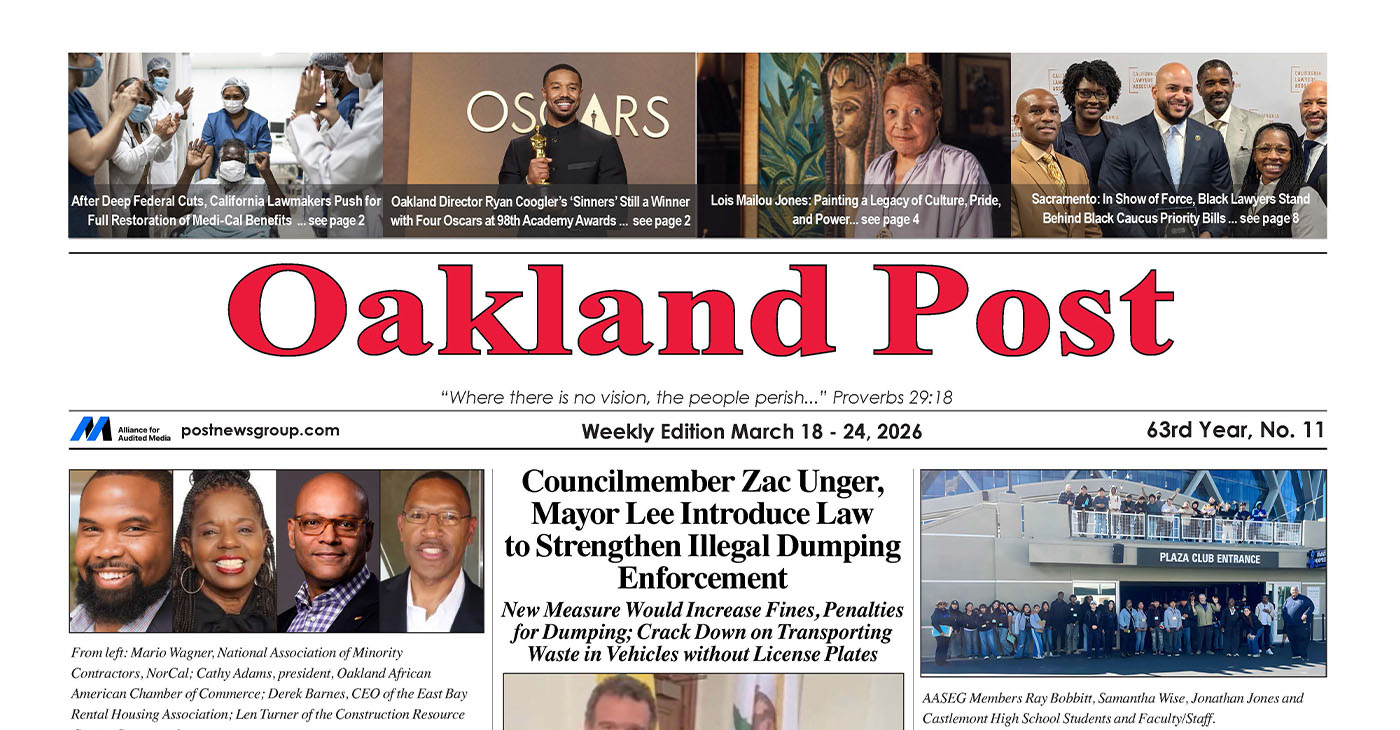
To enlarge your view of this issue, use the slider, magnifying glass icon or full page icon in the lower right corner of the browser window.

Activism
Oakland Post: Week of March 11 -17, 2026
The printed Weekly Edition of the Oakland Post: Week of March 11 – 17, 2026
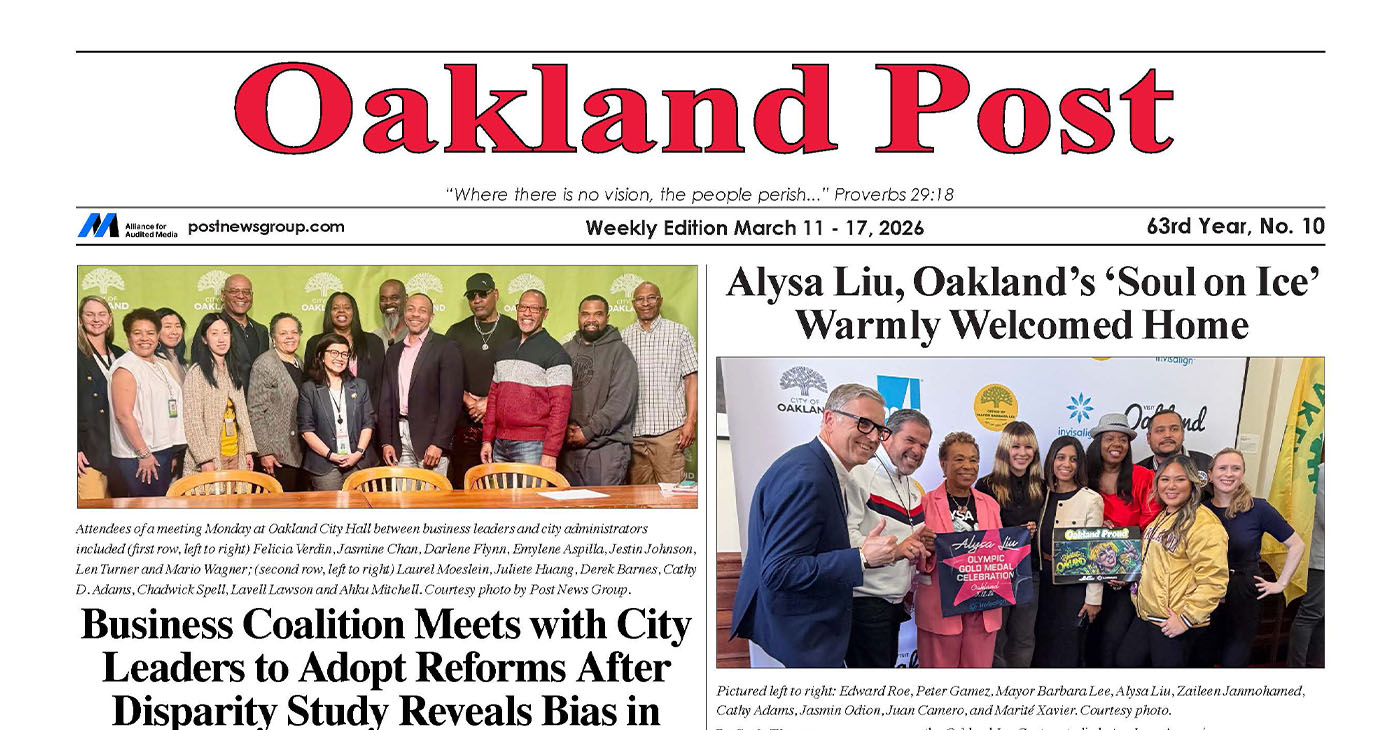
To enlarge your view of this issue, use the slider, magnifying glass icon or full page icon in the lower right corner of the browser window.
Activism
Oakland Post: Week of March 4 – 10, 2026
The printed Weekly Edition of the Oakland Post: Week of March 4 – 10, 2026

To enlarge your view of this issue, use the slider, magnifying glass icon or full page icon in the lower right corner of the browser window.

WORK FROM HOME
Home-based business with potential monthly income of $10K+ per month. A proven training system and website provided to maximize business effectiveness. Perfect job to earn side and primary income. Contact Lynne for more details: Lynne4npusa@gmail.com 800-334-0540


Black Artists in America, Installation Three Wraps at the Dixon Gallery and Gardens

Grief, Advocacy, and Education: A Counselor Reflects on Black Maternal Health

Future of Florida’s Black History Museum in Limbo

New Research Shows the Many Benefits of Early Learning

South Hampton K-8 Students Among Top 10 Finalists for Samsung’s ‘Solve for Tomorrow’ Competition

Cuba: No Negotiation with US on the President or Political System

Brooklyn Academy of Music Names Jamaican-Born Tamara McCaw as President

Trinidad & Tobego – U.S. Launches WhatsApp Channel for American Citizens in the Country

Oakland Post: Week of March 18 – 24, 2026

AI Innovation vs. Ethics and Environmental Impact

AI, Web3, and Digital Reparations

What If You Owned Your AI Agent?

Season 7, Episode 3 – January Reporter’s Roundtable 📱

Season 7, Episode 3 – January Reporter’s Roundtable

AI, Media, and Power | Part 2, Real-World Impacts and Tradeoffs

Oakland Post: Week of February 11 – 17, 2026

Reflecting on Black History Milestones in Birmingham AL

CITY OF SAN LEANDRO STATE OF CALIFORNIA PUBLIC WORKS DEPARTMENT ENGINEERING DIVISION NOTICE TO BIDDERS FOR ANNUAL STREET OVERLAY/REHABILITATION 2019-21 – PHASE III

Oakland Post: Week of February 18 – 24, 2026

PRESS ROOM: NBA Hall of Fame Nominee Terry Cummings Joins 100 Black Men of DeKalb County to Launch Victory & Values Initiative

Oakland Post: Week of February 25 – March 3, 2026

Trump’s MAGA Allies are Creating Executive Order Plan to Steal the 2026 Midterms

U.S. manufacturing rebounds – how foundry services are adapting to rising demand

OP-ED: One Hundred Years of Black Workers Telling the Truth

Chase Oakland Community Center Hosts Alley-Oop Accelerator Building Community and Opportunity for Bay Area Entrepreneurs

Advancements in solar technology that are changing the way we power the world

Poll Shows Support for Policies That Help Families Afford Child Care

Oakland Post: Week of March 4 – 10, 2026

PRESS ROOM: Civil Rights TV Launches in Selma as the World’s First 24/7 Civil Rights Television Network

Woman’s Search for Family’s Roots Leads to Ancestor John T. Ward – A Successful Entrepreneur and Conductor on the Underground Railroad

Hyundai Ioniq 5 Parking, Safety, and 360 View #shorts

2025 Ioniq 5 New Wiper & Powerful Performance! #shorts

Electric SUV Range: Is 259 Miles Enough? #shorts

EV Charging: How Fast Can You Charge an Electric Vehicle? #shorts

Biometric Cooling… Messaging Seats…Come on! 2025 Infiniti QX80 Autograph 4WD

Charged Up: Witness the Magic of a Fully Electric Car! #shorts

Range Rover Sport PHEV Included…: See What’s Inside This Luxury SUV! #shorts

Invisible Hood View: Perfect Parking with X-Ray Vision! #shorts

AI Is Reshaping Black Healthcare: Promise, Peril, and the Push for Improved Results in California

ESSAY: Technology and Medicine, a Primary Care Point of View

Sanctuary Cities

The RESISTANCE – FREEDOM NOW

STATE OF THE PEOPLE: Freddie

ECONOMIC BOYCOTT DAY!!!!!

I told You So

-
 #NNPA BlackPress4 weeks ago
Poll Shows Support for Policies That Help Families Afford Child Care
-
 Activism4 weeks ago
Oakland Post: Week of March 4 – 10, 2026
-
 #NNPA BlackPress3 weeks ago
Woman’s Search for Family’s Roots Leads to Ancestor John T. Ward – A Successful Entrepreneur and Conductor on the Underground Railroad
-

 #NNPA BlackPress4 weeks ago
OP-ED: NNPA Launches 2026 “Leadership Matters” Video Series
-

 #NNPA BlackPress3 weeks ago
Advocates Raise Alarm Over ICE Operation, MOU and Detention Risks in Baltimore County
-

 #NNPA BlackPress3 weeks ago
COMMENTARY: Women of Color Shape Our Past and Future
-

 #NNPA BlackPress3 weeks ago
Pete Buttigieg to Join Mayor Randall Woodfin for Community Town Hall in Birmingham
-
 Activism2 weeks ago
Oakland Post: Week of March 11 -17, 2026
