
Activism
COMMENTARY: DA Price Has Done Nothing Wrong; Oppose Her Recall
The job of the District Attorney’s Office is to do justice, not revenge. Since I was an NAACP leader and then a Congress of Racial Equality (CORE) Field Secretary in my home of Durham, N.C., in the 1960s, I have fought for prosecutorial justice of the kind Price tries to model. She is wrongly accused of not arresting criminals, (not her job), wrongly accused of letting criminal out of jail once arrested (not true) and failing to charge enhancements (part of a state reform movement).


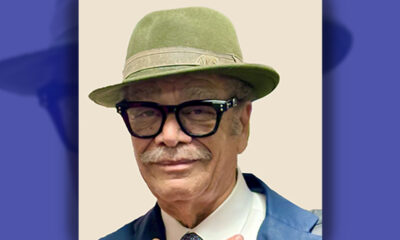
By Walter Riley
Attorney at Law
It has long been known that the criminal justice system needs to be reformed. Pamela Price campaigned on a promise to reform Alameda County’s criminal justice system. She ran a grassroots campaign, largely funded by small donations.
Despite being outspent nearly 4 to 1, she won decisively with 53% of the vote. She took no money from police unions, freeing her to hold law enforcement accountable, something voters consistently identify as a major issue.
Recall organizing began before she even took office, showing that the recall is not about her performance.
The job of the District Attorney’s Office is to do justice, not revenge. Since I was an NAACP leader and then a Congress of Racial Equality (CORE) Field Secretary in my home of Durham, N.C., in the 1960s, I have fought for prosecutorial justice of the kind Price tries to model.
She is wrongly accused of not arresting criminals, (not her job), wrongly accused of letting criminals out of jail once arrested (not true) and failing to charge enhancements (part of a state reform movement).
Oaklandside reported. “In April 2020, a growing number of COVID-19 cases pushed the state court system to lower bail to $0 for most misdemeanor and lower-level felony offenses. The emergency bail schedule, the list setting bail at nothing for most types of crimes, was intended to help reduce the number of people being booked into county jail” during COVID.
It was the Judicial Council Order that released arrestees, not Price!
Sentencing reform makes all our communities safer. Price referred all her attorneys to guidance from the California Commission on Revision of the Penal Code, where charging and enhancements were addressed for reform at the state level.
California state law limits prosecution of youth as adults. Diversion typically yields better outcomes than arrest and prosecution in juvenile courts, including far lower likelihood of subsequent arrests.
Price’s directive to limit sentencing enhancements is a step toward creating a more just and fair system. Enhancements have disproportionately targeted marginalized communities, leading to excessive sentences without addressing the root causes of crime.
By limiting enhancements, Price is creating more balanced sentencing, focusing on rehabilitation over harsh punishment.
Her broader actions in office have shown a commitment to making Alameda County safer. According to California Gov. Gavin Newsom, crime in Oakland has dropped by 33% since DA Price took office, underscoring the effectiveness of her approach.
Her administration also expanded mental health courts, ensuring individuals with mental health challenges receive appropriate treatment, reducing recidivism.
In addition, she increased victim advocacy by 38%, providing support to over 22,500 victims.
The recall effort is premature and unjustified. DA Price has been in office for just over a year and a half, and despite significant opposition from the start, she has made transformative changes.
Some key achievements include:
- Holding corporations accountable has been a central pillar of her work, bringing in over $20 million in settlements and judgments, five times as much as previous administrations.
- Securing a $4 million settlement holding Safeway, Vons, and Albertsons accountable for overcharging customers,
- Filing 12 felony charges against a man accused of multiple armed robberies.
- Investigating and prosecuting police misconduct.
Her approach is focused on long-term reform, and residents deserve the chance to see these policies take full effect before casting judgment.
Media coverage has largely focused on sensational stories about crime, often overlooking the broader reforms and successes achieved by Price. Fear-driven narratives about crime spikes—many of which are linked to the pandemic—have often obscured her efforts to make the justice system fairer and more effective.
DA Price’s 40 years of experience as a civil rights attorney, including a win before the U.S. Supreme Court, has been foundational to her efforts to reform the criminal justice system.
Her deep understanding of justice, fairness, and accountability is precisely why she’s the right person to lead Alameda County’s justice system into the future. We can’t go back.






Activism
Oakland Post: Week of September 23 – 29, 2026
The printed Weekly Edition of the Oakland Post: Week of September 23 – 29, 2026

To enlarge your view of this issue, use the slider, magnifying glass icon or full page icon in the lower right corner of the browser window.
Activism
Oakland Post: Week of September 16 – 22, 2026
The printed Weekly Edition of the Oakland Post: Week of September 16 – 22, 2026

To enlarge your view of this issue, use the slider, magnifying glass icon or full page icon in the lower right corner of the browser window.
Activism
Oakland Post: Week of September 9 – 15, 2026
The printed Weekly Edition of the Oakland Post: Week of September 9 – 15, 2026

To enlarge your view of this issue, use the slider, magnifying glass icon or full page icon in the lower right corner of the browser window.



Asm. Corey Jackson Announces Launch of 24-Hour Childcare in His District

IN MEMORIAM: The Rev. Leon “Sonny” Clark, Longtime Orange County Pastor and Community Leader, Dies at 72

Poll: Becerra Widens His Lead Over Hilton; Californians Split on Wealth Tax

From Historic Memories to New Possibilities: Oakland Celebrates Coliseum 60

County Office of Education Says OUSD Finances Are Getting Healthier, Materially Stronger

LIVE FREE Sunday Dinner Brings Faith, Fellowship and Civic Conversation to Oakland

Remembering Chauncey Bailey as Student Journalists Face Threats to Truth-Telling

BLACspace Cooperative Invites Bay Area to Experience Oakland’s Black Cultural Ecosystem Through a BLAC Map Tour + Party

In Wake of Death on Doorstep, Williams Chapel Baptist Church Calls for Better Care, Funding for Unhoused

Oakland Centenarian Nuna McKee Honored!

Caribbean Nations Produce Action Plan Calling for UK Reparations Over Slavery

Oakland Post: Week of September 23 – 29, 2026

Doulas Are Helping Black California Moms Navigate Pregnancy–Even as High Mortality Rates Persist

Newsom Signs Addictive Social Media Law to Protect Kids

On Your November Ballot: Prop 38 Would Allocate $8.4 Billion to Immunology and Immunotherapy Funding

Standoff for Justice: Our Homes Are Worth Fighting For

Oakland Post: Week of August 26 – September 1, 2026

Frontier Airlines’ Return to Oakland Airport Brings Flights, Jobs and Opportunity

Gubernatorial Candidate Steve Hilton Blasts California New Tire Rules; Newsom Hits Back

Chef Sharon Lee Blends Culinary Excellence, Education and Empowerment

Jackie Wright Champions Bay Area Stories, Filmmakers and Cultural Institutions

Big City Mayors Ask for “Yes” Vote on Housing Bond Measure; Conservatives Say “No”

Oakland Coliseum Project Opens Door for Small Businesses to Build Bigger

Gov. Newsom’s Latest Appointees Include Sacramento Advocate for Formerly Incarcerated Students; State’s New Tech Chief

Misnamed ‘Parent’ PAC Seeks to Influence Oakland School Board Elections

Longtime BWOPA Member Brendalyn Goodall Appointed to California Workforce Development Board

Gov. Newsom Signs Law Shielding Immigration Aid Workers From Doxing Threats

Secretary of State Shirley N. Weber Urges Californians to Vote Early as Voter ID Battle Intensifies

From Palestine to Oakland: Seeds for Liberation Examines Shared Struggles for Freedom

IN MEMORIAM: Dolly Parton Dead at 80 — How She Built a Legacy of Love and Earned Her Place in Black Culture

The Conversation With Al McFarlane 6/23/26

Media Monday 6/22/26

LIVE! ASK ALMA! — TUES. 6.23.26 7PM EST

Car Buying Secrets: 4 Hidden Checks Before You Sign!

Is This 550 HP Charger Worth YOUR Money? AutoNetwork Review

Celebrating Juneteenth – Frederick Douglass on education and resistance

LIVE! — ASK ALMA! — TUES. 6.19.26 7PM EST

Hyundai Ioniq 5 Parking, Safety, and 360 View #shorts

2025 Ioniq 5 New Wiper & Powerful Performance! #shorts

Electric SUV Range: Is 259 Miles Enough? #shorts

EV Charging: How Fast Can You Charge an Electric Vehicle? #shorts

Biometric Cooling… Messaging Seats…Come on! 2025 Infiniti QX80 Autograph 4WD

Charged Up: Witness the Magic of a Fully Electric Car! #shorts

Range Rover Sport PHEV Included…: See What’s Inside This Luxury SUV! #shorts

Invisible Hood View: Perfect Parking with X-Ray Vision! #shorts
-
 Community2 weeks ago
Misnamed ‘Parent’ PAC Seeks to Influence Oakland School Board Elections
-

 Activism3 weeks ago
Oakland Post: Week of September 2 – 8, 2026
-

 Community2 weeks ago
Richmond Tiny House Village Farm & Garden Set to Open Gates on Sept. 26
-

 Black History2 weeks ago
OPINION: Nolan Wells’ Death One of Several Signifying Racial Terror Lives on in U.S. South
-

 Black History2 weeks ago
Latest Massacre in Haiti Reveals Cruelty U.S. Deportations
-

 Activism2 weeks ago
Oakland Post: Week of September 9 – 15, 2026
-

 Community2 weeks ago
Democratic Clubs Interview Candidates for Oakland School Board
-

 Featured2 weeks ago
‘Ready to See These Bills Become Law’: Sen. Weber’s Package of 15 Bills Advance to Gov. Newsom’s Desk
