
Activism
COMMENTARY: Accountability — An Insurrectionist Removed from Office
In our system of government, there are many people with roles to play in defending our democracy. Congress can use its oversight power to reveal the corruption within the White House. The Justice Department can prosecute criminals like those who attacked the Capitol Police — and those who broke other laws as they tried desperately to keep the defeated Trump in power. Judges can hold public officials accountable for violating the Constitution.

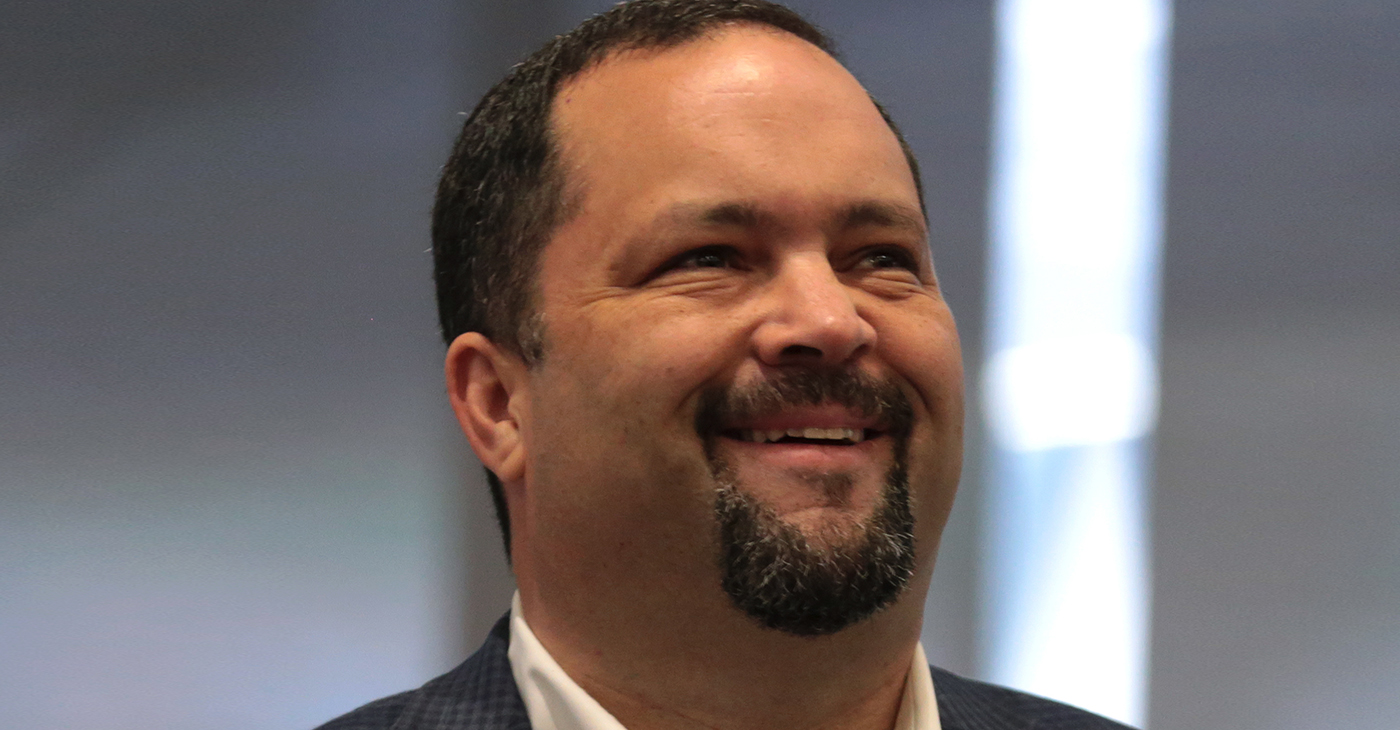
By Ben Jealous
A New Mexico judge has done the country a big favor. Judge Francis Mathew upheld a little-known provision of the U.S. Constitution and removed a public official for participating in the Jan. 6, 2021, insurrection. I hope other judges have the courage to follow his lead.
The principle that no person is above the law — that powerful people have to obey the laws like everyone else — is essential to a democratic society. If this principle is not enforced, corrupt leaders will undermine the rule of law and democracy itself.
Judge Mathew ruled that a county commissioner who participated in the attack on the U.S. Capitol can no longer hold public office. The ruling was based on a section of the 14th Amendment to the Constitution, which was passed after the Civil War. It forbids anyone from holding public office if they had taken an oath to support the Constitution of the United States and then “engaged in insurrection or rebellion” against the country.
The judge found that Otero County Commissioner Couy Griffin helped lead the mob that used violence to try to prevent Congress from affirming Joe Biden’s win in the presidential election. Griffin later bragged about his role and suggested that there might be another insurrection coming.
Judge Mathew’s ruling is a milestone in the effort to hold public officials accountable for trying to overturn the 2020 presidential election. It should provide a road map — and some moral courage — to other judges considering legal efforts to hold state legislators and others accountable for trying to undermine democracy.
Another important effort to hold powerful people accountable for the insurrection is being conducted by the House Select Committee that is investigating the insurrection and the schemes that led up to it.
The committee’s public hearings this summer gave the American people a powerful dose of truth-telling about the lies and deceptions of President Trump, members of his legal team, and his political allies. The committee’s investigation is continuing, and we can look forward to more public hearings this fall.
Members and staff of the committee have spent countless hours digging through emails and other public records; interviewing former Trump administration officials and lawyers; members of Congress, and far-right activists who promoted Trump’s lies about election fraud. They are still at it. Among the people they hope to interview this fall are former Vice President Mike Pence, former House Speaker Newt Gingrich, and far-right activist Ginni Thomas — wife of Supreme Court Justice Clarence Thomas.
Truth is a first step toward accountability. But it cannot be the only step.
The committee’s efforts to get a full picture of the illegal scheming to overturn the election is essential. So is punishing wrongdoers and preventing future attempts to subvert our elections.
There are plenty of wrongdoers who need to be held accountable, punished, and prevented from using powerful government positions to undermine democracy and the rule of law. And that includes former President Trump, whose lies about a “stolen” election fueled the insurrectionists’ anger.
In our system of government, there are many people with roles to play in defending our democracy. Congress can use its oversight power to reveal the corruption within the White House. The Justice Department can prosecute criminals like those who attacked the Capitol Police — and those who broke other laws as they tried desperately to keep the defeated Trump in power. Judges can hold public officials accountable for violating the Constitution.
And we the voters can defend democracy by electing local, state, and national officials who are committed to the democratic process — and rejecting those who seek power for the purpose of interfering with our elections and our ability to hold powerful people accountable.
Ben Jealous serves as president of People For the American Way and Professor of the Practice at the University of Pennsylvania. A New York Times best-selling author, his next book “Never Forget Our People Were Always Free” will be published by Harper Collins in December 2022.











Activism
Oakland Post: Week of September 23 – 29, 2026
The printed Weekly Edition of the Oakland Post: Week of September 23 – 29, 2026

To enlarge your view of this issue, use the slider, magnifying glass icon or full page icon in the lower right corner of the browser window.
Activism
Oakland Post: Week of September 16 – 22, 2026
The printed Weekly Edition of the Oakland Post: Week of September 16 – 22, 2026

To enlarge your view of this issue, use the slider, magnifying glass icon or full page icon in the lower right corner of the browser window.
Activism
Oakland Post: Week of September 9 – 15, 2026
The printed Weekly Edition of the Oakland Post: Week of September 9 – 15, 2026

To enlarge your view of this issue, use the slider, magnifying glass icon or full page icon in the lower right corner of the browser window.



Asm. Corey Jackson Announces Launch of 24-Hour Childcare in His District

IN MEMORIAM: The Rev. Leon “Sonny” Clark, Longtime Orange County Pastor and Community Leader, Dies at 72

Poll: Becerra Widens His Lead Over Hilton; Californians Split on Wealth Tax

From Historic Memories to New Possibilities: Oakland Celebrates Coliseum 60

County Office of Education Says OUSD Finances Are Getting Healthier, Materially Stronger

LIVE FREE Sunday Dinner Brings Faith, Fellowship and Civic Conversation to Oakland

Remembering Chauncey Bailey as Student Journalists Face Threats to Truth-Telling

BLACspace Cooperative Invites Bay Area to Experience Oakland’s Black Cultural Ecosystem Through a BLAC Map Tour + Party

In Wake of Death on Doorstep, Williams Chapel Baptist Church Calls for Better Care, Funding for Unhoused

Oakland Centenarian Nuna McKee Honored!

Caribbean Nations Produce Action Plan Calling for UK Reparations Over Slavery

Oakland Post: Week of September 23 – 29, 2026

Doulas Are Helping Black California Moms Navigate Pregnancy–Even as High Mortality Rates Persist

Newsom Signs Addictive Social Media Law to Protect Kids

On Your November Ballot: Prop 38 Would Allocate $8.4 Billion to Immunology and Immunotherapy Funding

Standoff for Justice: Our Homes Are Worth Fighting For

Oakland Post: Week of August 26 – September 1, 2026

Frontier Airlines’ Return to Oakland Airport Brings Flights, Jobs and Opportunity

Gubernatorial Candidate Steve Hilton Blasts California New Tire Rules; Newsom Hits Back

Chef Sharon Lee Blends Culinary Excellence, Education and Empowerment

Jackie Wright Champions Bay Area Stories, Filmmakers and Cultural Institutions

Big City Mayors Ask for “Yes” Vote on Housing Bond Measure; Conservatives Say “No”

Oakland Coliseum Project Opens Door for Small Businesses to Build Bigger

Gov. Newsom’s Latest Appointees Include Sacramento Advocate for Formerly Incarcerated Students; State’s New Tech Chief

Misnamed ‘Parent’ PAC Seeks to Influence Oakland School Board Elections

Longtime BWOPA Member Brendalyn Goodall Appointed to California Workforce Development Board

Gov. Newsom Signs Law Shielding Immigration Aid Workers From Doxing Threats

Secretary of State Shirley N. Weber Urges Californians to Vote Early as Voter ID Battle Intensifies

From Palestine to Oakland: Seeds for Liberation Examines Shared Struggles for Freedom

IN MEMORIAM: Dolly Parton Dead at 80 — How She Built a Legacy of Love and Earned Her Place in Black Culture

The Conversation With Al McFarlane 6/23/26

Media Monday 6/22/26

LIVE! ASK ALMA! — TUES. 6.23.26 7PM EST

Car Buying Secrets: 4 Hidden Checks Before You Sign!

Is This 550 HP Charger Worth YOUR Money? AutoNetwork Review

Celebrating Juneteenth – Frederick Douglass on education and resistance

LIVE! — ASK ALMA! — TUES. 6.19.26 7PM EST

Hyundai Ioniq 5 Parking, Safety, and 360 View #shorts

2025 Ioniq 5 New Wiper & Powerful Performance! #shorts

Electric SUV Range: Is 259 Miles Enough? #shorts

EV Charging: How Fast Can You Charge an Electric Vehicle? #shorts

Biometric Cooling… Messaging Seats…Come on! 2025 Infiniti QX80 Autograph 4WD

Charged Up: Witness the Magic of a Fully Electric Car! #shorts

Range Rover Sport PHEV Included…: See What’s Inside This Luxury SUV! #shorts

Invisible Hood View: Perfect Parking with X-Ray Vision! #shorts
-
 Community2 weeks ago
Misnamed ‘Parent’ PAC Seeks to Influence Oakland School Board Elections
-

 Activism3 weeks ago
Oakland Post: Week of September 2 – 8, 2026
-

 Community2 weeks ago
Richmond Tiny House Village Farm & Garden Set to Open Gates on Sept. 26
-

 Activism2 weeks ago
Oakland Post: Week of September 9 – 15, 2026
-

 Black History2 weeks ago
Latest Massacre in Haiti Reveals Cruelty U.S. Deportations
-

 Black History2 weeks ago
OPINION: Nolan Wells’ Death One of Several Signifying Racial Terror Lives on in U.S. South
-

 Community2 weeks ago
Democratic Clubs Interview Candidates for Oakland School Board
-

 Featured2 weeks ago
‘Ready to See These Bills Become Law’: Sen. Weber’s Package of 15 Bills Advance to Gov. Newsom’s Desk
