
Activism
Cassie ‘Mama C’ Lopez Honored as Oakland’s Mother of the Year
Cassandra “Mama C” Lopez, a dedicated parent, teacher, and activist, was honored as Oakland’s Mother of the Year for her unwavering commitment to community and justice.

By Ken Epstein
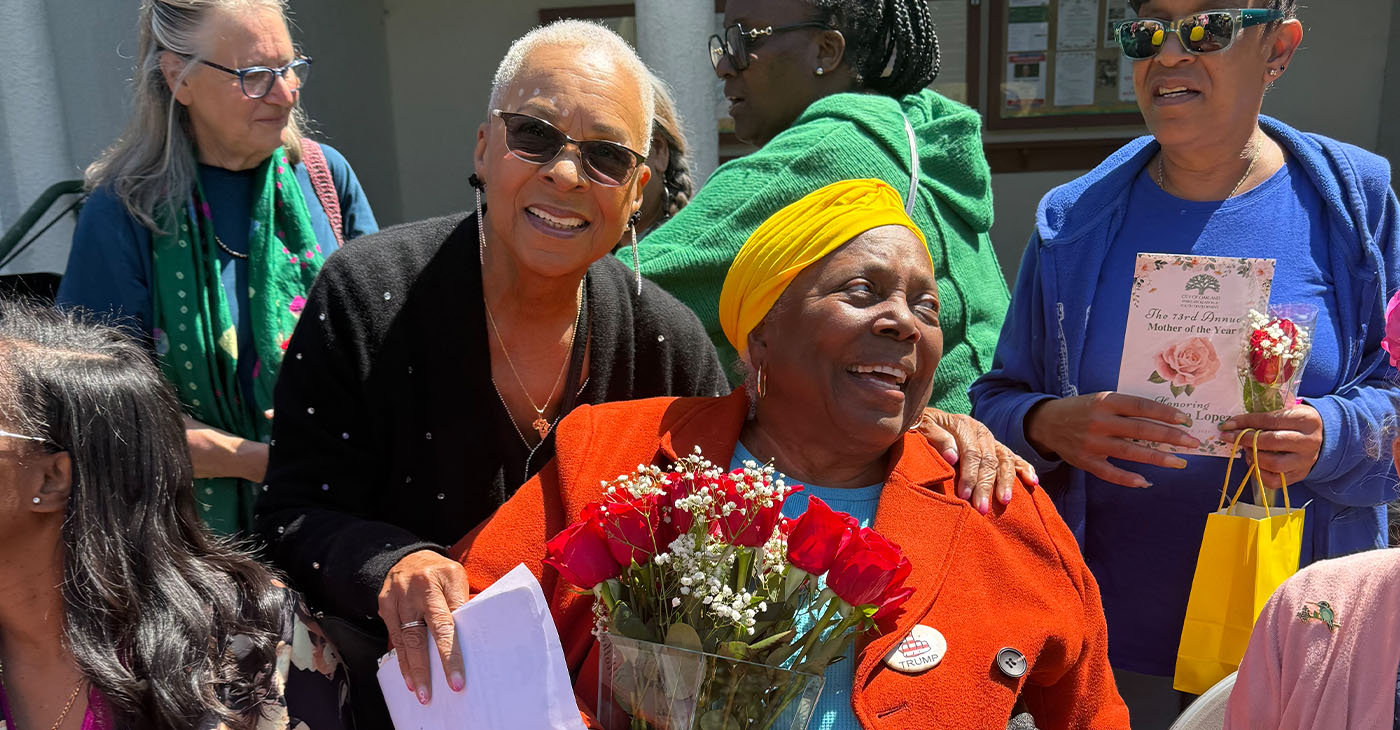
The City of Oakland recognized Cassandra, “Mama C,” Lopez – parent, teacher, community activist, and justice warrior – as Oakland’s Mother of the Year in a celebration at Oakland’s Morcom Rose Garden on Mother’s Day weekend.
Long recognized as a leader in her community, she was nominated by District 3 City Councilmember Carroll Fife to receive the city’s 73rd annual Mother of the Year award.
Speaking at the crowded ceremony on Saturday, May 9, where Mama C received roses and a proclamation from Mayor Barbara Lee, Fife said she felt honored to nominate Lopez, an “amazing woman – a hell-raising humanitarian, for the energy, the passion, but most of all the love for community” that makes her one of those “exceptional women whose lives, exemplify love, sacrifice, leadership, and unwavering commitment to the family and community they serve.”
Cassie Lopez was born in 1945 to Pauline and Calvin Weaver, a family that had left Florida and Jim Crow for the east side of Detroit. From an early age, she was instilled with a sense of Black awareness, love, and the importance of community in the face of hardships, including poverty, freezing winters, low pay, and slum landlords.
Fifty-five years ago, she married Juan Lopez. The couple has three children and has lived for decades in a neighborhood on the edge of downtown Oakland near Mosswood Park.
Said her husband, Juan, “Mama C has been a selfless mother of our own children, and she also became a teacher. Our home became a second home for many young people. For some, it was refuge from difficult home situations, and for others, a safe place to hang out.
“Throughout the years, Mama C was sometimes a foot soldier and other times a leader, immersed in some of the biggest national and citywide struggles of the day,” Juan said. “But less known to many is the role she played day in and day out where the rubber hits the road.
“For 35 years, she has shepherded the Mosswood Park and Recreation Center – through its good and bad times. If the Center exists (and thrives) today, it has to do with Mama C, working alongside neighbors, center directors, community advisory council, and when necessary, community coalitions, city officials, the religious community, and the labor movement.”
Said Mateenah Floyd-Okanlawon, “I am an old friend of my sister here. We met in 1970 in the sugarcane fields of Cuba, where we were helping the Cuban government harvest their sugar. We have been friends ever since. She has always been someone who does not give in to despair.”
David Johnson, an educator in Oakland, was one of the neighborhood children who grew up in the community created by Mama C and her family
“Cassandra Lopez is a beacon of light, full of compassion. She has dedicated her life to quality education to the poor and working class,” serving for 40 years as a Spanish teacher in Oakland schools, he said.
“She has dedicated her life to speak truth to power, justice to the silent, and as a member of the community, she advocates for programs and resources,” he said.
In her remarks, Mama C recognized the influence and power of all mothers. “Together, we all stand on the backs of our mothers. Mothers play a special role in society. We give when we have almost nothing left to give. We hurt when some people don’t see the hurt and the pain that our families endure. But we keep on moving forward.”
Looking at what African Americans, other people of color and working people face in the country today, she said, “We are deserving of the very best because our hands, our bodies produce the wealth of world, and yet we get the least. We see our country wholesale being stolen away from us, and we are told to grin and bear it. We’re not bearing it; we’re fighting against it.”
Continuing, she said, “There’s enough wealth in this world that there should be no hunger in the world. There should be nobody without a decent place to live. Nobody should be sleeping on the street. Teachers should get the freedom to be creative and tell the stories that exist in this nation that make us strong and great.
“We have a lot to do. We cannot despair. We cannot run. People are learning, and together, collectively, we can do it.”









Activism
Oakland Post: Week of September 23 – 29, 2026
The printed Weekly Edition of the Oakland Post: Week of September 23 – 29, 2026


To enlarge your view of this issue, use the slider, magnifying glass icon or full page icon in the lower right corner of the browser window.

Activism
Oakland Post: Week of September 16 – 22, 2026
The printed Weekly Edition of the Oakland Post: Week of September 16 – 22, 2026

To enlarge your view of this issue, use the slider, magnifying glass icon or full page icon in the lower right corner of the browser window.
Activism
Oakland Post: Week of September 9 – 15, 2026
The printed Weekly Edition of the Oakland Post: Week of September 9 – 15, 2026

To enlarge your view of this issue, use the slider, magnifying glass icon or full page icon in the lower right corner of the browser window.


Asm. Corey Jackson Announces Launch of 24-Hour Childcare in His District

IN MEMORIAM: The Rev. Leon “Sonny” Clark, Longtime Orange County Pastor and Community Leader, Dies at 72

Poll: Becerra Widens His Lead Over Hilton; Californians Split on Wealth Tax

From Historic Memories to New Possibilities: Oakland Celebrates Coliseum 60

County Office of Education Says OUSD Finances Are Getting Healthier, Materially Stronger

LIVE FREE Sunday Dinner Brings Faith, Fellowship and Civic Conversation to Oakland

Remembering Chauncey Bailey as Student Journalists Face Threats to Truth-Telling

BLACspace Cooperative Invites Bay Area to Experience Oakland’s Black Cultural Ecosystem Through a BLAC Map Tour + Party

In Wake of Death on Doorstep, Williams Chapel Baptist Church Calls for Better Care, Funding for Unhoused

Oakland Centenarian Nuna McKee Honored!

Caribbean Nations Produce Action Plan Calling for UK Reparations Over Slavery

Oakland Post: Week of September 23 – 29, 2026

Doulas Are Helping Black California Moms Navigate Pregnancy–Even as High Mortality Rates Persist

Newsom Signs Addictive Social Media Law to Protect Kids

On Your November Ballot: Prop 38 Would Allocate $8.4 Billion to Immunology and Immunotherapy Funding

Standoff for Justice: Our Homes Are Worth Fighting For

Oakland Post: Week of August 26 – September 1, 2026

Frontier Airlines’ Return to Oakland Airport Brings Flights, Jobs and Opportunity

Gubernatorial Candidate Steve Hilton Blasts California New Tire Rules; Newsom Hits Back

Chef Sharon Lee Blends Culinary Excellence, Education and Empowerment

Jackie Wright Champions Bay Area Stories, Filmmakers and Cultural Institutions

Big City Mayors Ask for “Yes” Vote on Housing Bond Measure; Conservatives Say “No”

Oakland Coliseum Project Opens Door for Small Businesses to Build Bigger

Gov. Newsom’s Latest Appointees Include Sacramento Advocate for Formerly Incarcerated Students; State’s New Tech Chief

Misnamed ‘Parent’ PAC Seeks to Influence Oakland School Board Elections

Longtime BWOPA Member Brendalyn Goodall Appointed to California Workforce Development Board

Gov. Newsom Signs Law Shielding Immigration Aid Workers From Doxing Threats

Secretary of State Shirley N. Weber Urges Californians to Vote Early as Voter ID Battle Intensifies

From Palestine to Oakland: Seeds for Liberation Examines Shared Struggles for Freedom

IN MEMORIAM: Dolly Parton Dead at 80 — How She Built a Legacy of Love and Earned Her Place in Black Culture

The Conversation With Al McFarlane 6/23/26

Media Monday 6/22/26

LIVE! ASK ALMA! — TUES. 6.23.26 7PM EST

Car Buying Secrets: 4 Hidden Checks Before You Sign!

Is This 550 HP Charger Worth YOUR Money? AutoNetwork Review

Celebrating Juneteenth – Frederick Douglass on education and resistance

LIVE! — ASK ALMA! — TUES. 6.19.26 7PM EST

Hyundai Ioniq 5 Parking, Safety, and 360 View #shorts

2025 Ioniq 5 New Wiper & Powerful Performance! #shorts

Electric SUV Range: Is 259 Miles Enough? #shorts

EV Charging: How Fast Can You Charge an Electric Vehicle? #shorts

Biometric Cooling… Messaging Seats…Come on! 2025 Infiniti QX80 Autograph 4WD

Charged Up: Witness the Magic of a Fully Electric Car! #shorts

Range Rover Sport PHEV Included…: See What’s Inside This Luxury SUV! #shorts

Invisible Hood View: Perfect Parking with X-Ray Vision! #shorts
-
 Community3 weeks ago
Misnamed ‘Parent’ PAC Seeks to Influence Oakland School Board Elections
-

 Activism4 weeks ago
Oakland Post: Week of September 2 – 8, 2026
-

 Community3 weeks ago
Richmond Tiny House Village Farm & Garden Set to Open Gates on Sept. 26
-

 Activism3 weeks ago
Oakland Post: Week of September 9 – 15, 2026
-

 Black History3 weeks ago
Latest Massacre in Haiti Reveals Cruelty U.S. Deportations
-

 Black History3 weeks ago
OPINION: Nolan Wells’ Death One of Several Signifying Racial Terror Lives on in U.S. South
-

 Community3 weeks ago
Democratic Clubs Interview Candidates for Oakland School Board
-

 Business2 weeks ago
Mayor Lee Announces $1 Million Kaiser Permanente Grant for Pilot Program to Address Homelessness, Clean Up Public Spaces throughout Oakland
