
Government
California’s 2020 Redistricting Commission Is Accepting Applications: Only 253 African Americans Have Applied

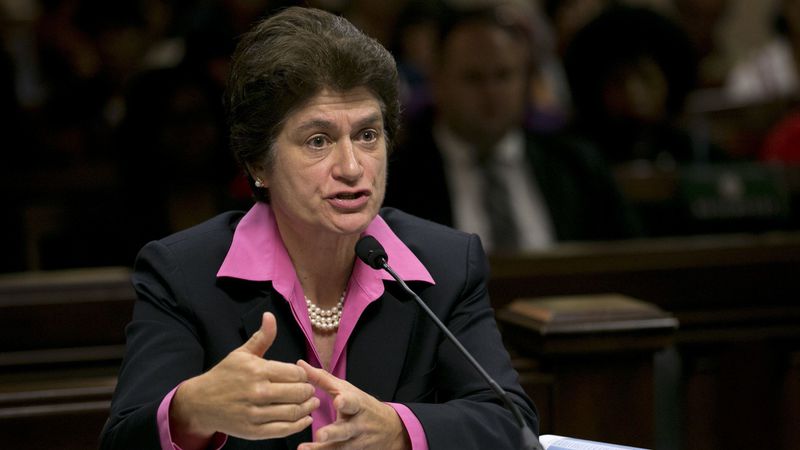
Gerrymandering, or the creation of voting districts that look like jigsaw puzzle pieces to meet political goals, is a problem the California Redistricting Commission seeks to avoid.
The 14 appointees to the commission should reflect the diversity of the state’s population and there is already concern that Black people may be counted out.
As of Sunday this week, a total of about 4,226 Californians had applied for a position on the CRC, which will convene next year and last through 2030.
Of that number, about 6 percent – or approximately 253 applicants – are African Americans.
On the website of the CSA, which guides the work of the commission, there are daily updating charts and graphs that capture the ethnicity and other demographic information of the people who have applied so far.
The CSA says it wants Californians of all backgrounds who have a history of civic engagement to apply in an effort to make sure the group selected is a close reflection of the state’s general population in terms of region, comity, income, age, race, ethnicity and other profile information.
“We are thrilled about the number of applications submitted since the application period opened on June 10,” said Elaine M. Howie, California State Auditor. “But the work is not done yet. We want to make sure that all Californians are represented in the initial application pool. That means we need even more of the State’s talented and diverse citizens to take up this once in a decade opportunity and apply by August 9.”
Every 10 years, California appoints a new commission after the U.S. Census. It is tasked with mapping or re-drawing the state’s electoral lines based on geographic and other data changes in the state population over the decade between census counts.
In 2008, California voters approved the commission through a constitutional amendment called “The Voters First Act” or “Proposition 11” that handed the power of drawing electoral maps over to the hands of citizens. The policy was set up to avoid the political influence of government officials or special interest groups on the redistricting process.
Before the passage of Proposition 11, the state Legislature was responsible for drawing its own electoral districts.
“The politicians were choosing their districts instead of the districts choosing their politicians,” said Mario Blanco, a member of the outgoing 2010 commission, detailing how the former process of redistricting before prop 11 was vulnerable to gerrymandering.
Then, in 2011, California voters approved Proposition 20, an initiative that expanded the responsibilities of the commission to drawing California’s U.S. Congressional districts as well.
The 2020 Commission will include five Democrats, five Republicans, and four who are either registered without, or “independent” of, any political party,” said Fernandez.
The citizens of California, through the California State Auditor (CSA) office, sets up the commission and tasks it with drawing the 120 legislative districts for the state’s U.S. Congress, Assembly and Senate elections.
To qualify, an applicant must be a registered voter who has been a member of the same political party or no political party since July 1, 2015. He or she must have also voted in three statewide general elections. The CSA also employs other criteria to narrow down the pool of applicants.
Last year, a total of 30,000 Californians applied to be on the commission, which gets narrowed down through eligibility requirements, essay questions and letters of recommendation. A random drawing reduces the applicant pool to 60, leaders of the state legislature, further reduce the list that the state auditor and the preliminary members of the commission bring down to the final 12.
The commission hires its own staff and works independently within pre-set guidelines established by the CSA. Commissioners are paid a stipend of between $300 – $400 per week and all expenses related to work will be reimbursed.
“Nationally, we are seen as the alternative, the model, of how you can do redistricting better and in a more inclusive way,” says Connie Malloy, another member of the 2010 commission.
To apply or track demographics visit: shapecaliforniasfuture.auditor.ca.gov.

Community
Asm. Corey Jackson Announces Launch of 24-Hour Childcare in His District
Assemblymember Corey Jackson has secured $2 million in state funding for a proposed childcare special district in Moreno Valley and Perris. This funding aims to establish a system providing 24-hour, seven-day-a-week childcare, which would be California’s first special district focused solely on childcare. The initiative seeks to address the area’s designation as a “childcare desert” and high costs for working families. The funding will cover startup, planning, and formation costs for the district. Read more about the specifics of this groundbreaking initiative.

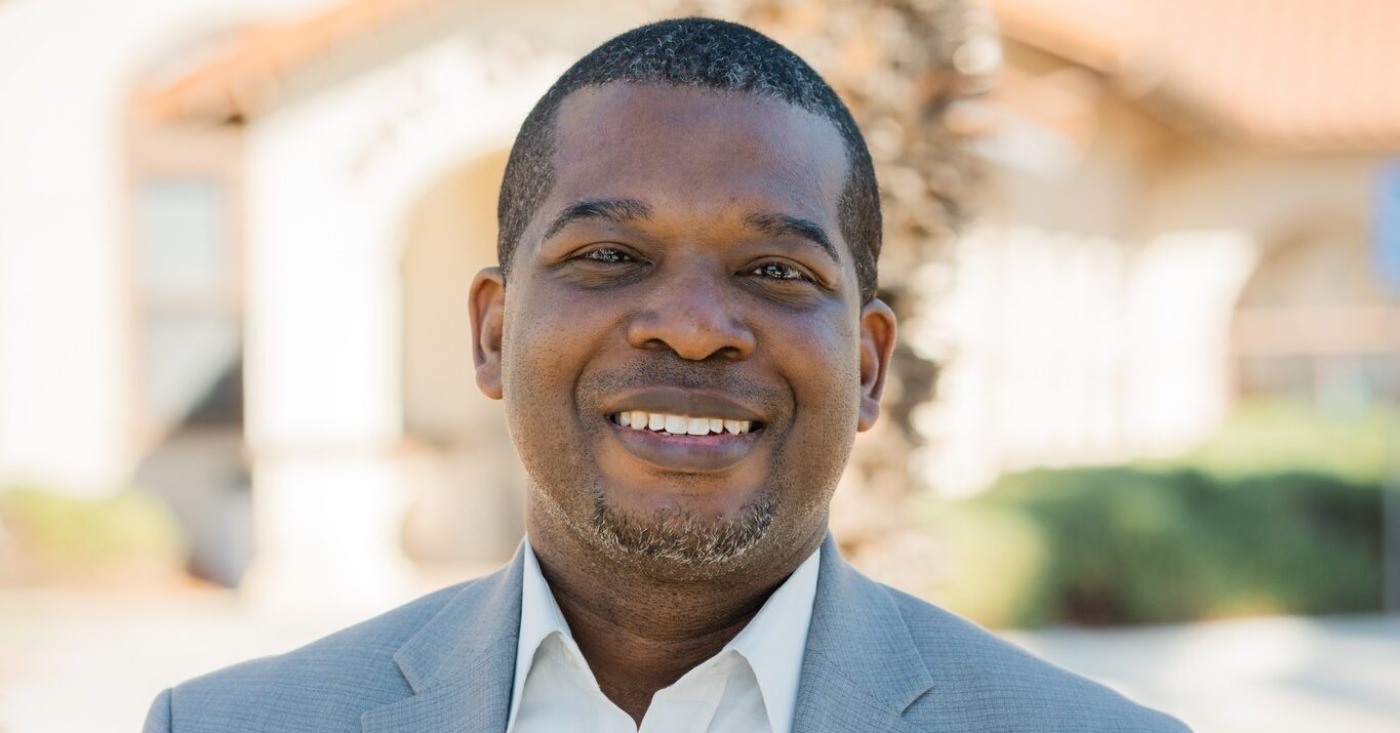
Assemblymember Corey Jackson (D-Moreno Valley) has secured $2 million in state funding to launch a proposed childcare special district serving families in Moreno Valley and Perris, paving the way for a system designed to provide childcare 24 hours a day, seven days a week.
The Moreno Valley-Perris Childcare Special District would be the first special district in California focused specifically on childcare, according to Jackson’s office. The state funding will cover startup, planning, and formation costs and help the district meet requirements set by the Riverside Local Agency Formation Commission, or LAFCO.
The proposed district would coordinate a mixed-delivery childcare system that could include home-based and center-based care. The goal is to provide universal childcare for families who work overnight, early morning, or other nontraditional shifts.
Jackson’s office says Moreno Valley is a certified “childcare desert,” with licensed childcare spaces available for only 15% of children with working parents. Infant care in Moreno Valley averages $2,776 a month, or about 35.7% of median household income. In Perris, licensed infant care can cost more than 60% of an individual worker’s gross median earnings, according to the assemblymember’s office.

“Securing this $2 million in startup funding is a monumental victory for the working-class families of Moreno Valley and Perris who have been trapped in a childcare desert for far too long,” Jackson said.
The proposal follows Jackson’s unsuccessful effort to establish the district through Assembly Bill 2083. The legislation would have created the district as a dependent special district covering Moreno Valley, Perris and their spheres of influence, with Riverside LAFCO responsible for reviewing its formation and boundaries.
The new funding allows the district’s formation to move forward without requiring mandatory contributions from local school districts and other stakeholders, according to Jackson’s office. His spokesperson, Daniel Peeden, said Jackson hopes the district can be operating by 2028.
The proposal has faced questions from some local officials. Moreno Valley City Councilmember Ed Delgado, who is running against Jackson for the 60th Assembly District seat, said he supports affordable childcare but questioned how the proposed district would operate and how much it would ultimately cost.
“Basically, he didn’t have a plan. We didn’t see a plan,” Delgado said, adding that officials had questions about operating costs, insurance and eligibility.
“It’s going to take a lot more than $2 million to create a special district to provide affordable childcare,” Delgado said.
Delgado has suggested working with existing childcare centers to subsidize costs for local families rather than creating a new agency.
Jackson’s office says the program will lower barriers to “workforce participation” and reduce “affordability anxiety” for young families. This landmark District is poised to trigger a virtuous cycle of economic upward mobility and long-term regional prosperity in the 60th Assembly District, his office added.

Economy
Poll: Becerra Widens His Lead Over Hilton; Californians Split on Wealth Tax
A new Public Policy Institute of California poll shows Democrat Xavier Becerra leads Republican Steve Hilton by 22 points in California’s governor’s race, with 60% of likely voters supporting Becerra compared to 38% for Hilton. The September survey also reveals Californians are closely divided on a proposed one-time tax on billionaires, with 52% of likely voters in favor of Proposition 40. Affordability issues are a major factor for voters. Read more to learn about the poll’s additional findings on voter sentiment.

Democrat Xavier Becerra holds a 22-point lead over Republican Steve Hilton in California’s governor’s race, while voters remain closely divided over a proposed one-time tax on billionaires, according to a new Public Policy Institute of California poll.
The September PPIC survey found that 60% of likely voters support Becerra, compared with 38% for Hilton. His lead is actually narrower than it was in July, when he led Hilton 61% to 36%.
Becerra leads among independent voters, with 57% supporting him compared with 38% for Hilton. Party loyalty remains strong, with 93% of Democratic likely voters backing Becerra and 92% of Republicans supporting Hilton.
Hilton leads in the Central Valley, where 52% of likely voters support him compared with 46% for Becerra.
Affordability remains a major factor: 65% of likely voters say candidates’ plans to address cost-of-living issues are “very important” to their vote.
“Affordability continues to be top of mind for Californians when considering their choice for governor,” said Mark Baldassare, PPIC Statewide Survey director and Miller Chair in Public Policy.

The poll also found a narrow split over Proposition 40, a proposed one-time tax of up to 5% on taxpayers with assets exceeding $1 billion. Fifty-two percent of likely voters said they would vote yes, while 46% said they would vote no.
Support for the wealth tax varies sharply by party. Seventy-two percent of Democrats favor Proposition 40, compared with 46% of independents and 21% of Republicans.
Two competing measures also drew majority support. Fifty-one percent back Proposition 41, while 54% support Proposition 42, both of which could affect the wealth-tax proposal.
The findings come as Californians express broader frustration with the state’s political direction. Seventy-one percent of likely voters expect bad economic times in California over the next year.
“Californians are clearly grumpy and aren’t enamored with any particular political party or movement,” Baldassare said.
The survey interviewed 1,745 California adults, including 1,103 likely voters, from Sept. 4-10. The margin of error for likely voters is plus or minus 3.8 percentage points.
Black History
Caribbean Nations Produce Action Plan Calling for UK Reparations Over Slavery
Caribbean nations are developing an action plan with legal options to press the United Kingdom for negotiations regarding slavery reparations. Officials at a recent conference indicated that regional leaders hope for targeted talks at upcoming Commonwealth and UN summits. However, if diplomatic efforts are resisted, the Caribbean nations are prepared to pursue international court action. A spokesperson for the British government recently reiterated its long-held position against paying reparations. Read more about the unified strategy being pursued.

Caribbean nations are producing an “action plan” with legal options to push the United Kingdom (UK) into negotiating a decades-long slavery reparations deal, according to officials at a reparations conference.
Leaders in the region are hoping the UK would agree to targeted and constructive negotiation talks at upcoming Commonwealth and UN summits, but they are ready to take the matter to international courts if Britain continues to resist diplomatic options, according to the Guardian.
Earlier this month, a spokesperson reiterated the British government’s long‑held position that “the UK does not and will not pay reparations”.
Ralph Gonsalves, the former prime minister of St. Vincent and the Grenadines, said the Caricom Regional Conference on Reparations, which was hosted last week by Barbados with the Caricom Reparations Commission (CRC), was key for agreeing to a unified strategy to bring Britain to the negotiating table. Gonsalves is now an elder and adviser for the Repair Campaign, a social movement for reparatory justice.
He said that slavery happened over centuries and reparations had to be realistic and set over decades. “We need a concrete, multigenerational plan,” he said.
On the legal options available to the Caribbean, Gonsalves challenged arguments that Britain did not violate historical laws during transatlantic slavery, adding that the UK’s signature on contemporary UN conventions had established a binding legal obligation for reparative justice.
“The fact is that the consequences of slavery fall squarely under the Committee on the Elimination of Racial Discrimination, which obliges states to help address the consequences of native genocide and slavery,” Gonsalves said.



Asm. Corey Jackson Announces Launch of 24-Hour Childcare in His District

IN MEMORIAM: The Rev. Leon “Sonny” Clark, Longtime Orange County Pastor and Community Leader, Dies at 72

Poll: Becerra Widens His Lead Over Hilton; Californians Split on Wealth Tax

From Historic Memories to New Possibilities: Oakland Celebrates Coliseum 60

County Office of Education Says OUSD Finances Are Getting Healthier, Materially Stronger

LIVE FREE Sunday Dinner Brings Faith, Fellowship and Civic Conversation to Oakland

Remembering Chauncey Bailey as Student Journalists Face Threats to Truth-Telling

BLACspace Cooperative Invites Bay Area to Experience Oakland’s Black Cultural Ecosystem Through a BLAC Map Tour + Party

In Wake of Death on Doorstep, Williams Chapel Baptist Church Calls for Better Care, Funding for Unhoused

Oakland Centenarian Nuna McKee Honored!

Caribbean Nations Produce Action Plan Calling for UK Reparations Over Slavery

Oakland Post: Week of September 23 – 29, 2026

Doulas Are Helping Black California Moms Navigate Pregnancy–Even as High Mortality Rates Persist

Newsom Signs Addictive Social Media Law to Protect Kids

On Your November Ballot: Prop 38 Would Allocate $8.4 Billion to Immunology and Immunotherapy Funding

Standoff for Justice: Our Homes Are Worth Fighting For

Oakland Post: Week of August 26 – September 1, 2026

Frontier Airlines’ Return to Oakland Airport Brings Flights, Jobs and Opportunity

Gubernatorial Candidate Steve Hilton Blasts California New Tire Rules; Newsom Hits Back

Chef Sharon Lee Blends Culinary Excellence, Education and Empowerment

Jackie Wright Champions Bay Area Stories, Filmmakers and Cultural Institutions

Big City Mayors Ask for “Yes” Vote on Housing Bond Measure; Conservatives Say “No”

Oakland Coliseum Project Opens Door for Small Businesses to Build Bigger

Gov. Newsom’s Latest Appointees Include Sacramento Advocate for Formerly Incarcerated Students; State’s New Tech Chief

Misnamed ‘Parent’ PAC Seeks to Influence Oakland School Board Elections

Longtime BWOPA Member Brendalyn Goodall Appointed to California Workforce Development Board

Gov. Newsom Signs Law Shielding Immigration Aid Workers From Doxing Threats

Secretary of State Shirley N. Weber Urges Californians to Vote Early as Voter ID Battle Intensifies

From Palestine to Oakland: Seeds for Liberation Examines Shared Struggles for Freedom

IN MEMORIAM: Dolly Parton Dead at 80 — How She Built a Legacy of Love and Earned Her Place in Black Culture

The Conversation With Al McFarlane 6/23/26

Media Monday 6/22/26

LIVE! ASK ALMA! — TUES. 6.23.26 7PM EST

Car Buying Secrets: 4 Hidden Checks Before You Sign!

Is This 550 HP Charger Worth YOUR Money? AutoNetwork Review

Celebrating Juneteenth – Frederick Douglass on education and resistance

LIVE! — ASK ALMA! — TUES. 6.19.26 7PM EST

Hyundai Ioniq 5 Parking, Safety, and 360 View #shorts

2025 Ioniq 5 New Wiper & Powerful Performance! #shorts

Electric SUV Range: Is 259 Miles Enough? #shorts

EV Charging: How Fast Can You Charge an Electric Vehicle? #shorts

Biometric Cooling… Messaging Seats…Come on! 2025 Infiniti QX80 Autograph 4WD

Charged Up: Witness the Magic of a Fully Electric Car! #shorts

Range Rover Sport PHEV Included…: See What’s Inside This Luxury SUV! #shorts

Invisible Hood View: Perfect Parking with X-Ray Vision! #shorts
-
 Community3 weeks ago
Misnamed ‘Parent’ PAC Seeks to Influence Oakland School Board Elections
-

 Activism4 weeks ago
Oakland Post: Week of September 2 – 8, 2026
-

 Community3 weeks ago
Richmond Tiny House Village Farm & Garden Set to Open Gates on Sept. 26
-

 Activism3 weeks ago
Oakland Post: Week of September 9 – 15, 2026
-

 Black History3 weeks ago
Latest Massacre in Haiti Reveals Cruelty U.S. Deportations
-

 Black History3 weeks ago
OPINION: Nolan Wells’ Death One of Several Signifying Racial Terror Lives on in U.S. South
-

 Community3 weeks ago
Democratic Clubs Interview Candidates for Oakland School Board
-

 Business2 weeks ago
Mayor Lee Announces $1 Million Kaiser Permanente Grant for Pilot Program to Address Homelessness, Clean Up Public Spaces throughout Oakland
