
Activism
Californians Spurn Sports Gambling Initiatives on Election Day
Prop 27 was the one of the least successful ballot measures in the last 30 years, based on the percentage of yes votes. Nearly 17% or 1,127,983 voters marked “yes.” The proposition was opposed by more than 50 of California’s Native American tribes who said Internet sports wagering would harm gambling business at tribal casinos statewide.


By McKenzie Jackson | California Black Media
On Election Day, Golden State voters emphatically rebuked the sports gambling initiatives on the ballot.
With 67% of the ballots counted at press time, according to the Associated Press (AP), 83.31% or 5,628,855 California voters voted against Proposition 27, which would have legalized online sports gambling. The initiative was backed by gambling-industry titans Bally’s, BetMGM, DraftKings, Fanatics, FanDuel, PENN Entertainment, and WynnBet.
Prop 27 was the one of the least successful ballot measures in the last 30 years, based on the percentage of yes votes. Nearly 17% or 1,127,983 voters marked “yes.”
The proposition was opposed by more than 50 of California’s Native American tribes who said Internet sports wagering would harm gambling business at tribal casinos statewide.
Greg Sarris, chairman of the Federated Indians of the Graton Rancheria Tribe in the Bay Area, a member of the Coalition for Safe Responsible Gambling, No on Prop 27, said the No on 27 campaign is thankful voters stood with state Indian tribes and downed the proposition supported by the gambling companies.
“Today’s vote is a show of support for tribal self-reliance and a total rejection of corporate greed,” Sarris said in an election night statement.
Anthony Roberts, tribal chairman of the Yocha Dehe Wintun Nation in Northern California, said No on 27’s polling before the November 8 election revealed Californians do not support online sports betting.
“Voters have real and significant concerns about turning every cellphone, laptop, and tablet into a gambling device,” Roberts said, “and the resulting addiction, and exposure to children.”
Another sports wagering measure – this one supported by dozens of Indian tribes — was also smacked down.
Proposition 26 would have legalized sports betting at tribal casinos and allowed them to offer craps and roulette. According to the AP though, 69.71% or 4,665,484 voters marked “no” on their ballot to the question of whether they supported the initiative, while 30.39% or 2,036,734 Californians marked “yes.”
Santa Monica voter Clint Thompson, 39, doesn’t gamble but voted in favor of Prop 26 and opposed Prop 27.
“I wanted the tribes to keep money,” Thompson said. “I feel like it’s hard for them to make money. Any possible hustle they can do on tribal lands, they should have it.”
The runup to Election Day saw advertisements for and against both of the propositions overwhelm the airwaves and digital platforms. The campaigns combined waged the most expensive ballot measure contest in U.S. history — spending nearly half a billion dollars.
Both campaigns sought support from various individuals and entities across California. Many civil rights organizations, including the Baptist Ministers Conference of Los Angeles and Southern California, the Black Business Association, California-Hawaii State Conference of the NAACP, and the California African American Chamber of Commerce supported Prop 26.
Voter rejection of the gambling initiatives leaves the largest market in America — California— out of reach to legal sports betting.
Nathan Click, the Prop 27 campaign spokesperson, said the coalition knew passing Prop 27 would be an uphill battle, but they remain committed to it.
“This campaign has underscored our resolve to see California follow more than half the country in legalizing safe and responsible online sports betting,” Click said.











Activism
Oakland Post: Week of April 1 – 7, 2026
The printed Weekly Edition of the Oakland Post: Week of April 1 – 7, 2026
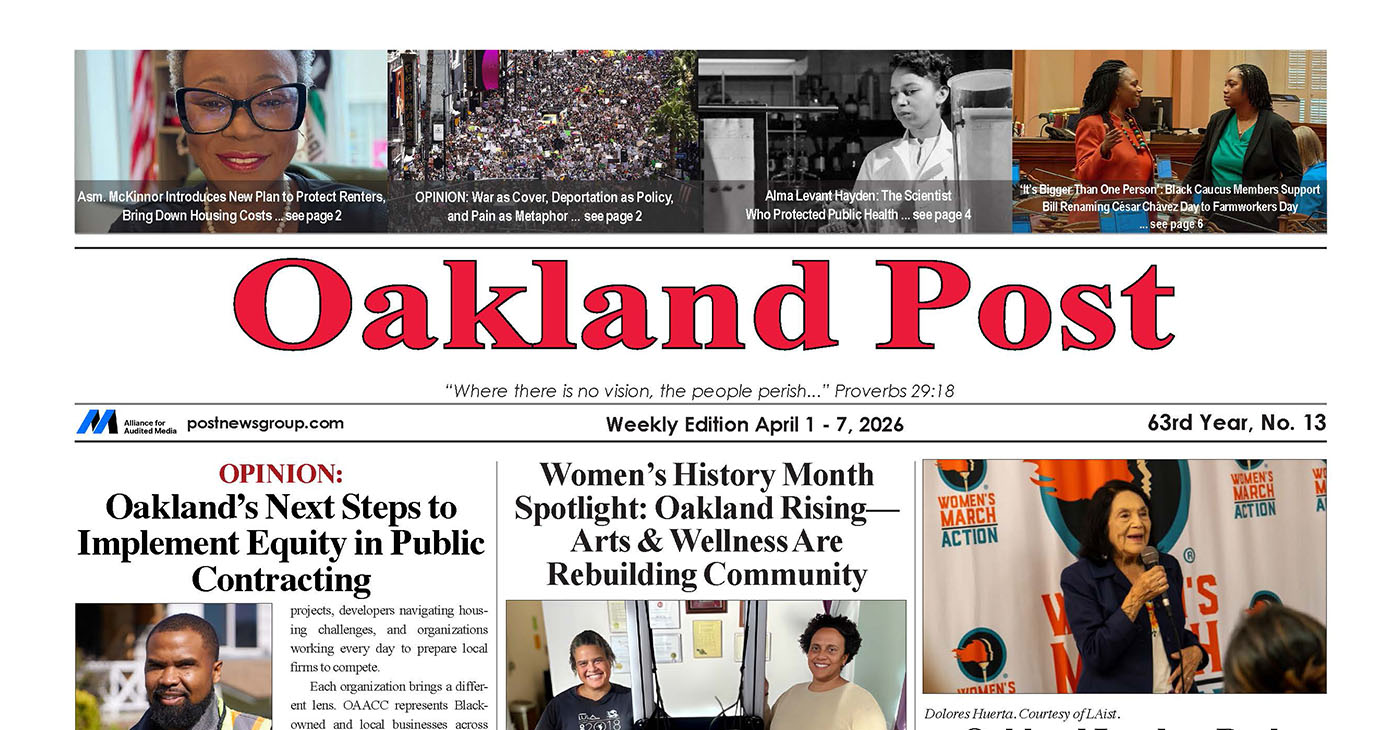
To enlarge your view of this issue, use the slider, magnifying glass icon or full page icon in the lower right corner of the browser window.
Activism
Oakland Post: Week of March 18 – 24, 2026
The printed Weekly Edition of the Oakland Post: Week of March 18 – 24, 2026
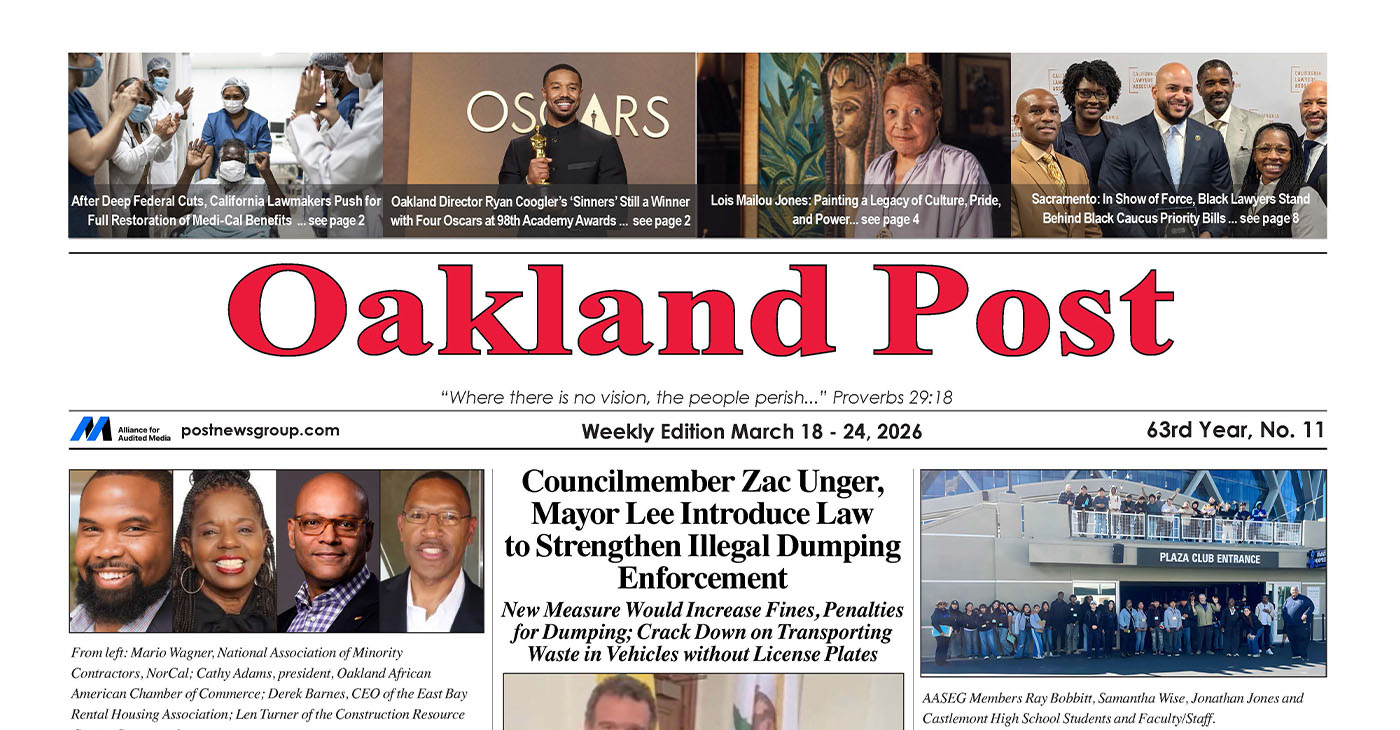
To enlarge your view of this issue, use the slider, magnifying glass icon or full page icon in the lower right corner of the browser window.
Activism
Oakland Post: Week of March 11 -17, 2026
The printed Weekly Edition of the Oakland Post: Week of March 11 – 17, 2026
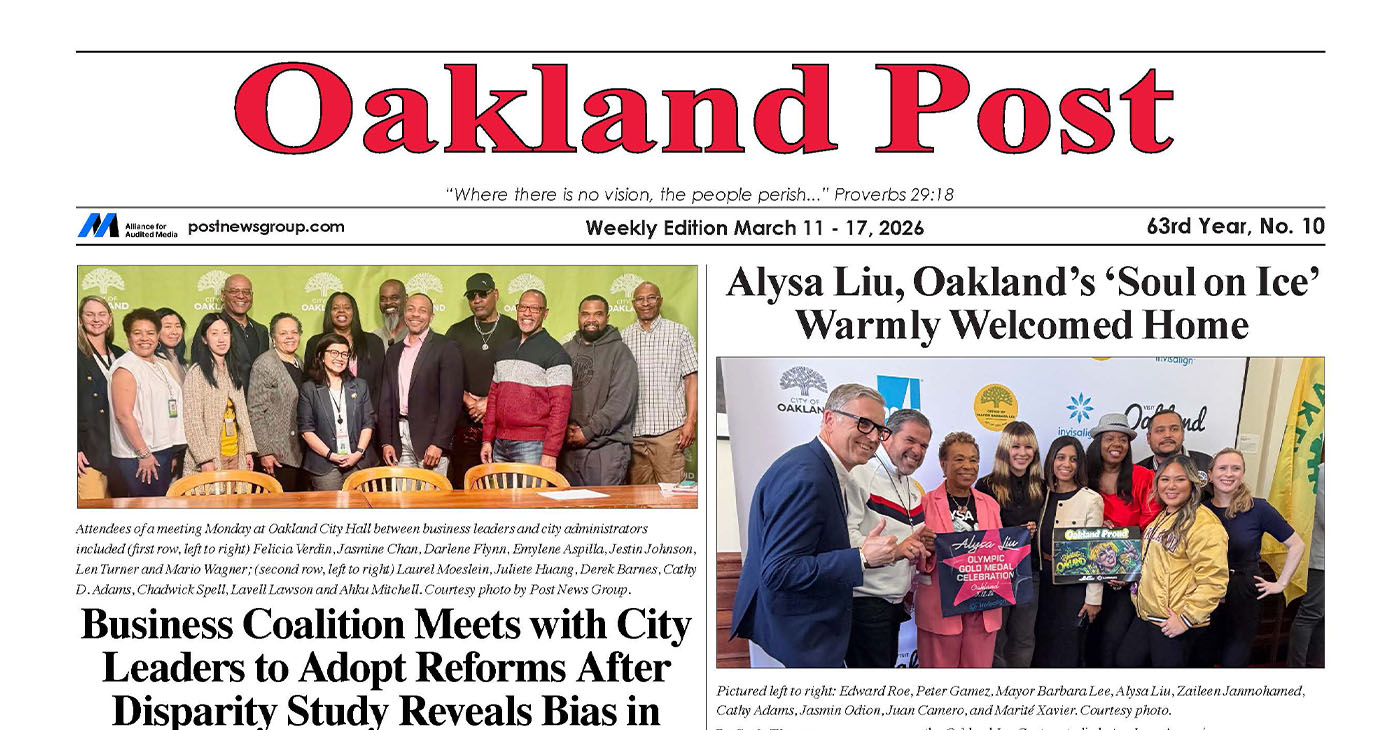
To enlarge your view of this issue, use the slider, magnifying glass icon or full page icon in the lower right corner of the browser window.

WORK FROM HOME
Home-based business with potential monthly income of $10K+ per month. A proven training system and website provided to maximize business effectiveness. Perfect job to earn side and primary income. Contact Lynne for more details: Lynne4npusa@gmail.com 800-334-0540


Oakland Post: Week of April 1 – 7, 2026

Black Artists in America, Installation Three Wraps at the Dixon Gallery and Gardens

Grief, Advocacy, and Education: A Counselor Reflects on Black Maternal Health

Future of Florida’s Black History Museum in Limbo

New Research Shows the Many Benefits of Early Learning

South Hampton K-8 Students Among Top 10 Finalists for Samsung’s ‘Solve for Tomorrow’ Competition

Cuba: No Negotiation with US on the President or Political System

Brooklyn Academy of Music Names Jamaican-Born Tamara McCaw as President

Trinidad & Tobego – U.S. Launches WhatsApp Channel for American Citizens in the Country

Oakland Post: Week of March 18 – 24, 2026

AI Innovation vs. Ethics and Environmental Impact

AI, Web3, and Digital Reparations

What If You Owned Your AI Agent?

Season 7, Episode 3 – January Reporter’s Roundtable 📱

Season 7, Episode 3 – January Reporter’s Roundtable

Reflecting on Black History Milestones in Birmingham AL

Oakland Post: Week of February 25 – March 3, 2026

PRESS ROOM: NBA Hall of Fame Nominee Terry Cummings Joins 100 Black Men of DeKalb County to Launch Victory & Values Initiative

Oakland Post: Week of March 4 – 10, 2026

Trump’s MAGA Allies are Creating Executive Order Plan to Steal the 2026 Midterms

U.S. manufacturing rebounds – how foundry services are adapting to rising demand

Poll Shows Support for Policies That Help Families Afford Child Care

Oakland Post: Week of March 11 -17, 2026

OP-ED: One Hundred Years of Black Workers Telling the Truth

Advancements in solar technology that are changing the way we power the world
Oakland Post: Week of March 18 – 24, 2026

Woman’s Search for Family’s Roots Leads to Ancestor John T. Ward – A Successful Entrepreneur and Conductor on the Underground Railroad

Financial Wellness and Mental Health: Managing Money Stress in College

COMMENTARY: Women of Color Shape Our Past and Future

PRESS ROOM: Civil Rights TV Launches in Selma as the World’s First 24/7 Civil Rights Television Network

Hyundai Ioniq 5 Parking, Safety, and 360 View #shorts

2025 Ioniq 5 New Wiper & Powerful Performance! #shorts

Electric SUV Range: Is 259 Miles Enough? #shorts

EV Charging: How Fast Can You Charge an Electric Vehicle? #shorts

Biometric Cooling… Messaging Seats…Come on! 2025 Infiniti QX80 Autograph 4WD

Charged Up: Witness the Magic of a Fully Electric Car! #shorts

Range Rover Sport PHEV Included…: See What’s Inside This Luxury SUV! #shorts

Invisible Hood View: Perfect Parking with X-Ray Vision! #shorts

AI Is Reshaping Black Healthcare: Promise, Peril, and the Push for Improved Results in California

ESSAY: Technology and Medicine, a Primary Care Point of View

Sanctuary Cities

The RESISTANCE – FREEDOM NOW

STATE OF THE PEOPLE: Freddie

ECONOMIC BOYCOTT DAY!!!!!

I told You So
-
 Activism3 weeks ago
Oakland Post: Week of March 11 -17, 2026
-
 Activism2 weeks ago
Oakland Post: Week of March 18 – 24, 2026
-
 Advice3 weeks ago
Financial Wellness and Mental Health: Managing Money Stress in College
-
 #NNPA BlackPress2 weeks ago
Brooklyn Academy of Music Names Jamaican-Born Tamara McCaw as President
-

 Advice3 weeks ago
Women & Wealth: Tips for Navigating Your Lifelong Financial Journey
-
 #NNPA BlackPress2 weeks ago
Grief, Advocacy, and Education: A Counselor Reflects on Black Maternal Health
-
 #NNPA BlackPress2 weeks ago
New Research Shows the Many Benefits of Early Learning
-
 #NNPA BlackPress2 weeks ago
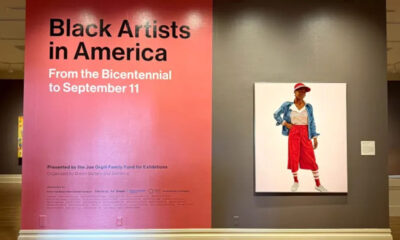
Black Artists in America, Installation Three Wraps at the Dixon Gallery and Gardens
