
Bo Tefu
California GOP Candidate Steve Hilton Files Lawsuit Challenging Redistricting, Citing “Partisan Power Grab”
“After Gavin Newsom’s Partisan Power Grab, a Democrat Vote in California Will be Worth Eight Times What a Republican Vote is Worth, a Grotesque Assault on our Democracy,” said Hilton in a campaign news release. He also described Proposition 50 as a “scheme” that ignores California’s constitutional requirement that redistricting occur only once every 10 years after a census.

By Bo Tefu, California Black Media
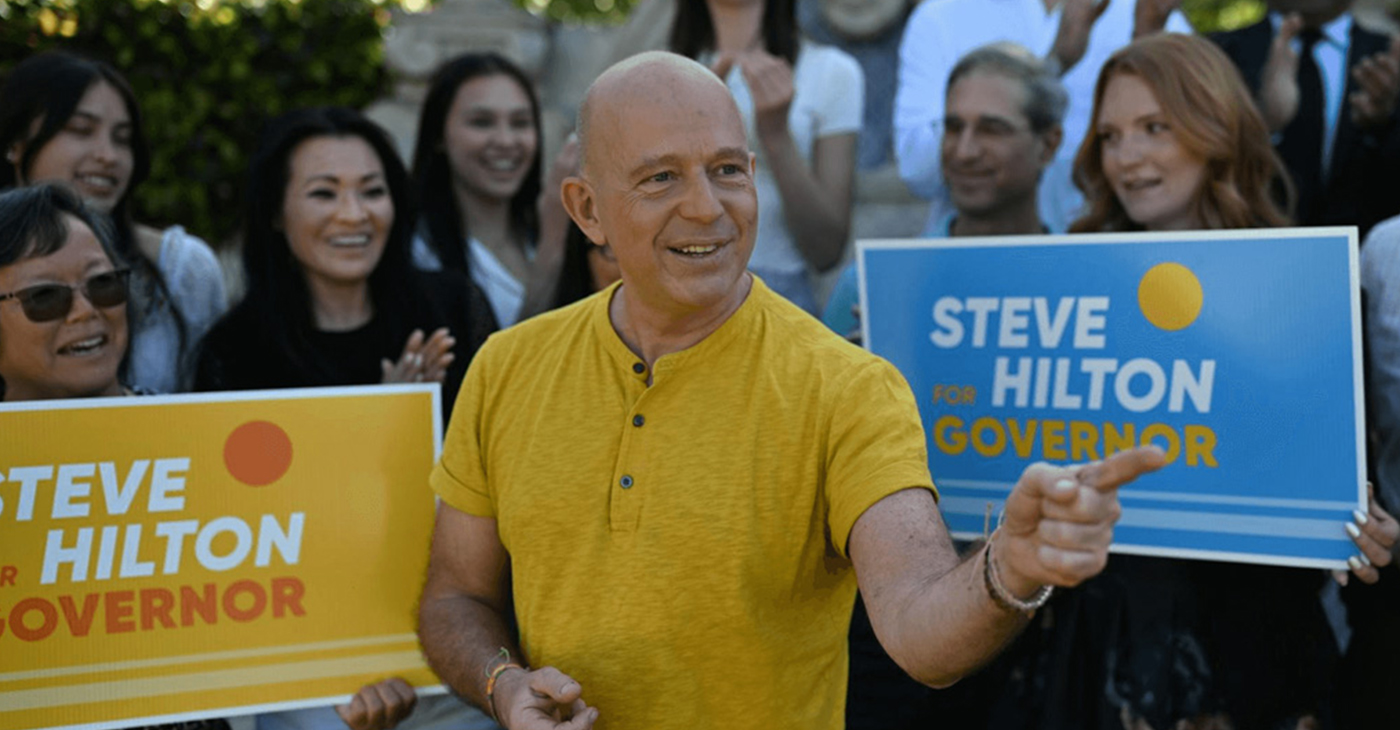
Republican gubernatorial candidate Steve Hilton has filed a federal lawsuit challenging California’s proposed congressional redistricting plan, known as Proposition 50, arguing that it violates the 14th Amendment and equal protection rights for voters. The suit was filed Sept. 4 in the U.S. Central District Court of California’s Southern Division.
Hilton, a former Fox News commentator and prominent contender in the race to succeed Gov. Gavin Newsom, had warned last month he would take legal action if Democrats advanced redistricting plans that he claims would favor their party. The lawsuit names Newsom and Secretary of State Shirley Weber, whose office oversees elections in California.
“After Gavin Newsom’s Partisan Power Grab, a Democrat Vote in California Will be Worth Eight Times What a Republican Vote is Worth, a Grotesque Assault on our Democracy,” said Hilton in a campaign news release. He also described Proposition 50 as a “scheme” that ignores California’s constitutional requirement that redistricting occur only once every 10 years after a census.
“The Constitution does not say one person, one vote sometimes. It does not say one person, one vote, only for the majority party. It says one person, one vote for everyone. If this map is allowed to stand, millions of Californians will have their voices silenced and their votes devalued,” Hilton added.

If voters approve the newly proposed maps in a special election on Nov. 4, five Republican-held districts, including that of Kevin Kiley in Northern California, could be redrawn to include more Democratic-leaning areas. The new boundaries would make Kiley’s district smaller and add parts of urban Sacramento County.
Other Republicans have also pushed for a ban on mid-decade redistricting, but state courts have not acted, and the California Supreme Court has twice declined to intervene in related ballot measures. Kiley has appealed to U.S. House Speaker Mike Johnson to support efforts to prevent mid-decade redistricting nationwide.
Hilton and Riverside County Sheriff Chad Bianco are the two most prominent GOP candidates hoping to challenge a crowded Democratic field for governor as Newsom reaches his term limit next year.




Activism
California Dem Party Is Holding Its Summer Executive Board Meeting July 31-Aug. 2
The meeting will gather Executive Board members and standing committee members to conduct official party business, including committee meetings, training sessions, and a Sunday General Session where credentialed members will vote on party matters. Party officials say the event is designed to coordinate strategy as Democrats in California look to strengthen voter outreach efforts and support national goals, including efforts to regain control of the U.S. House of Representatives.

By Bo Tefu, California Black Media

The California Democratic Party is set to hold its 2026 Summer Executive Board Meeting from July 31 through Aug. 2 at the Sheraton San Diego Hotel & Resort, bringing together party leaders for three days of organizing, voting, and planning ahead of the November election cycle.
The meeting will bring together Executive Board members and standing committee members to conduct official party business, including committee meetings, training sessions, and a Sunday General Session in which credentialed members will vote on party matters. Party officials say the event is designed to coordinate strategy as Democrats in California look to strengthen voter outreach efforts and support national goals, including efforts to regain control of the U.S. House of Representatives.
Online registration and credentialing for Executive Board attendees is currently open and will close at 5 p.m. on July 8. Observer credential requests for non-board members close earlier, on July 2 at 5 p.m. Party officials are encouraging attendees to complete registration online in advance to streamline on-site credential pickup.
Executive Board members must pick up physical credentials in person during registration hours to be eligible to vote. Registration fees include $85 for Executive Board members, $80 for 2026 DSCC dues, and $165 for combined dues and registration. Standing committee members may also register for $85, while non-board members can attend the Sunday General Session by purchasing a $95 observer pass.
The party is also organizing volunteer opportunities over the weekend, including an in-person phone bank focused on voter outreach. Organizers say the activity is part of broader efforts to mobilize voters ahead of the general election.
Several logistical details remain in progress, including the release of the full executive board agenda, travel accommodations information, and Sunday voting procedures. A proxy submission portal is currently open for members unable to attend in person.
The hotel room block at the Sheraton San Diego Hotel & Resort has already sold out, though attendees can still access discounted parking rates during the event.
Party officials note that caucus meetings, standing committee sessions, and training events will remain open to all Democrats and do not require credentials. However, only credentialed members and approved observers will be allowed to participate in the formal Sunday General Session.
Black History
Report Examines Link Between Low Earnings and Incarceration Rates
Researchers found that low earnings were common throughout the employment histories they examined. Only 28% of people employed before incarceration earned more than the federal poverty threshold in at least one year. Although that share rose to 45% after release, many workers continued to earn too little to achieve lasting financial stability.

By Bo Tefu, California Black Media
Low earnings and unstable employment before incarceration may play a larger role in the cycle of imprisonment than previously understood, according to a new report from the Public Policy Institute of California (PPIC) that tracks the work histories of nearly 170,000 people released from state prisons.
The report, Employment Before, During, and After Prison in California, found that many people entering prison had weak ties to the labor market, often working temporary, low-paying jobs that failed to lift them above the federal poverty line. Researchers said the findings underscore the need for stronger education, workforce development and employment programs to improve long-term economic outcomes and reduce barriers to successful reentry.
The study analyzed employment records for people released from California prisons between 2015 and 2019, examining their work histories before incarceration, jobs held while in prison and employment after release. Researchers found that nearly half of those studied never held a job outside prison during the period examined, while one in four had no recorded employment before, during or after incarceration.
“Policymakers have long sought to promote employment among released prisoners through policies and programs that reduce incarceration and broaden access to the labor market,” researcher Heather Harris stated. “This descriptive report provides previously unavailable information about employment before, during, and after incarceration among released prisoners with the aim of highlighting opportunities for improvement.”
Before incarceration, about one-third of employed individuals worked temporary jobs. After release, that share increased to 42%, suggesting employment remained unstable even after returning to the community. The report also found that prison jobs generally paid about 40% less than the national average, and nearly one-third of incarcerated workers received no wages at all.
Researchers found that low earnings were common throughout the employment histories they examined. Only 28% of people employed before incarceration earned more than the federal poverty threshold in at least one year. Although that share rose to 45% after release, many workers continued to earn too little to achieve lasting financial stability.
The report also identified significant disparities, with Black workers earning an average of 38% less than White workers and women earning about 20% less than men.
Despite those challenges, the report identified several factors associated with stronger employment outcomes. Individuals who worked before incarceration were nine times more likely to find employment after release, while prison jobs, vocational education, college coursework and substance use disorder treatment were all linked to improved employment prospects.
“Our findings suggest that improving access to education, job training and employment opportunities before, during and after incarceration could strengthen labor market outcomes for formerly incarcerated Californians,” Harris stated.
The researchers said expanding evidence-based workforce and education programs could help break the connection between persistent low earnings and incarceration, while improving economic mobility and reducing the likelihood of future justice system involvement.
Activism
Newsom, Legislature Reach Deal on $355.9 Billion Budget That Protects Health Care; Averts Deficits for Two Years
Other major investments include a record $2.4 billion in ongoing funding for special education, $5 billion for TK-12 schools, $500 million in Low-Income Housing Tax Credits, $200 million for affordable multifamily housing, a $100 million Disaster Rebuilding Fund, and new funding to strengthen election security, voter outreach and protections against misinformation. The agreement also preserves free school meals, universal transitional kindergarten, universal preschool, summer school programs and childcare slots.
By Bo Tefu, California Black Media
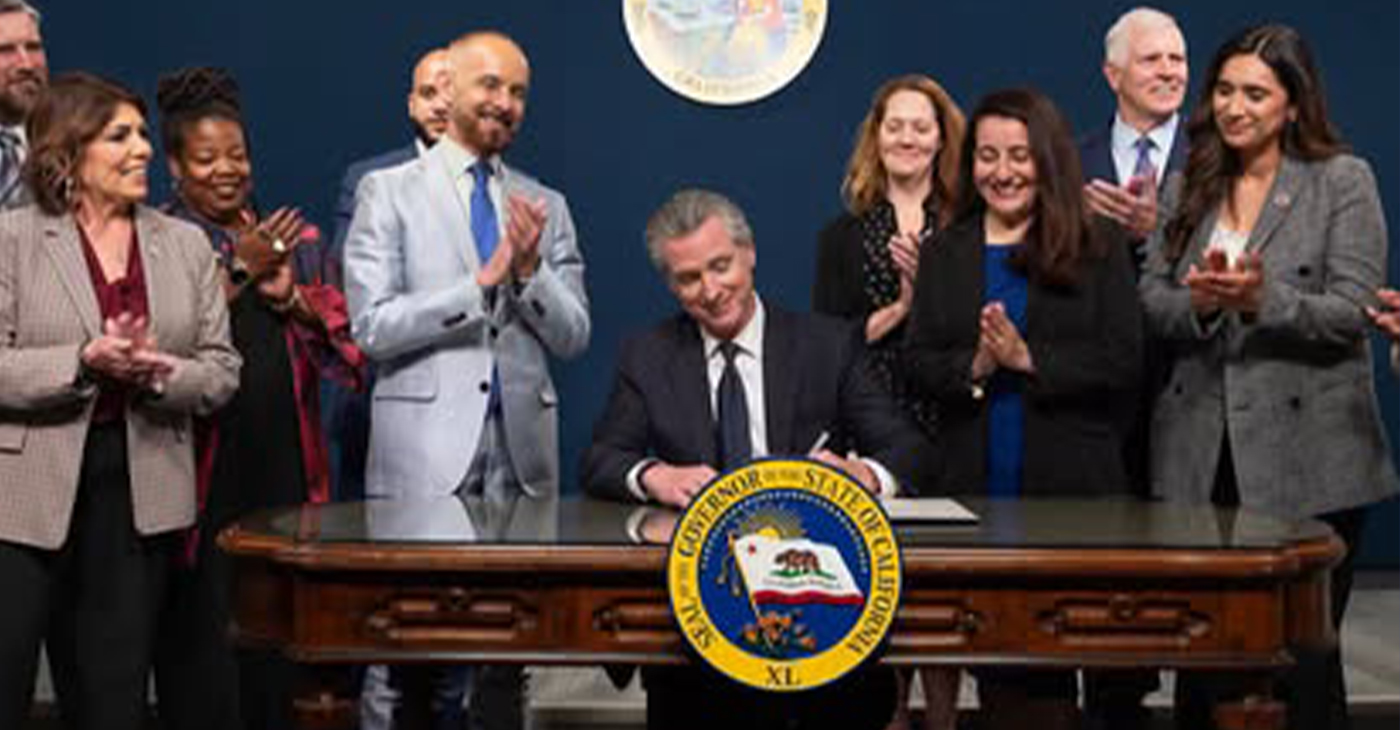
Gov. Gavin Newsom and Democratic legislative leaders announced a final agreement June 26 on California’s $355.9 billion 2026–27 state budget, saying the spending plan preserves health care and other essential services while eliminating projected deficits through the next two fiscal years.
The agreement between Newsom, Senate President Pro Tempore Monique Limón (D-Santa Barbara), and Assembly Speaker Robert Rivas (D-Hollister) balances the budget while maintaining investments in health care, education, housing, public safety and other priorities despite continued economic uncertainty and federal funding challenges.
“A balanced budget isn’t an end in itself — it’s how we deliver for Californians,” Newsom said. “This budget demonstrates responsible choices that protect our fiscal strength while continuing to invest in what matters most. In California, we support working families, create more opportunity, and build safer, healthier communities.”
The budget includes $300 million to lower health care costs, preserves $0 monthly health plans for many lower-income Californians, and helps offset higher insurance premiums resulting from the expiration of enhanced federal Affordable Care Act subsidies. It also protects funding for behavioral health programs and continues implementation of Proposition 1.
Other major investments include a record $2.4 billion in ongoing funding for special education, $5 billion for TK-12 schools, $500 million in Low-Income Housing Tax Credits, $200 million for affordable multifamily housing, a $100 million Disaster Rebuilding Fund, and new funding to strengthen election security, voter outreach and protections against misinformation. The agreement also preserves free school meals, universal transitional kindergarten, universal preschool, summer school programs and childcare slots.
Limón said lawmakers worked to shield Californians from federal spending reductions while strengthening the state’s finances.
“Today’s budget agreement reflects our commitment to protect core programs and address our short and long-term financial future by building up our rainy-day fund and making responsible budgeting choices,” Limón said. “I am also proud that the Senate was able to secure critical funding for childcare slots, safeguard access to care, and take significant steps toward ensuring large corporations pay their fair share.”
Rivas said the budget “protects health care, preserves food programs, invests in housing at record levels and builds reserves to fight back no matter what Trump and Republicans throw at us.”



Oakland Probate Dispute Raises Questions About Court-Ordered Property Transfer and Missing Notice

‘Raising a Child Shouldn’t Break the Bank’: California Is Helping Families Save on Childcare Costs

Secretary of State Shirley Weber Pushes Back Against DOJ Demands Over California Voter Rolls

Chase Launches Fraud & Scam Prevention Month

U.S. Rep. Simon Secures More Than $1 Million for Public Safety at Mills College at Northeastern University Oakland, Surrounding Neighborhood

COMMENTARY: Valarie Bachelor and Jennfier Brouhard are Excellent School Board Members and Deserve to Be Reelected

Oakland Faith Leaders Gather to Revitalize the Interdenominational Ministerial Alliance of Oakland

Statue of ‘La Catrina,’ a Beloved Symbol of Dia de Los Muertos, Visits Oakland

Oakland Honors 60 Years of the Black Panther Party at the All Power to the People Gala

Fate of Bay Area Public Transit Hinges on Regional Transit Measure

Why AC Transit Director Joel Young is My Choice for AC Transit Board Ward 3

Oakland Post: Week of October 21 – 27, 2026

Mayor Barbara Lee Holds Special State of the City Address in Deep East Oakland

Practitioners of African Traditional Spirituality Offer Ancestral Reverence Ritual Oct. 31

It’s Time to Lose Weight Before the Holidays

Misnamed ‘Parent’ PAC Seeks to Influence Oakland School Board Elections

Listening as a Lifeline: A Doula’s Witness to Black Maternal Health

Poll: Becerra Widens His Lead Over Hilton; Californians Split on Wealth Tax

County Office of Education Says OUSD Finances Are Getting Healthier, Materially Stronger

Oakland Post: Week of September 9 – 15, 2026

Doulas Are Helping Black California Moms Navigate Pregnancy–Even as High Mortality Rates Persist

Zakiya Jendayi Arrested, Locked Out of Home by Sheriff’s Deputies

Mayor Lee Announces $1 Million Kaiser Permanente Grant for Pilot Program to Address Homelessness, Clean Up Public Spaces throughout Oakland

Richmond Tiny House Village Farm & Garden Set to Open Gates on Sept. 26

BLACspace Cooperative Invites Bay Area to Experience Oakland’s Black Cultural Ecosystem Through a BLAC Map Tour + Party

OPINION: Nolan Wells’ Death One of Several Signifying Racial Terror Lives on in U.S. South

Latest Massacre in Haiti Reveals Cruelty U.S. Deportations

Oakland People’s Arms Embargo Coalition Demands End to Military Shipments Thru Oakland

Oakland Post: Week of September 16 – 22, 2026

Democratic Clubs Interview Candidates for Oakland School Board

The Conversation With Al McFarlane 6/23/26

Media Monday 6/22/26

LIVE! ASK ALMA! — TUES. 6.23.26 7PM EST

Car Buying Secrets: 4 Hidden Checks Before You Sign!

Is This 550 HP Charger Worth YOUR Money? AutoNetwork Review

Celebrating Juneteenth – Frederick Douglass on education and resistance

LIVE! — ASK ALMA! — TUES. 6.19.26 7PM EST

Hyundai Ioniq 5 Parking, Safety, and 360 View #shorts

2025 Ioniq 5 New Wiper & Powerful Performance! #shorts

Electric SUV Range: Is 259 Miles Enough? #shorts

EV Charging: How Fast Can You Charge an Electric Vehicle? #shorts

Biometric Cooling… Messaging Seats…Come on! 2025 Infiniti QX80 Autograph 4WD

Charged Up: Witness the Magic of a Fully Electric Car! #shorts

Range Rover Sport PHEV Included…: See What’s Inside This Luxury SUV! #shorts

Invisible Hood View: Perfect Parking with X-Ray Vision! #shorts
-
 Black History3 weeks ago
Listening as a Lifeline: A Doula’s Witness to Black Maternal Health
-
 Economy4 weeks ago
Poll: Becerra Widens His Lead Over Hilton; Californians Split on Wealth Tax
-
 Business4 weeks ago
County Office of Education Says OUSD Finances Are Getting Healthier, Materially Stronger
-
 Lead Story3 weeks ago
Zakiya Jendayi Arrested, Locked Out of Home by Sheriff’s Deputies
-
 Art4 weeks ago
BLACspace Cooperative Invites Bay Area to Experience Oakland’s Black Cultural Ecosystem Through a BLAC Map Tour + Party
-

 Business4 weeks ago
From Historic Memories to New Possibilities: Oakland Celebrates Coliseum 60
-
 Community4 weeks ago
Asm. Corey Jackson Announces Launch of 24-Hour Childcare in His District
-

 Black History4 weeks ago
IN MEMORIAM: The Rev. Leon “Sonny” Clark, Longtime Orange County Pastor and Community Leader, Dies at 72
