
California Black Media
California Ed Chief Tony Thurmond’s Equity Initiatives Gain National Recognition
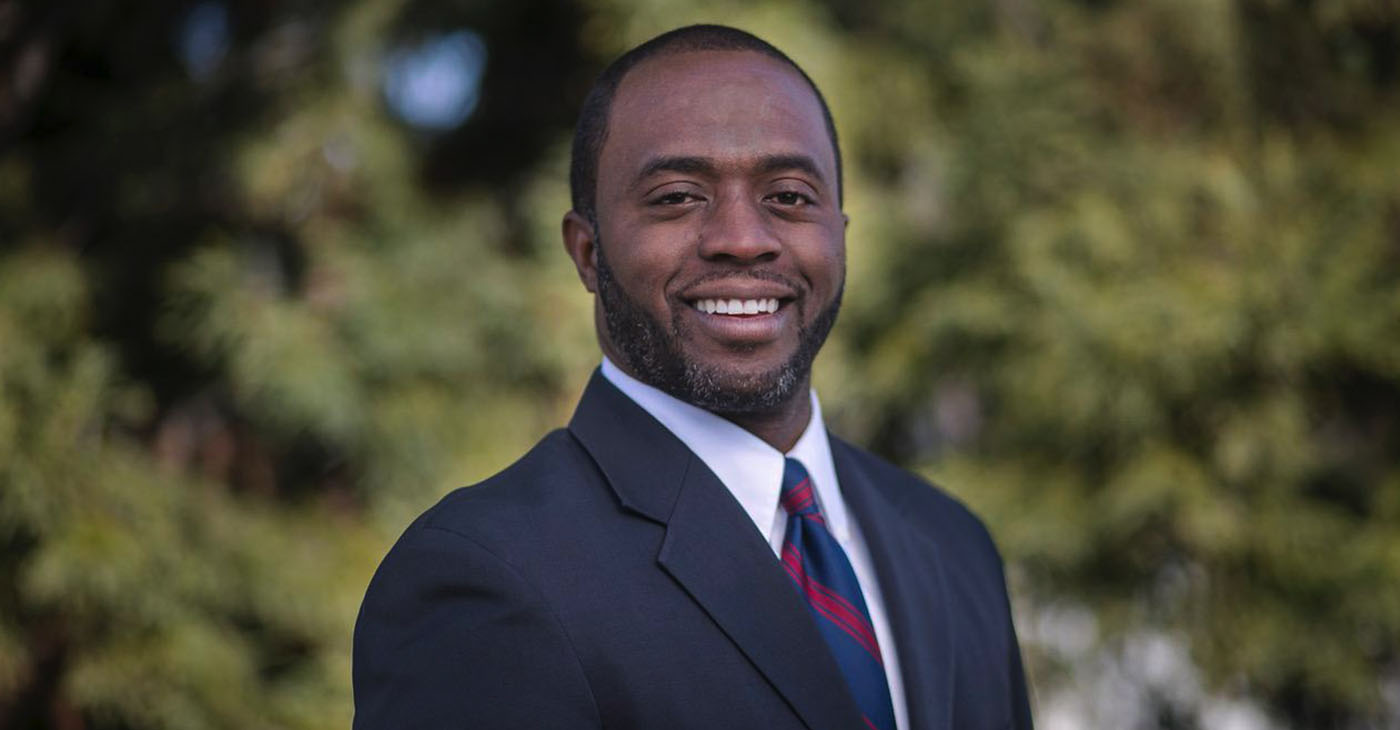
California is the winner of the 2022 Frank Newman Award for State Innovation. In his press release announcing the win, State Superintendent of Public Instruction Tony Thurmond said, “This is an incredible honor, and while the work continues, we’re proud of this national recognition that shows how California is improving educational outcomes for its students, closing equity gaps, and transforming education for students from pre-kindergarten to adulthood.”

By Joe W. Bowers Jr., California Black Media
California is the winner of the 2022 Frank Newman Award for State Innovation.
The nation’s preeminent education award for innovation, it recognizes a state for enacting reforms or implementing programs that go beyond marginal or incremental changes to improve student outcomes on a large scale.
According to the Education Commission of the States, California is being recognized for “its coordinated approach to educating all students from preschool to postsecondary, with explicit attention toward whole-child supports and services, as well as its historic financial investments to ensure educational equity.”
In his press release announcing the win, State Superintendent of Public Instruction Tony Thurmond said, “This is an incredible honor, and while the work continues, we’re proud of this national recognition that shows how California is improving educational outcomes for its students, closing equity gaps, and transforming education for students from pre-kindergarten to adulthood.”
Gov. Gavin Newsom, whose administration has made funding public education a priority, acknowledged receiving the award by saying, “California is transforming education from pre-kindergarten through to college and beyond, empowering students and families with more supports, more choices, and more opportunities. This award recognizes the hard work that’s gone into this transformative change by leaders throughout the state…. and the winners here are California’s kids and parents.”
The Newman Award announcement coincided with school districts finalizing their 2022-23 budgets which were due at their County Office of Education by June 30. Their budgets are bolstered by the highest level of funding in state history for all K-12 education programs – $128.6 billion is being allocated. Per pupil spending is $22,893 an all-time high.
The award recognized California’s Local Control Funding Formula (LCFF) as one of the nation’s most equitable formulas. LCFF allocates more resources to school districts educating low-income students. In this year’s state budget, school districts are receiving a $9.0 billion increase in ongoing LCFF funding, a 13% base increase over 2021-22 rates.
The award noted that in the last two years, California has approved increases to the LCFF allowing school districts to add more teachers, counselors, paraprofessionals, and other student support providers.
A letter nominating the state for the award read, “… [W]e believe there is no other state doing as much to advance educational equity for its neediest students as California is doing today.”
Since taking office in 2019, Thurmond has championed and created initiatives taking into consideration the unique needs California’s students. In order to achieve equity and transformative change he has promoted mental health programs, community schools, literacy, expanded learning programs, professional development, anti-racism training, and universal schools and universal meals programs.
Thurmond told California Black Media (CBM) that, “Starting out my goal was to figure out how to support Black students wherever they are in the state.” His Task Force on Closing the Achievement Gap has been the source of a number of recommendations advancing equity for all students.
Task Force recommendations include:
Supporting literacy as a strategy for closing the gap. In 2021 Thurmond launched a campaign committed to ensuring all students read by third grade by 2026. This effort includes securing funds for literacy supports and school libraries as well as for family engagement supports for literacy. This year’s budget includes $250 million to be spent over 5 years to hire literacy coaches and reading specialists for low-income elementary schools, and to implement evidence-based literacy strategies for preschool through third grade students and their families.
Diversifying the teacher workforce. Thurmond developed and sponsored AB 520 (Mike Gipson, D-Carson), which called for expanding male educators of color. This bill was embedded into the 2021 budget which allocated $350 million in residency grants for teacher preparation programs with an emphasis on diversifying the teacher workforce. $184 million in new funding for teacher residencies is included in the 2022-23 budget and eligibility is expanded include to counselors.
Expanding funding for Community Schools. In 2019 Thurmond wrote and sponsored AB 1196 (Gipson) to fund Community Schools. In 2021, Thurmond worked with Newsom on a proposal to expand community schools. The 2021 budget allocated $3 Billion for Community Schools and the California Department of Education (CDE) is currently implementing the community schools’ strategy. An additional $1.13 Billion was authorized in this year’s budget.
Providing professional development to help close the achievement gap. Thurmond helped to secure $1.5 Billion in Educator Effectiveness Grants to support professional development for educators to help close learning gaps. CDE has awarded the Educator Effectiveness Grants and is working with districts to implement this strategy.
Expanding mental health programs. Thurmond sponsored SB 1229 (McGuire, D-Healdsburg) which would fund $25,000 grants to add 10,000 mental health clinicians to serve California students. Provisions of SB 1229 have been folded into the 2022-23 budget legislation as part of teacher and school counselor residency programs. The current Golden State Teacher Grant Program is expanded to include mental health providers authorizing them to receive grants up to $20,000.
Expanding Pre-school programs. Thurmond sponsored AB 22 (McCarty, D-Sacramento) a bill that guarantees Universal Transitional Kindergarten. Thurmond and CDE are now implementing the policy. This year’s budget expands transitional kindergarten eligibility and rebenches the Proposition 98 Guarantee to $611 Million to accommodate enrollment increases. Also, $383 Million is approved to reduce the adult-to-student ratio for transitional kindergarten.
Expanding Dual language immersion programs. Thurmond wrote and is sponsoring SB 952 (Limón, D-Santa Barbara) a bill that helps schools expand into dual language immersion programs. This bill is a priority bill for the Latino Caucus.
Piloting implicit bias programs. Thurmond secured $10 million in the 2021 state budget for funds for districts to provide anti-bias training.
Reducing chronic absenteeism. Thurmond secured grant funds to provide Oakland and Inglewood Unified School Districts resources needed to contact families with chronically absent students.
The Education Commission of the States will present California leaders with the Newman Award at the 2022 National Forum on Education Policy being held July 13-15 in Washington, D.C.









Activism
Oakland Post: Week of September 23 – 29, 2026
The printed Weekly Edition of the Oakland Post: Week of September 23 – 29, 2026

To enlarge your view of this issue, use the slider, magnifying glass icon or full page icon in the lower right corner of the browser window.
Activism
Oakland Post: Week of September 16 – 22, 2026
The printed Weekly Edition of the Oakland Post: Week of September 16 – 22, 2026

To enlarge your view of this issue, use the slider, magnifying glass icon or full page icon in the lower right corner of the browser window.
Activism
Oakland Post: Week of September 9 – 15, 2026
The printed Weekly Edition of the Oakland Post: Week of September 9 – 15, 2026

To enlarge your view of this issue, use the slider, magnifying glass icon or full page icon in the lower right corner of the browser window.



Asm. Corey Jackson Announces Launch of 24-Hour Childcare in His District

IN MEMORIAM: The Rev. Leon “Sonny” Clark, Longtime Orange County Pastor and Community Leader, Dies at 72

Poll: Becerra Widens His Lead Over Hilton; Californians Split on Wealth Tax

From Historic Memories to New Possibilities: Oakland Celebrates Coliseum 60

County Office of Education Says OUSD Finances Are Getting Healthier, Materially Stronger

LIVE FREE Sunday Dinner Brings Faith, Fellowship and Civic Conversation to Oakland

Remembering Chauncey Bailey as Student Journalists Face Threats to Truth-Telling

BLACspace Cooperative Invites Bay Area to Experience Oakland’s Black Cultural Ecosystem Through a BLAC Map Tour + Party

In Wake of Death on Doorstep, Williams Chapel Baptist Church Calls for Better Care, Funding for Unhoused

Oakland Centenarian Nuna McKee Honored!

Caribbean Nations Produce Action Plan Calling for UK Reparations Over Slavery

Oakland Post: Week of September 23 – 29, 2026

Doulas Are Helping Black California Moms Navigate Pregnancy–Even as High Mortality Rates Persist

Newsom Signs Addictive Social Media Law to Protect Kids

On Your November Ballot: Prop 38 Would Allocate $8.4 Billion to Immunology and Immunotherapy Funding

Standoff for Justice: Our Homes Are Worth Fighting For

Oakland Post: Week of August 26 – September 1, 2026

Frontier Airlines’ Return to Oakland Airport Brings Flights, Jobs and Opportunity

Gubernatorial Candidate Steve Hilton Blasts California New Tire Rules; Newsom Hits Back

Chef Sharon Lee Blends Culinary Excellence, Education and Empowerment

Jackie Wright Champions Bay Area Stories, Filmmakers and Cultural Institutions

Big City Mayors Ask for “Yes” Vote on Housing Bond Measure; Conservatives Say “No”

Oakland Coliseum Project Opens Door for Small Businesses to Build Bigger

Gov. Newsom’s Latest Appointees Include Sacramento Advocate for Formerly Incarcerated Students; State’s New Tech Chief

Misnamed ‘Parent’ PAC Seeks to Influence Oakland School Board Elections

Longtime BWOPA Member Brendalyn Goodall Appointed to California Workforce Development Board

Gov. Newsom Signs Law Shielding Immigration Aid Workers From Doxing Threats

Secretary of State Shirley N. Weber Urges Californians to Vote Early as Voter ID Battle Intensifies

From Palestine to Oakland: Seeds for Liberation Examines Shared Struggles for Freedom

IN MEMORIAM: Dolly Parton Dead at 80 — How She Built a Legacy of Love and Earned Her Place in Black Culture

The Conversation With Al McFarlane 6/23/26

Media Monday 6/22/26

LIVE! ASK ALMA! — TUES. 6.23.26 7PM EST

Car Buying Secrets: 4 Hidden Checks Before You Sign!

Is This 550 HP Charger Worth YOUR Money? AutoNetwork Review

Celebrating Juneteenth – Frederick Douglass on education and resistance

LIVE! — ASK ALMA! — TUES. 6.19.26 7PM EST

Hyundai Ioniq 5 Parking, Safety, and 360 View #shorts

2025 Ioniq 5 New Wiper & Powerful Performance! #shorts

Electric SUV Range: Is 259 Miles Enough? #shorts

EV Charging: How Fast Can You Charge an Electric Vehicle? #shorts

Biometric Cooling… Messaging Seats…Come on! 2025 Infiniti QX80 Autograph 4WD

Charged Up: Witness the Magic of a Fully Electric Car! #shorts

Range Rover Sport PHEV Included…: See What’s Inside This Luxury SUV! #shorts

Invisible Hood View: Perfect Parking with X-Ray Vision! #shorts
-
 Community2 weeks ago
Misnamed ‘Parent’ PAC Seeks to Influence Oakland School Board Elections
-

 Activism3 weeks ago
Oakland Post: Week of September 2 – 8, 2026
-

 Community2 weeks ago
Richmond Tiny House Village Farm & Garden Set to Open Gates on Sept. 26
-

 Black History2 weeks ago
OPINION: Nolan Wells’ Death One of Several Signifying Racial Terror Lives on in U.S. South
-

 Black History2 weeks ago
Latest Massacre in Haiti Reveals Cruelty U.S. Deportations
-

 Activism2 weeks ago
Oakland Post: Week of September 9 – 15, 2026
-

 Community2 weeks ago
Democratic Clubs Interview Candidates for Oakland School Board
-

 Featured2 weeks ago
‘Ready to See These Bills Become Law’: Sen. Weber’s Package of 15 Bills Advance to Gov. Newsom’s Desk
