
Black History
California Commemorates Juneteenth ’22
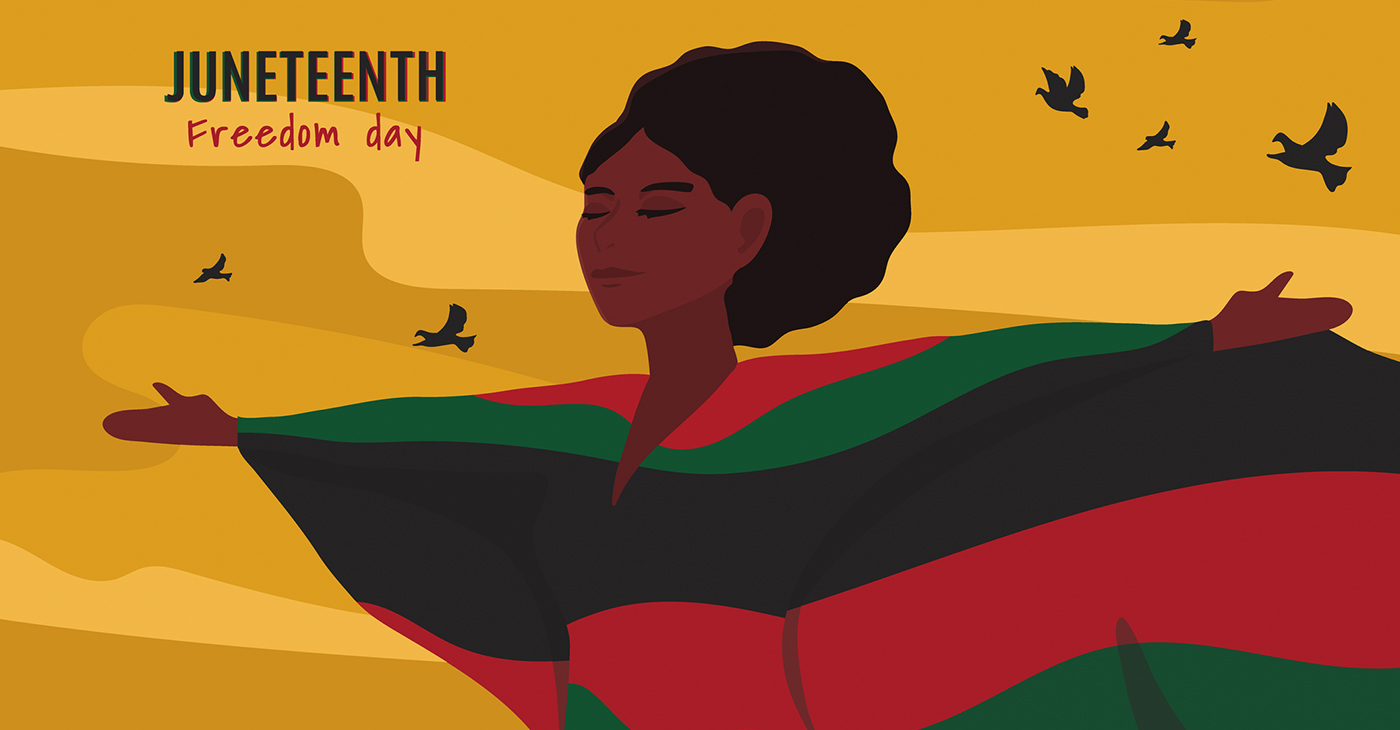
Mayor Garcetti’s signing is one among many commemorations of Juneteenth nationwide as a growing number of states and municipalities officially honor the historic holiday long celebrated in African American communities across the United States. “We need every Angeleno to learn the full story of our past, no matter the ugliness of some of its chapters, and that means recognizing the lasting legacy of slavery in our country,” Garcetti said at the signing ceremony.

By Edward Henderson, California Black Media
On June 6, Los Angeles Mayor Eric Garcetti signed a proclamation making Juneteenth an official holiday for city employees.
Although President Joe Biden signed a bill declaring Juneteenth a federal holiday last year, cities and states still have the power to decide which holidays they will officially observe.
Mayor Garcetti’s signing is one among many commemorations of Juneteenth nationwide as a growing number of states and municipalities officially honor the historic holiday long celebrated in African American communities across the United States.
“We need every Angeleno to learn the full story of our past, no matter the ugliness of some of its chapters, and that means recognizing the lasting legacy of slavery in our country,” Garcetti said at the signing ceremony.
History of Juneteenth
The holiday is recognition of June 19, 1865, the day Union soldiers notified enslaved African Americans in Galveston Bay, Texas that they were free under the Emancipation Proclamation.
Two and a half years earlier, enslaved and free African Americans gathered in churches and private homes across the country to mark what was known as “Freedom’s Eve” on Jan. 1, 1863. They were awaiting news confirming that President Abraham Lincoln had signed the Emancipation Proclamation that ended slavery in Confederate States.
Anticipation heightened and celebrations began as the news spread of the 13th Amendment, the constitutional modification that established the abolition of slavery. Union soldiers began their march to spread the news throughout plantations and cities in the South.
However, not everyone in Confederate territory would immediately be free. Even though the Emancipation Proclamation was signed into law in 1863, it could not be implemented in places still under Confederate control. As a result, in the westernmost Confederate state of Texas, enslaved people would not be free until much later.
In Galveston Bay, freedom finally came on June 19, 1865, when some 2,000 Union troops arrived. The army announced that the more than 250,000 enslaved black people in the state, were free by executive decree. That momentous day came to be known as “Juneteenth,” by the newly freed people in Texas.
The post-emancipation period known as Reconstruction (1865-1877) marked an era of great hope, uncertainty, and struggle for the nation. Formerly enslaved people immediately sought to reunify families, establish schools, run for political office, push radical legislation, and even sue slaveholders for compensation.
A California 2022 Juneteenth State Proposal
On May 19, California State Senators Steven Bradford (D-Gardena) and Sydney Kamlager (D-Los Angeles) introduced Senate Concurrent Resolution (SCR) 109, which would recognize Juneteenth as an official holiday statewide this year. Nine other members of the California Legislative Black Caucus are co-sponsors of the resolution.
For the past three years, Gov. Gavin Newsom has issued Juneteenth proclamations commemorating the holiday and declaring it “Juneteenth National Freedom Day: A Day of Observance” in the State.
SCR 109 urges “the people of California to join in celebrating Juneteenth as a day to honor and reflect on the significant role that African Americans have played in the history of the United States and how they have enriched society through their steadfast commitment to promoting unity and equality.”
California would join Texas (1980), Massachusetts (2007), New Jersey (2020), New York (2020), Pennsylvania (2020), Virginia (2020), Washington (2021), Oregon (2021) and Delaware (2021) recognizing Juneteenth as an official state holiday giving state employees the day off from work.
“By making Juneteenth an official state holiday, California would demonstrate its commitment to celebrating the emancipation of all slaves,” Assemblymember Akilah Weber (D-San Diego) said in a statement.
“Juneteenth is an important and special annual celebration for Black culture, resilience, and achievement,” Weber continued. “Designating this date as a paid state holiday mirrors the federal holiday commemorating the end of slavery in the United States.”
A Snapshot of Juneteenth Events in California
Here are a few highlighted Juneteenth 2022 events in California.
East Bay
Pan African Wellness Fest in Oakland
Lake Merritt Ampitheater
Afrocentric Oakland is hosting a two-day event, The Fam Bam & Pan African Wellness Fest, at Lake Merritt Amphitheater on Lake Merritt Boulevard on June 18 and 19 from 11:00 a.m. to 8:00 p.m.
The festival will focus on holistic wellness and feature local wellness providers offering meditation, yoga, Tai Chi, spoken word, self-defense lessons, connections to mental health services, and more.
The organization will also present “Black Excellence Awards” and provide fun activities for children.
Berkeley Juneteenth Festival
Alcatraz-Adeline Corridor
Held annually in June on Father’s Day in South Berkeley’s five-block Alcatraz-Adeline corridor, the festival has been produced by the Berkeley Juneteenth Association, Inc., a non-profit, serving the community since 1986. They rebranded as Berkeley Juneteenth Cultural Celebrations to pursue and sponsor more cultural events throughout the year.
You can find more Juneteenth events here.
Contra Costa County
2022 Let Freedom Ring East Contra Costa County Juneteenth Celebration
Sunday, June 19, 2022, Brentwood City Park, 12:00 pm – 5:00 pm
“As we strive to celebrate and honor the diversity of all Contra Costa County cities and their history, Juneteenth is a celebration to be held with as much respect as 4th of July celebrations go forth,” the web announcement says. The event is dubbed “A Salute to Black Fathers,” and features tributes to Luther Vandross and Frankie Beverly and gospel artists.
Sacramento
California Legislative Black Caucus Presents Juneteenth: A Day of Remembrance
State Capitol – West Steps
From 12: 30 p.m. to 2:00 p.m. on Monday, June 20, the California Legislative Black Caucus will host a lunch celebrating Black freedom with family, friends, food trucks, and more festivities. The CLBC is calling on all Californians to support AB 1655, which will permanently make Juneteenth a state holiday in California.
Sacramento Juneteenth Festival 2022
William Land Park
Sacramento Juneteenth Incorporated will produce this year’s festival June 17-19, 2022, in William Land Park. This year’s theme will focus on systematic economic injustices. They will partner with several local organizations to highlight and expose the systems and laws that perpetuate the continued economic injustices inflicted on communities of color. Events include a gospel concert, live entertainment, vendors, and more.
You can find more Sacramento Juneteenth events here.












Activism
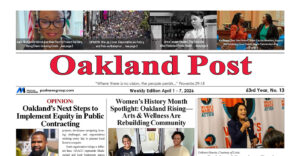
Oakland Post: Week of April 1 – 7, 2026
The printed Weekly Edition of the Oakland Post: Week of April 1 – 7, 2026
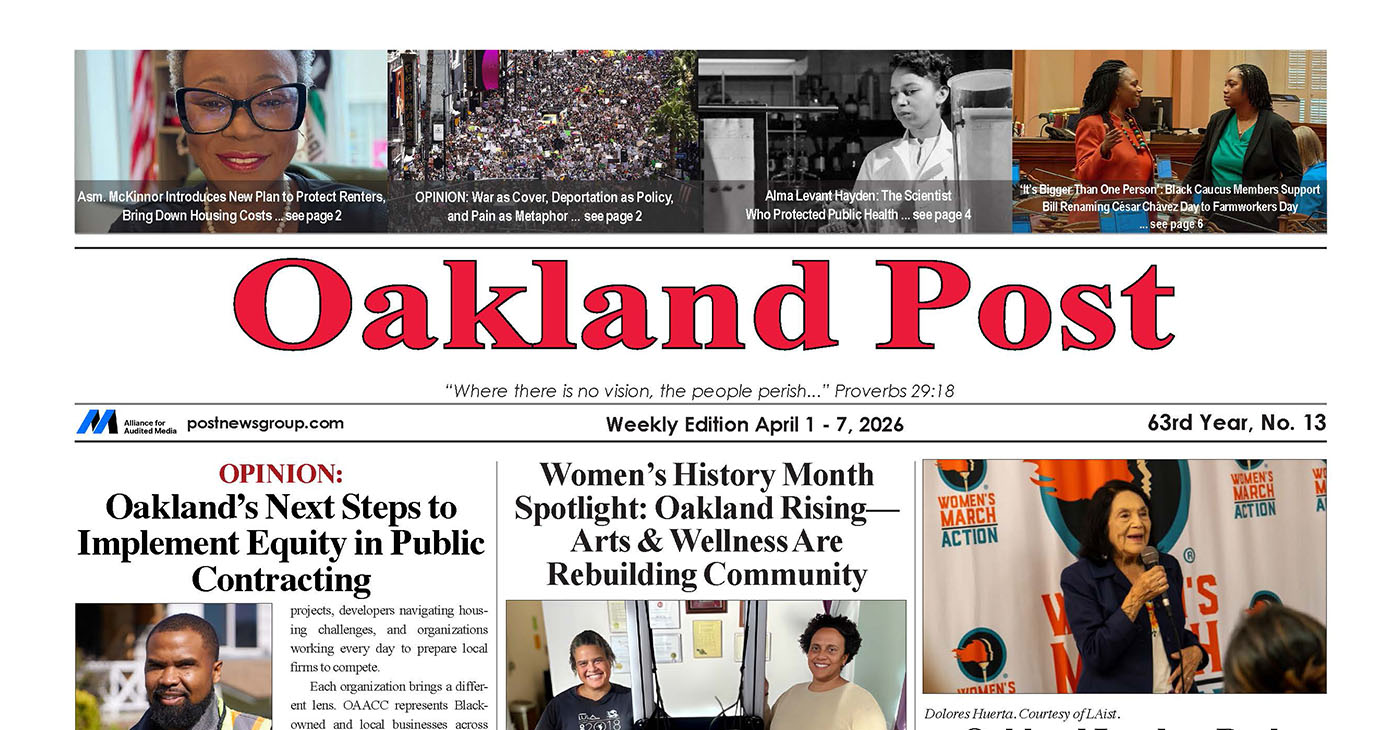
To enlarge your view of this issue, use the slider, magnifying glass icon or full page icon in the lower right corner of the browser window.
Activism
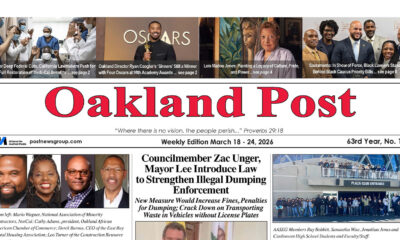
Oakland Post: Week of March 18 – 24, 2026
The printed Weekly Edition of the Oakland Post: Week of March 18 – 24, 2026
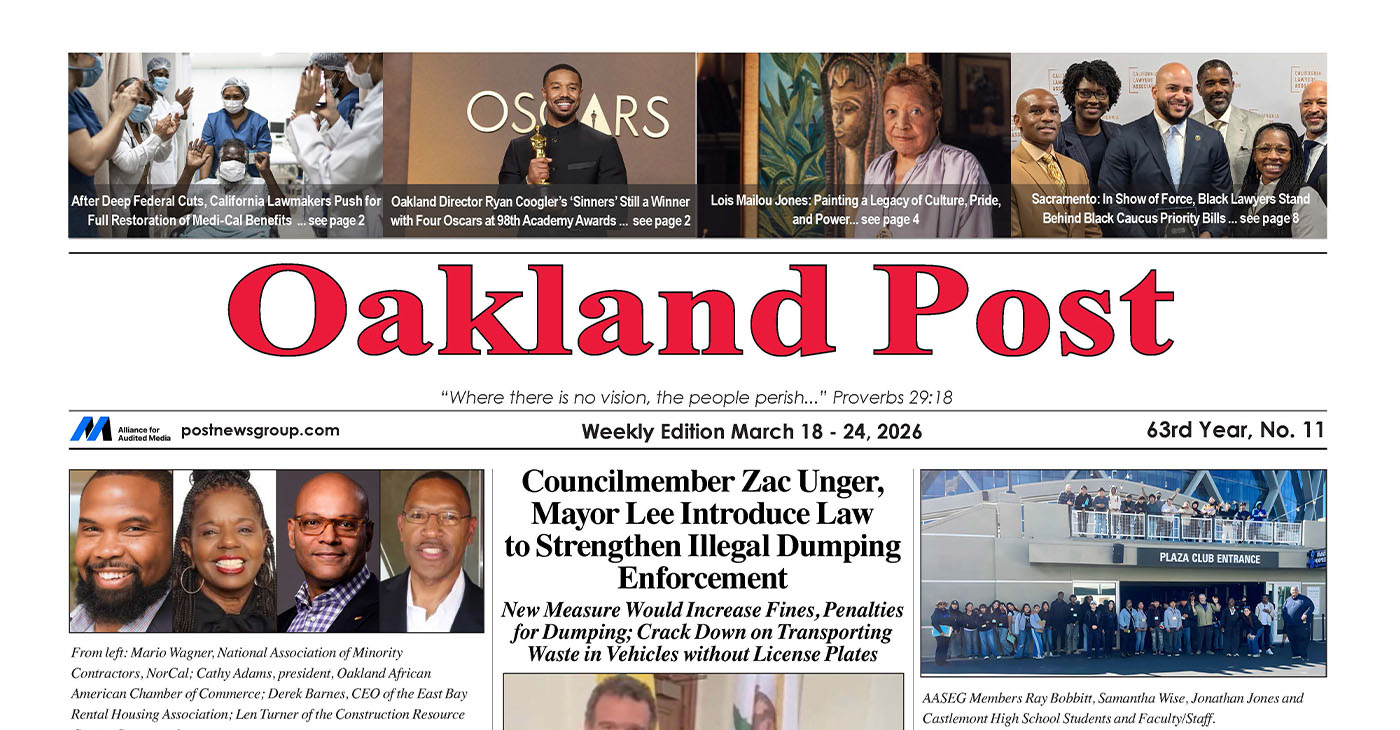
To enlarge your view of this issue, use the slider, magnifying glass icon or full page icon in the lower right corner of the browser window.
Activism
Oakland Post: Week of March 11 -17, 2026
The printed Weekly Edition of the Oakland Post: Week of March 11 – 17, 2026
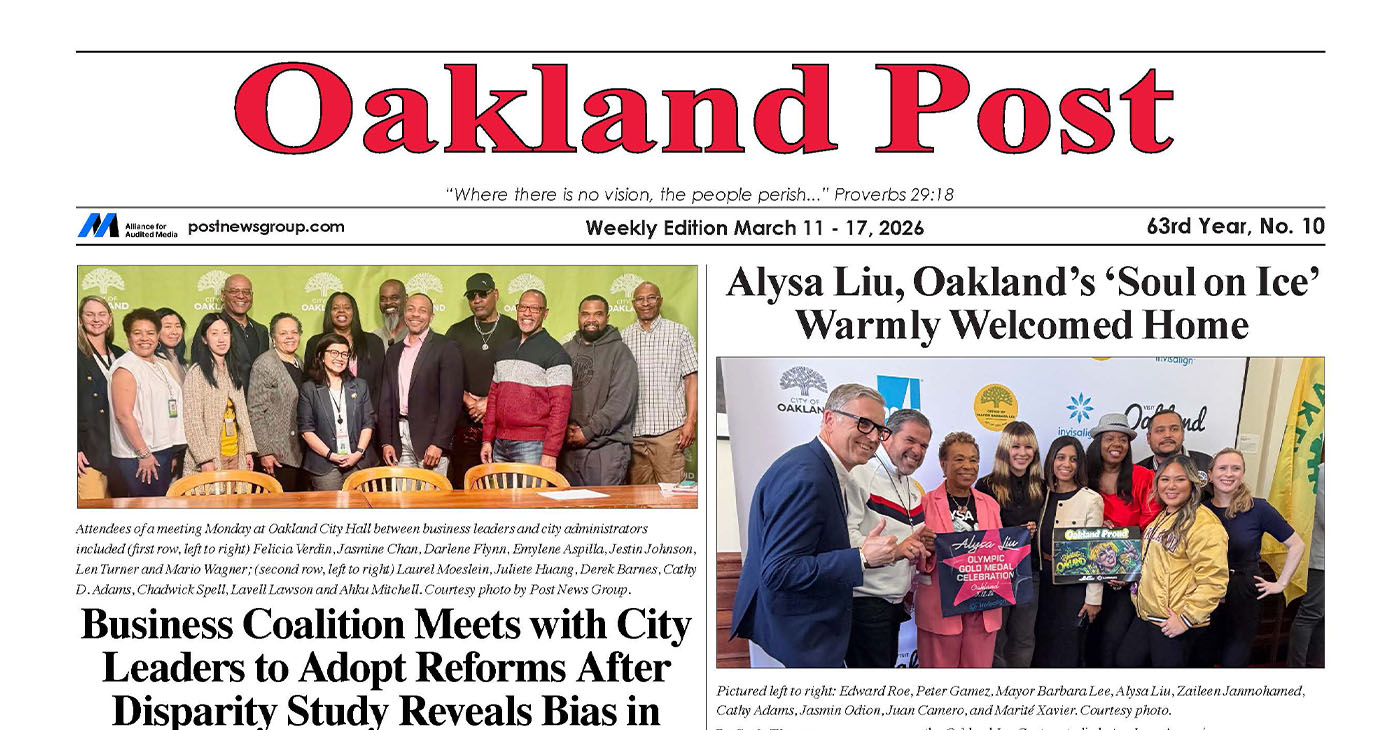
To enlarge your view of this issue, use the slider, magnifying glass icon or full page icon in the lower right corner of the browser window.

WORK FROM HOME
Home-based business with potential monthly income of $10K+ per month. A proven training system and website provided to maximize business effectiveness. Perfect job to earn side and primary income. Contact Lynne for more details: Lynne4npusa@gmail.com 800-334-0540


Oakland Post: Week of April 1 – 7, 2026

Black Artists in America, Installation Three Wraps at the Dixon Gallery and Gardens

Grief, Advocacy, and Education: A Counselor Reflects on Black Maternal Health

Future of Florida’s Black History Museum in Limbo

New Research Shows the Many Benefits of Early Learning

South Hampton K-8 Students Among Top 10 Finalists for Samsung’s ‘Solve for Tomorrow’ Competition

Cuba: No Negotiation with US on the President or Political System

Brooklyn Academy of Music Names Jamaican-Born Tamara McCaw as President

Trinidad & Tobego – U.S. Launches WhatsApp Channel for American Citizens in the Country

Oakland Post: Week of March 18 – 24, 2026

AI Innovation vs. Ethics and Environmental Impact

AI, Web3, and Digital Reparations

What If You Owned Your AI Agent?

Season 7, Episode 3 – January Reporter’s Roundtable 📱

Season 7, Episode 3 – January Reporter’s Roundtable

Reflecting on Black History Milestones in Birmingham AL

Oakland Post: Week of February 25 – March 3, 2026

PRESS ROOM: NBA Hall of Fame Nominee Terry Cummings Joins 100 Black Men of DeKalb County to Launch Victory & Values Initiative

Trump’s MAGA Allies are Creating Executive Order Plan to Steal the 2026 Midterms

Oakland Post: Week of March 4 – 10, 2026

Chase Oakland Community Center Hosts Alley-Oop Accelerator Building Community and Opportunity for Bay Area Entrepreneurs

U.S. manufacturing rebounds – how foundry services are adapting to rising demand

Poll Shows Support for Policies That Help Families Afford Child Care

OP-ED: One Hundred Years of Black Workers Telling the Truth

Advancements in solar technology that are changing the way we power the world

Oakland Post: Week of March 11 -17, 2026

Woman’s Search for Family’s Roots Leads to Ancestor John T. Ward – A Successful Entrepreneur and Conductor on the Underground Railroad

COMMENTARY: Women of Color Shape Our Past and Future

PRESS ROOM: Civil Rights TV Launches in Selma as the World’s First 24/7 Civil Rights Television Network
Oakland Post: Week of March 18 – 24, 2026

Hyundai Ioniq 5 Parking, Safety, and 360 View #shorts

2025 Ioniq 5 New Wiper & Powerful Performance! #shorts

Electric SUV Range: Is 259 Miles Enough? #shorts

EV Charging: How Fast Can You Charge an Electric Vehicle? #shorts

Biometric Cooling… Messaging Seats…Come on! 2025 Infiniti QX80 Autograph 4WD

Charged Up: Witness the Magic of a Fully Electric Car! #shorts

Range Rover Sport PHEV Included…: See What’s Inside This Luxury SUV! #shorts

Invisible Hood View: Perfect Parking with X-Ray Vision! #shorts

AI Is Reshaping Black Healthcare: Promise, Peril, and the Push for Improved Results in California

ESSAY: Technology and Medicine, a Primary Care Point of View

Sanctuary Cities

The RESISTANCE – FREEDOM NOW

STATE OF THE PEOPLE: Freddie

ECONOMIC BOYCOTT DAY!!!!!

I told You So
-
 Activism3 weeks ago
Oakland Post: Week of March 11 -17, 2026
-
 #NNPA BlackPress4 weeks ago
Woman’s Search for Family’s Roots Leads to Ancestor John T. Ward – A Successful Entrepreneur and Conductor on the Underground Railroad
-
 #NNPA BlackPress4 weeks ago
COMMENTARY: Women of Color Shape Our Past and Future
-
 Activism2 weeks ago
Oakland Post: Week of March 18 – 24, 2026
-

 Advice3 weeks ago
Financial Wellness and Mental Health: Managing Money Stress in College
-

 #NNPA BlackPress4 weeks ago
Advocates Raise Alarm Over ICE Operation, MOU and Detention Risks in Baltimore County
-

 #NNPA BlackPress4 weeks ago
Pete Buttigieg to Join Mayor Randall Woodfin for Community Town Hall in Birmingham
-
 #NNPA BlackPress2 weeks ago
Brooklyn Academy of Music Names Jamaican-Born Tamara McCaw as President
