
Bay Area
California Attorney General Announces $700 Million Multistate Settlement Agreement with Google
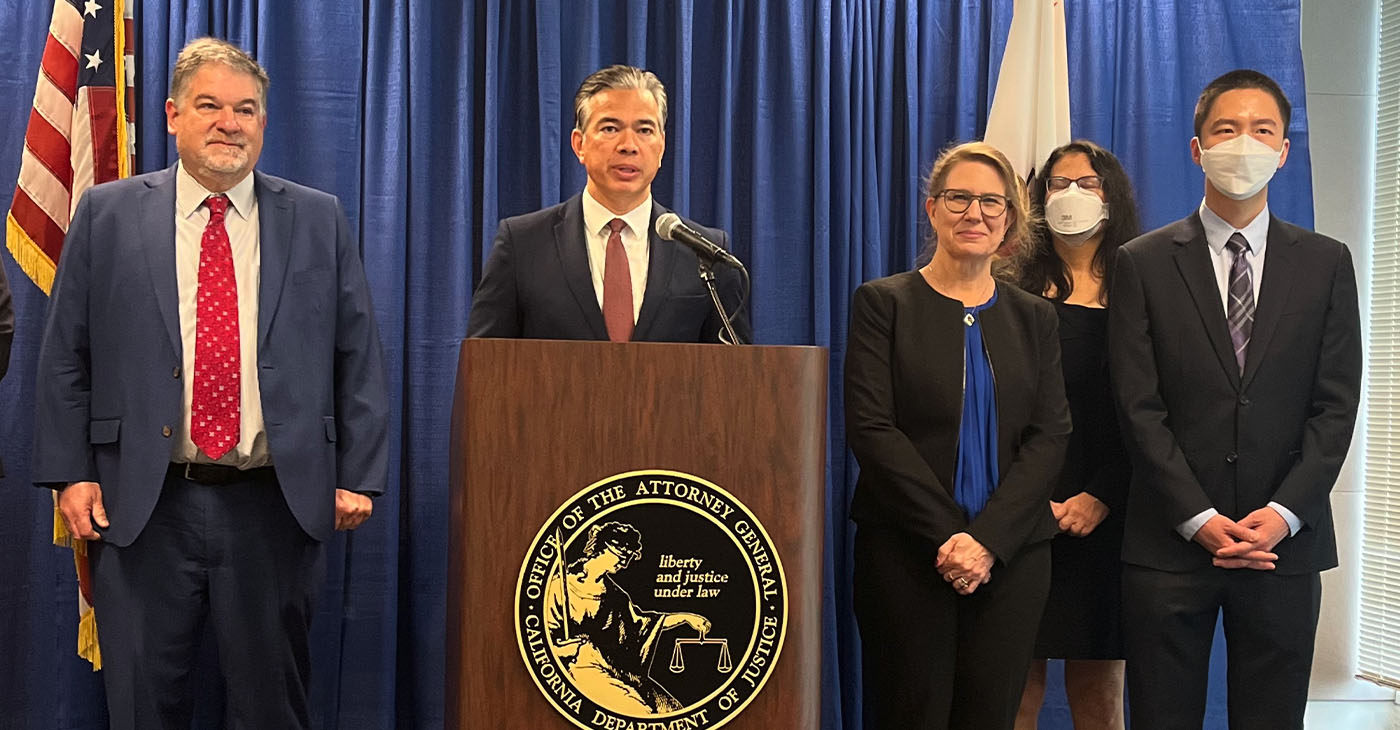
On Tuesday morning, in downtown San Francisco, Attorney General Rob Bonta announced that Google has agreed to a $700 million settlement with Google for monopolizing the Android application market. The multistate, bipartisan settlement is a rare victory for two sides of the political aisle that often cannot agree on much, Bonta emphasized at the conference, but they were all in fast agreement to fight for changes and restitution for the impacted consumers.

By Magaly Muñoz
On Tuesday morning, in downtown San Francisco, Attorney General Rob Bonta announced that Google has agreed to a $700 million settlement with Google for monopolizing the Android application market.
The multistate, bipartisan settlement is a rare victory for two sides of the political aisle that often cannot agree on much, Bonta emphasized at the conference, but they were all in fast agreement to fight for changes and restitution for the impacted consumers.
Google will pay $630 million to over 100 million Android consumers to compensate for the high prices they charged for digital transactions in Google Play Store. The minimum payouts will range from $2 or more to those who were harmed by Google’s anti-competitive market practices between August 2016 to September.
“They made it extremely difficult for consumers to have options, for consumers to have options that would reduce price and they essentially effectively maintained a monopoly,” Bonta said.
Google will also pay out $70 million to the states in penalties, costs and fees.
The lawsuit, State of Utah et al. v. Google LLC, alleged that Google signed anti-competitive contracts to prevent other app stores from being preloaded on Android devices, bought off key app developers who might have launched rival app stores to the Google Play store, and created technological barriers to deter consumers from directly downloading apps to their devices.

In addition to the payouts, the settlement requires Google to cease its anti-competitive operations and make changes in their market conduct for injunctive relief. The changes include giving developers the ability to allow users to make payments through in-app billing systems other than Play Billing for a minimum of five years; allow for the installation of third-party apps on Android phones from sources outside the Google Play Store for at least seven years; maintain Android system support for third-party app stores, including allowing automatic updates, for four years; and many more changes.
The settlement also stipulates that Google must provide compliance reports to an independent monitor who will verify that the company is not continuing its anti-competitive behavior for at least five years. Bonta is confident that Google will comply with all the changes specified in the settlement, and if they don’t, legal action will be taken.
Other state attorneys general shared their views on the big win against Google and its anti-competitive behavior.
Oregon Attorney General Ellen Rosenblum said in a statement that Google has to make right for the harm it cost their Android consumers.
“Every company is required to play by the rules, from the smallest of mom-and-pop shops to the biggest brands on the planet, and this settlement demonstrates that principle as clear as day,” Rosenblum said.
In a statement Tuesday morning, New York Attorney General Letitia James condemned the market abuse that Google established to raise prices and block app developers from fairly selling their products in the Play Store.
“No company, no matter how large or powerful, is allowed to corner a market and use its influence to overcharge consumers and smother competition,” James said.
But this is not the first time the Department of Justice (DOJ) has taken a stand against Big Tech.
In September, the state secured a $93 million settlement with Google for violating California’s consumer protection laws, where they misled users by collecting and using their location data for consumer profiling and advertising purposes without obtaining informed consent.
In October, a lawsuit was filed against Meta, the parent company of Facebook and Instagram, by over 30 states alleging that their apps are harming the mental health of children who are becoming addicted to their platforms.
“Today’s settlement, as well as our active lawsuits send a clear message to not just Google but to all corporations doing business in California: If you use your power to illegally bend the market at the expense of consumers, small business owners and the economy, we’ll hold you accountable. We’ll see you in court,” Bonta said.
The attorney general would not comment on whether they would go after Apple, which has been accused of trying to stifle competition in the app market, but he shared that the settlement with Google could serve as a model for “other app stores” including those headquartered in California, such as Apple.






Activism
Oakland Post: Week of March 18 – 24, 2026
The printed Weekly Edition of the Oakland Post: Week of March 18 – 24, 2026

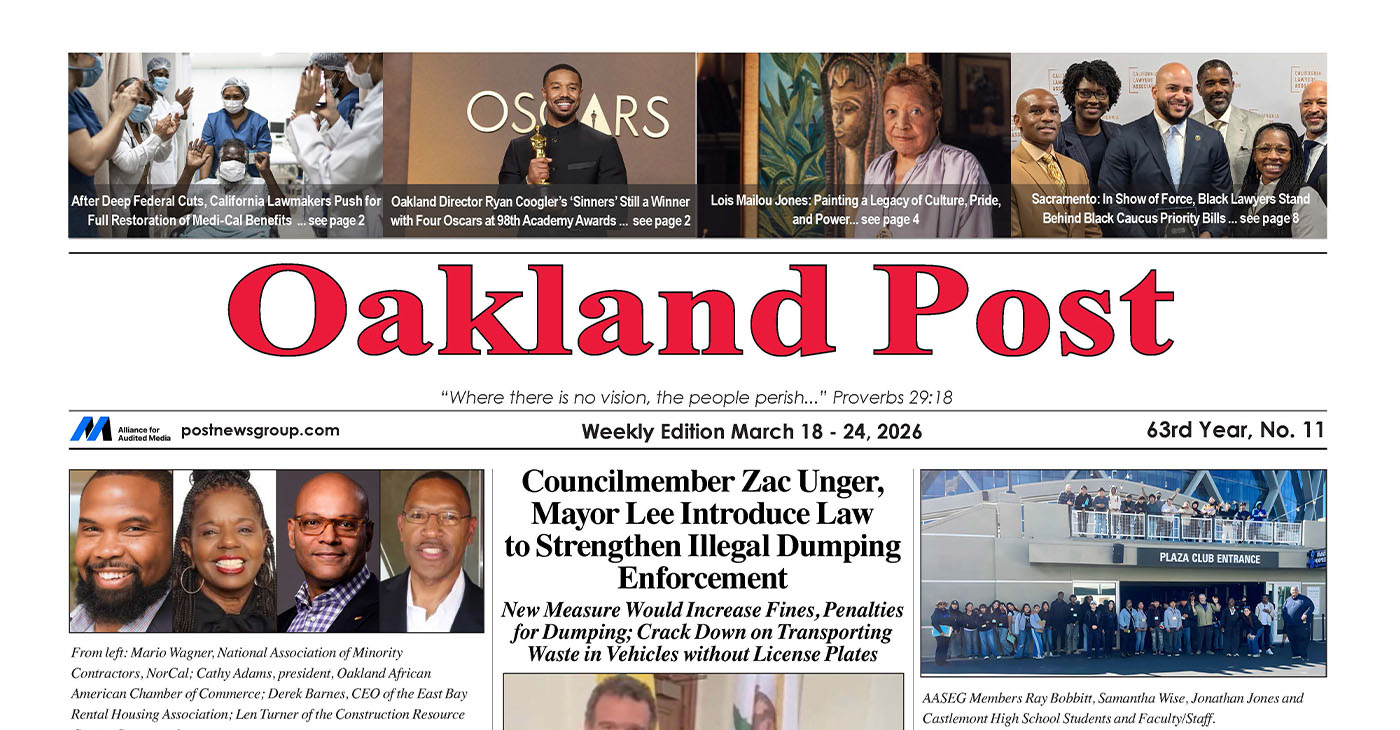
To enlarge your view of this issue, use the slider, magnifying glass icon or full page icon in the lower right corner of the browser window.

Activism
Oakland Post: Week of March 11 -17, 2026
The printed Weekly Edition of the Oakland Post: Week of March 11 – 17, 2026
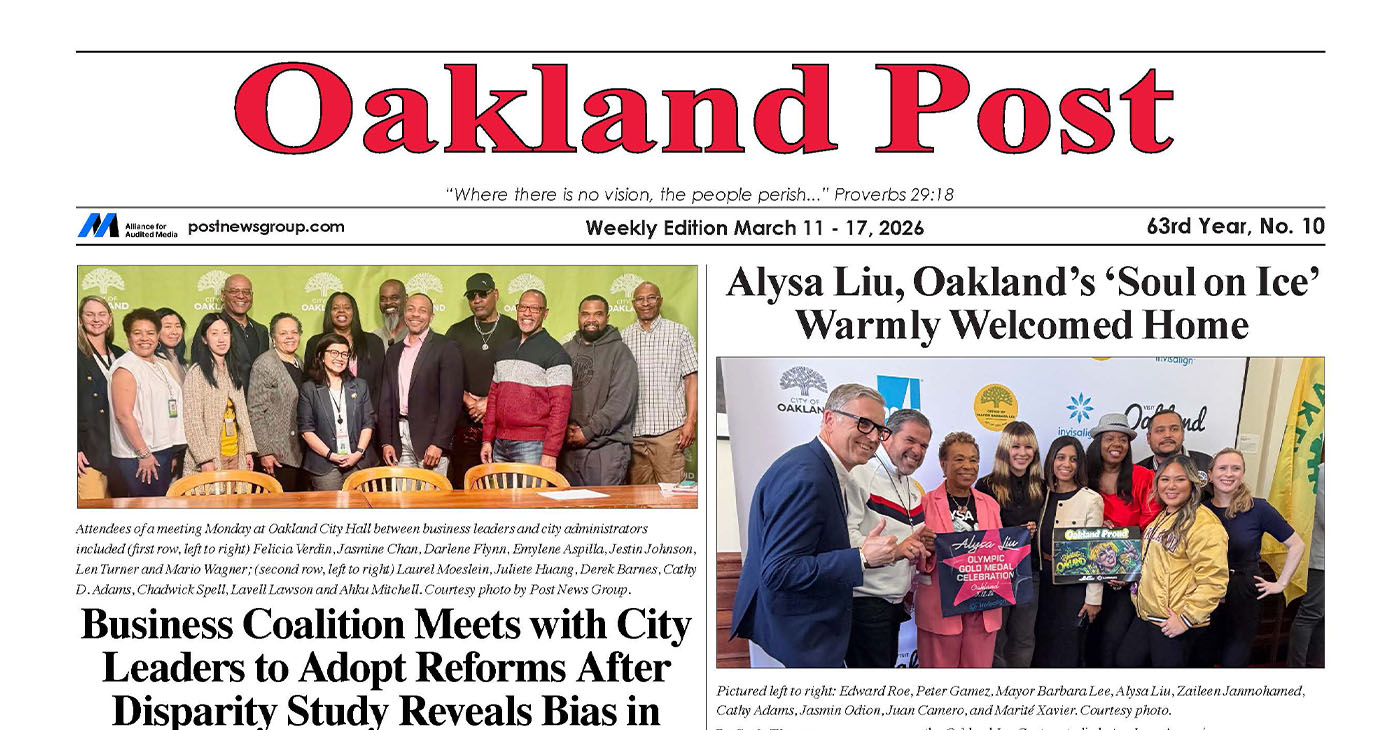
To enlarge your view of this issue, use the slider, magnifying glass icon or full page icon in the lower right corner of the browser window.
Activism
Oakland Post: Week of March 4 – 10, 2026
The printed Weekly Edition of the Oakland Post: Week of March 4 – 10, 2026

To enlarge your view of this issue, use the slider, magnifying glass icon or full page icon in the lower right corner of the browser window.

WORK FROM HOME
Home-based business with potential monthly income of $10K+ per month. A proven training system and website provided to maximize business effectiveness. Perfect job to earn side and primary income. Contact Lynne for more details: Lynne4npusa@gmail.com 800-334-0540


Black Artists in America, Installation Three Wraps at the Dixon Gallery and Gardens

Grief, Advocacy, and Education: A Counselor Reflects on Black Maternal Health

Future of Florida’s Black History Museum in Limbo

New Research Shows the Many Benefits of Early Learning

South Hampton K-8 Students Among Top 10 Finalists for Samsung’s ‘Solve for Tomorrow’ Competition

Cuba: No Negotiation with US on the President or Political System

Brooklyn Academy of Music Names Jamaican-Born Tamara McCaw as President

Trinidad & Tobego – U.S. Launches WhatsApp Channel for American Citizens in the Country

Oakland Post: Week of March 18 – 24, 2026

AI Innovation vs. Ethics and Environmental Impact

AI, Web3, and Digital Reparations

What If You Owned Your AI Agent?

Season 7, Episode 3 – January Reporter’s Roundtable 📱

Season 7, Episode 3 – January Reporter’s Roundtable

AI, Media, and Power | Part 2, Real-World Impacts and Tradeoffs

Reflecting on Black History Milestones in Birmingham AL

CITY OF SAN LEANDRO STATE OF CALIFORNIA PUBLIC WORKS DEPARTMENT ENGINEERING DIVISION NOTICE TO BIDDERS FOR ANNUAL STREET OVERLAY/REHABILITATION 2019-21 – PHASE III

Oakland Post: Week of February 18 – 24, 2026

Oakland Post: Week of February 25 – March 3, 2026

PRESS ROOM: NBA Hall of Fame Nominee Terry Cummings Joins 100 Black Men of DeKalb County to Launch Victory & Values Initiative

Trump’s MAGA Allies are Creating Executive Order Plan to Steal the 2026 Midterms

Oakland Post: Week of March 4 – 10, 2026

Chase Oakland Community Center Hosts Alley-Oop Accelerator Building Community and Opportunity for Bay Area Entrepreneurs

U.S. manufacturing rebounds – how foundry services are adapting to rising demand

Poll Shows Support for Policies That Help Families Afford Child Care

OP-ED: One Hundred Years of Black Workers Telling the Truth

Advancements in solar technology that are changing the way we power the world

Woman’s Search for Family’s Roots Leads to Ancestor John T. Ward – A Successful Entrepreneur and Conductor on the Underground Railroad

Oakland Post: Week of March 11 -17, 2026

COMMENTARY: Women of Color Shape Our Past and Future

Hyundai Ioniq 5 Parking, Safety, and 360 View #shorts

2025 Ioniq 5 New Wiper & Powerful Performance! #shorts

Electric SUV Range: Is 259 Miles Enough? #shorts

EV Charging: How Fast Can You Charge an Electric Vehicle? #shorts

Biometric Cooling… Messaging Seats…Come on! 2025 Infiniti QX80 Autograph 4WD

Charged Up: Witness the Magic of a Fully Electric Car! #shorts

Range Rover Sport PHEV Included…: See What’s Inside This Luxury SUV! #shorts

Invisible Hood View: Perfect Parking with X-Ray Vision! #shorts

AI Is Reshaping Black Healthcare: Promise, Peril, and the Push for Improved Results in California

ESSAY: Technology and Medicine, a Primary Care Point of View

Sanctuary Cities

The RESISTANCE – FREEDOM NOW

STATE OF THE PEOPLE: Freddie

ECONOMIC BOYCOTT DAY!!!!!

I told You So

-
 Activism4 weeks ago
Oakland Post: Week of March 4 – 10, 2026
-
 #NNPA BlackPress4 weeks ago
Woman’s Search for Family’s Roots Leads to Ancestor John T. Ward – A Successful Entrepreneur and Conductor on the Underground Railroad
-
 Activism3 weeks ago
Oakland Post: Week of March 11 -17, 2026
-
 #NNPA BlackPress4 weeks ago
COMMENTARY: Women of Color Shape Our Past and Future
-

 #NNPA BlackPress4 weeks ago
Advocates Raise Alarm Over ICE Operation, MOU and Detention Risks in Baltimore County
-

 Advice3 weeks ago
Financial Wellness and Mental Health: Managing Money Stress in College
-

 #NNPA BlackPress4 weeks ago
Pete Buttigieg to Join Mayor Randall Woodfin for Community Town Hall in Birmingham
-
 Activism2 weeks ago
Oakland Post: Week of March 18 – 24, 2026
